
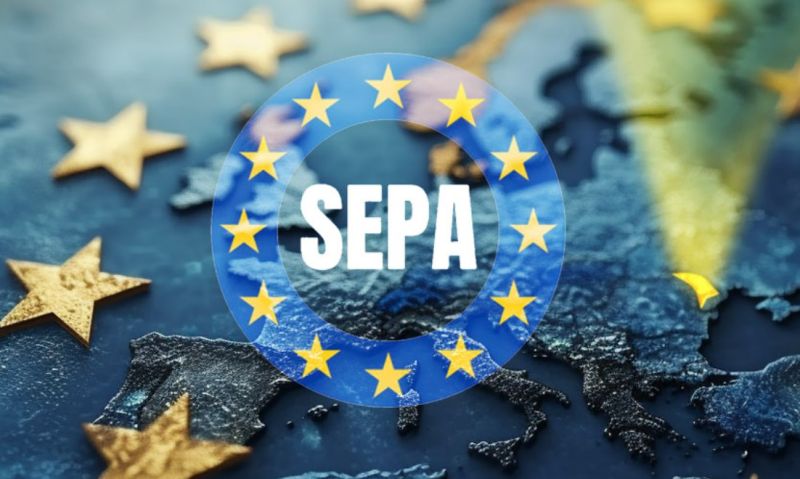
Moldova marks one year since joining SEPA: lower fees and millions of euros saved
The Republic of Moldova marks one year since joining the Single Euro Payments Area (SEPA), during which the national payment system has undergone significant changes, with a direct impact on citizens, business environment, and external economic relations. SEPA transfers have enabled savings of millions of euros for citizens and entrepreneurs.

Joining SEPA, achieved on March 6, 2025, now allows euro transfers to be made under conditions similar to those in the European Union: faster, safer, and at significantly lower costs.

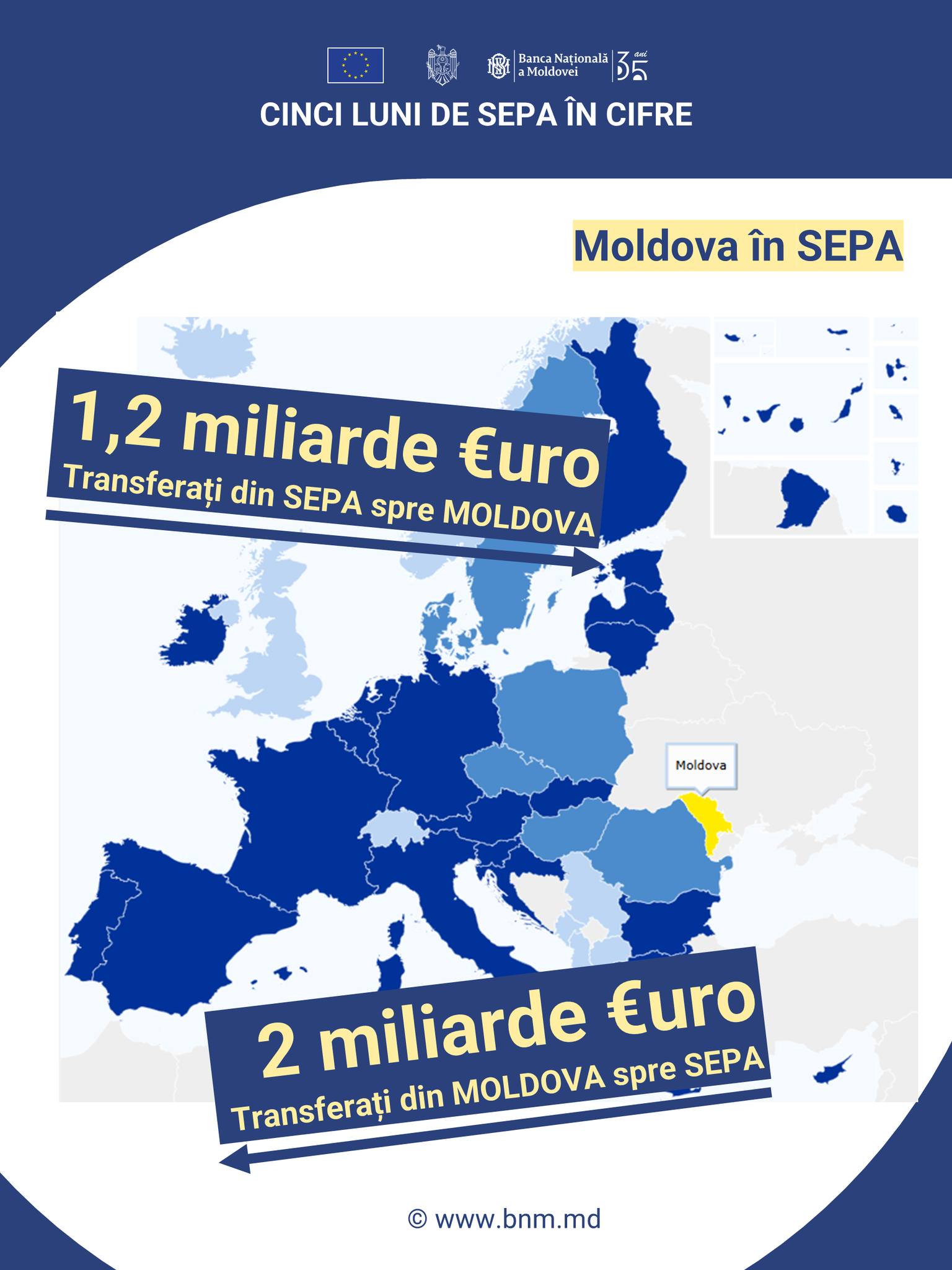
In less than a year from acceptance and just a few months after operational interconnection, SEPA has become the main channel for the Republic of Moldova’s cross-border euro payments, radically changing the way money flows to and from Europe. Transfers carried out according to European standards, available since October 6, 2025, have already generated tangible benefits for citizens, the diaspora, and the business community.

Currently, citizens can transfer money faster and at significantly lower costs between SEPA member states, while businesses benefit from more predictable conditions for trade, investment, and external economic relations.

According to NBM data, just a few months after becoming operational, 73% of euro transfers made by Moldovans were processed through SEPA, and in February 2026 this rate reached 81%.

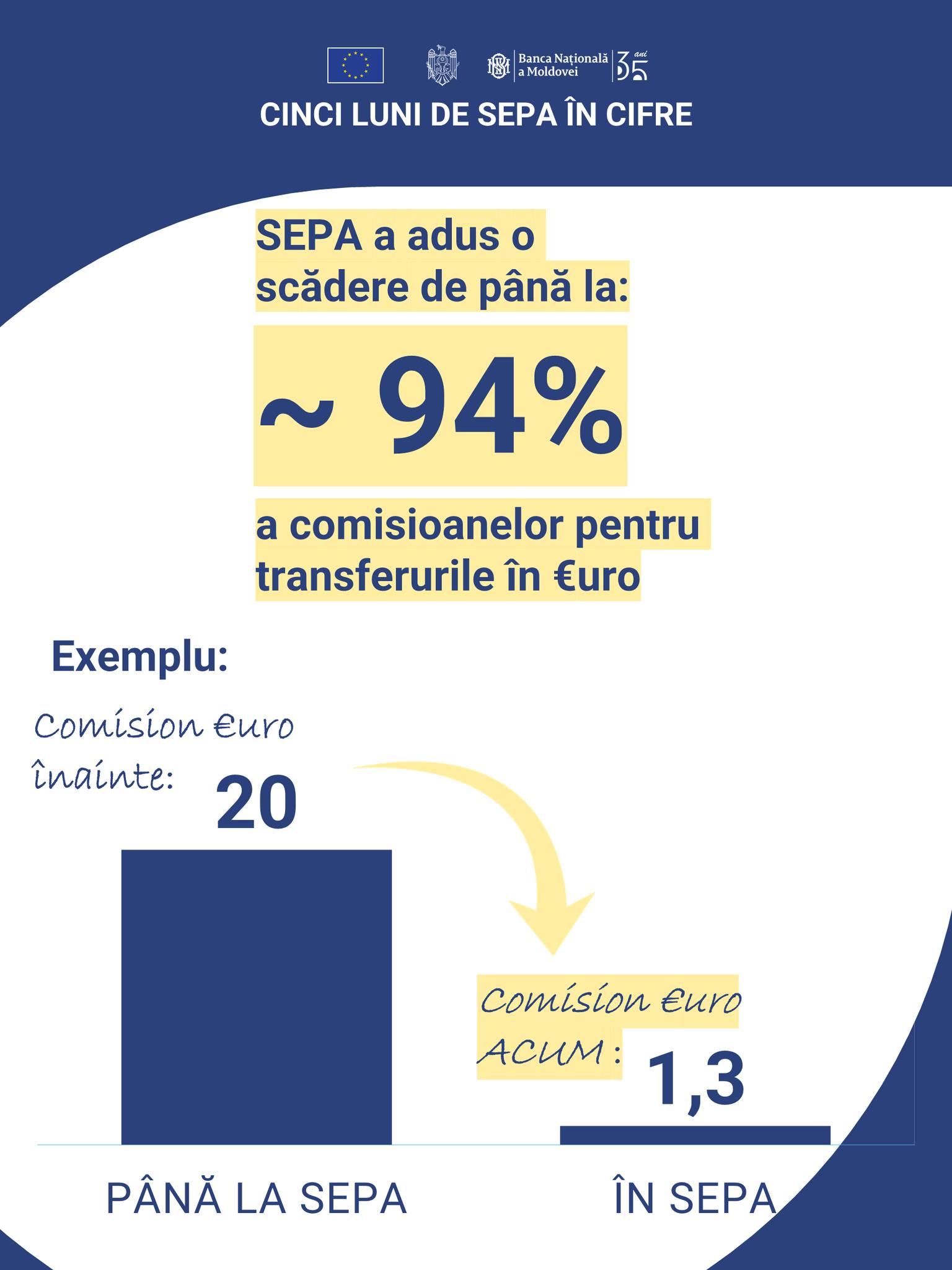
The NBM emphasized that the transition to SEPA has generated an unprecedented economic boost, optimizing capital flows and increasing the profit margins of local companies. As a result, costs have been radically reduced, with the average fee dropping from more than 20 euros to just 1.26 euros per transaction.

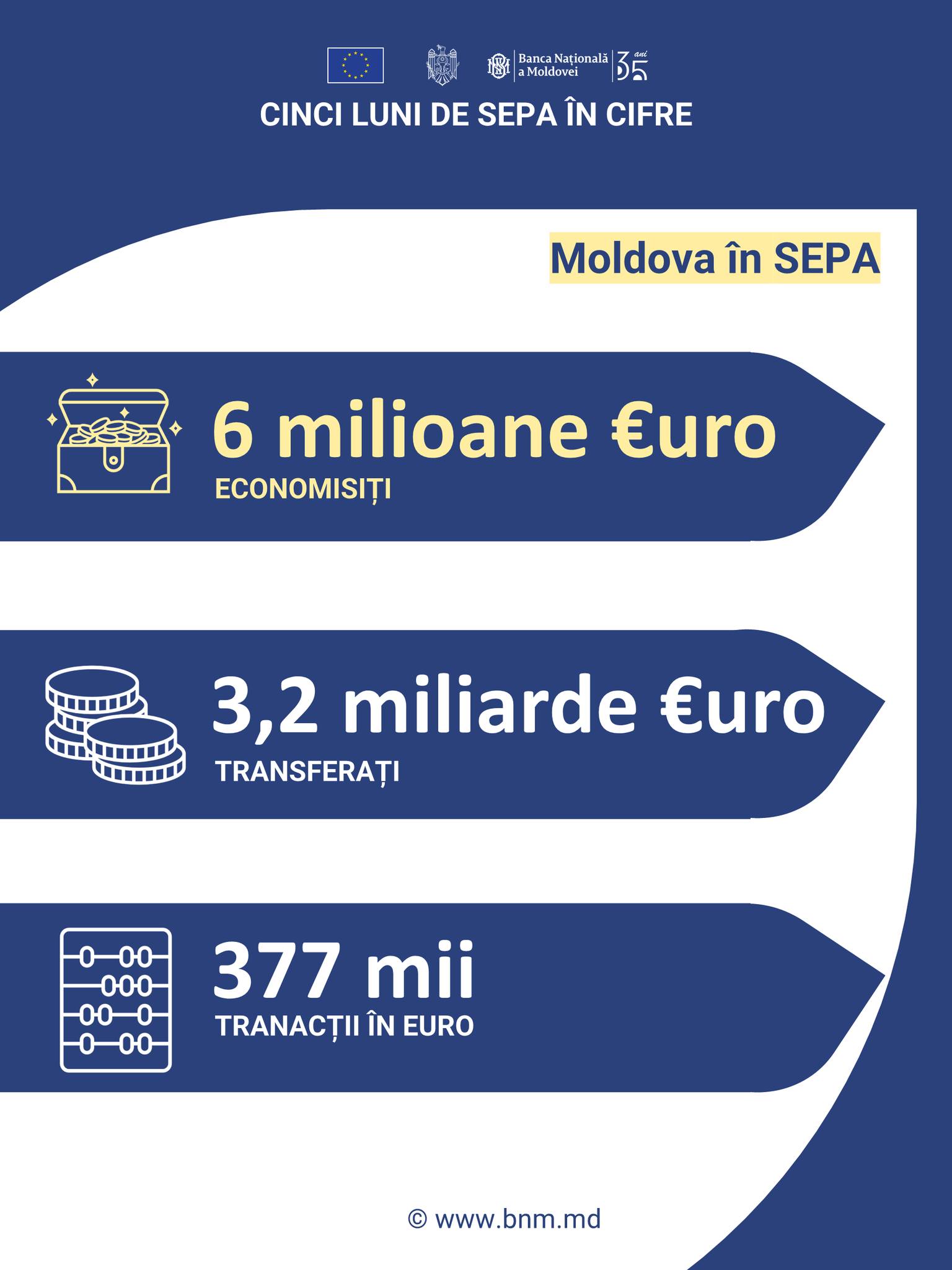
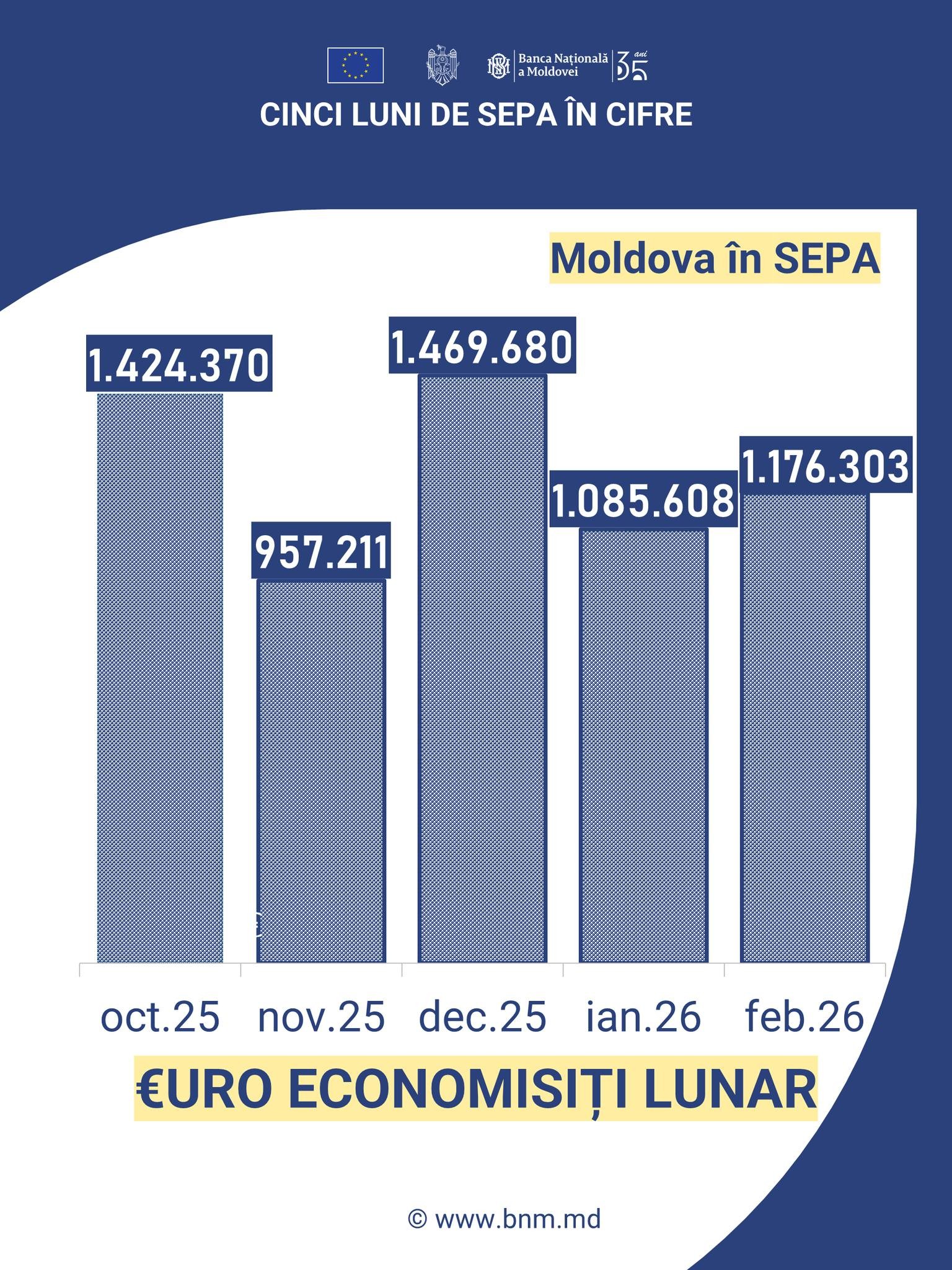
As a result, savings of millions have been achieved: the more than 377,000 transfers made since Moldova’s connection to SEPA would have cost the national economy 6.6 million euros via the traditional SWIFT system. Through SEPA, costs amounted to 474,000 euros, meaning that 6.11 million euros remained in Moldovans’ budgets, the NBM reports.

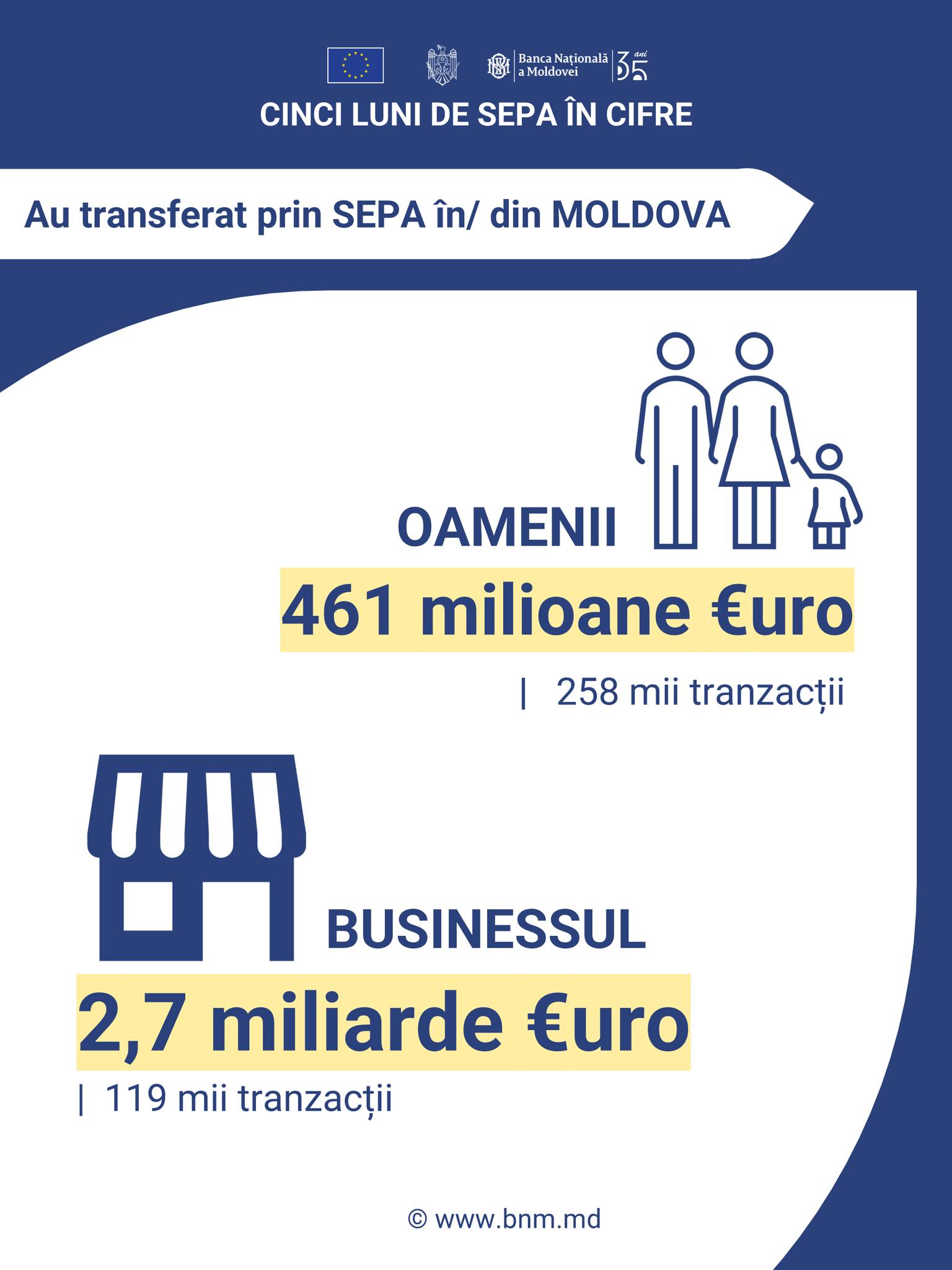
In addition, companies have carried out imports worth more than 1.7 billion euros via SEPA, benefiting from the speed and simplicity of European transactions.

NBM governor Anca Dragu stressed that integration into SEPA shows that Moldova can advance rapidly when there is vision, cooperation, and trust. It is an important step toward a more connected, more competitive economy, more firmly anchored in the European space, the Governor said.


“Every euro saved becomes a resource for education, for the well-being of families, or for harnessing a local business. SEPA demonstrates that the Republic of Moldova can be competitive, connected, and credible in its relationship with international partners. Integration into SEPA strengthens the irreversible rapprochement with the European economic area. For the National Bank of Moldova, SEPA is not just the achievement of a technical objective, but a firm commitment that the benefits of European integration will be felt directly by people and by the economy,” said Anca Dragu.


SEPA (Single Euro Payments Area) is the European framework that enables euro transfers between payment systems in participating countries under the same conditions of cost, security, and processing time, regardless of borders. SEPA brings together all European Union member states, as well as the United Kingdom, the countries of the European Economic Area, Switzerland, Andorra, Monaco, San Marino and Vatican City.
 Facebook
 Instagram
 X/Twitter
 Telegram
Moldova to receive 150 million euros to modernize strategic roads
Moldovan energy minister says every leu invested in energy efficiency generates significant economic impact
Energy compensations to be maintained in next cold season
Agriculture Minister after farmers’ protest: I will continue to focus on dialogue to identify solutions to all demands
Fuel prices drop: diesel falls below 29 lei
VIDEO // State introduces new incentives for green energy
Energy cooperation between Moldova and Romania discussed at conference in Chișinău
PHOTO // Investment opportunities of Moldova presented at Economic Diplomatic Club Bucharest; Moldovan ambassador to Romania says Moldova stays open to investments
Romania accelerates strategic Vulcanesti–Chisinau project: “A pillar of Moldova’s energy security and European future”
Moldova to host first edition of International Exhibition, China Expo Auto, Mobility and Agrotech
Agreement signed in Chisinau; Moldova, Iceland to operate direct flights
VIDEO // Over 70% of Moldova's electricity consumption covered by renewable sources; Energy minister: “Less dependence on imports and greater security for citizens”
Governor of National Bank of Moldova says country's economy to continue to grow in 2026, inflation stays major challenge
PHOTO // Moldova to participate in China International Import Expo
Prosecutors' vetting continues in Moldova: 70 files completed, 42 prosecutors pass evaluation
Moldova, Turkey seek to expand joint projects in culture, tourism
Natural gas transit tariff on route to Ukraine to be cut by 90 percent; Moldovan energy minister: “It will make the route more economically feasible”
European Commissioner for Enlargement expected in Chisinau, to advance EU accession reforms, boost investments; visit's agenda
European Parliament Vice-President calls for launch of political negotiations, opening of all clusters with Moldova
Moldova ranks third in Europe for short-term tourist accommodations' affordability
VIDEO // Moldovan deputy PM for European integration says Moldova ready to open EU accession negotiations
 National Bank of Moldova
European Commissioner for Enlargement to pay visit to Chisinau
Moldova completed clearing former Republican Stadium site and moving to transfer it to U.S. Government
Subsidizing agriculture in next 5 years: Greater competitiveness, climate resilience, added value and rural development
Home appliances that use less energy, even when switched off – Government aligns national requirements with European standards
Government to fund 30 projects in localities from Security Zone through country reintegration program for 2026

Moldova completed clearing former Republican Stadium site and moving to transfer it to U.S. Government
CNMC director after Tuesday’s heavy rains: There are no major risks
Record number of registrations for Moldova – EU investment conference
Subsidizing agriculture in next 5 years: Greater competitiveness, climate resilience, added value and rural development
EBRD to provide additional financing for rehabilitation of Chișinău–Leușeni road and Chișinău bypass
Home appliances that use less energy, even when switched off – Government aligns national requirements with European standards
Government to fund 30 projects in localities from Security Zone through country reintegration program for 2026
CEC launches web platform for district electoral councils
Cultural priorities for next 5 years: Expanding access to cultural services, modernizing infrastructure and increasing resources for heritage development
Government approves national reintegration activity program: 25 million lei for 30 projects to be implemented this year
Moldova completed clearing land for construction of new US Embassy
Ministry of Health to have new state secretary
Old-Calendar Orthodox Christians celebrate Saints Constantine and Helen
Moldova, EU strengthen partnership: 27 million euros for jobs, better social services, protection of vulnerable people
European Commissioner for Enlargement to pay visit to Moldova
Moldovan president has phone conversation with Swedish PM
Receive the latest news directly to your email

Receive the latest news directly to your email