
Subsidizing agriculture in next 5 years: Greater competitiveness, climate resilience, added value and rural development
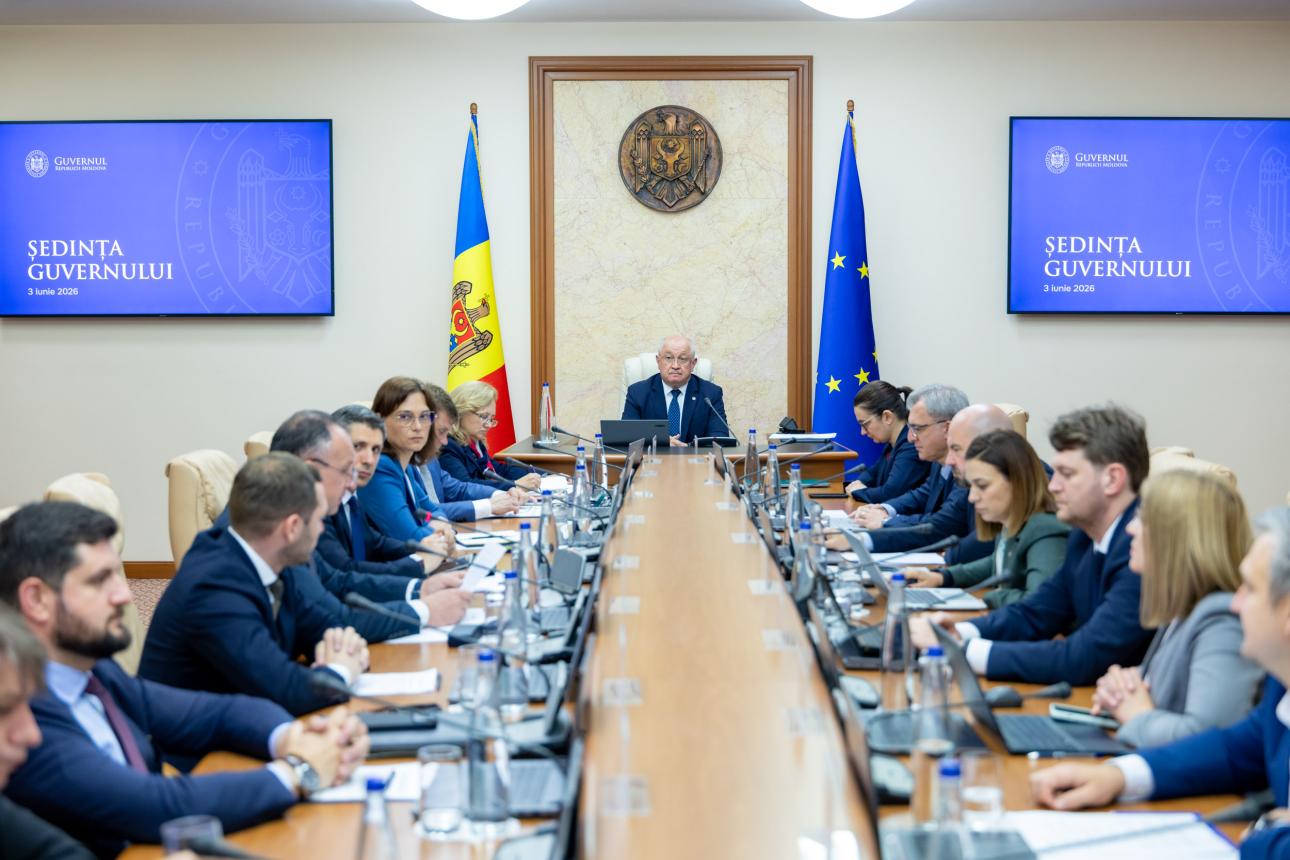
The Government has approved the Strategic Program for Agricultural Policy for 2026–2030, a document that sets out how subsidies will be granted to farmers and for the development of the agri-food sector over the next five years. The Program proposes a gradual increase in allocations for the sector, from 2.3 billion lei in 2026 to 5.3 billion lei in 2030, with a planned cumulative budget of 18.9 billion lei.

“This is a long-awaited program for farmers – we are moving from year-to-year planning to a clearer, more predictable and multiannual vision for the development of agriculture. Farmers need not only support, but also predictability. We want to back those investments that develop agriculture in the long term – modern farms, local processing, irrigation systems, efficient technologies and competitive rural businesses,” said Minister of Agriculture and Food Industry Ludmila Catlabuga.

The new approach provides for a comprehensive evaluation of investment projects before funding is granted. In this way, financial support will be directed to those projects that contribute the most to achieving the objectives of agricultural and rural development policy and represent the best cost–performance ratio.

Financial support is organized into three categories of eligible interventions:

The first category refers to coupled direct payments. These are support schemes linked to the actual production or to livestock numbers in certain sectors. Support may be granted for the production of seeds for cereal, legume, oilseed, industrial, forage and vegetable crops, sugar beet, vegetables and potatoes grown in open field, vegetables grown in protected areas, cow, sheep and goat milk, for beef, sheep, pork, poultry and rabbit meat, young cattle, sheep and goats, as well as for equines, forage crops and grain legumes.

The second category includes sectoral interventions. These refer to areas where more targeted support is needed along the production and marketing chain. The Program includes measures for activities in vineyards, for increasing the competitiveness of wine-making units, planning production and adapting it to market demand, technologies adapted to climate change, the development of the beekeeping sector and integrating producers into quality schemes.

The third category concerns rural development. This includes investments in the modernization and establishment of crop farms, the construction or modernization of livestock farms, contributions to the payment of insurance premiums, support for access to agricultural loans, organic farming, investments in irrigation and climate resilience, processing, conditioning and storage of agri-food products, cooperation and innovation, support for young and new farmers, support for small farmers and family farms, infrastructure related to agricultural holdings, diversification of economic activities in rural areas, LEADER, knowledge transfer, agricultural advisory services and modernization of the technical and material base for research and vocational training.

Financial support will be granted through the National Fund for the Development of Agriculture and Rural Areas, approved annually through the State Budget Law, with the possibility of attracting funds provided by development partners.

A new element is the integration of the Agricultural Knowledge and Innovation System (AKIS). Through this system, farmers will be able to receive practical support for more efficient management of their agricultural holdings. Advisory services will cover economic, technological, environmental and management aspects, including sustainable use of water and soil, proper application of plant protection products, nutrient management, adaptation to climate change and improving farm performance.

The Strategic Program for Agricultural Policy for 2026–2030 also establishes a monitoring system based on output, result and impact indicators. Each intervention will be analyzed annually, depending on the results obtained.

Between 2017 and 2025, the value of the National Fund for the Development of Agriculture and Rural Areas increased from 900 million lei to 1.9 billion lei, while the number of subsidy applications rose from 5,836 to 9,877. For 2026, the Subsidy Fund amounts to approximately 2.3 billion lei, of which about 628.8 million lei are related to the Growth Plan for the Republic of Moldova.
 Facebook
 Instagram
 X/Twitter
 Telegram
Moldovan head of state meets former president of Georgia, awards her Order of the Republic
Government simplifies recognition of study documents and qualifications obtained abroad
President discussed Moldova’s European path and expansion of bilateral cooperation with Austrian parliamentarians
2025 Budget implementation: Government invests in better public services – indexed pensions, expanded social support and access to more medical services
10 hospitals in Chișinău and Bălți to be renovated with EU support
Government approved measures to stabilize fuel market and unblock capacities in electricity networks
Moldovans working in Canada or Ukraine to be eligible for pensions
Head of State received credentials from several ambassadors
Energy security on agenda of Moldovan National Security Council's meeting
EU funds – concrete opportunities for business, investment and development in Moldova
Moldovan PM discusses with Slovakia’s Defence Minister
Head of State signed decree granting citizenship of the Republic of Moldova to Mr Traian Băsescu
Moldovan president summons meeting of National Security Council
Moldova's president signs decree withdrawing citizenship from five individuals
Alignment with EU labour standards: cross-border workers to be eligible for unemployment benefits
Moldova completed clearing former Republican Stadium site and moving to transfer it to U.S. Government
CNMC director after Tuesday’s heavy rains: There are no major risks
Record number of registrations for Moldova – EU investment conference
Subsidizing agriculture in next 5 years: Greater competitiveness, climate resilience, added value and rural development
EBRD to provide additional financing for rehabilitation of Chișinău–Leușeni road and Chișinău bypass
Home appliances that use less energy, even when switched off – Government aligns national requirements with European standards
 National Bank of Moldova
Moldova completed clearing former Republican Stadium site and moving to transfer it to U.S. Government
Home appliances that use less energy, even when switched off – Government aligns national requirements with European standards
Government to fund 30 projects in localities from Security Zone through country reintegration program for 2026
Cultural priorities for next 5 years: Expanding access to cultural services, modernizing infrastructure and increasing resources for heritage development
Moldovan president has phone conversation with Swedish PM

Government approves national reintegration activity program: 25 million lei for 30 projects to be implemented this year
Moldova completed clearing land for construction of new US Embassy
Ministry of Health to have new state secretary
Moldova, EU strengthen partnership: 27 million euros for jobs, better social services, protection of vulnerable people
European Commissioner for Enlargement to pay visit to Moldova
Moldovan president has phone conversation with Swedish PM
Moldovan deputy PM for European integration has talks with MEP
Subsidies worth 178 million lei for Moldova's farmers authorized in last May
Moldovan government's secretary general has meetings with European officials
Armenian exports meet EU standards, economy minister says amid Russian trade ban and diversification push
Moldova to establish National Erasmus+ Agency; EU provides 5 million euros in support for candidate countries
European Parliament supports Moldova in European integration process; MEP Siegfried Muresan: "We support the opening of accession negotiations across all clusters"
Russian Embassy’s chargé d’affaires summoned to Moldovan Foreign Affairs Ministry after drone incident in Galati, Romania
POLITICO: Moldova, Ukraine might start official EU accession talks in June
Moldovan president, after Russian attack on Ukraine, says more support for Ukraine, stronger pressure on Russia – both needed now
Seven Moldovan MPs to pay study visit to United States
Receive the latest news directly to your email

Receive the latest news directly to your email