
Home appliances that use less energy, even when switched off – Government aligns national requirements with European standards
The Government today approved amendments to the regulatory framework on ecodesign requirements for energy-related products, in line with the latest European Union standards. The changes target several categories of products frequently used by citizens and businesses: household tumble dryers, fans, local space heaters and electrical equipment in standby mode.

The new provisions will help reduce energy consumption, lower costs for consumers and promote more durable products that are easier to repair and have a reduced environmental impact.

Among the new requirements is the obligation for manufacturers and importers to comply with stricter standards on energy efficiency and performance for products placed on the market. As a result, consumers will benefit over time from equipment that uses less electricity, has a longer service life and generates lower operating costs.

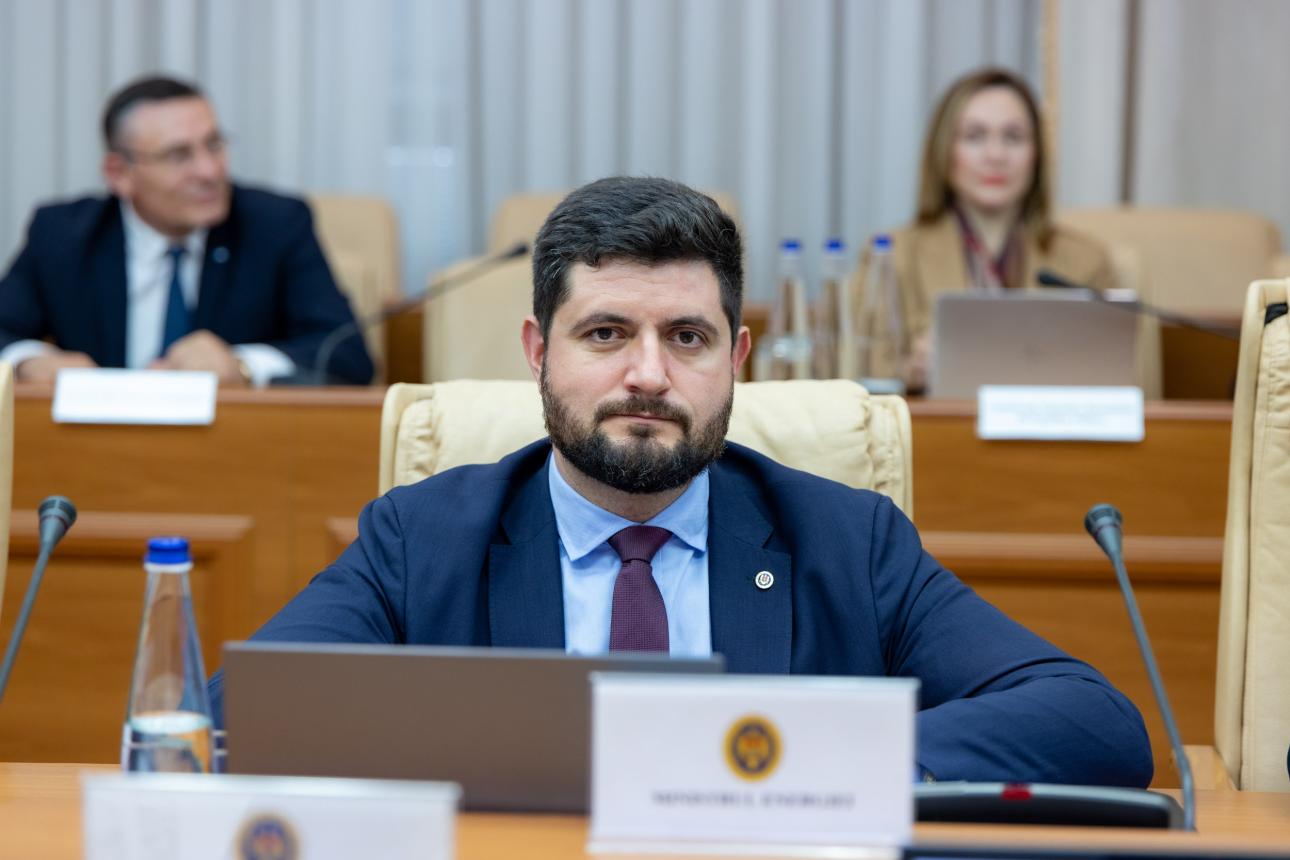
“In many homes there are invisible energy consumers – televisions, consoles, routers or other devices that continue to use electricity even when they appear to be switched off. This ‘phantom’ consumption adds up day by day and shows up on citizens’ bills. By applying European ecodesign standards, we ensure that new products placed on the market will use less energy, last longer and be easier to repair. It is one of the simplest ways to reduce household bills and strengthen the energy security of the Republic of Moldova,” said Minister of Energy Dorin Junghietu.

For example, a device that is permanently in standby mode consumes energy 24 hours a day, even if it is not being used. Each watt consumed continuously means approximately 9 kWh of energy per year. In addition, an old television can consume 5–10 W in standby mode, even when it appears to be switched off. A modern television, compliant with current standards, consumes less than 0.5 W in standby, and the difference can mean savings of up to 80 kWh per year for a single device. Thus, a household with 10–15 devices permanently plugged in can pay thousands of lei per year for energy that brings no real benefit to the family.

The residential sector is one of the largest energy consumers in the Republic of Moldova, accounting for 43% of total consumption. In this context, energy efficiency measures applied to equipment and appliances used daily in homes can generate energy savings of up to 32.76 GWh per year and emission reductions of 16,620 tons of CO2 equivalent per year at national level.

The decision transposes into national legislation the latest European regulations on ecodesign and represents a further step in the process of integrating the Republic of Moldova into the European energy market and implementing the commitments undertaken under the Energy Community.
 Facebook
 Instagram
 X/Twitter
 Telegram
Moldovan head of state meets former president of Georgia, awards her Order of the Republic
Government simplifies recognition of study documents and qualifications obtained abroad
President discussed Moldova’s European path and expansion of bilateral cooperation with Austrian parliamentarians
2025 Budget implementation: Government invests in better public services – indexed pensions, expanded social support and access to more medical services
10 hospitals in Chișinău and Bălți to be renovated with EU support
Government approved measures to stabilize fuel market and unblock capacities in electricity networks
Moldovans working in Canada or Ukraine to be eligible for pensions
Head of State received credentials from several ambassadors
Energy security on agenda of Moldovan National Security Council's meeting
EU funds – concrete opportunities for business, investment and development in Moldova
Moldovan PM discusses with Slovakia’s Defence Minister
Head of State signed decree granting citizenship of the Republic of Moldova to Mr Traian Băsescu
Moldovan president summons meeting of National Security Council
Moldova's president signs decree withdrawing citizenship from five individuals
Alignment with EU labour standards: cross-border workers to be eligible for unemployment benefits
Moldova completed clearing former Republican Stadium site and moving to transfer it to U.S. Government
CNMC director after Tuesday’s heavy rains: There are no major risks
Record number of registrations for Moldova – EU investment conference
Subsidizing agriculture in next 5 years: Greater competitiveness, climate resilience, added value and rural development
EBRD to provide additional financing for rehabilitation of Chișinău–Leușeni road and Chișinău bypass
Home appliances that use less energy, even when switched off – Government aligns national requirements with European standards
 National Bank of Moldova
Moldova completed clearing former Republican Stadium site and moving to transfer it to U.S. Government
Subsidizing agriculture in next 5 years: Greater competitiveness, climate resilience, added value and rural development
Government to fund 30 projects in localities from Security Zone through country reintegration program for 2026
Cultural priorities for next 5 years: Expanding access to cultural services, modernizing infrastructure and increasing resources for heritage development
Moldovan president has phone conversation with Swedish PM

Government approves national reintegration activity program: 25 million lei for 30 projects to be implemented this year
Moldova completed clearing land for construction of new US Embassy
Ministry of Health to have new state secretary
Moldova, EU strengthen partnership: 27 million euros for jobs, better social services, protection of vulnerable people
European Commissioner for Enlargement to pay visit to Moldova
Moldovan president has phone conversation with Swedish PM
Moldovan deputy PM for European integration has talks with MEP
Subsidies worth 178 million lei for Moldova's farmers authorized in last May
Moldovan government's secretary general has meetings with European officials
Armenian exports meet EU standards, economy minister says amid Russian trade ban and diversification push
Moldova to establish National Erasmus+ Agency; EU provides 5 million euros in support for candidate countries
European Parliament supports Moldova in European integration process; MEP Siegfried Muresan: "We support the opening of accession negotiations across all clusters"
Russian Embassy’s chargé d’affaires summoned to Moldovan Foreign Affairs Ministry after drone incident in Galati, Romania
POLITICO: Moldova, Ukraine might start official EU accession talks in June
Moldovan president, after Russian attack on Ukraine, says more support for Ukraine, stronger pressure on Russia – both needed now
Seven Moldovan MPs to pay study visit to United States
Receive the latest news directly to your email

Receive the latest news directly to your email