
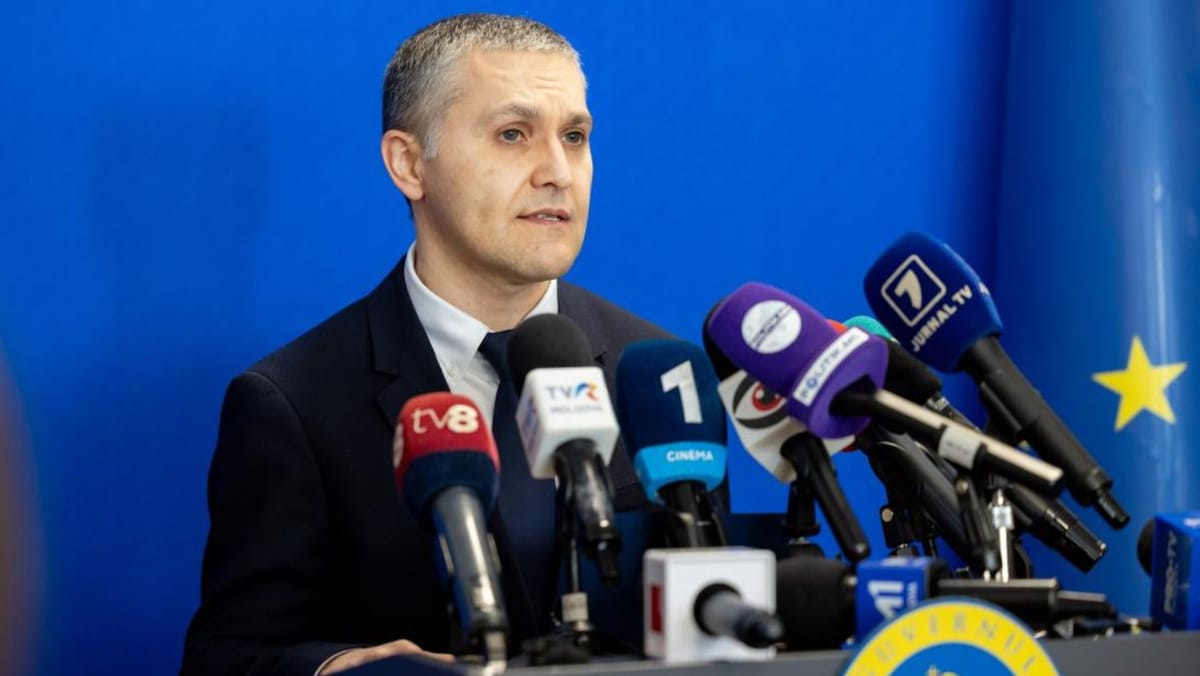
Serghei Diaconu on state of emergency: Any scheme in procurement procedures applied in crisis situations ruled out
Any procurement procedure applied in a crisis situation will be subject to oversight and will not allow schemes to emerge, director general of the National Crisis Management Center Serghei Diaconu said. The statement was made as authorities proposed declaring a state of emergency in the energy and water sectors for a period of 60 days.

Asked whether deviations from the standard procurement regime that could be applied in crisis situations might create opportunities for schemes, Serghei Diaconu ruled out such a scenario.


“Absolutely ruled out, because, as I have repeatedly said, in accordance with the amendments proposed and adopted regarding crisis management, we, as does the Government, are required whenever the National Crisis Management Center or the National Crisis Management Commission approves decisions to present them to the Government within no more than 72 hours, all decisions together with their full justification. Members of Parliament also have the right to intervene in these decisions,” Diaconu said.


According to him, measures adopted in crisis situations must remain within the limits of the Constitution and the law.


“Any scheme or deviation from norms that are constitutional or that would take place without oversight is ruled out. Therefore, no scheme or procedure that contravenes the Constitution, the interests of citizens or anything else is possible,” he said.


The Government approved the proposal to declare a state of emergency in the energy and water sectors nationwide for 60 days, starting on September 26. The proposal will be submitted to Parliament for consideration and approval. Authorities describe the measure as preventive, intended to enable rapid intervention in the event of disruptions to the supply of energy, fuel and water.

The states of alert previously declared in the two sectors expire on September 25. According to the authorities, the risks that led to their introduction persist, while the approaching cold season could increase pressure on the energy system and available resources.

This winter, approximately 59% of the Republic of Moldova’s electricity needs are expected to be covered through imports. During peak hours, the import requirement is estimated at 400–450 MW, of which approximately 360 MW represents guaranteed capacity.

Regarding natural gas, more than 90% of the requirements for the cold season have already been contracted. Authorities say there is currently no risk of insufficient gas volumes, but price developments on international markets pose financial risks and require additional resources for purchases and the replenishment of mandatory reserves.

The situation on the fuel market has improved in recent weeks. At the beginning of August, stocks covered approximately 3.5 days of consumption, and 109 stations reported shortages of certain products. Currently, stocks are estimated to cover around 10 days, while the number of stations reporting shortages has fallen to fewer than seven.

At the same time, authorities note that external risks persist amid disruptions in regional and international markets. The vulnerability of petroleum product supplies and the need to maintain sufficient reserves were previously among the reasons for introducing and extending alert measures in the energy sector.

Another risk is the severe hydrological deficit on the Dniester and Prut rivers. Low water levels could affect water intake capacity and, consequently, the supply of drinking water to the population.

Authorities emphasize that the risks in the two sectors are interconnected. Water intake, pumping and treatment infrastructure depends on electricity, while drought, in turn, reduces hydroelectric power production.

If approved by Parliament, the state of emergency will allow authorities, when necessary, to adopt temporary and proportionate measures to maintain energy and fuel reserves and imports, protect household consumers and critical infrastructure, and ensure continuity of water and energy supplies.

Prime Minister Vasile Tofan said that, in the period ahead, the Government must focus on measures that can reduce the impact of risks on the population, including by reviewing the support provided to households during the cold season.


“This winter, we will have to review the initial decision and increase compensation compared with the original plans. We must ensure that we cover a larger number of households. Last year, we covered 620,000 households and this year that figure will probably be even higher. We cannot control drought, war or fuel shortages, but there are things we can control. In this regard, the assistance provided to people by the Government becomes an absolute priority,” the prime minister said.


According to Tofan, the measures must be adopted in advance, before potential external risks turn into direct problems for the population. The authorities’ objective is to prevent shortages and disruptions and maintain the continuity of energy, heating, water and fuel supplies, as well as the operation of essential services.

The proposal to declare a state of emergency in the energy and water sectors will be submitted to Parliament for consideration and approval.
 Facebook
 Instagram
 X/Twitter
 Telegram
Grants worth over one million euros to develop Moldova’s innovation ecosystem with EU support
Convergence fund for Transnistrian region expected to finance infrastructure, education and public services
Application of national tax regime to goods from Transnistrian region enters new stage
Parliament votes in first reading on broad package of tax and customs amendments
Iași–Ungheni railway line to be rehabilitated and electrified
Moldovan Railways prepares new investments to strengthen railway connection to Giurgiulesti Port
Draft Fiscal Policy for 2027 presented in Parliament
Energocom purchased natural gas for August at €57.80/MWh
DOC // Moldova prepares national aviation sector for implementation of Single European Sky requirements
Higher tax exemptions, revised VAT and new excise duties: 2027 tax policy draft reaches Parliament
Cold-season assistance program in finalization stage
Government proposes measures to prepare for next cold season
Moldova Railways to be reorganized and transformed into joint-stock company
Moldovan finance minister explains key fiscal policy provisions: increased personal allowance, reduced value added tax on basic products, higher excise duties, vice tax
Crime victims to gain easier access to support and compensation
Government begins reorganization of central public administration to reduce expenditures
Serghei Diaconu on state of emergency: Any scheme in procurement procedures applied in crisis situations ruled out
Moldova and India expand cooperation: investments, exports and new agreements on bilateral agenda
Number of families eligible for energy compensation to increase
Chisinau’s Triumphal Arch to be registered as state public property
Government approves declaration of state of emergency in energy and hydrological sectors
 National Bank of Moldova
National railway infrastructure program for 2026–2030 approved by Government: Railway to be modernized and passenger transport expanded
Crime victims to gain easier access to support and compensation
Government begins reorganization of central public administration to reduce expenditures
Government proposes declaring state of emergency in energy and hydrological sectors for 60 days
Moldovan National Security Council approves string of measures to ensure continuous energy supply, prepare country for cold season

Foreign Ministry condemns two unauthorized overflights of Moldova’s airspace: Serious violation of sovereignty
Compensation for cold season to be provided throughout entire period; Moldovan president says government identifying additional resources
Moldovan National Security Council approves string of measures to ensure continuous energy supply, prepare country for cold season
Moldovan president explains why Moldova does not buy gas from Russia
VIDEO // Moldovan parliament to convene at extraordinary meeting to declare state of emergency in energy, hydrological sectors
Moldovan government to ask parliament to declare state of emergency in energy, hydrological sectors; PM: “We cannot afford to wait for a crisis to emerge”
Moldova's National Security Council orders measures to protect energy infrastructure from drones, cyberattacks
PHOTO // European integration can accelerate mobilization of green investments in Moldova; study presented in Montenegro
Moldovan president's message following meeting of National Security Council
Moldovan PM meets Irish Ambassador
Low water flows in Dniester; Moldovan environment minister announces measures to manage situation
VIDEO // Moldova's National Security Council: authorities to consider declaring state of emergency in energy, hydrological sectors
Deputy PM for reintegration has meeting with new Ambassador of Austria to Moldova
Natural gas price in European exchanges stays high, amid regional situation
Moldovan Education Ministry launches Young Researcher contest meant ethnic minorities' pupils
Europe at Your Home – dialogue on European path continues in Ungheni city of Moldova
Receive the latest news directly to your email

Receive the latest news directly to your email