
Moldovan National Security Council approves string of measures to ensure continuous energy supply, prepare country for cold season
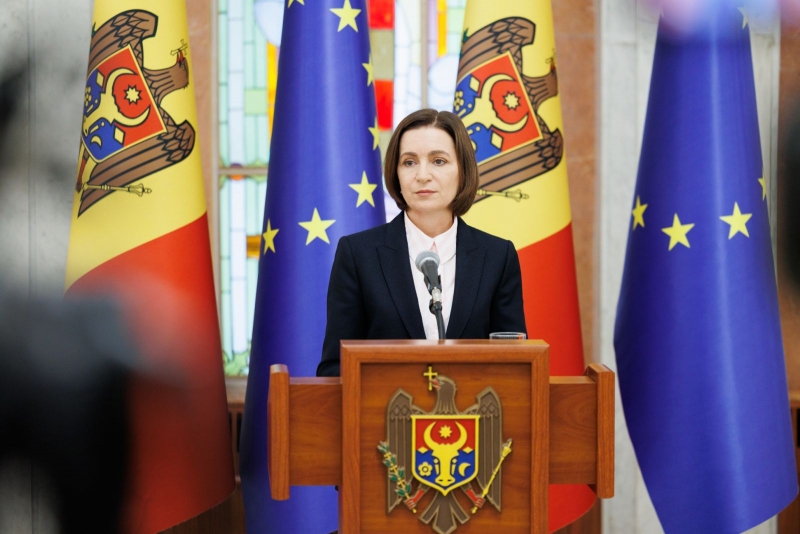
The situation on the international energy market, regional vulnerabilities, Moldova’s preparations for the 2026–2027 cold season and the measures needed to ensure the country’s uninterrupted supply of energy resources today were examined at a meeting of the National Security Council (NSC), chaired by President Maia Sandu.

This is the second time in recent months that the NSC has examined the situation in the energy sector. In the context of volatility on international markets and the risks triggered by developments in the Middle East, Council members analyzed possible scenarios and the degree of institutional preparedness for potential supply disruptions.

“We must be prepared for any scenario. The mobilization of all institutions is essential—the economy and citizens must be supplied with energy resources without interruption,” the Moldovan president said.

Presently, the benchmark price for natural gas on the European exchange has exceeded 83 euros per MWh, or approximately 1,000 dollars per 1,000 cubic meters, more than two and a half times higher than last year. Diesel quotations have exceeded 1,500 dollars per ton. Petrol and diesel have reached the highest prices ever recorded in the EU. The blockage of some supply routes from the Middle East, low underground storage levels in Europe and increased gas consumption for electricity generation are maintaining pressure on prices.

At the same time, NSC members examined the hydrological situation on the Dniester River. The water level in the Novodnistrovsk Reservoir reached a historic low, while the average inflow amounted to 23 m³/s during the period from September 1 to 20, compared with the 100–120 m³/s typical for this period.

Following the meeting, the National Security Council agreed on the need to declare a state of emergency in the energy and hydrological sectors, so that institutions have the necessary tools to respond rapidly in the event of major disruptions and ensure the country’s supply of electricity, natural gas and petroleum products.

The NSC decision provides for the activation of the coordination mechanism for the cold season, as well as the updating and testing of response mechanisms in the event of a shortage or major disruptions. The responsible institutions will prepare plans for various scenarios and maintain alternative capacities and routes for importing electricity, including the possibility of emergency use of the 110 kV interconnections with Romania and maximizing commercial capacity at the Moldova–Romania border.

Authorities will also monitor the establishment of the necessary natural gas reserves and prepare for the gradual creation of emergency stocks of oil products. In addition, reserves of equipment, materials and spare parts needed for rapid intervention in the event of breakdowns will be established.

“The government is to ensure the resources needed for the compensation mechanism to operate throughout the entire cold season. Compensation will take into account tariff developments and the vulnerability of each household,” the president said.

By November 1, the authorities will develop a guide for the public containing practical recommendations on reducing energy consumption, the actions to be taken in the event of a temporary interruption of energy supply and backup solutions that households can use.

Measures to strengthen the protection of critical energy infrastructure were also approved during the meeting. The responsible institutions will develop a phased plan to reinforce the protection of energy facilities and update plans for ensuring the continuity and restoration of infrastructure operations in the event of major breakdowns. Identified critical cyber vulnerabilities are to be addressed as a priority.

In the context of security risks, the protection of critical infrastructure against drones was also examined. In 2026, 39 airspace violations were recorded, compared with 17 in 2025. Moldova continues to develop its capabilities to detect and neutralize drones, including with the support of external partners. The Defence Ministry has recently got a 120-million-euro grant from the European Union to purchase a medium-range air defense system for detecting and destroying aerial targets.

At the same time, the ability of critical water supply and sewage facilities to operate during electricity outages will be assessed. Where necessary, autonomous energy sources and fuel reserves will be provided.

In addition, the authorities will identify solutions for rapidly alerting the public in crisis situations until the MD-Alert system is completed, including through the use of digital tools.

The responsible institutions are to inform the National Security Council, by December 15, 2026, about the actions taken to implement the decision.
 Facebook
 Instagram
 X/Twitter
 Telegram
Summary of Moldovan parliament's plenary meeting held on September 17, 2026
Roman Rosca takes over as chair of special parliamentary commission for monitoring and oversight of Moldova’s reintegration policy
Working of small farms in built-up areas of localities to be regulated by law in Moldova
Moldova accedes to convention in marine environmental protection sector
Moldovan deputy PM for reintegration has meeting with Sweden’s Ambassador
Moldovan PM meets Director of European Bank for Reconstruction and Development for Ukraine and Moldova
Voted in first reading: Railway of Moldova state enterprise to be reorganized by late 2026
Clear requirements for classification, labelling of chemical products in Moldova
Regulatory framework for extractive waste management harmonized with EU standards in Moldova
Moldovan parliament denounces agreement with Commonwealth of Independent States on interlibrary lending
Moldovan government creates single structure for implementing strategic infrastructure projects
Defence Staff institutionalized by law in Moldova
Moldovan parliament adopts measures to prevent phone scams, electronic communications fraud
Moldova's legislation establishes mechanism for authorizing operators holding emergency stocks of oil products
Moldovan president explains why Moldova does not buy gas from Russia
VIDEO // Moldovan parliament to convene at extraordinary meeting to declare state of emergency in energy, hydrological sectors
Moldovan government to ask parliament to declare state of emergency in energy, hydrological sectors; PM: “We cannot afford to wait for a crisis to emerge”
Moldova's National Security Council orders measures to protect energy infrastructure from drones, cyberattacks
Moldovan PM meets Irish Ambassador
Low water flows in Dniester; Moldovan environment minister announces measures to manage situation
VIDEO // Moldova's National Security Council: authorities to consider declaring state of emergency in energy, hydrological sectors
 National Bank of Moldova
Moldovan president's message following meeting of National Security Council
Moldovan PM meets Irish Ambassador
Deputy PM for reintegration has meeting with new Ambassador of Austria to Moldova
Europe at Your Home – dialogue on European path continues in Ungheni city of Moldova
Moldovan deputy PM for reintegration has meeting with members of Foreign Affairs, Defence and Security Committee of Czech Republic's Senate

Deputy PM for reintegration has meeting with new Ambassador of Austria to Moldova
Natural gas price in European exchanges stays high, amid regional situation
Moldovan Education Ministry launches Young Researcher contest meant ethnic minorities' pupils
Europe at Your Home – dialogue on European path continues in Ungheni city of Moldova
Moldovan deputy PM for reintegration has meeting with members of Foreign Affairs, Defence and Security Committee of Czech Republic's Senate
Moldovan parliament speaker says leadership seeks closest possible cooperation with Lithuania during its presidency of Council of EU
Documentary play to be presented on Moldovan parliament's square
Investing in government securities: Ministry of Finance launches new subscription round
VIDEO // Caligula, Ivan Franko Theatre’s production from Kyiv presented in Chișinău
Foreign Ministry condemns Russia’s organization of State Duma elections in Transnistrian region without consent of Chișinău’s constitutional authorities
Aircraft object illegally entered airspace of Moldova near Palanca
Three athletes from Moldova become beach wrestling world champions
PHOTO // Judges and prosecutors from Moldova trained on integrated environmental permits and liability for damage
Centre for Strategic Communication warns of propaganda following drone incidents
Parliament hosts visit by delegation of Senate of Czech Republic
Territorial Education Agencies to take over responsibilities of education directorates
Receive the latest news directly to your email

Receive the latest news directly to your email