
Parliament votes in first reading on broad package of tax and customs amendments
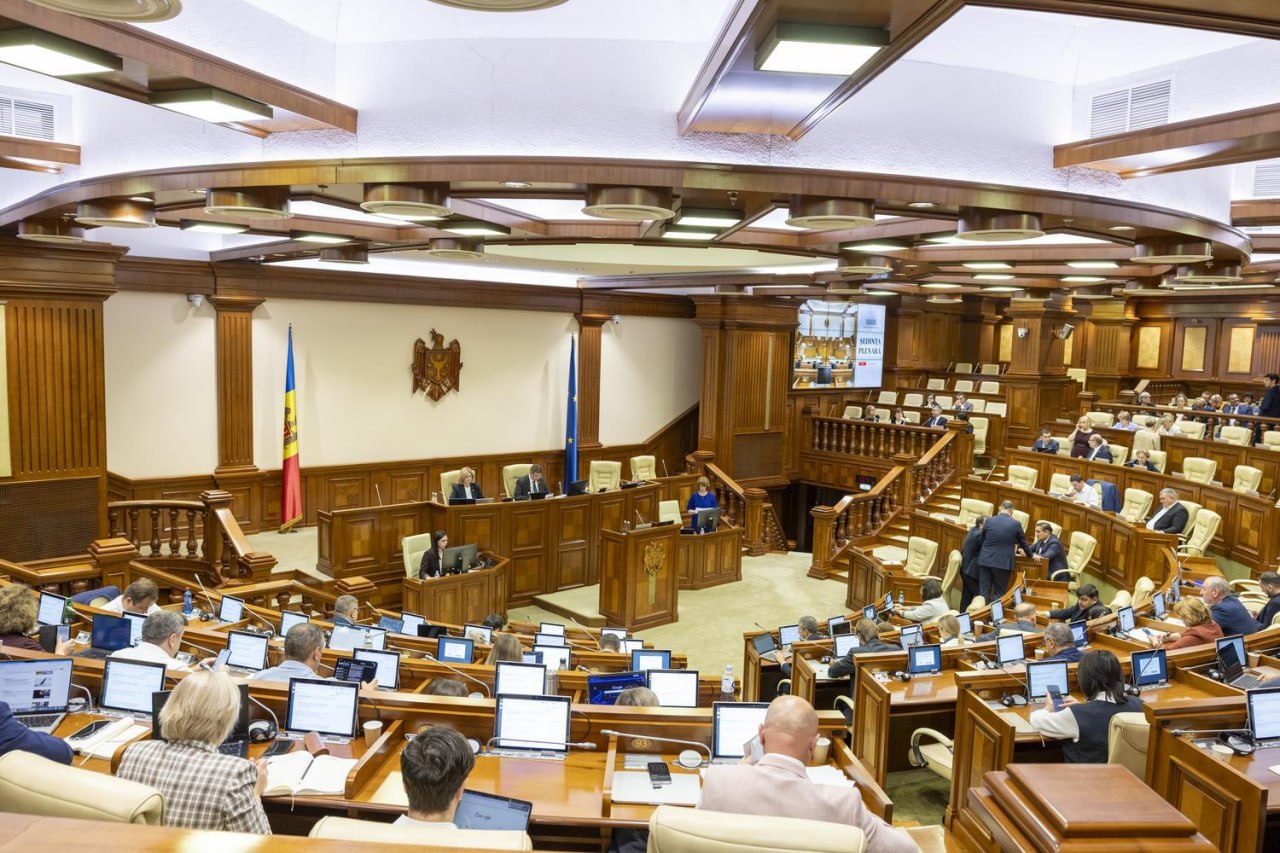
After nearly four hours of debate, Parliament voted today in the first reading on the bill concerning the simplification of tax and customs legislation. The document provides for an increase in the personal exemption, changes to VAT and excise duty rates, measures to stimulate investment, and new rules on income taxation. The opposition criticized the bill and announced that it would submit amendments for the second reading.

The document was presented to the plenary by Finance Minister Victoria Belous, who emphasized that through the proposed amendments, the authorities aim to support work, encourage investment, and tax harmful habits more heavily. Calculations show that the new tax policy will bring approximately 5.1 billion lei in additional revenue to the budget.


“In any state, the Republic of Moldova is no exception, state institutions, schools, hospitals, roads and infrastructure modernization are built on the basis of financial resources. In most countries, these financial resources come from taxes and duties. Accordingly, citizens’ contributions are reflected in the service quality and infrastructure modernization. Through the tax policy for 2027, we are trying to support work, support investment, and tax harmful habits more heavily, so that we can achieve a balanced increase in the tax burden,” Victoria Belous told the Parliament meeting.


The document presented by the Finance Minister was criticized by MP Ion Chicu, who accused the Government of preparing “the largest tax increase in the history of the Republic of Moldova.” According to him, the new tax policy will increase the tax burden for both companies and citizens, while the increase in tax exemption would not offset these effects.

Criticism also came from MP Vlad Batrîncea. He warned that increasing taxes, in the absence of sufficient measures to stimulate the economy, could lead to higher inflation, prices and poverty.


“The main problem is not only the level of debt in relation to GDP, but also the economy’s ability to generate revenues to service and repay these debts,” Batrîncea said.


The MP argued that the Republic of Moldova needs economic growth in order to cover budget expenditures and debt-servicing costs.


“Any additional revenue collected for the budget could be eroded by inflation. Even if, as a result of raising taxes, you manage to collect more money, this money supply will practically be destroyed by inflation. Inflation will destroy the purchasing power of money and wages,” Batrîncea said.


In response, Belous defended the bill’s provisions and explained that some of the criticized measures had been developed following consultations with the business community. The Finance Minister said that the 2027 tax policy aims to simplify the system, stimulate investment, and create a more predictable tax framework.

One of the topics discussed in the plenary was the introduction of VAT on goods imported through distance sales, worth up to 150 euros per parcel.

Victoria Belous said that the introduction of this tax had been requested by business representatives. The minister did not rule out a possible decline in the number of orders from abroad, but said that the authorities would monitor the situation to prevent orders from being used for illicit trade.

In addition to VAT, the bill provides for a management fee of 12 lei for each parcel. The Ministry of Finance says that the measure is aimed at eliminating the allegedly unjustified competitive advantage of cross-border e-commerce over local retailers.

During the debates, the Finance Minister said that in 2027, farmers would be reimbursed for the amount of the increase in the excise duty on diesel fuel.

Answering a question from MP Sergiu Stefanco, Victoria Belous explained that subsidies for farmers are paid from the taxes and duties collected for the budget and that, at present, the capacity of the national budget does not allow for support comparable to that provided in European Union member states.


“European countries have different subsidy practices and methods. Unfortunately, the budget’s capacity is what it is, and we must find a balance in supporting all sectors of the economy,” Belous said.


Another issue contested in the plenary was the removal of the tax benefit for private educational institutions. Victoria Belous argued that it was unfair for citizens and companies to pay taxes while private educational institutions benefited from tax incentives. According to the minister, eliminating this exemption would bring approximately 10 million lei in additional revenue to the budget.

Under the bill, private educational institutions would apply the standard 12% income tax rate. The same provision would apply to savings and loan associations, as well as trade union and employers’ organizations.

Key tax changes for 2027

One of the bill’s main provisions is an increase in the personal exemption from 29,700 to 40,020 lei per year. The authors say that the measure will reduce the tax burden on individuals.

For peasant farms, the income tax rate will increase from 7% to 12%, making it consistent with the rate applied to individual enterprises.

To stimulate investment, the zero tax rate on undistributed profits will be extended until 2029, while the eligibility threshold will increase from 100 million to 200 million lei.

The bill also provides for a 6% vice tax on participation in gambling and lotteries.

VAT changes

For HoReCa sector, the VAT rate will increase from 8% to 12%. The 12% rate will also apply to certain livestock, crop production, and horticultural products.

At the same time, the reduced 8% rate will be maintained for essential products, including bread, milk, certain fruits and vegetables, eggs, and poultry meat.

For household consumption of natural gas, starting April 1, 2027, an 8% VAT rate is proposed for consumption of up to 150 cubic meters per month per consumption point. Consumption exceeding the threshold will be taxed at the standard rate.

The VAT exemption with the right to deduct will also be maintained for the first 100 kWh of electricity per consumption point.

The excise duty on tobacco products is set to increase. Excise duties will be introduced for nicotine-free liquids, certain non-alcoholic beverages containing sugar or sweeteners, energy drinks, and pyrotechnic articles.

The Finance Minister argued that increases in excise duties on harmful products would primarily affect consumers of those products, rather than people who do not smoke, consume alcohol, or participate in gambling.

How much revenue the Government expects to collect

According to the Ministry of Finance, the direct positive budgetary impact of the measures is estimated at approximately 5.1 billion lei. Of this amount, 820 million lei is expected to come from income tax and the vice tax, 1.6 billion lei from VAT, and 2.7 billion lei from excise duties.

The bill will be examined in the second reading. Most provisions are proposed to enter into force on January 1, 2027.
 Facebook
 Instagram
 X/Twitter
 Telegram
Customs Service marks 35th anniversary of establishment
Deputy Prime Minister: Reintegration is no longer goal for future. It is goal being achieved today
Term of inquiry commission investigating state-owned enterprises extended
Moldovan parliament proposes new regime for strategic investments
Import of cereal, oilseed crops to be temporarily licensed in Moldova
Railway of Moldova state enterprise transports over 46,000 tons of export, transit goods in last August
Energocom company of Moldova says natural gas price continue to rise on European exchange
New Economy Minister optimistic about country’s financial situation
Government offers 4.5 billion lei to city halls choosing to merge, with three types of incentives
Energy compensation to be provided next cold season: Government allocates 550 million lei for 2026
Companies of Moldova can access business development grants: over 61 million lei available for September
Gradual standardization of tax regime for economic operators in Transnistrian region: Which categories of goods targeted starting 1 September
Local Product // Speaker urges citizens to buy local products
PHOTO // National record in Chișinău: Milina – largest sour cherry pie in Moldova
Speaker: Elections in Gagauzia must be fair
Moldovan troops participate in Strong Griffin 2026 exercise in Lithuania
Moldovan Railways prepares new investments to strengthen railway connection to Giurgiulesti Port
Draft Fiscal Policy for 2027 presented in Parliament
 National Bank of Moldova
Prime Minister discusses fiscal-budgetary priorities and economic reforms with IMF Resident Representative
Prime Minister attends opening of Meeting of Romanian National Theatres
Moldovan PM announces concept for deregulation, simplification of inspections
New ways to advance Moldova-Bulgaria relations on agenda of discussions between Moldovan foreign affairs minister and Bulgarian MPs
Moldovan PM has phone conversation with Dutch counterpart

Warning for Moldovans seeking work in Greece: some offers may conceal illegal activities
Moldovan lawmakers held minute of silence in memory of victims of 11 September 2001 attacks
Moldova to extradite person to India for first time; man accused of murder and drug trafficking
Moldovan Speaker to visit Budapest to persuade Hungarian authorities to support opening of EU negotiation clusters
Euronews: Chișinău advanced faster than Brussels’ assessment capacity, prompting European Commission to redirect resources to Moldova
Speaker on Local Public Administration Reform: Moldova’s new administrative map to have fewer than 10 regions
DOC // Moldova prepares national aviation sector for implementation of Single European Sky requirements
DOC // Law on Road Safety Assessment published in Official Journal
Deputy Prime Minister in Sofia: Bulgaria - reliable partner of Moldova and supporter of European path
Speaker on PAS participation in Gagauzia elections: For now, we have no decision
Authorities issue clarifications following Norwegian prime minister's statement about Ukrainian President's plane
Meeting of Romanian National Theatres opens in Chișinău
Speaker on Russia’s attack on Starokazacie, near Moldova’s border: It was deliberate. Civilian location was attacked
Moldovan foreign affairs minister has meeting with President of Bulgaria
VIDEO // Changes made to leadership of parliamentary commissions of Moldova
Moldovan PM announces simplified procedures for entrepreneurs, reform of inspections; about 80 permits might be eliminated or simplified
Receive the latest news directly to your email

Receive the latest news directly to your email