
VIDEO // Holocaust victims commemorated in Chisinau; Moldovan parliament speaker says lessons of past more relevant than ever in face of hatred, extremism
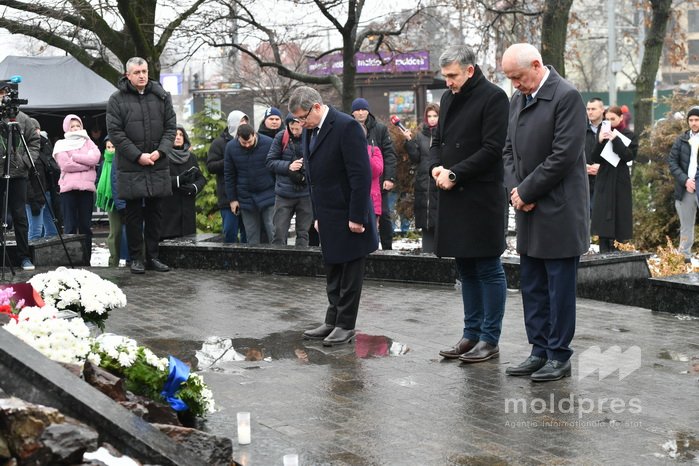
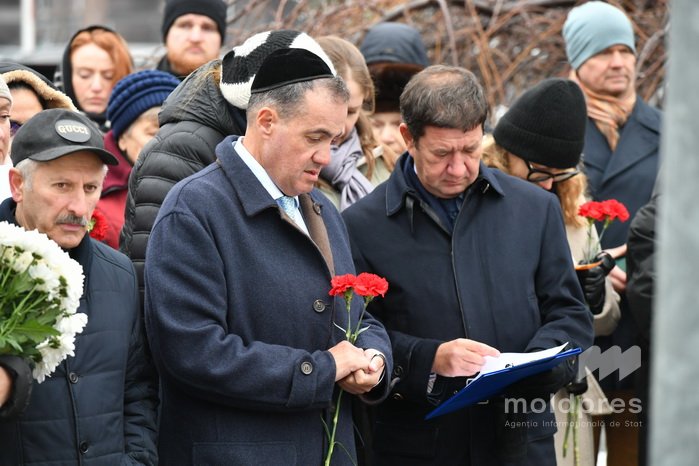
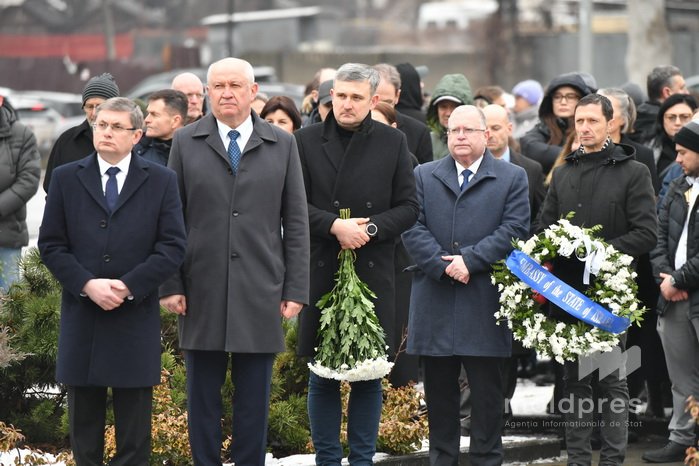
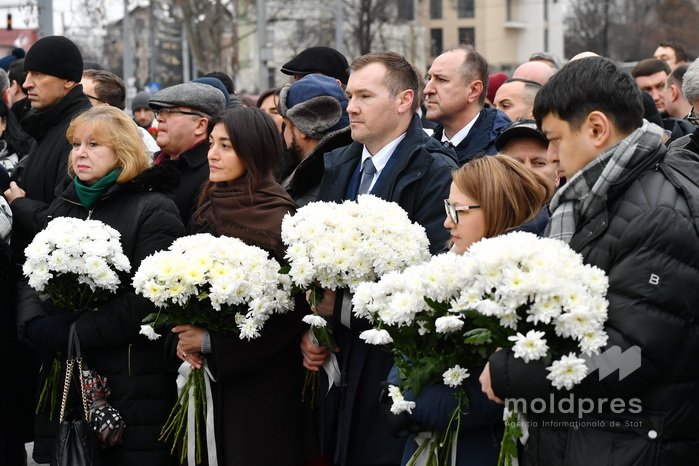
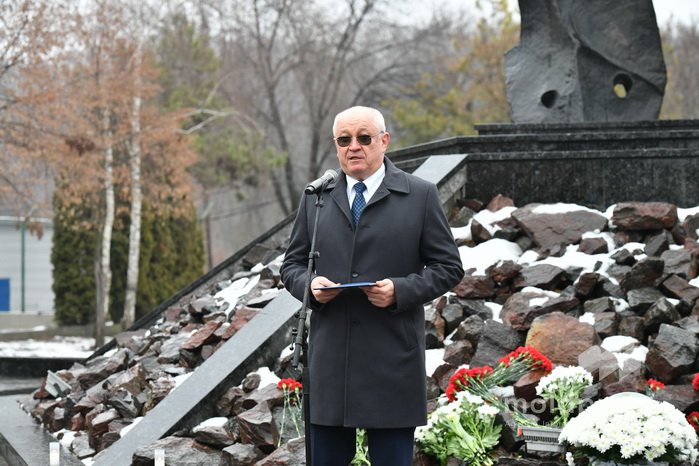
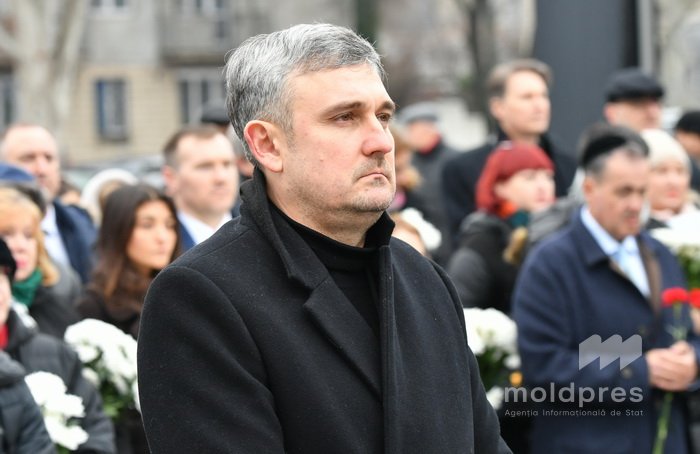
The victims of the Holocaust on January 27 were commemorated at a national rally held in Chisinau. Gathered at the Memorial to the Victims of Fascism, Parliament Speaker Igor Grosu, Prime Minister Alexandru Munteanu, Culture Minister Cristian Jardan, as well as officials and representatives of the Jewish and Roma communities stressed that forgetting and indifference can enable the repetition of tragedies that had deeply marked the history of this land.
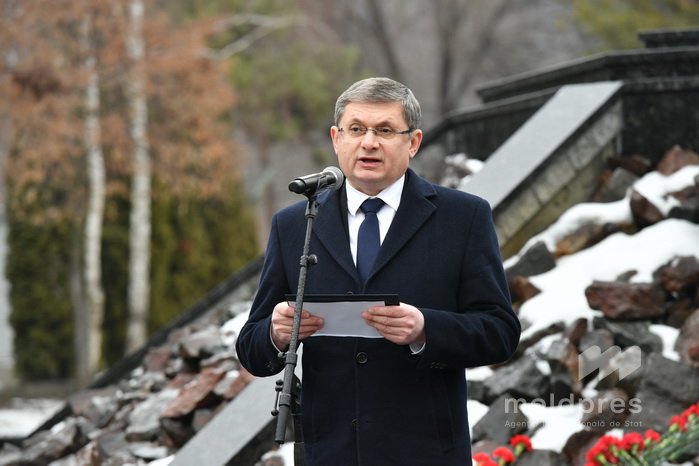
Parliament Speaker Igor Grosu emphasized the importance of honestly acknowledging the past and preserving collective memory, warning about the danger of forgetting and the resurgence of hatred and extremism in contemporary society.
“Commemorating the Holocaust is not just an act of memory, but an act of conscience. It obliges us to tell the truth about the past, to honor the victims and to acknowledge the suffering of those who were silenced. We are not speaking only of a tragedy of the past, but of a wound that has marked the history of this land and of the communities that lived here together. The Holocaust destroyed lives, families and entire communities, and on our territory, crimes were committed that cannot and must not be forgiven or forgotten. In a world in which we again see how hatred, extremism and disinformation seek to divide societies, the lessons of the Holocaust are more relevant than ever.
Keeping alive the memory of the victims means firmly opposing antisemitism, xenophobia, racism and any form of discrimination. It means building a society in which human dignity is respected and differences are not reasons for hatred, but for understanding.
We have the duty to pass on to future generations the truth about these crimes against humanity and to preserve the values of peace,” Parliament Speaker Igor Grosu said.
Prime Minister Alexandru Munteanu underlined that this tragedy remained an open wound of the humanity and a permanent warning about the dangers of indifference, hatred and disinformation.“The Holocaust is an open wound of humanity. We are here not only to remember; we are here to learn and to assume our responsibilities. One of the great responsibilities we all have is to learn from history, to protect our human dignity.
And unfortunately, today again, we live in a world marked by wars, propaganda, disinformation and violence. We do not have the right to be indifferent, we do not have the right to justify evil, we do not have the right to close our eyes. We must defend our rights: our right to be human, our right to be free. We must counter lies with truth and hatred with empathy, and honor those who chose the truth when it was most dangerous to do so,” said Prime Minister Alexandru Munteanu.
Culture Minister Cristian Jardan recalled, during the commemoration event, personal memories related to the Jewish community in the region where he grew up, passed on by his parents, speaking with respect about the kindness, professionalism and contribution of Jewish families to the life of the local community.“Today, all over the world, is a sad but extremely important day. We commemorate a tragedy that has marked all humanity. The Holocaust was an extremely difficult period also for the local population, profoundly affecting society and leaving wounds that are still felt today. My mother remembered with great pleasure and respect the family of teachers from the small town of Cornesti, Ilia and Țila Goldstein. And my father always told me about the extraordinary work of the doctor Moisei Vayber from Ungheni, the one who practically laid the foundations and built the entire medical system in the region and who saved, through his mastery and surgical skill, hundreds and thousands of people.
Therefore, culture has an essential role in keeping alive the memory of those times. The passage of time must not lead to oblivion. It is essential to speak openly about all the tragic pages of history, so that they are never repeated,” said Culture Minister Cristian Jardan.
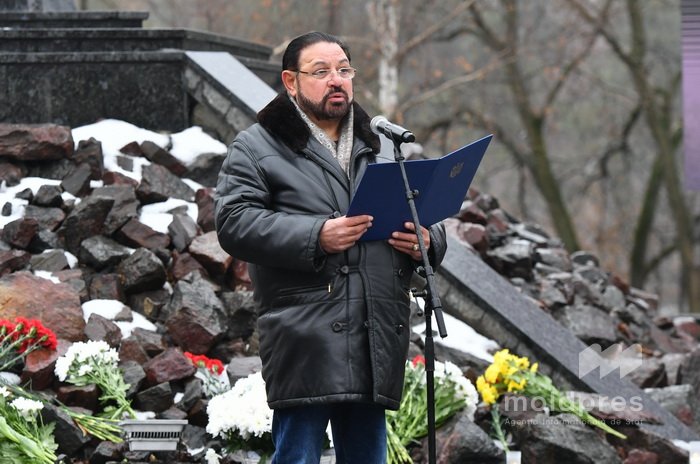
The moral responsibility of society to keep alive the memory of one of the most tragic chapters in history and to pass on the truth about these crimes to future generations was emphasized by President of the Jewish Community of Moldova Alexandr Bilinkis.“The Holocaust was not a distant or abstract event. The crimes took place here, in our cities and villages, on the streets we know, in the families that were part of our communities. This tragedy left deep scars in the history and collective memory of our society. We are here today, because this commemoration means responsibility. The responsibility to remember, to tell the truth about the past and to pass this memory on to the generations that come after us. We have the duty not to forget and to ensure that such crimes will never happen again,” Bilinkis said.
For his part, the head of the Roma Voice Coalition, Vasile Drangoi, highlighted the need for concrete actions and institutional cooperation in the commemoration process.“For the Roma community, this page of history represents not only the past, but also a moral responsibility towards memory, education and passing the truth on to the next generation. Authentic memory is not limited to words or symbolic ceremonies; it is built through concrete steps, through institutional cooperation and mutual respect. In the context, we welcome the openness shown by providing a space for a commemorative monument dedicated to the Roma,” he said.
At the national rally dedicated to the commemoration of the victims of the Holocaust, held in Chisinau, ambassadors accredited in Moldova, residents of the capital and community leaders took part and laid flowers at the Monument to the Victims of Fascism.
“Romania attaches particular importance to preserving the memory of the Holocaust and combating antisemitism, in a regional and international context marked by growing intolerance, hate speech and discrimination. The 27 January commemoration stays an essential landmark for assuming historical responsibility and for promoting the values of tolerance and solidarity,” reiterated Ambassador of Romania to Moldova Cristian‑Leon Turcanu.
“Today, in Moldova and all over the world, we remember and pay tribute to the six million Jews killed in the Holocaust by the Nazi regime. This tragedy is not distant history. It happened here too. The Jewish communities of Chisinau, Orhei, Balti and many other towns on the territory of today’s Republic of Moldova were destroyed. Entire neighborhoods disappeared. Entire communities were wiped out. Memory is our strongest defense. By keeping alive the memory of the victims, we ensure that education, respect for human rights and the fight against antisemitism and hatred become priorities for future generations,” stressed Ambassador of the European Union to Moldova Iwona Piórko.
The Memorial to the Victims of Fascism, located on Calea Orheiului Street in Chisinau, was built in 1982. The sculptural composition was created during 12 years by the artist Aurel David. It depicts two fists chained with barbed wire. The monument was erected exactly at the site of the massacre. An information panel recalls approximately 15,000 Jews – men, women and children – who perished in these crimes.
The International Holocaust Remembrance Day is annually marked on January 27. On this day in 1945, the prisoners of the Auschwitz camp were liberated. The Holocaust led to the deaths of millions of Jews, Roma and other persecuted groups. The United Nations established this date in 2005, and Moldova has officially commemorated it since 2015.


 Facebook
 Instagram
 X/Twitter
 Telegram
Higher pensions and social benefits: 6.84 percent indexation applied as of today
Over 1,800 hectares of forest to be planted in 15 districts along Dniester River, under World Bank–supported programme
Over 900,000 unique beneficiaries, representing 38% of population received reimbursed medicines through ePrescription system
Ben Gurion Airport in Tel Aviv remains closed until 16 April
Another Shahed-type drone detected while unauthorizedly flying over national airspace in Transnistrian segment
DOC // Official Journal publishes implementation mechanism for CEEPUS IV
Moldova’s airspace violated again: Shahed drone found in Dubăsari–Orhei area
Nicolae Testemitanu Medical University of Moldova launches new master’s programme, Health Promotion and Protection
Permanent teaching grades and less bureaucracy in schools
Prosecutor’s Office provides new details on investigation into death of Ludmila Vartic
Moldova, Romania to sign Agreement on extending coordinated control at Leuseni–Albita border crossing point
Unique trilingual work on medicinal plants, created in partnership with Nicolae Testemitanu Medical University of Moldova
Driving licenses issued in Moldova to be recognized in Ireland
Increased flow of passengers in Moldova on eve of Easter holidays; Customs Service head announces measures to streamline traffic
CNMC: Eenergy sector remains fragile, ending state of emergency requires caution
Foreign Ministry: We condemn violation of airspace. Such actions endanger citizens’ security
Support for export promotion: 16 business associations to receive 14.6 million lei through Bridge Export Program
Over 20 media projects to get funding from media subsidy fund
 National Bank of Moldova
President met with U.S. Senator
Proposals for improving efficiency of ministries discussed at roundtable
Prime Minister visited agricultural business in Unguri village, Ocnița district
Prime Minister visited rescuers and firefighters unit in Ocnița
Weekly meeting of Joint Control Commission of 2 April 2026

Simple motion on public policies implemented by Ministry of Labour and Social Protection failed
Proposals for improving efficiency of ministries discussed at roundtable
PHOTO GALLERY // Premiere at Mihai Eminescu National Theater: “Intrigue and Love,” directed by Alexandru Cozub
Moldova to sign social security agreements with Quebec (Canada), Albania, Croatia and Ireland
Around 622,000 vulnerable families receive energy compensation
Prime Minister visited agricultural business in Unguri village, Ocnița district
Minister of Labor and Social Protection: Deficit of state social insurance budget decreased to 3.6 billion lei in 2026
Prime Minister visited rescuers and firefighters unit in Ocnița
Eastern European plants used in Chinese medicine: book by Wang Yifeng launched in Chișinău
PHOTO GALLERY // About 160 companies gathered at Moldconstruct and Moldenergy exhibitions: innovation and cutting-edge technologies
Weekly meeting of Joint Control Commission of 2 April 2026
Energy and infrastructure – essential pillars in Ukraine’s reconstruction
Specialized international exhibitions Moldconstruct and Moldenergy open at Moldexpo
Deputy Prime Minister for Reintegration meets Ambassador of Romania to Moldova
Speaker about permanent withdrawal from CIS statutory bodies: Moldova has sovereign and independent right to decide which union to be part of
Moldovan government representatives to present to parliamentary factions actions taken during emergency state, proposals on future developments
Receive the latest news directly to your email

Receive the latest news directly to your email