
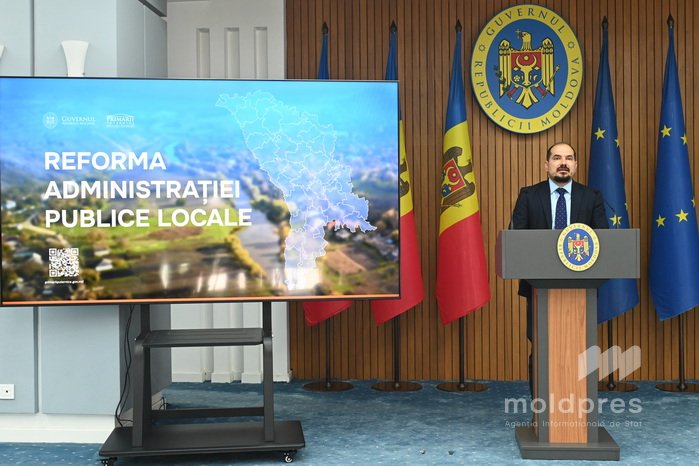
Decisions to initiate voluntary amalgamation approved by 85 percent of Moldova's mayoralties
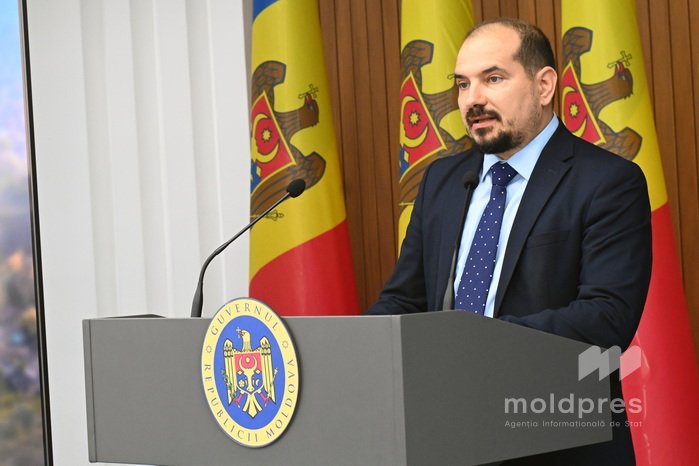
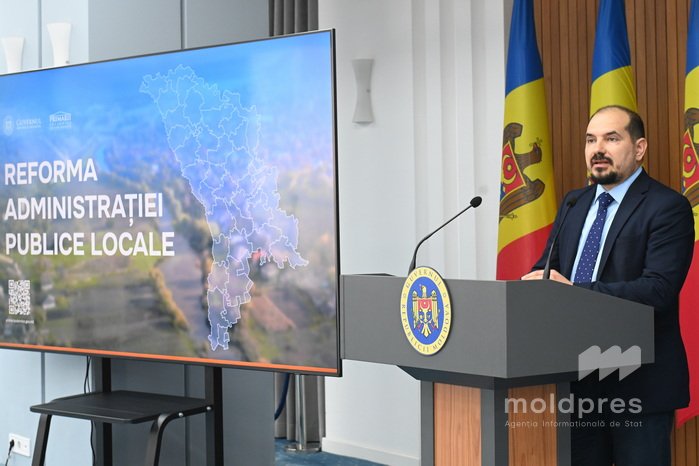
A share of 85 percent of the Moldova’s mayoralties have initiated the process of voluntary amalgamation, which means 761 mayoralties out of the existing 890, or 90 percent of mayoralties with a population of less than 3,000 inhabitants. For the mayoralties involved in the process, the next step is to draft development projects based on the incentives offered by the government, while for those that did not opt for this path, normative amalgamation will follow, starting in August.  Secretary General of the Government Alexei Buzu today made statements to this effect, in the context of the expiry, on July 31, of the deadline for approving the decision to initiate voluntary amalgamation.

At a today’s news conference, Secretary General of the Government Alexei Buzu said that the results obtained and the decisions to initiate the voluntary amalgamation process show that, although it is a difficult decision, local elected officials of Moldova, for the most part, have made a choice in favor of the people they represent and the development of their communities.

“In Moldova, we have 892 mayoralties. Two municipalities – the municipality of Chisinau and the municipality of Balti – cannot be part of the amalgamation process. So, we refer to 890 mayoralties. Of these, 761 municipalities, that is 85 percent of them, have adopted decisions to initiate the process. So, 85 percent of all mayoralties of Moldova have taken the decision to initiate it. This means about 90 percent of the mayoralties that have a population of less than 3,000 inhabitants. It is a clear sign that, although it is a difficult decision, local elected officials of Moldova, for the most part, have taken a decision in favor of the locality and the people they represent. And it is a very clear sign that the amalgamation process is understood and supported by local elected officials in our country,” said Alexei Buzu.

The official explained the need to launch the local public administration reform. According to him, this was indispensable for ensuring the development of localities and infrastructure, providing citizens with easier access to public services, and strengthening the capacity of local authorities to attract new investments.

According to Buzu, 8 out of 10 families of Moldova without access to water and sewerage live in mayoralties with a population of less than 3,000 inhabitants. In these localities, over the last 10 years, the population has decreased by one third, twice as much as the national average. At the same time, in mayoralties with fewer than 3,000 inhabitants, own revenues account for only 11 percent, practically three times lower than administrative costs.

“It is important to understand why we started this extremely complex but very, very necessary effort. Eight out of ten families of Moldova that do not have access to water and sewerage live in mayoralties with a population of less than 3,000 inhabitants. In these localities, over the last ten years, the population has decreased by one third, twice as much as the national average. This is our stake, this is our objective, this is the standard we are aligning with. We are making this complicated effort for our citizens and for our communities. In these localities, I have met phenomenal local elected officials and civil servants, extraordinary, dedicated, honest people who, year after year, make superhuman efforts to solve problems, to understand citizens and to be close to them. The problem is that, year after year, their own revenues and possibilities are getting smaller and smaller. In municipalities with fewer than 3,000 inhabitants, own revenues are only 11 percent, practically three times lower than administrative costs. And that is why, it is important to provide these people with strong mayoralties. Because only through strong municipalities can we offer our people quality services and adequate infrastructure,” Alexei Buzu said.

The secretary general of the government pointed out that, of the 761 municipalities that decided to initiate the amalgamation process, in 400 cases the final decisions have been approved, which represents about 45 percent of all mayoralties.

For these municipalities, the next stage follows.

“Starting next week, the government will begin working on the project based on the development incentives offered. In August, together with these local elected officials, these teams, these mixed groups, we will work on the development project based on those incentives. We will return with details next week,” said Alexei Buzu.

At the same time, another 200 mayoralties out of the 760 that initially decided in favor of amalgamation, or about 22 percent, are in the final stages of the process. They still have one month, until September 1, to approve the final decision.

“They have held consultations, developed a common vision, but have not yet adopted the final decision. The September 1 deadline is for these mayoralties, for these local elected officials. They have one more month to sit down at the table, finalize these discussions and make an assumed decision, certainly by consulting and listening to citizens. This end-of-August deadline is for these approximately 200 mayoralties that have gone through practically all the stages, but have not yet managed to take the final decision. We will help them, we will facilitate, we will sit through those long, sometimes endless negotiations, but we will stand by them, shoulder to shoulder, on the front line, while only they will decide; we will have a supporting role. We very much hope that a good part of these 200 mayoralties will take the final decision by the end of August,” stressed Alexei Buzu.

The official explained that, if these mayoralties fail to take a final decision by the end of August, the government will assume responsibility and launch the normative amalgamation process.

In addition, there are 161 municipalities that took the initial decision to amalgamate and started the process, but became stuck.

“We know these mayoralties and are trying to offer them certain solutions. Over the next month we will stand by them, but we believe that a good part of them will move into the normative amalgamation process. In some localities, including myself and my colleagues, we have tried to mediate, we have been there eight or nine times, so we have tried to find solutions and we did not succeed. That is why, on Wednesday after the government meeting, I said that we anticipate that we would have at least 200 municipalities that would go through this process,” added Alexei Buzu.

At the same time, a number of 60 mayoralties said from the outset that they do not wish to initiate the amalgamation process. “For them, the State Chancellery will take the initiative. In August, we will immediately move to the normative amalgamation process,” noted the secretary general of the government.

Thus, next week these municipalities will receive notifications on the launch of the normative amalgamation process.

“In the normative amalgamation process, the government assumes the decisions. We will consult people, we will consult citizens, we will see what their opinions are, and we start from the supreme interest of the citizens. But in this case, for the amalgamation process, the decision will already belong to the government and parliament, not to local elected officials. So, where local elected officials have abdicated their responsibility and did not wish to follow the example of the majority of local elected officials in the country, the government will assume and will take over the initiative, because we want to ensure that no citizen remains stuck in a small local administration, with a decreasing number of citizens and limited resources,” said Alexei Buzu.

The secretary general of the government emphasized that, in next autumn, the draft law describing the new administrative structure of the country is to be presented to parliament.

“We want this law to be voted in the autumn, so that we have one year at our disposal to carry out this transition and to implement and facilitate the next stages of the reform. Shortly we will also present details on the second level – competences, what the map will look like. The law we will present in the autumn will also refer to the second level,” the official said.

He added that, after the 2027 general local elections, no municipality in the Republic of Moldova will have a population of fewer than 3,000 inhabitants.

At the same time, Alexei Buzu stressed that the money from the development incentive provided by the government would be made available to localities at the beginning of 2027.

“We will work on the project proposals and, starting in 2027, we will make these resources available. But because they are significant resources, the money must be placed into a clear project: water, sanitation, roads, services. Thus, the funds for incentives – the second development incentive – will be made available in 2027, at the beginning of the year,” explained the secretary general of the government.

Alexei Buzu also reacted to cases reported in the public space that concern disagreements over the amalgamation process.

“We are undertaking this complicated effort because we want better services and better infrastructure for our citizens and our localities. Therefore, the interest, will and opinion of citizens will always come first. (...) Certainly, every case must be examined and the interest of citizens must always prevail. (...) Regarding criticism. We live in and are building a democratic society. It is important that every opposition party, representative of civil society, local elected official, citizen, media institution has an opinion, and we respect it. But we also believe that opinions should be substantiated. (...) In public, some criticize, but when the cameras are not on, including in localities, they go and support it; even their representatives support this process. But again, criticism is always beneficial, because even in such a very important and very complex process, it helps us identify where the problems are, where the loopholes are, and how we can improve,” argued Alexei Buzu.

The local public administration reform was launched by the government at the beginning of 2026 and aims to strengthen the administrative capacity of municipalities and improve public services. Localities that opt for voluntary amalgamation benefit from increased financial incentives, which will be invested in the development of localities and the consolidation of services for citizens.
 Facebook
 Instagram
 X/Twitter
 Telegram
Moldovan PM pays visit to Bucharest: meetings with Romania's president, prime minister, leadership of parliament
Moldovan MPs to convene at final plenary meeting of current session, with 33 drafts on agenda
Chisinau advocates replacing current peacekeeping format with civilian mission; Moldovan deputy PM for reintegration says this might contribute to country’s reintegration process
About 85 per cent of Moldova's mayoralties start voluntary amalgamation: normative amalgamation begins in next August
Chisinau proposes new 1+1 negotiations; deputy PM for reintegration says he receives evasive answers or refusals
Emilia Cebotari appointed deputy secretary general of Moldova's government
Moldova marks 32 years since adoption of Constitution; Moldovan president described Supreme Law as legal, moral benchmark that guarantees citizens' rights, protects dignity
Eurasia organization included in Registry of Extremist Organizations of Moldova
Protest held outside Moldovan parliament building against higher gas tariffs; parliament speaker demands solutions from opposition
Peculiarities of elections to People’s Assembly of Gagauzia to be included in Electoral Code
Moldovan parliament speaker says observance of Supreme Law means respect for democracy, citizens’ rights
Moldovan parliament speaker says elections for People’s Assembly of Gagauzia scheduled for November 15, 2026
Amendments to Moldova's Electoral Code on elections in Gagauzia consulted with representatives of People’s Assembly
Moldovan MPs to meet for final plenary meetings of spring session on July 29, 30; agenda includes 15 EU‑labelled draft laws
VIDEO // Available fuel stocks increase in Moldova; energy minister says measures adopted yield results
Decisions to initiate voluntary amalgamation approved by 85 percent of Moldova's mayoralties
VIDEO // MOLDPRES INTERVIEW // Moldovan parliament speaker: “We must persuade each member state that Moldova deserves to be in the European Union”
Moldova, Bavaria strengthen economic cooperation
VIDEO // Discharges from Novodnistrovsk Reservoir of Ukraine to be reduced in next two weeks over drought
Deadline to initiate voluntary amalgamation of Moldova's localities expires on July 31
Yellow fire danger warning Moldova till August 7
 National Bank of Moldova
Over 400 local councils adopted final decisions on voluntary amalgamation in Moldova
Moldova, Bavaria strengthen economic cooperation
Moldovan government proposes targeted measures to stop excessive remuneration practices
About 4,000 pupils, students from Transnistrian region integrated into Moldova's national education system
Coaches of Moldova to have professional day, marked annually on September 25

VIDEO // Moldova, German state of Bavaria to establish intergovernmental commission for economic cooperation
Moldovan government proposes targeted measures to stop excessive remuneration practices
Two years since launch of MIA Instant Payments in Moldova: over 31 million transactions processed, with total value of around 28.5 billion lei
Moldovan president says voluntary amalgamation comes with significant resources for local projects
VIDEO // Moldovan PM announces results of preliminary analysis "obscene salaries," main solutions proposed by government
Bavarian PM pledges support for Moldova’s European path: “Moldova must have a place in the European Union”
VIDEO // Investments in government securities exceed 1.3 billion lei via eVMS.md platform in Moldova
State-owned companies of Moldova increase profit more than fivefold in 2025; who tops ranking
Moldova's wrestler wins country’s first medal at U17 World Championships in Baku
VIDEO // New contingent of Moldova's National Army takes part in KFOR Mission in Kosovo
About 4,000 pupils, students from Transnistrian region integrated into Moldova's national education system
Over 70 candidates for 39 vacant judge positions in Moldova; ten new prosecutors proposed after graduating from National Justice institute
Moldovan parliament concludes spring–summer session; parliament speaker extraordinary meeting to be held on August 24
Coaches of Moldova to have professional day, marked annually on September 25
Processing of personal data for purpose of combating crime regulated by new law in Moldova
Moldova's legislation on supervision of investment firms harmonized with EU rules
Receive the latest news directly to your email

Receive the latest news directly to your email