
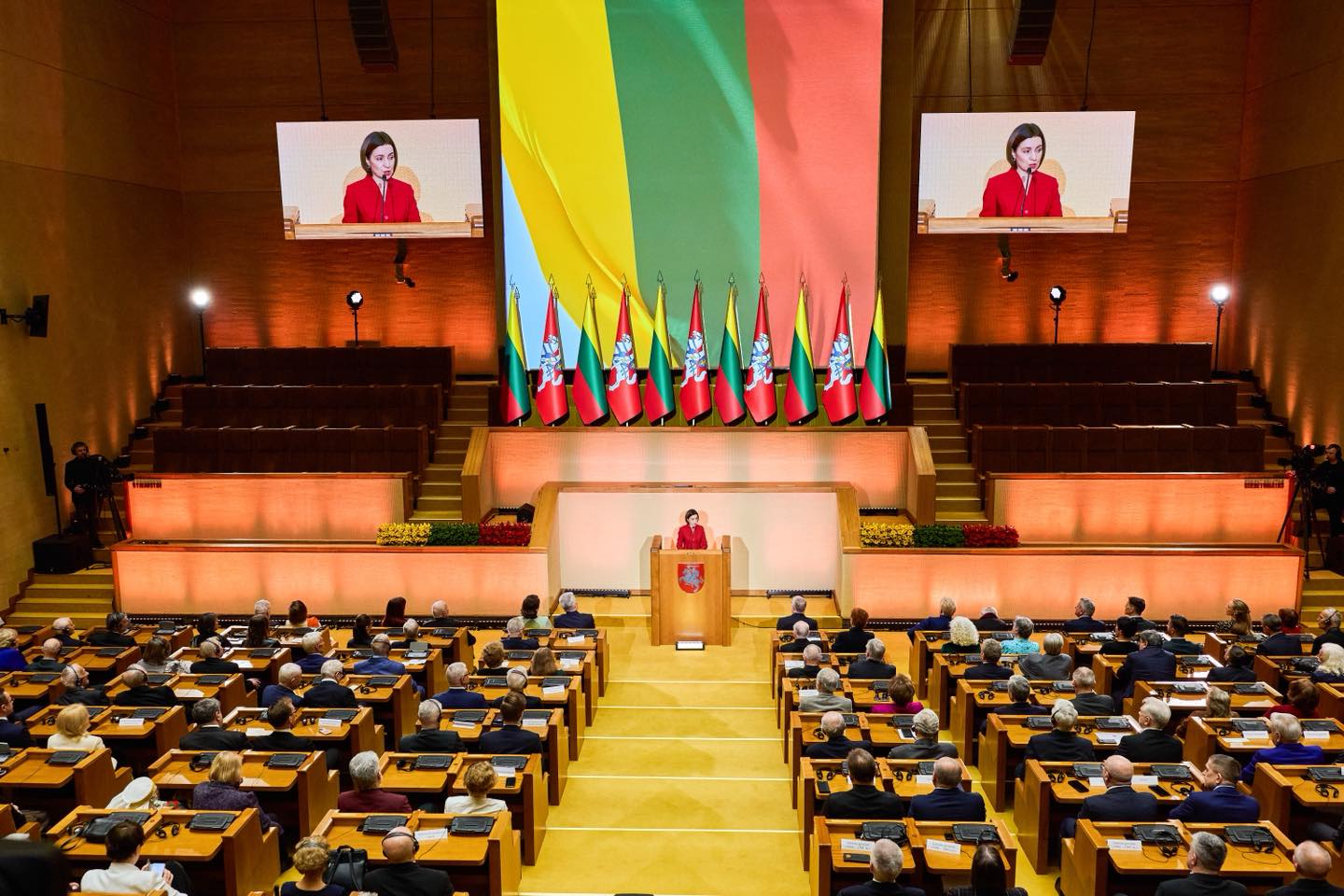
Head of State in Vilnius Parliament: Moldova counts on Lithuania’s voice in Brussels. Help us follow your path in family of free European nations
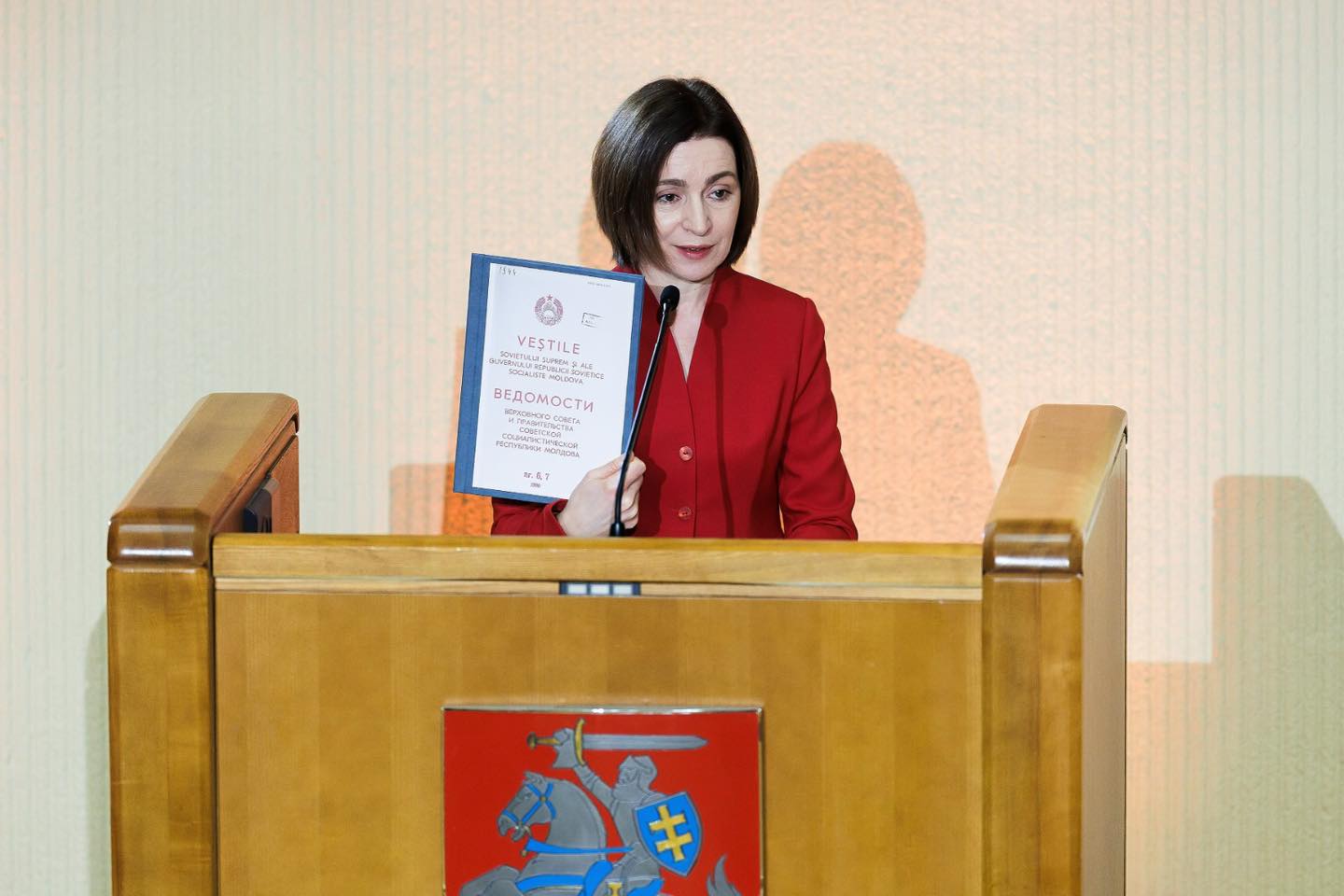
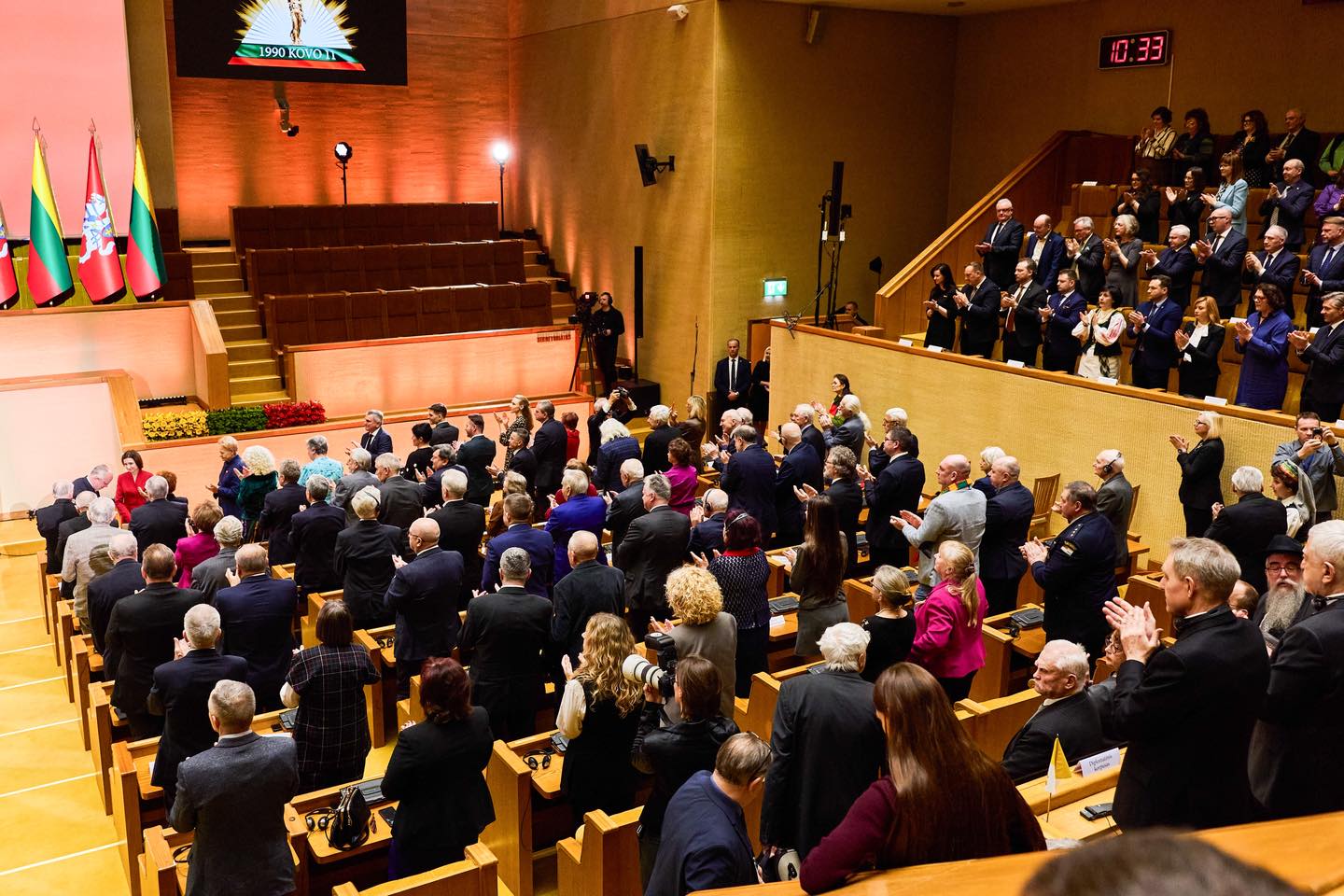
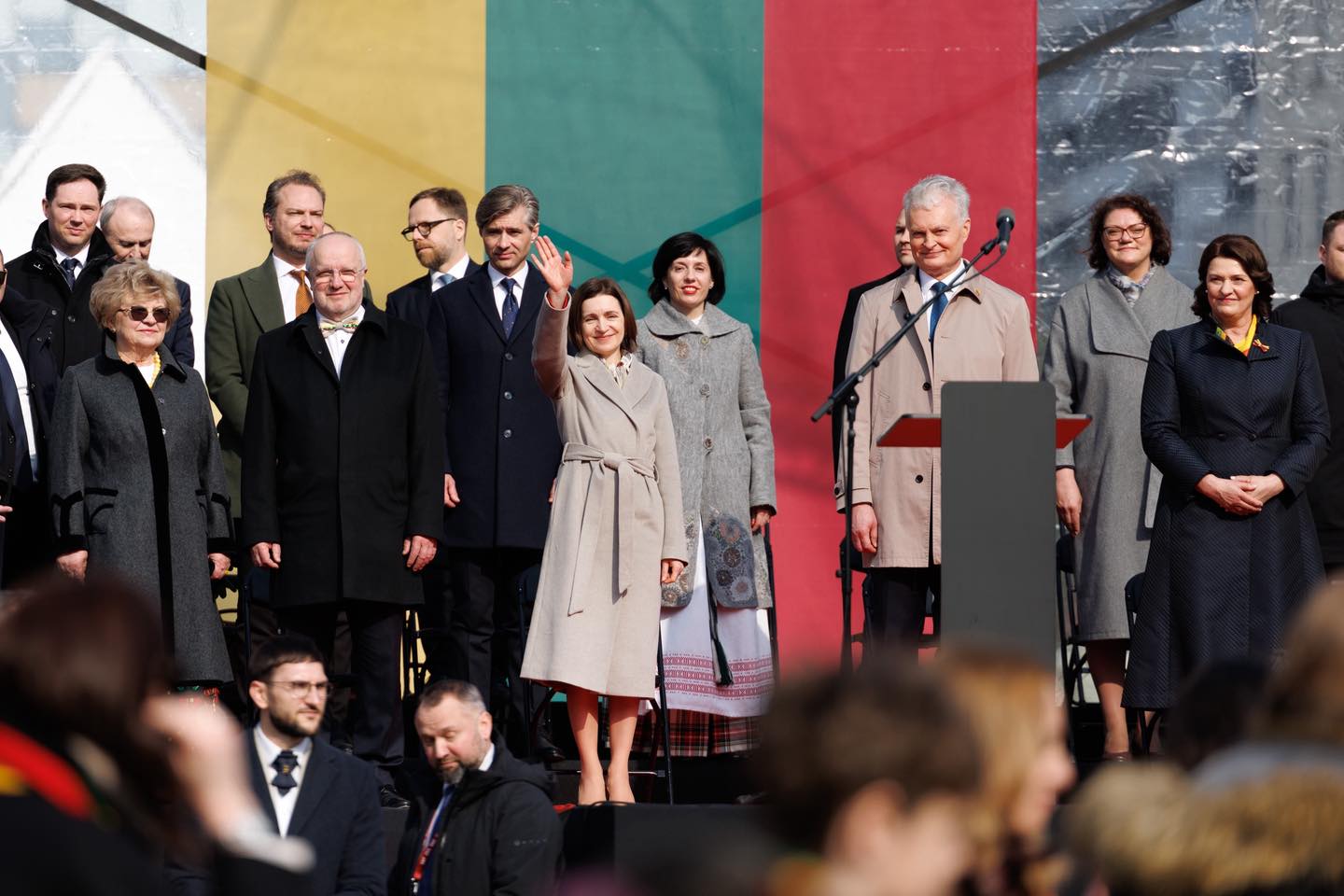
The Republic of Moldova will be safer inside the European Union, and the EU will be stronger with Moldova as part of it. Our country counts on Lithuania’s voice in Brussels. Help us follow your path in the family of free European nations. Head of State Maia Sandu conveyed the message in the Parliament in Vilnius on Independence Restoration Day.

Maia Sandu emphasized that 36 years ago, on 11 March 1990, Lithuania became free, and Moldova was the first country in the world to recognize this independence.


“Lithuania was the first country to break free from Moscow’s grip and served as a model for every people who dared to believe that what had been taken by force could be regained through will. The Kremlin called this act illegal. The Soviet Union imposed an economic blockade. The world watched, uncertain. And you held your ground. I am proud to say that Moldova was the first country in the world to recognize your independence. In May 1990, Moldova was not a sovereign state. We were part of the Soviet Union. We had no army, no international status, no protection whatsoever if Moscow had decided to punish us for our boldness. And yet, our legislature looked at what you had done and said: this is right, we stand with you. It was our own small act of courage. A gesture of solidarity made before we ourselves were free,” Maia Sandu stated.


The official spoke about Russia’s aggression against the states’ desire to free themselves from Kremlin’s influence—actions that resulted in invasions and loss of human lives.


“On 13 January 1991, Soviet troops stormed your Parliament building and the television tower in Vilnius. Unarmed civilians stood between the tanks and the building that defended your freedom. Fourteen people were killed. Hundreds were injured. You did not retreat. On 2 March 1992, separatist forces supported by Russia, backed by elements of Moscow’s 14th Army, launched an attack against Moldova’s constitutional order. That was the beginning of the war on the Nistru. We lost hundreds of lives. Part of our territory has remained occupied ever since, and Russian troops have been stationed there without our consent for more than thirty years. Different dates, different places — but the same aggressor, the same method, the same logic: that nations have no right to exist outside Moscow’s sphere. That our sovereignty is conditional. That our memory can be rewritten. And that is precisely why memory matters so much — as a form of resilience, as a form of national defence,” Maia Sandu said.


She also referred to Russia’s full-scale invasion of Ukraine, which began four years ago.


“Russia is not winning. That country’s economy is functioning in a war regime that it cannot sustain indefinitely. Its army has suffered losses on a scale that Moscow is desperately trying to conceal. And its international isolation, though imperfect, is real. Yet Ukraine is not only surviving, it is innovating. On the battlefield, it is redefining how modern wars are fought, with ingenuity and courage that have amazed military strategists around the world. In its cities, in its institutions, through its people, it shows something even more important: what it means to fight for values, for the idea that a free nation has the right to decide its own future. Every day that Ukraine holds the front line, it keeps Russia away from our borders, away from the rest of Europe — and it deserves all our support,” the President declared.


Maia Sandu also noted that Russia has invested massively in cognitive warfare and has flooded information spaces with falsehoods.


“We must communicate our message better — and say it with conviction. Ukraine’s resilience is extraordinary. Europe’s support, although sometimes slow, has been consistent. Sanctions are having an effect. Weapons help. There is much more to be done. But we must help Ukraine stand tall and we must ensure that Russia’s invasion fails — not only on the battlefield, but also in the minds of citizens across Europe. This battle for minds is not just about Ukraine. It is being fought in each of our democracies. Russia does not only want to win on the ground in Ukraine — it wants to win in our parliaments, in our newsrooms, in our elections,” Maia Sandu added.


The head of state explained that Lithuania, like Moldova, has understood Russia’s nature, and that Europe needs this shared clarity.


“In the face of an aggressive empire, Europe must be the place where people matter, where sovereignty is respected, and where nations defend each other. Lithuania has shown what this means in practice — by building its own defence, contributing to collective defence, investing as much as needed. This is the standard to which Europe must aspire. Your country has been among the most consistent voices in support of Ukraine — in Vilnius, in Kyiv, in Brussels and across the Ocean. You have not hesitated. And Moldova is grateful to you, because supporting Ukraine means supporting Moldova,” Maia Sandu remarked.


She added that Russia has been waging a hybrid war against the Republic of Moldova for years — by financing opposition parties, using energy as a weapon, orchestrating disinformation campaigns, attempting to buy votes, and trying to create chaos.


“We have fought back. We won a referendum to anchor EU accession in our Constitution. We won the presidential elections. We won the parliamentary elections. Our citizens, despite all the pressure, chose Europe. Moldova’s accession to the EU is not just a matter of development or aspiration. It is a matter of security — for us and for Europe. Moldova has made its choice. In 2024, our citizens voted in a referendum — under enormous Russian pressure, with the fear of war, with unprecedented electoral interference — and they said yes to Europe. Moldova is doing its homework. We have eliminated our dependence on Russian gas, going from 100% to 0% in just three years. We are reforming the judiciary. We are fighting corruption. We are aligning every area of public life with EU standards. The European Commission’s reports have acknowledged this. My appeal — spoken openly, in this Parliament, on this anniversary day: a stable and integrated Eastern Europe is not only the security of today; it is the foundation of tomorrow’s peace. That is why the enlargement of the European Union cannot wait. Lithuania’s voice carries weight. We continue to count on it — in Brussels, in the European Council, in every room where our future is being discussed. In May 1990, the parliament of a country that was not yet free looked at what you had done and said: we see you, we stand with you, your freedom is legitimate. Now it is Moldova that is seeking its place in the family of free European nations. You set an example for us in 1990. I ask you, please help us follow it now,” Maia Sandu concluded.


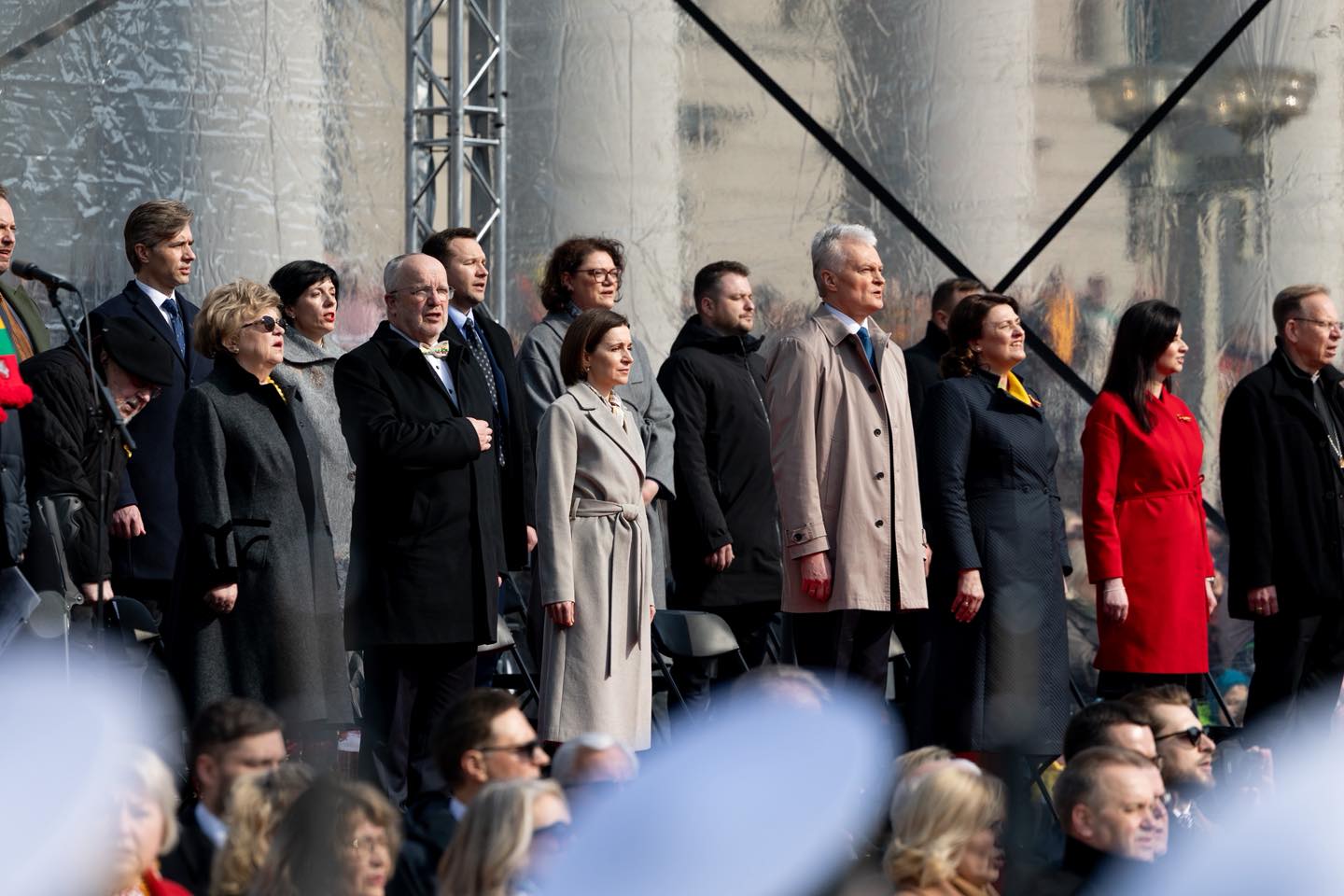
Maia Sandu is paying an official visit to Vilnius on 10–11 March this year, at the invitation of Lithuanian President Gitanas Nausėda. The visit takes place on the 36th anniversary of the restoration of Lithuania’s independence from the Soviet Union, proclaimed on 11 March 1990.

The visit’s agenda includes meetings with Lithuanian counterpart Gitanas Nausėda, Prime Minister Inga Ruginienė and Speaker Juozas Olekas. The talks will focus on the European path of the Republic of Moldova, strengthening security and resilience in the region, continued support for Ukraine, as well as bilateral cooperation, including investment opportunities for Lithuanian companies in our country.
 Facebook
 Instagram
 X/Twitter
 Telegram
Government approves national reintegration activity program: 25 million lei for 30 projects to be implemented this year
Moldova completed clearing land for construction of new US Embassy
Ministry of Health to have new state secretary
European Parliament supports Moldova in European integration process; MEP Siegfried Muresan: "We support the opening of accession negotiations across all clusters"
Russian Embassy’s chargé d’affaires summoned to Moldovan Foreign Affairs Ministry after drone incident in Galati, Romania
POLITICO: Moldova, Ukraine might start official EU accession talks in June
Moldovan president, after Russian attack on Ukraine, says more support for Ukraine, stronger pressure on Russia – both needed now
Seven Moldovan MPs to pay study visit to United States
Prime Minister condemns Russia’s recent attack on Ukraine
Strengthening collective defense and support for Ukraine discussed at NATO Parliamentary Assembly Spring Session
Washington announces nomination of Joseph Burkhalter as ambassador to Chisinau
PHOTO // After two weekends of debates, Citizens’ Assembly put forward 15 recommendations to authorities on local administration reform
Bulgaria reconfirms support for European path of Moldova
Moldovan MPs discuss opening EU accession negotiations in Brussels
Heavy traffic at Sculeni border crossing point of Moldova; Border Police recommend alternative routes for leaving country
ARMENPRESS // EU pledges continued support for Armenia amid Russian pressure
Creative Industries' Festival: almost 50 original posters by Milton Glaser exhibited in Chisinau
VIDEO // Road stays blocked in central Moldova; road crews continue interventions
Parliament speaker visits localities affected by torrential rains in central Moldova: over 100 households hit by bad weather
MOLDPRES REPORT // Technology that can change energy of future: how China tries to revolutionize solar market, what opportunities arise for Moldova
PHOTO // Moldova's Emergency Inspectorate reports 65 interventions after June 6 torrential rains
 National Bank of Moldova
Moldovan president attends ceremony on 24th anniversary of foundation of National Anticorruption Centre
Prime Minister at Moldova Digital Summit 2026: Our ambition is not only to join EU, but to help build Europe’s digital future
Over 1 billion euros in new investment partnerships, financing announced for Moldova
Topical issues addressed at meeting of Joint Control Commission
Moldovan president, European Commissioner for Enlargement discuss reforms, next steps in accession process

Vladimir Voronin steps down from leadership of Moldovan Party of Communists; Diana Caraman elected as party's president
PHOTO // European Commissioner for Enlargement, Moldovan environment minister participate in visit on Dniester bank
Homes flooded, roads blocked after heavy rainfall in Moldova; authorities urge caution
UN Food and Agriculture Organization launches farmer field schools in central Moldova district: climate-resilient vegetables, market access
PHOTO // European Commissioner for Enlargement returns to Marta and Maria Monastery of Moldova
Energy invoices to be digitalized in Moldova in next five years: real-time access to data on consumption, energy costs
VIDEO // Moldova women’s national team holds Romania to 0-0 draw in Nisporeni
Moldova national team draw with Bulgaria at friendly match played in Chisinau
PHOTO // European Commissioner for Enlargement meets mayors of Moldova: EU to help modernize another 20 schools
Over 1,000 Diaspora Moldovans register for Online Career Fair
PHOTO // European Commissioner for Enlargement urges young people to defend democracy, combat disinformation
BTA // Ishtar: Music Is Like Perfume, It Is about Feeling
Moldova Presents exhibition inaugurated in Vaslui: Moldovan products promoted in Romania by 60 local companies
Moldovan president conveys message on World Environment Day
Moldovan president attends ceremony on 24th anniversary of foundation of National Anticorruption Centre
Environment Minister announces when fish safety to be checked
Receive the latest news directly to your email

Receive the latest news directly to your email