
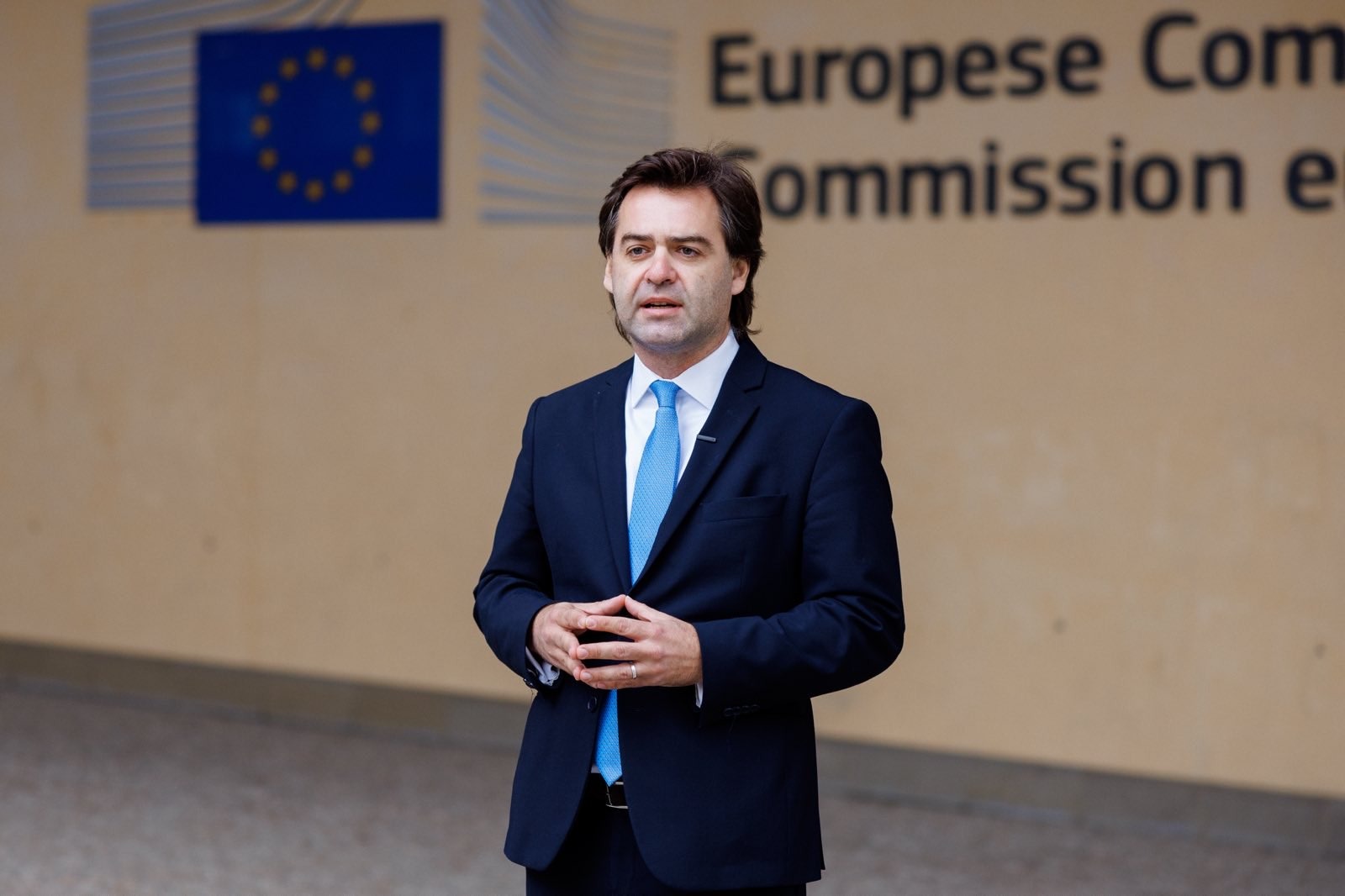
Nicu Popescu: More functional and enlarged European Union, which also includes Moldova in everyone’s interest
A more functional and enlarged European Union, which also includes the Republic of Moldova, is in everyone’s interest. The message was conveyed by Nicu Popescu, the special envoy of the President of the Republic of Moldova for European affairs and strategic partnerships. In an interview with Radio France Internationale, the official explained that the European Commission’s proposals on adapting the EU to enlargement aim to make the decision-making process more efficient and prevent deadlocks.

Nicu Popescu emphasized that the European Union’s proposals to optimize the decision-making process are an important signal: the EU is taking the enlargement process seriously and is preparing for it.


“It is good that the EU is adjusting because the success of the Union and Moldova’s benefits within the EU depend on a functional European Union capable of modernizing its economy, remaining competitive and addressing external threats and pressures, whether military, hybrid, technological or environmental. A more functional and enlarged European Union, which also includes Moldova, is in everyone’s interest,” Nicu Popescu said.


The official stressed that all enlargements over the past three decades were preceded by EU reforms that increased the number of decisions adopted by qualified majority instead of unanimity, meaning without the right of veto.


“Maastricht, Amsterdam and Nice Treaties, from the 1990s and the early 2000s, all included provisions limiting the right of veto ahead of the 1995 enlargements involving Finland, Austria and Sweden, as well as those in 2004 and 2007 involving Central and Eastern Europe. As a result of these processes, more than 80% of EU decisions are adopted by qualified majority. In other words, in more than 80% of cases, there is no longer a right of veto in the EU. And in the case of future enlargements, what has happened several times before will happen again,” he noted.


Nicu Popescu mentioned that the experience of previous enlargements shows that countries joining the European Union benefit from transition periods in certain areas.


“When they joined in 2004 or 2007, not all new member states immediately gained access to the Schengen Area, the free movement of workers or the benefits of the common agricultural policy. Access to these benefits came later, several years after accession. Even today, there are EU member states that are not part of Schengen, namely Ireland and Cyprus, or the euro area, including Poland, Romania, Denmark, Sweden and the Czech Republic. All these exceptions to the rule have occurred dozens of times and have affected and continue to affect many member states in various policy areas,” the official said.


In conclusion, Nicu Popescu said that the European Commission’s proposals are consistent with practices already applied in the EU enlargement process.


“The European Commission’s proposals provide for nothing unusual or that has not been applied before: measures to safeguard the EU decision-making process or transition periods of varying lengths in different areas. This is how the European Union functions and how it has managed to ensure peace and prosperity for entire generations of Europeans: through its ability to act and avoid deadlocks in decision-making, challenges faced by many other international organizations,” he added.


The Republic of Moldova will receive, on October 28, a roadmap outlining the next steps on its path toward joining the European Union. The document will be presented by the European Commission together with the EU enlargement reports and will include indicative stages, deadlines and concrete objectives for the most advanced candidate countries.

As the country prepares to join the European Union, the EU is adapting its policies and institutions to be able to welcome new members. The European Commission has published an analysis on adapting the Union’s policies for enlargement. The document examines the changes needed within the European Union in anticipation of enlargement and addresses how decisions will be made, how the budget will be organized and how common policies will function in a Union with more member states.

The analysis also covers areas such as agriculture, energy, transport, security and support for regional development. At the same time, the document proposes several opportunities for candidate countries before full EU accession, including broader access to the European market, participation in programs and attracting investment. The document also provides guarantees for respect for democracy and the rule of law, as well as for the proper use of European funds.
 Facebook
 Instagram
 X/Twitter
 Telegram
VIDEO // New U.S. Ambassador to Moldova: trade, investments, regional security among mandate's priorities
Parliament to review structure and personnel strength of National Army in closed session
VIDEO // President at Moldova Security Forum 2026: Russia is trying to test our limits, but every time we have managed to cope. In European family, we will be even stronger
Foreign Minister at Security Forum: Moldova is stronger and more resilient than a few years ago
Moldova Security Forum 2026 // Head of NATO Liaison Office in Chișinău: Moldova on front line of protecting democracy and sovereignty
Moldova, Turkey strengthen economic cooperation; trade reaches 638.7 million dollars
United States, Moldova strengthen cooperation on cybersecurity
VIDEO // Deputy PM for reintegration says Moldova's advancement along European integration path to create sustainable, much more attractive framework for country's reintegration
Moldovan foreign affairs minister meets new Ambassador of the Netherlands; EU integration developments on agenda
VIDEO // Prime Minister: Brussels wants Moldova to move forward, and reforms linked to Growth Plan designed to bring country closer to EU
Government accepts Dumitru Pâslaru’s resignation as Secretary General of Ministry of Labor and Social Protection
Moldovan ambassador presented credentials to French President
Moldovan parliament hosts 109th Rose-Roth Seminar
Moldovan parliament speaker says Ukraine's security most important investment in security of Moldova
Nicu Popescu: More functional and enlarged European Union, which also includes Moldova in everyone’s interest
Speaker: Modernizing National Army and adapting defense capabilities to new security realities require updating strategic documents
Moldovan president, U.S. senator discuss Moldovan-American cooperation, Moldova’s role in regional security
Director of Konrad Adenauer Foundation Office in Moldova says dialogue within Security Forum must turn into concrete actions
Head of NATO Liaison Office in Chisinau says Security Forum generates valuable ideas, due to help Moldova become more resilient, safer
Moldovan PM tells business people government willing to build Europe’s most entrepreneur-friendly country
Foreign Affairs Ministry's state secretary says Moldova firmly committed to path toward EU, determined to be part of safer Europe
 National Bank of Moldova
Moldovan president, U.S. senator discuss Moldovan-American cooperation, Moldova’s role in regional security
Moldovan PM tells business people government willing to build Europe’s most entrepreneur-friendly country
Environmental protection experts discuss critical hydrological situation in Dniester River basin
Moldovan PM attends enlarged meeting of Administrative Council of Congress of Local Authorities of Moldova
Moldovan deputy PM for reintegration has meeting with Lithuanian officials

Moldovan PM attends enlarged meeting of Administrative Council of Congress of Local Authorities of Moldova
Hydrological situation of Dniester River, rehabilitation of Bender wastewater treatment plant discussed by experts from both banks
Moldova's Diaspora children can enroll in free Romanian language courses
Eight violations of Moldova’s Airspace recorded in recent days; five cause explosions on ground
Moldova Security Forum 2026 // Moldovan president's adviser on national defence and security says Russia’s strategy not aimed only at winning elections, but at undermining trust in democracy
Moldovan deputy PM for reintegration has meeting with Lithuanian officials
Foreign affairs minister says Moldova ready to open next four EU negotiation clusters
VIDEO // Intelligence and Security Service chief, at Moldova Security Forum 2026, says money replaced ideology in attempts to destabilize Moldova
Moldovan president has meeting with NATO Deputy Secretary General
Moldova Security Forum 2026 // NATO Deputy Secretary General says strong, stable, resilient Moldova contributes to stability, resilience on NATO’s border
Elections in Gagauzia: 83 candidates registered for Popular Assembly
European Commissioner for Defence and Space says Moldova can count on EU's support in security, defence
Moldova Security Forum 2026 // Moldovan official says resilience not defined only by preventing Shocks, but also by systemic capacity to maintain core functions
Moldovan president says local power must be in mayor’s office
Moldova must accelerate investments under Growth Plan; EU Ambassador explains conditions for funding
DOC // New general structure, staffing of Moldova's National Army enter into force
Receive the latest news directly to your email

Receive the latest news directly to your email