
Exhibition about state terror in Soviet Moldovia inaugurated in Chisinau
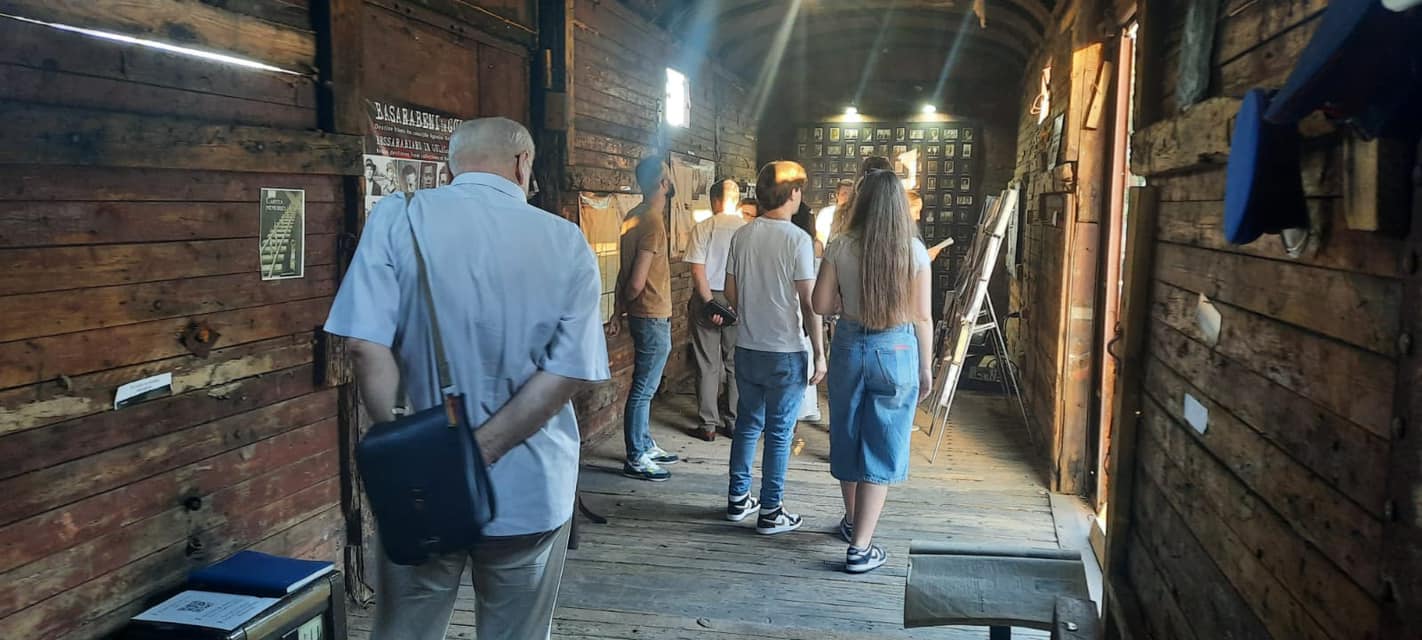
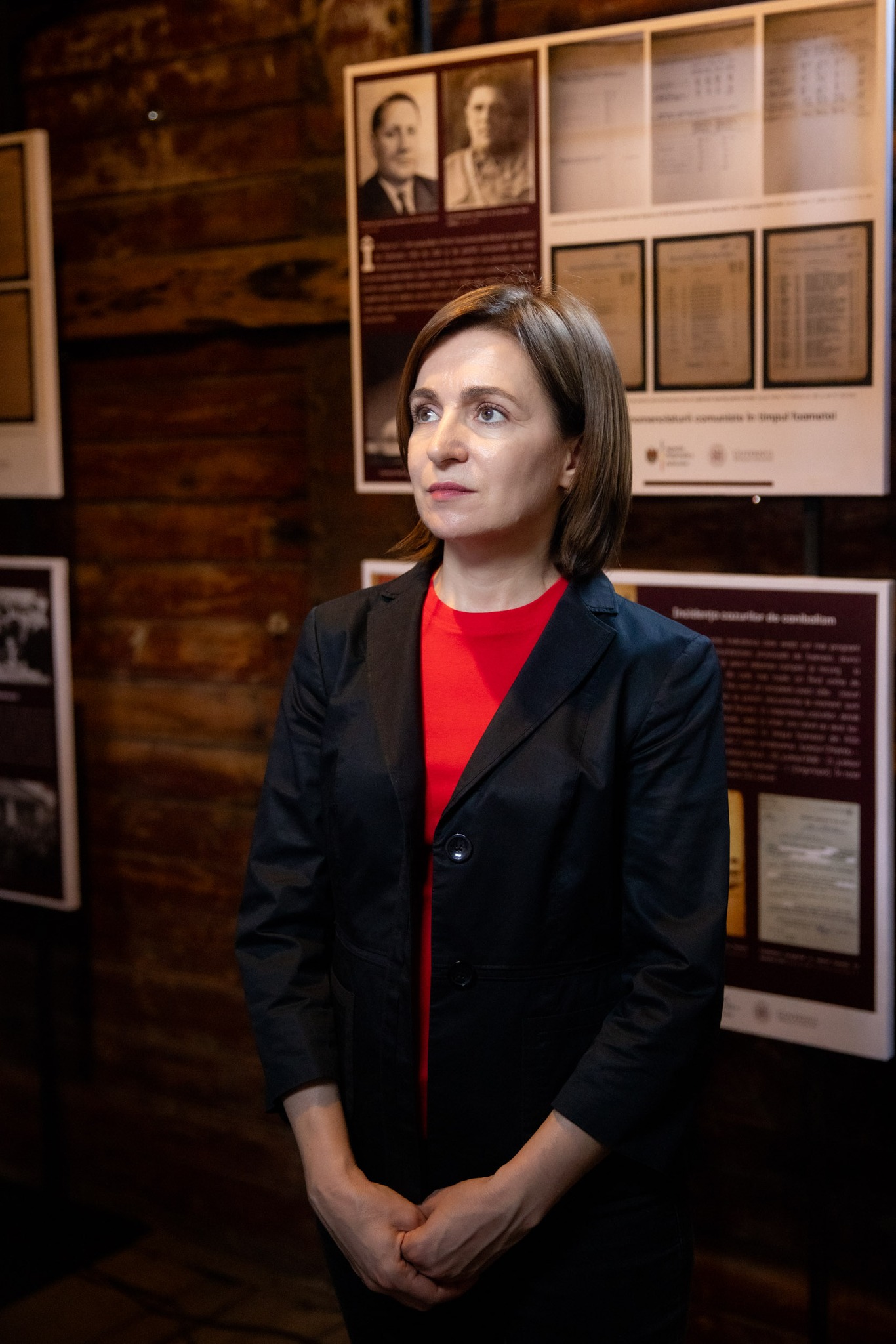
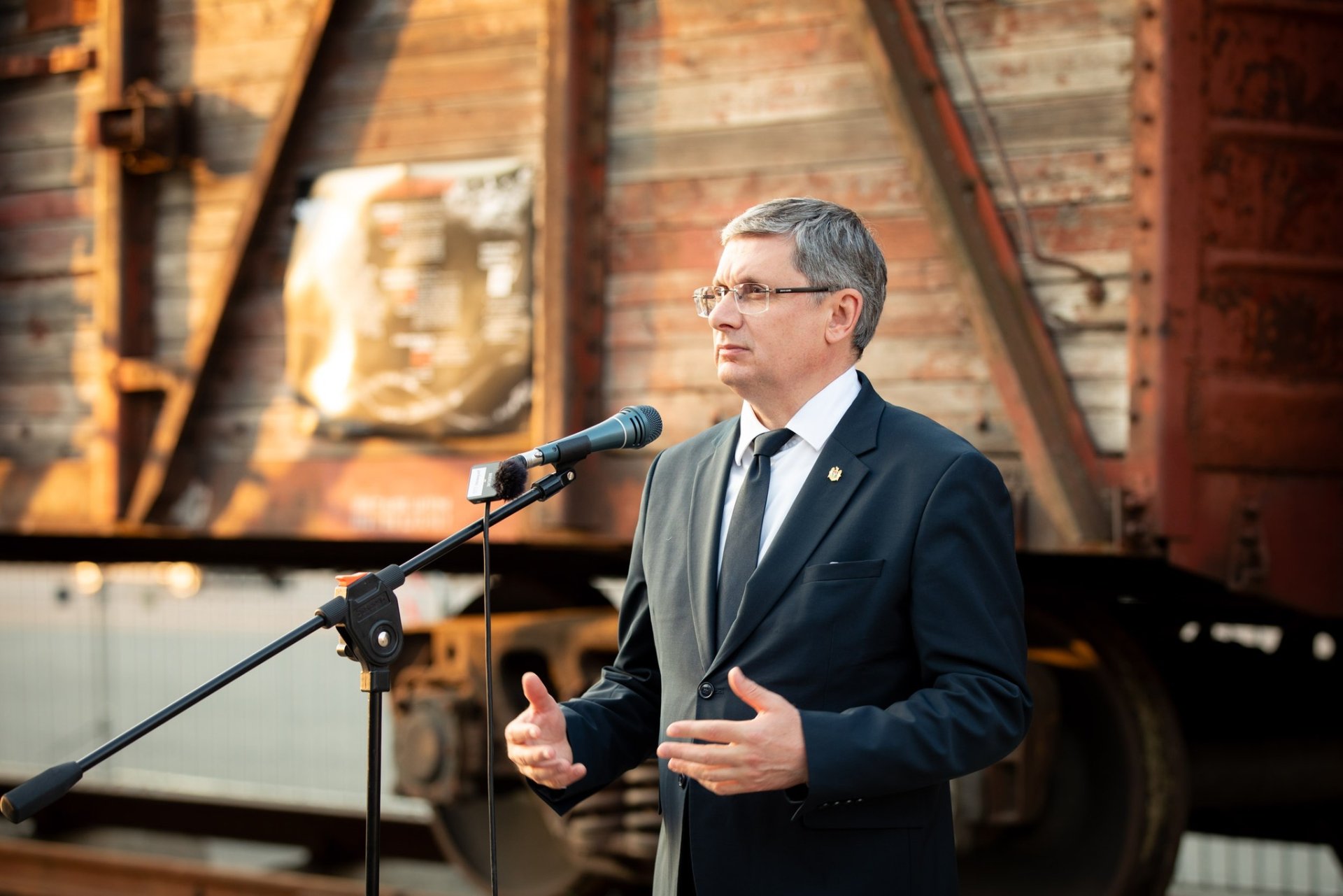
An exhibition titled, State Terror in Soviet Moldavia. Scale, Victims, and Perpetrators, was inaugurated on the Great National Assembly Square today evening. Attending the event were President Maia Sandu and Speaker Igor Grosu.

At the beginning of the event, Director of the National Archives Agency of  Moldova, Igor Casu, spoke about the exhibits.

"This exhibition shows the entire Soviet period. This year, we have brought new information, new faces of the repression, due to the fact that we have recently managed — with the joint efforts of more institutions — to transfer the last 30,000 files to the National Archives Agency. These files, received from the Intelligence and Security Service (SIS) and the Interior Ministry (MAI), are reflected in this exhibition. We also have a new batch of books, which also covers this chronological and topic-related space we were talking about, because the crimes of communism were specific not only to Moldova, but to all former Soviet republics," said Casu.

Present at the inauguration, the head of state thanked the National Archives Agency and the government of Moldova for organizing this outdoor museum for the third year in a row.

"We are here today to honor the memory of the tens of thousands of people who were condemned without guilt, torn from their homes and lives, and then deported to Siberia. I want to thank the National Archives Agency and the government of Moldova for organizing this exhibition — this museum of memory — for the third consecutive year. This is our duty, all of us, to know our past better. To understand the dramas our people went through. We are here not only to mourn the past, but to learn its lessons. To learn what a totalitarian regime means and how precious freedom is. To value democracy and protect it. To build a country where human life is respected and valued by the state. I invite everyone following us to come to the museum. To feel, even for a few moments, the pain and suffering our grandparents and parents went through, when they were torn from their families and sent far from home, deprived of the most basic rights — the right to a dignified and decent life," said Maia Sandu.

Parliament Speaker Igor Grosu also thanked the historian colleagues for their work in making this exhibition.

"Thank you for all the work you do, with dedication, in order to bring out of anonymity, from the archives, those testimonies, those stories and tragic histories of our fellow citizens — of our families, our ancestors who lived a terrible drama and who felt on their own skin what a totalitarian regime means, what communism meant, Stalinism. These are living stories. People who lived their lives peacefully, went to church, worked the land, and cared for their households and families. People whom the regime labeled as 'kulaks,' in an attempt to give them a negative connotation. But they were not enemies; they were just hardworking people, who worked honestly and loved their village and family. A totalitarian regime can erase everything in a single night: lives, homes, dignity. I have recently read a statistic: over 11,000 children were deported. Entire families, people who believed in God. Perhaps it was their faith that kept them alive. What I want — and I see this starting to happen in more and more communities — is to ensure that there are commemorative plaques in each settlement. That we remember. That we do not let oblivion fall over these tragedies. Wherever I go, I insist on checking if such signs of memory exist. All the colleagues from the archives do a tremendous job. I know the archives have been digitized, that the lists are available online. So, to those who haven't done it yet, I say: go in, search for your village. You'll find familiar names there, families you may be part of. I did this exercise for my village. I urge you to do it as well," concluded Grosu.

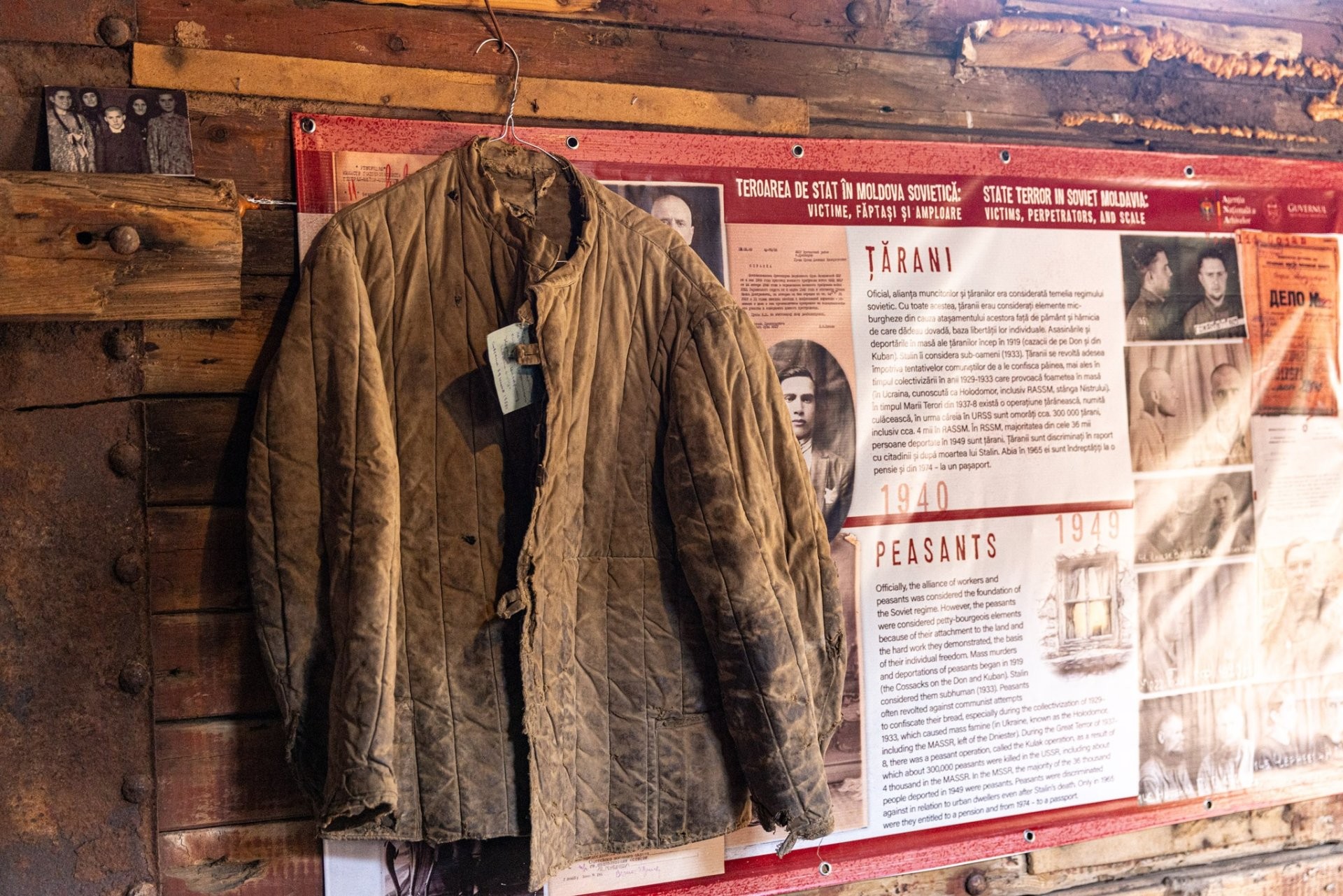
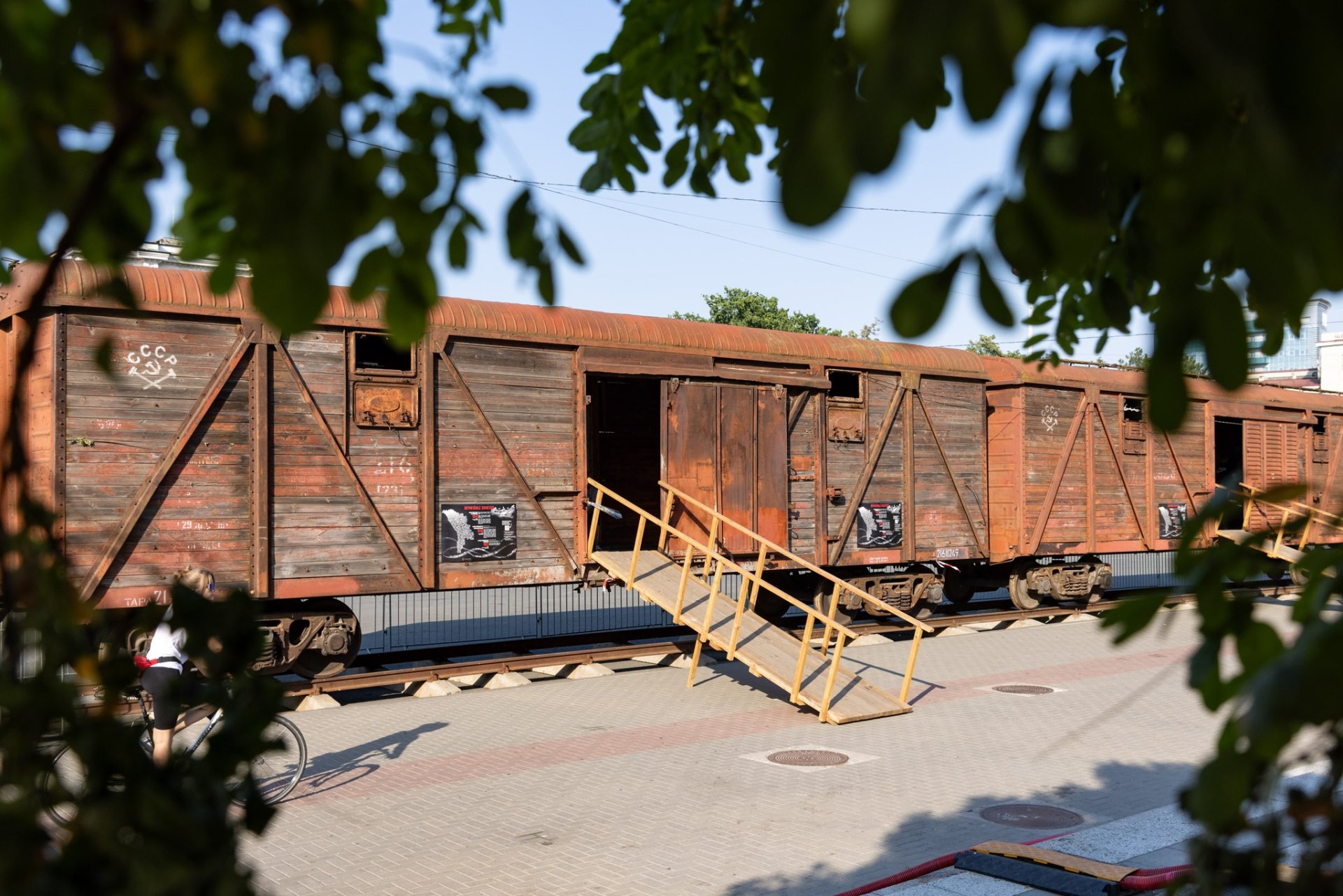
The exhibition, now at its third edition, includes two railway carriages similar to those used for deporting people to Siberia and will be open until July 27. One of the carriages displays documents, photographs, books and various objects illustrating the experience of those repressed by the Soviet regime, while the second carriage allows visitors to explore an exhibition dedicated to the famine of 1946–1947 and other multimedia materials.

At the same time, visitors will be able to view a virtual exhibition using VR technology.

The exhibition’s schedule includes, in addition to daily visits from 09:00 to 21:00, several special events. On July 13, topic-related films from the national archive about Soviet repressions will be screened, and on July 20, the feature film, Siberia in the Bones, directed by Leontina Vatamanu, will be shown. On July 26, actors from the Vasile Alecsandri Theatre in Balti will present the play, Homework, a drama inspired by Stalinist deportations.

The exhibition is organized by the government of Moldova — the State Chancellery and the Ministry of Culture, with support of the Interior Ministry, the National Archives Agency and the General Directorate for Government Buildings Management.

The mass deportation from July 6–9 1949 was the largest on the current territory of the Moldova. The operation involved 11,281 families, the contingent of deportees — forcibly boarded into cattle railway carriages — comprised 35,796 people, including 11,889 children, 14,033 women and 9,864 men.
 Facebook
 Instagram
 X/Twitter
 Telegram
Government approves new regulation for Environmental Inspectorate
Prosecutors appealed court ruling in case of Vladimir Plahotniuc
VIDEO // Children with disabilities to receive annual payment of 3,000 lei
PHOTO // Journalists from several European countries visit Moldova to explore economic potential and cultural values
President congratulates Gagauzia residents on Hederlez holiday
PHOTO // Moldova hosts Study in Europe events for first time
USMF "Nicolae Testemițanu" to organize SimOlympic simulation Olympiad
Reform of local public administration: nine mayoralties in north Moldova district rule to merge; incentives of 85 million lei provided by authorities
Moldova to take over Japanese models for emergency management
Head of State on domestic violence and Ludmila Vartic case: We need justice, not speculation
Moldova and Japan strengthen cooperation for faster response and modernized emergency services
European Union supports work of Moldovan journalists to ensure all citizens have access to objective information
Prime Minister’s message on World Press Freedom Day
President expresses gratitude to dedicated journalists who defend democracy and truth in Moldova
PHOTO // Logos team from central Moldova town wins EuroQuiz Moldova 2026 competition
Exports of Moldovan fruits to EU grow steadily: apples, sweet cherries record largest increases
VIDEO // Moldovan foreign affairs minister comments on case involving former ambassador to India
Kaja Kallas on May 9: We all have different pasts, but we must focus on our common future. That is what Europe Day means
Head of State: Goal remains same. Moldova aims to sign EU accession treaty by 2028
Local councils in Moldova approved 451 decisions on voluntary amalgamation
EuroQuiz Moldova 2026 Grand Final held in Chișinău
 National Bank of Moldova
Reforms, security, Moldova’s European path on agenda of meeting between Moldovan president and European Commission's vice-president
Moldovan head of state to host president of Cyprus in Chisinau on Europe Day
Local councils in Moldova approved 451 decisions on voluntary amalgamation
Speech by President of the Republic of Moldova at joint press conference with EU High Representative for Foreign Affairs and Security Policy
Moldovan PM has meeting with businesspeople from Balti


Local councils in Moldova approved 451 decisions on voluntary amalgamation
EuroQuiz Moldova 2026 Grand Final held in Chișinău
Silver and bronze medals for students from Moldova at Balkan Mathematical Olympiad
Foreign Ministry condemns unauthorized overflight of national airspace by unmanned aircraft
EU may increase financial support for Moldova in security sector
President: Moldova’s accession to EU to be act of strategic coherence for entire Union
Case of activist Ghenadie Ciorba reaches ECHR: allegations of unlawful detention and persecution for criticizing Tiraspol
European Commission Vice-President: Transnistrian region will not be obstacle to European future of Moldova
Speech by President of the Republic of Moldova at joint press conference with EU High Representative for Foreign Affairs and Security Policy
Drone found in airspace of the Republic of Moldova
VIDEO // President welcomes visit to Chișinău of European Commission Vice-President on eve of Europe Day
EU official in Chișinău: Civil society plays key role in strengthening democracy
Parliament appointed new member to ANRE Board of Directors
ANSP: Risk of hantavirus infection in Moldova remains low
Parliament marks Museum Night with special program for public
Moldova inaugurates first national pavilion at Venice Art Biennale
Receive the latest news directly to your email

Receive the latest news directly to your email