
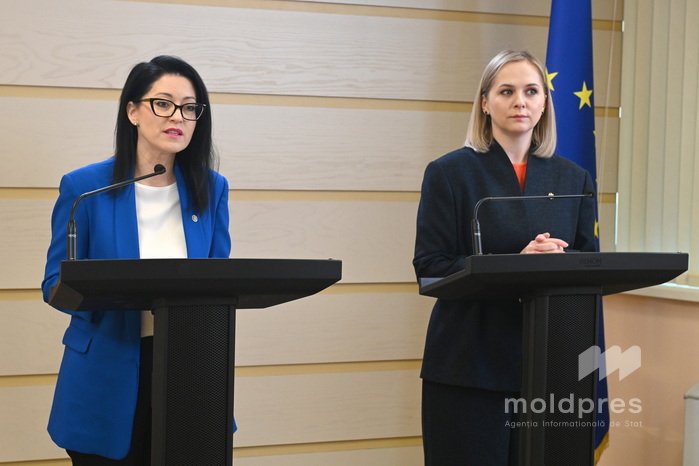
VIDEO // Children with disabilities to receive annual payment of 3,000 lei
Children with disabilities will receive an annual payment of 3,000 lei. MP Ludmila Adamciuc and Minister of Labour and Social Protection Natalia Plugaru made the statement today. The legislative initiative was proposed in the context of International Children's Day and is to be voted on by Parliament.
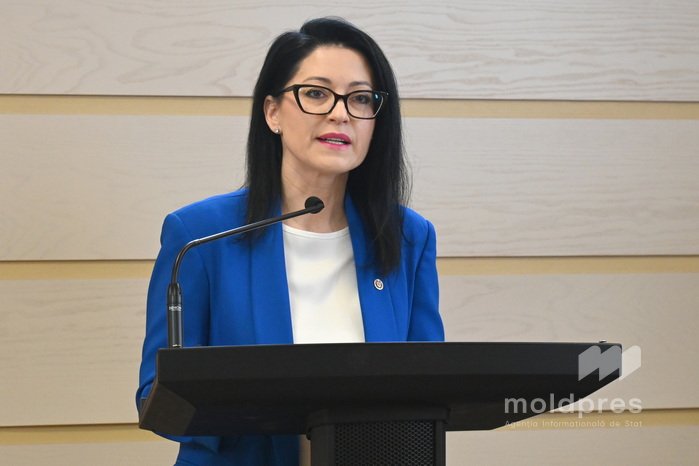
Adamciuc emphasized that the financial support is intended to help parents of children with special needs by easing their financial burden.
“June 1 is associated with childhood and joy, but it is also about every child's right to harmonious development. For children with disabilities, access to the opportunities that other children have is much more difficult, and the road to an independent life is challenging. Behind them is a family that makes immense sacrifices, taken on with great love. For these parents, the financial pressure never takes a break. Therapies, specialized care, basic needs – all of these quickly exhaust a family's budget. Although the state provides support, the reality is that a significant burden still falls directly on the parents' shoulders. To provide them with tangible support now, while we work on long-term solutions, we have drafted a legislative initiative so that, in June, each beneficiary – a child with a severe disability – will receive 3,000 lei. This measure is a recognition that these families exist, that their effort is immense, and that the state is not indifferent to them,” she said.
Adamciuc also mentioned that MPs, together with the Ministry of Labour and Social Protection, are working on several legislative amendments related to disability issues.“We are talking about the deinstitutionalization process, about revising the criteria for determining the degree of disability, about the personal assistance service, respite services, and many others. All these priorities are included in the Inclusion Programme for 2026–2030, which will soon be presented for consultations. This inclusion programme is also a priority in the Republic of Moldova's EU accession agenda. We want policies that not only react to problems but build a more humane, more accessible system, closer to the real needs of children with disabilities and their parents,” the MP stated.
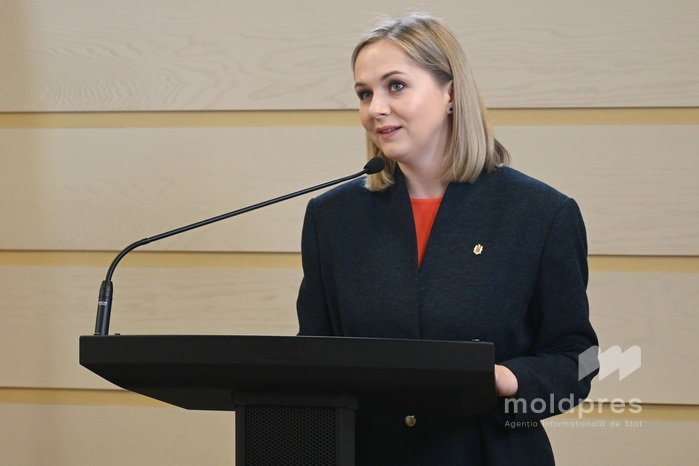
Minister of Labour and Social Protection Natalia Plugaru stressed that the payment will be made proactively by the National Social Insurance House and will be automatically transferred to beneficiaries' accounts on June 1.
“This is an important and necessary action for thousands of families in our country. This annual payment is a support measure for those raising children with disabilities, regardless of where they live or their social situation. Every year, we try to increase this support. In addition to this payment, there are social benefits for persons with disabilities, as well as benefits for care, accompaniment, and supervision, but we understand that these are not enough for a family raising a child with a disability, which is why we will undertake additional actions,” noted Natalia Plugaru.
The official pointed out that the authorities will undertake several actions to expand the access of persons with disabilities to state-provided services.“Currently, we have six types of services for persons with disabilities: personal assistance, mobile teams, respite services, day centres, community homes, and protected housing. We believe that day centres are a particularly important service. Today, in the Republic of Moldova, we have over 15 such centres. These are spaces where children and people with disabilities participate in various educational and occupational activities, while parents can be at work. We aim to expand the number of these centres. Another important service we are working on is the respite service, which offers people with severe disabilities assistance and care 24 hours a day, seven days a week, for a period of up to one month, so that caregivers can have a break during this time. At present, we have six such centres providing respite services, and we plan that by the end of the year, these services will be extended to Bălți, Râșcani, Cahul, Dondușeni, Criuleni, and Anenii Noi,” added Natalia Plugaru.
Authorities are also currently working on the Social Inclusion Plan for Persons with Disabilities for 2026–2030.
“Soon, we will announce the measures proposed within the reform of the disability sector. These will be subject to public consultations. I would like to send a message to all families raising children with disabilities: you are not alone; we are by your side and will be a reliable partner in the enormous work you are doing. Every child deserves a chance at a dignified life, and every family deserves support and respect,” emphasized Natalia Plugaru.
According to data from the Ministry of Labour and Social Protection, there are 13,582 children with various forms of disability in the Republic of Moldova.
 Facebook
 Instagram
 X/Twitter
 Telegram
Moldova moved up in press freedom ranking
PHOTO, VIDEO // Prosecutor General took oath of office today
DOC // Mechanism for voluntary amalgamation of administrative-territorial units improved
Environment chapter - among most expensive in EU accession negotiations
Alexandru Machidon officially takes over as Prosecutor General
Defence Ministry says object found in central district drone which illegally flew over Moldova on March 30
Doctoral studies system to be modernized, aligned with European standards in Moldova
PHOTO // Drone-like object discovered on field in central Moldova district: identified parts pose no danger
Mechanism for establishing state of emergency to be amended in Moldova according to European model
Moldovan government approves draft decision: new Moldova-Romania border crossing point to be created
Moldova to introduce new models of passports, travel documents
Moldova modernizes Register of road accidents, aligns it with EU standards
Moldovan Interior Ministry has new secretary general
PHOTO // Denim Day international campaign campaign; Moldovan Labour Ministry's employees stand in solidarity with violence victims
Republic of Moldova and Poland to cooperate in defense
VIDEO // Children with disabilities to receive annual payment of 3,000 lei
Salary arrears of employees of Moldovan Railways company fully paid off
Prime Minister invited citizens to attend events on Europe Day
 National Bank of Moldova
All children with disabilities to receive annual allowance of 3,000 lei on 1 June
Combating high-level corruption and financial fraud to be carried out more rapidly and efficiently
Simplified procedures for development of electronic communications networks in Moldova
Stronger environmental institutions for better management, more effective control, prevention of violations
Working groups for economy on behalf of Chisinau, Tiraspol told meeting in Moldovan capital

Ministry of Finance has new State Secretary
PHOTO // Journalists from several European countries visit Moldova to explore economic potential and cultural values
President congratulates Gagauzia residents on Hederlez holiday
EU–Moldova Parliamentary Association Committee calls for opening accession negotiations on all chapters
IMF team of experts comes to Chisinau during May 7–20
Working groups for economy on behalf of Chisinau, Tiraspol told meeting in Moldovan capital
Discover Moldova with #MOLDPRES // Turbulent history of Pripiceni-Curchi Monastery: more than two-century-old icon, one of its most precious treasures
Moldovan finance minister participates in EU Economic and Financial Dialogue in Brussels
Moldovan parliament speaker in Copenhagen says EU candidate states to create common platform for parliamentary dialogue
Moldovan energy minister in Brussels says energy security no longer political promise, but system under construction
Moldova represented at annual high-level meeting of Economic and Financial Dialogue between EU and countries candidates for accession
Mihai Isac: Moldova participated in ECP Summit in Yerevan as state at heart of EU enlargement talks
Meeting of Cooperation Committee between Moldova and North Carolina held in Chișinău: progress in implementing joint projects and new priority areas
European Commission Vice-President to pay official visit to Chișinău
PHOTO // Moldova hosts Study in Europe events for first time
PHOTO // Deputy Prime Minister meets with North Carolina Secretary of State
Receive the latest news directly to your email

Receive the latest news directly to your email