
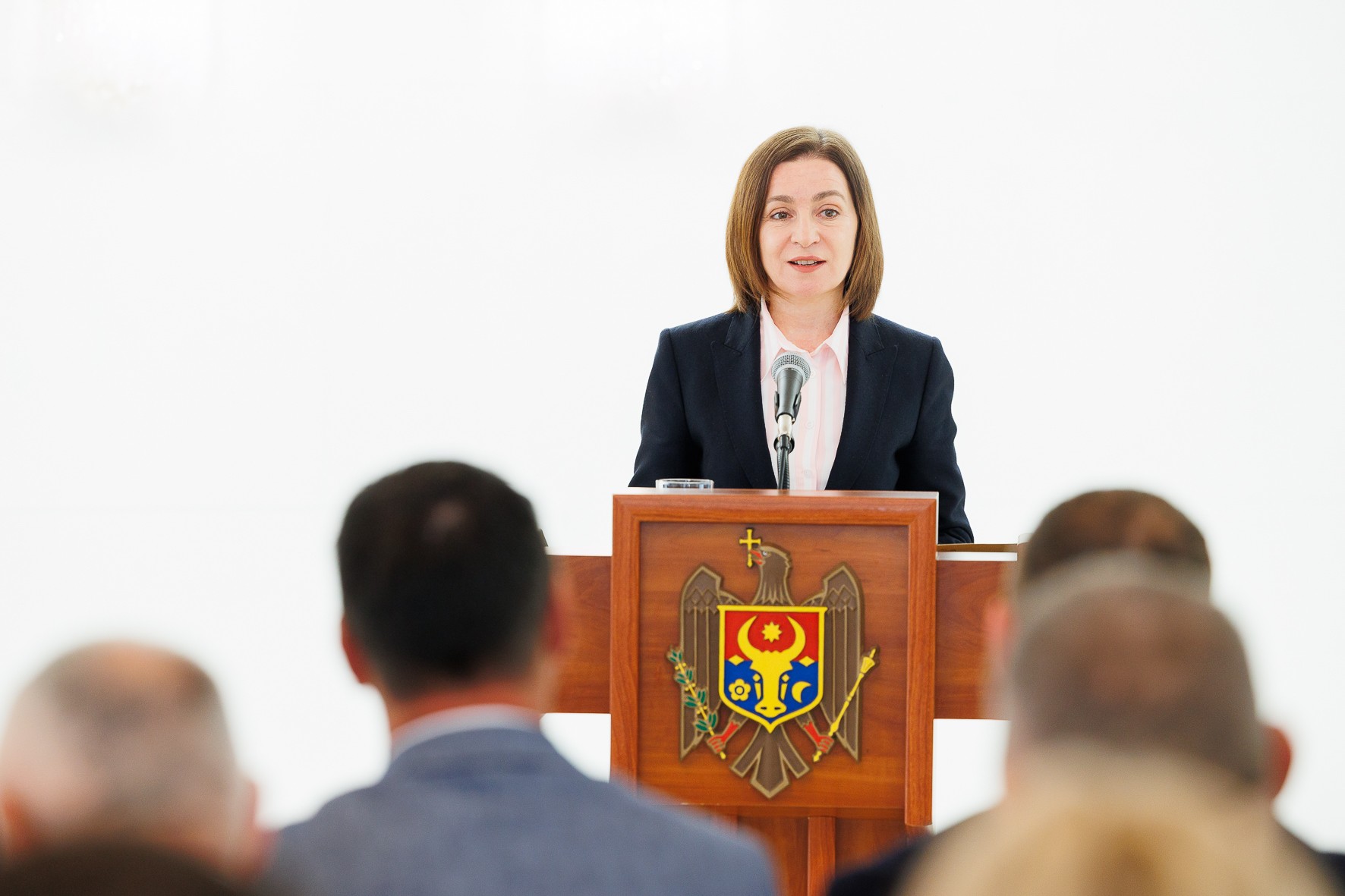
President: Dniester - essential for people’s health and safety of our communities
The March 2026 crisis, triggered by Russian aggression against Ukraine, showed how much solidarity and the ability to act together in difficult times matter, President of the Republic of Moldova Maia Sandu said today in a message delivered on Dniester Day.

The head of state stressed that the Dniester River has strategic importance for the Republic of Moldova, being essential for public health, agriculture, the economy, energy, and the safety of communities.


“The Dniester is essential for people’s health, agriculture, the economy, energy, and the safety of our communities. Its protection must remain a constant concern for all of us,” said Maia Sandu.


According to the President, the March 2026 crisis demonstrated the vulnerability of the Republic of Moldova when the security of natural resources is threatened. She noted the involvement of state institutions, field specialists, external partners, and civil society in managing the situation.


“State institutions, field specialists, external partners, and civil society helped manage one of the most complicated situations of recent years,” the head of state said.


At the same time, Maia Sandu mentioned that she thanked those involved in the interventions carried out to prevent more serious consequences and to protect the population.

Dniester Day is celebrated every year on the last Sunday of May.

The Dniester River, which springs from the Carpathian Mountains, has a length of 1,359 km and a total basin area of 72.1 thousand km², and is the most important water artery of the country. On the territory of the Republic of Moldova, the length of its course (Naslavcea–Palanca) is 636 km, and for a distance of 142.5 km the river forms the border between the Republic of Moldova and Ukraine.

The water resources of the Dniester basin within the territory of the Republic of Moldova are estimated at 10,700 million m³, of which less than 30% is formed within the country. Thus, the Dniester supplies drinking water to about 80% of the country’s population and 99% of the population of the municipality of Chişinău.

The Dniester river basin has social and historical-cultural importance, as well as a vital role in providing high-quality water for the needs of agriculture and industry, in maintaining the ecological balance and, in general, in the sustainable development of the Republic of Moldova.
 Facebook
 Instagram
 X/Twitter
 Telegram
Moldova, Greece seek to develop joint projects in tourism, culture
Moldovan government endorses draft of new media law; Culture minister describes step as necessary for modernizing legal framework in sector
Moldova aims to become regional hub for medical tourism; authorities preparing strategy
Around 70 households affected by floods caused by heavy rains in Moldova; damages to be assessed
Moldova expands diplomatic presence in United Kingdom: first Honorary Consulate opened in Manchester
Yellow Code for atmospheric instability in Moldova: showers with thunderstorms, hail expected
Moldovans working in Slovakia to receive pensions
Defense Minister denounces smear campaign
Process of recognizing diplomas obtained in foreign institutions to be optimized
Moldovan citizens who worked legally in Canada to be eligible for social benefits
Prime Minister calls for continuous mobilization and support for communities affected by heavy rains
DOC // New rules for in vitro fertilization in the Republic of Moldova
DOC // Amendments to Citizenship Law published in Official Journal
PHOTO // EU4GenderEquality Programme: around 3,000 people engaged in initiatives promoting gender equality, preventing violence in Moldova
Prime Minister at Great Children’s Choir: We want every child to know they have seat at grown‑ups’ table, their voice matters
Citizens expected at polls to participate in second round of new local elections for mayor
VIDEO // Head of State on foreign visits: Moldova must convince EU countries to accept accession
Water, roads and public services: why authorities insist on local reform
 National Bank of Moldova
Prime Minister at Great Children’s Choir: We want every child to know they have seat at grown‑ups’ table, their voice matters
President received Romania’s Prime Minister in Chișinău
Last Bell rings in Romanian-language schools on left bank of Dniester
Moldovan president says reform of local public administration communal effort between villages
Moldovan president's speech at Strong Mayoralties - Developed Settlements event


PHOTO GALLERY // Largest exhibition dedicated to children opened at Moldexpo
MOLDPRES REPORT // Solar energy, batteries and electric transport: green technologies developed in China that could be of interest to Moldova
Attention, travelers! Heavy traffic at Leușeni border crossing point on exit from Moldova
Moldova ready to open first negotiation cluster with European Union, says Moldovan foreign minister
Deputy Prime Minister: Moldova increasingly respected internationally
CEC announces silence day ahead of second round of new local mayoral elections
Moldova hosts annual conference of banking supervisors from Central and South-Eastern Europe
PHOTO GALLERY // About 400 mayors gathered in PMAN for event - Strong city halls. Developed Communities. Romania’s acting prime minister special guest
Larisa Miculeț to assume role of acting head of Embassy of the Republic of Moldova in Ireland
ARMENPRESS: Armenia reaffirms constructive engagement in EAEU
ARBOM signs sponsorship agreement with Levski Trakia football team
Moldova’s walnut exports exceed 40 million dollars annually
President received Romania’s Prime Minister in Chișinău
PM's emotional message at end of school year
30 MW Photovoltaic park with battery storage to be built in Vadul lui Vodă
Last Bell rings in Romanian-language schools on left bank of Dniester
Receive the latest news directly to your email

Receive the latest news directly to your email