
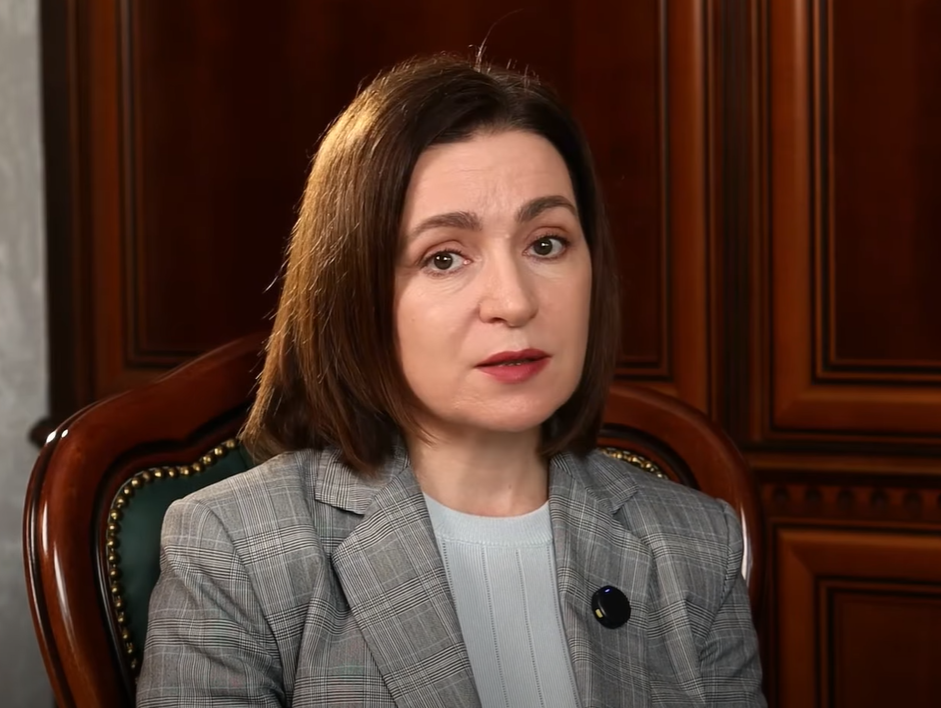
President urges citizens to double-check before transferring money to scammers
President Maia Sandu warns that the number of phone and online fraud cases remains high and urges citizens to exercise "maximum vigilance" before transferring money or providing personal data.

At a TV show, the president said that although state institutions are stepping up public information about fraud, many people continue to fall into scammers’ traps.


"Citizens must be very careful when it comes to their money. They should think a hundred times, check a hundred times before giving this money to someone," Maia Sandu said.


The president called on people who are aware of the risks to discuss these schemes with family members, neighbors and relatives, especially with elderly people, who are more vulnerable to phone and online fraud.

According to the head of state, people should not make payments immediately after receiving suspicious calls or messages and should consult trusted persons before transferring money.


"If someone calls us and asks for money, we should say 'thank you, I will get back to you' and then consult with someone," Maia Sandu said.


The president warned that recently new scams have appeared in which people are asked to pay alleged fines for traffic violations.


"Do not make payments before checking several times that it is a correct account and not a scammer’s account," the head of state declared.


Maia Sandu stressed that the authorities cannot fully prevent such crimes, especially since many schemes are organized from abroad, which makes it difficult to recover the money and punish the perpetrators.


"The state will not be able to provide one hundred percent protection. It is very hard to recover the money," the president said.


The head of state mentioned that even people in her close circle and relatives have been contacted by scammers, but they avoided fraud because they checked the information before making any payments.

Recently, law enforcement bodies have been recording more and more phone fraud cases. Scammers use various false identities and present themselves as: employees of law enforcement institutions, representatives of banking institutions, SIS employees, inspectors of the State Tax Service, representatives of telecommunications companies, and couriers of postal services. The most frequent scam scenarios include: checking bank accounts, blocking fraud, protecting savings, and offering profitable investments.

In this context, law enforcement officers urge citizens not to share SMS codes or banking data and not to transfer money to unknown persons. It is important to verify information only from official sources, and in the case of a suspicious call – hang up immediately and contact the institution concerned.
 Facebook
 Instagram
 X/Twitter
 Telegram
Corruption, financial fraud investigated under new rules in Moldova; powers of three corruption-fighting institutions redefined
Moldovan Prosecutors' Evaluation Commission resumes hearings; Victor Cazacu, first prosecutor heard in June
Another prosecutor passed external evaluation
Protests and violent incidents in Northern Ireland
Voted by Parliament. Geographical indications and designations of origin to be regulated by new law aligned with EU standards
MPs urged to take part in blood donation campaign
Around 180 families affected by floods in recent weeks received humanitarian aid
CIS Agreement on Interstate Humanitarian Fund denounced
DOC // Citizens of the Republic of Moldova working in Slovakia to be eligible for pensions
Modern equipment for pupils from central Moldova settlement, through project supported by World Bank
Moldovan PM conveys message to border police on 34th anniversary of institution's foundation
MOLDOVA IS ME // From Denmark, through China, back home; story of Moldovan woman who opened in Chisinau first restaurant with Japanese Omakase concept
Moldova withdraws from cultural agreement signed within Commonwealth of Independent States
USMF "Nicolae Testemițanu" to hold oath-taking ceremony for doctors and pharmacists
Moldovan president urges citizens to learn about local public administration reform
European Parliament President: “Enlargement is our most powerful geopolitical tool, and Ukraine and Moldova belong in the EU”
EU countries agree to open first negotiation cluster with Moldova; European Commission President: “Enlargement remains one of EU’s greatest success stories”
Moldovan president has phone conversation with European Council President
EU member states approve opening of first negotiation cluster; deputy PM for European integration says decision confirms recognition of progress achieved by Moldova
PHOTO // Moldovan Energy Ministry, UNDP strengthen strategic partnership for modernization, transformation of energy sector
Deputy PM for reintegration on working visit to north Moldova district
 National Bank of Moldova
Moldovan president has phone conversation with European Council President
Deputy PM for reintegration on working visit to north Moldova district
Meeting of Monitoring Committee of Interreg NEXT Black Sea Basin Programme held in Moldovan capital
Second Voluntary National Report on implementation of 2030 Agenda presented at Moldova's government
My Village – Our Town Hall: Over 790 city halls involved in voluntary amalgamation process

Phenomenon of phone, online fraud continuously growing in Moldova; General Police Inspectorate handling 754 fraud cases
Moldovan president expresses condolences after traffic accident in Hungary
Meeting of Monitoring Committee of Interreg NEXT Black Sea Basin Programme held in Moldovan capital
Electricity prices not increasing in Moldova; National Energy Regulatory Agency makes clarifications
Second Voluntary National Report on implementation of 2030 Agenda presented at Moldova's government
Moldova gets right to export Hatching eggs to Ukraine
PHOTO GALLERY // Over 150 stops painted in Mosaic inserted in book signed by Stefan Susai
New details about accident in Hungary: Moldova's Foreign Affairs Ministry says Moldovan, Romanian passports found at the scene
ARCHIVE Chronicle // Story of more than 1,000 Bessarabians saved from exile
PHOTO // Faster interventions, safer medical services in Moldova; UN Population Fund donates 1,800 blood pressure monitors to emergency medical teams
MOLDOVA IS ME // Story of Moldovan woman who survived deportation
My Village – Our Town Hall: Over 790 city halls involved in voluntary amalgamation process
President on 85 years after first wave of Stalinist deportations: Commemorating deportations is about memory of past and the democratic future we are building together
First in Moldova's energy sector: Moldelectrica enterprise activates balancing services provided by photovoltaic plants equipped with storage systems
PHOTO GALLERY // Documents and testimonies about deportations and famine presented at exhibition “State Terror in Soviet Moldova: Scale, Victims and Perpetrators
Prime Minister: Memory of deported obliges us to build society in which such tragedies never again possible
Receive the latest news directly to your email

Receive the latest news directly to your email