
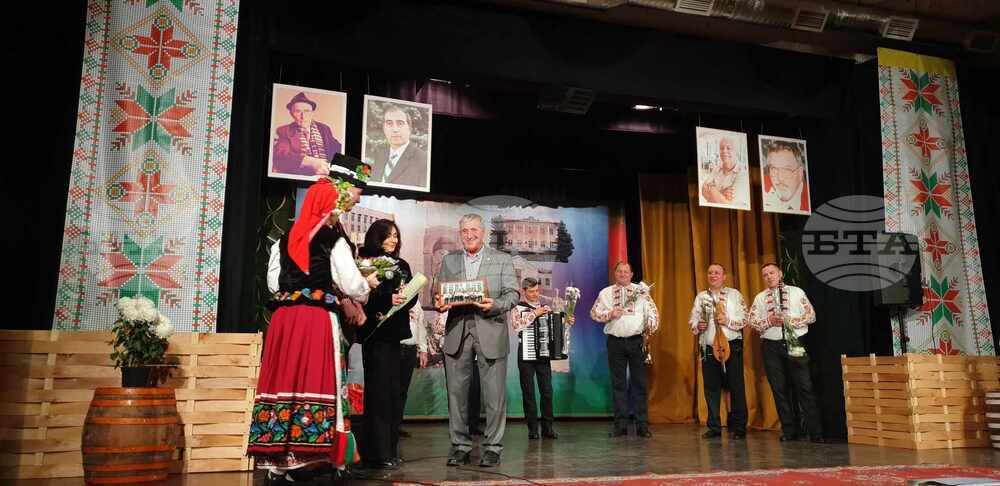
BTA: Honorary Citizen of Taraclia Recalls Role of Traditional Bulgarian Dance on International Dance Day
On International Dance Day, April 29, honorary citizen of Taraclia Ivan Borimechkov spoke in an interview with BTA about the memory of the traditional horo dance of the past - not a stage performance, but a natural part of life and traditions of Bulgarians in Moldova. He is also one of the founders of the Bessarabian Bulgarian theatre Smeshen Petak in Taraclia.

In Borimechkov’s memories, the horo in Taraclia was not just a dance. It was place and time, gathering, youth and custom, and a whole world in which the village comes together, observes, becomes acquainted with one another, and lives together. There were evening and grand horo dances, he recounted.

The evening horo took place on the streets and in the neighbourhoods, where the young women would gather, sing songs, and dance. There was not always music, as the songs themselves led the dance. The adults stood on the sidelines, watching, smiling, and quietly discussing who would ask whom to dance, and who would suit whom, while the young people went out to meet and show themselves off.

The grand horo dance was something else entirely. It was performed only on major holidays. It was not frequent, but that is why it was remembered. It was at just such a grand horo dance, Borimechkov’s mother would tell him, that she met his future father. For him, this is not just a family story but proof that the horo was also a place where destinies were forged.

War and famine during the Soviet era, however, changed many things. People stopped gathering as they had before. "War stops everything," Borimechkov said. Then came the famine - a time when no one was in the mood for dancing. But sometime in the 1950s, people began gathering again, reminiscing, and seeking out music and celebration. Gradually, the horo moved to clubs and cultural venues, he added.

Later, when the theatre in Taraclia was established, the idea to bring back the spirit of the old horo dance took shape. They began collecting short stories, scenes, and memories. Street concerts, theatrical skits, and humorous vignettes were held, and after them, the horo would begin. It was not a complete revival of the old custom, but it was an attempt to relive the memory of it.

Borimechkov also recalled how they announced on the local radio that there would be a grand dance gathering, how they looked for musicians, and how sometimes guests from Bulgaria would stumble upon these people and join in the dance.

The folk dance gave rise to other celebrations as well - St. George’s Day, Slavic Literacy Day, etc. Everything was done with limited resources but with great enthusiasm. The focus was not on ostentation, but on community - the desire for the village to be seen, to be heard, and to come together.
 Facebook
 Instagram
 X/Twitter
 Telegram
Moldovan government invests 25 million lei in tourism infrastructure in Valeni village
PHOTO // Mărțișor included in Lithuania’s Intangible Cultural Heritage List
PHOTO // Painting exhibition inaugurated at Moldova's parliament
PHOTO GALLERY // Wolves of Calancea, Osoianu sisters gave concert in Chisinau
PHOTO GALLERY // Homage paid to writers through voice of public, at National Library of Moldova
PHOTO GALLERY // Opening of Martisor 2026 International Music festival
Eugen Doga Chisinau Airport in waltz harmonies: tribute to great composer
BTA: Martenitsa: Bulgarians Celebrate Spring with Centuries-Old Tradition
Legend of Martisor on stage in France
PHOTO GALLERY // Martisor retrospective
Schedule of Martisor Festival 2026 // Cultural events begin in Chisinau, across Moldova
Martisor brings spring back into people’s hearts: ancient tradition, Music Festival on March 1 in Chisinau
Spring Fair brought charm of Chinese culture to Chisinau; Chinese Ambassador: “Let us continue cultural exchanges and cooperation”
PHOTO GALLERY // Eugen Doga – 89 years since birth of maestro who brought Moldova’s music to world
Moldovan head of state continues dialogue on children’s safety online in Balti
Moldovan parliament expands foreign relations: friendship groups with United Arab Emirates, Saudi Arabia created
Largest energy storage system of Moldova launched in Radeni; Energy minister says investment promises competitive prices for consumers
Moldovan parliament speaker comments on detection of drones on country’s territory
Moldovan parliament speaker says removing tax, legislative discrepancies between two banks of Dniester River to bring concrete benefits for citizens
VIDEO // Prime Minister at National Forum of Labour Market and Social Dialogue
Japan’s Minister for Internal Affairs to pay visit to Moldova
 National Bank of Moldova
Moldovan head of state continues dialogue on children’s safety online in Balti
Paid internships in public service of Moldova: young people invited to apply for edition 6.1 of programme
VIDEO // Prime Minister at National Forum of Labour Market and Social Dialogue
President at swearing-in ceremony of Prosecutor General: You have my full support for genuine rule of law that strictly serves interests of citizens and Republic of Moldova
Head of State signed decree appointing new Prosecutor General of Moldova

Parliament tightens rules for operation of zoos
BTA: Honorary Citizen of Taraclia Recalls Role of Traditional Bulgarian Dance on International Dance Day
Diplomat Dumitru Socolan appointed Secretary General of Foreign Ministry
VIDEO // One year passes since launch of Identity Card in Moldova: over 360,000 documents requested
Moldova moved up in press freedom ranking
As of 1 July, new rules to come into force for imports from United States
Unified taxes and excise duties on both banks of Dniester approved by Parliament
President at swearing-in ceremony of Prosecutor General: You have my full support for genuine rule of law that strictly serves interests of citizens and Republic of Moldova
Obtaining and renewing entrepreneur patents become fully digital starting 4 May
Parliament welcomes Moldova’s progress in press freedom ranking
PHOTO, VIDEO // Prosecutor General took oath of office today
Over 21 million trips by Moldovans to EU recorded after visa liberalisation
DOC // Mechanism for voluntary amalgamation of administrative-territorial units improved
VIDEO // China National Opera presents “Turandot” in Chișinău
Energy Minister discussed with US and EU officials about investments in Moldova’s energy infrastructure
Environment chapter - among most expensive in EU accession negotiations
Receive the latest news directly to your email

Receive the latest news directly to your email