
Chișinău–Strășeni–Călărași main aqueduct: 45 million euros invested for benefit of thousands of citizens in Central region
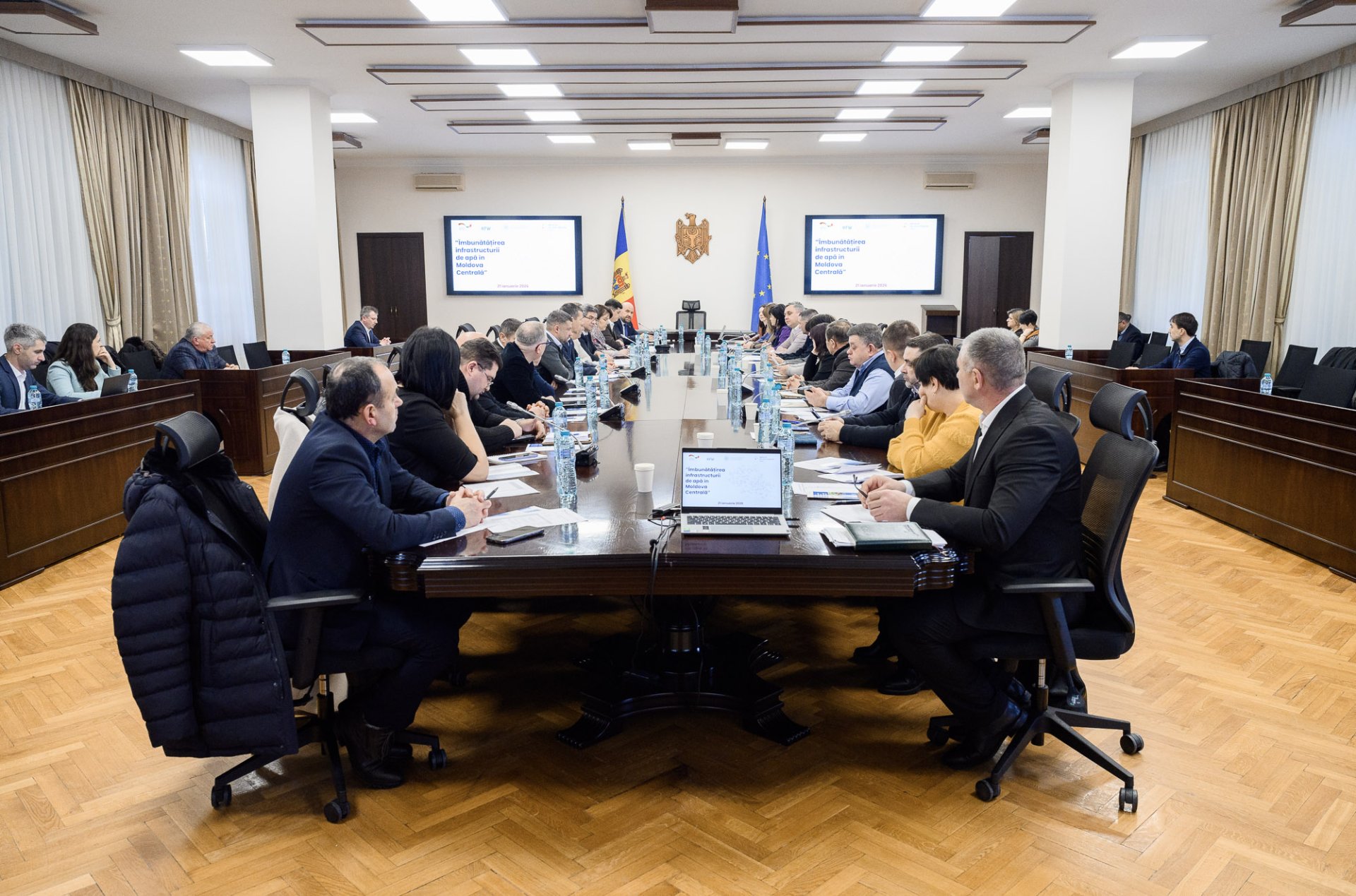
Construction works on the Chișinău–Strășeni–Călărași main aqueduct are progressing, with 35,000 people from the towns of Strășeni and Călărași set to benefit directly, in the first stage, from this new infrastructure. The progress achieved in the implementation of the project was reviewed during a meeting chaired by Deputy Prime Minister, Minister of Infrastructure and Regional Development Vladimir Bolea.

The meeting was attended by local public authorities from Strășeni and Călărași districts, the regional operators Apă-Canal Strășeni and Apă-Canal Călărași, the Central Regional Development Agency, and other institutions involved in implementing the project Improving Water Infrastructure in Central Moldova.

Participants examined the prospects for connecting other localities in the Central region of the country to the main aqueduct. They also discussed the level of preparedness and the institutional and technical capacity of the regional operators to take over and manage the public water supply service at the district level.

With a total length of over 50 kilometers, the aqueduct will connect the central water supply system of the municipality of Chișinău with the towns of Strășeni and Călărași, thus providing a safe and sustainable source of drinking water for residents of the region. More than 35,000 people in the towns of Strășeni and Călărași will benefit directly, in the first stage, from this new infrastructure.

“For me, infrastructure development means decisions that are felt in people’s daily lives, whether we are talking about running water, street lighting, roads and sidewalks, playgrounds, or any other type of infrastructure,” said Bolea.

The construction of Chișinău–Strășeni–Călărași aqueduct is part of the project “Improving Water Infrastructure in Central Moldova”, implemented by the Central Regional Development Agency and financed by the Government of Germany through the KfW Development Bank. The total value of the project is 45 million euros, of which 40 million euros, in the form of a grant, are provided by KfW and 5 million euros represent the contribution of the Government of the Republic of Moldova.
 Facebook
 Instagram
 X/Twitter
 Telegram
ANRE reduced electricity prices for Premier Energy and FEE Nord consumers
New agrometeorological stations to help farmers in Moldova combat drought and frost
DOC // Giurgiulești Port declared strategic asset
Moldovan energy minister thanks partners from Romania, Ukraine, EU for vital support to Moldova’s power system
Chisinau Airport launches summer season with 70 international routes
Almost 24 thousand tons of gasoline and 3,300 tons of diesel imported into Moldova in last three days
First diesel price cut since outbreak of Middle East conflict
Government to maintain state of emergency as long as situation requires, government spokesperson says
New round of EcoVoucher program: around 3,000 families to be able to replace old household appliances with new, energy-efficient equipment
Faster, greener European rail: Chișinău–Ungheni line enters electrification phase
Electricity consumption decreases by 3 per cent in Moldova on March 26; energy minister describes this as important result of efforts of all country's consumers
VIDEO // Energy minister says solidarity of European partners helps country overcome energy crises
Moldova again avoids power cuts through emergency measures, regional cooperation
Farmers from 14 districts to receive irrigation grants
CNMC: Eenergy sector remains fragile, ending state of emergency requires caution
Foreign Ministry: We condemn violation of airspace. Such actions endanger citizens’ security
Support for export promotion: 16 business associations to receive 14.6 million lei through Bridge Export Program
Over 20 media projects to get funding from media subsidy fund
 National Bank of Moldova
President met with U.S. Senator
Proposals for improving efficiency of ministries discussed at roundtable
Prime Minister visited agricultural business in Unguri village, Ocnița district
Prime Minister visited rescuers and firefighters unit in Ocnița
Weekly meeting of Joint Control Commission of 2 April 2026


Simple motion on public policies implemented by Ministry of Labour and Social Protection failed
Proposals for improving efficiency of ministries discussed at roundtable
PHOTO GALLERY // Premiere at Mihai Eminescu National Theater: “Intrigue and Love,” directed by Alexandru Cozub
Moldova to sign social security agreements with Quebec (Canada), Albania, Croatia and Ireland
Around 622,000 vulnerable families receive energy compensation
Prime Minister visited agricultural business in Unguri village, Ocnița district
Minister of Labor and Social Protection: Deficit of state social insurance budget decreased to 3.6 billion lei in 2026
Prime Minister visited rescuers and firefighters unit in Ocnița
Eastern European plants used in Chinese medicine: book by Wang Yifeng launched in Chișinău
PHOTO GALLERY // About 160 companies gathered at Moldconstruct and Moldenergy exhibitions: innovation and cutting-edge technologies
Weekly meeting of Joint Control Commission of 2 April 2026
Energy and infrastructure – essential pillars in Ukraine’s reconstruction
Specialized international exhibitions Moldconstruct and Moldenergy open at Moldexpo
Deputy Prime Minister for Reintegration meets Ambassador of Romania to Moldova
Speaker about permanent withdrawal from CIS statutory bodies: Moldova has sovereign and independent right to decide which union to be part of
Moldovan government representatives to present to parliamentary factions actions taken during emergency state, proposals on future developments
Receive the latest news directly to your email

Receive the latest news directly to your email