
CNMC: Eenergy sector remains fragile, ending state of emergency requires caution
The situation in the energy sector remains fragile, although some improvements have been observed recently. In this context, the institutions responsible for the energy sector emphasize that the current level of risks does not allow for the immediate lifting of the state of emergency, since the Republic of Moldova remains vulnerable as it depends entirely on fuel imports, and the regional context continues to affect deliveries. The situation was analyzed on the platform of the National Crisis Management Center (CNMC).

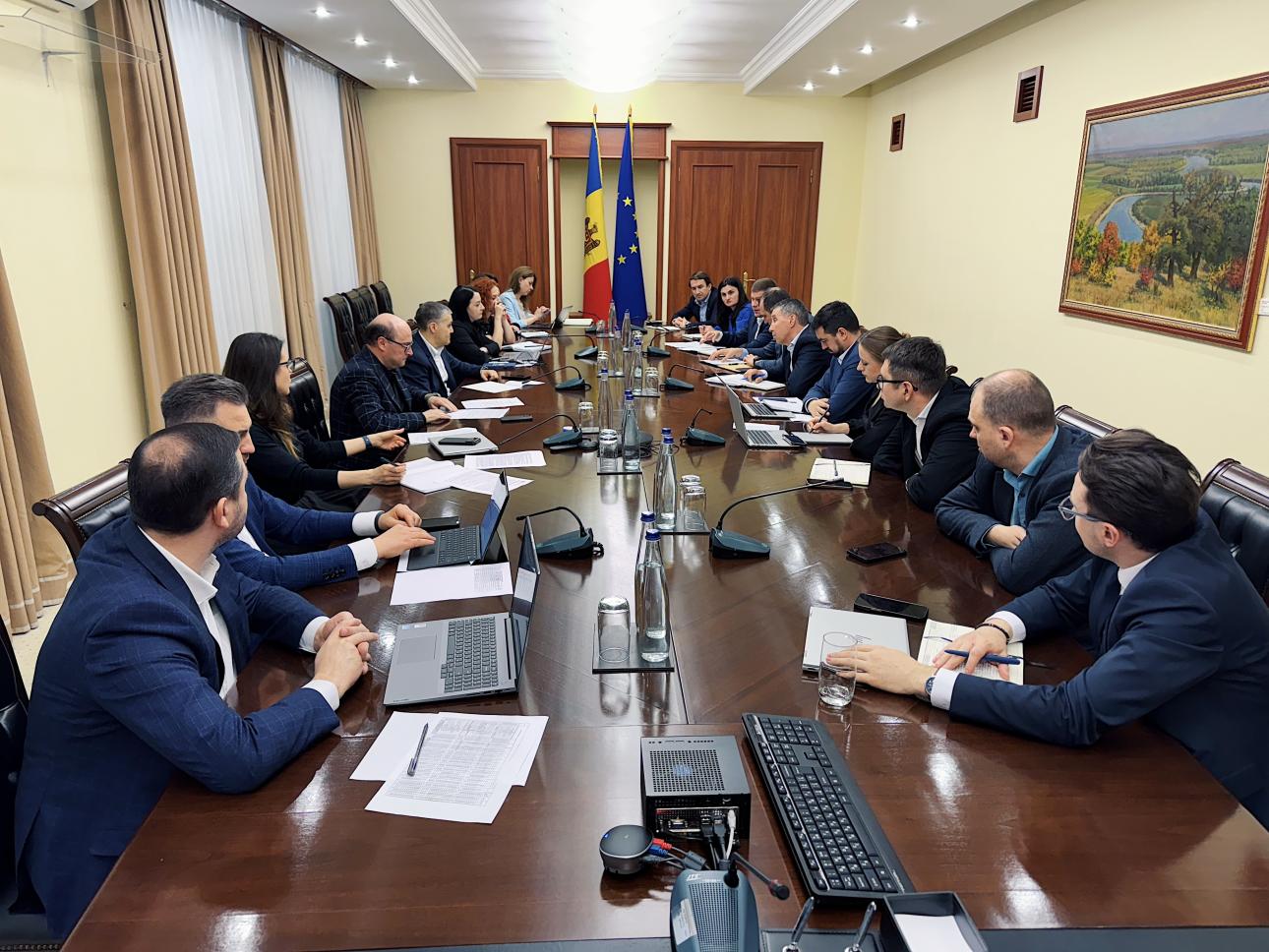
The meeting was organized at the instruction of Prime Minister Alexandru Munteanu and brought together representatives of 12 institutions to assess the situation in the energy sector and the possible impact in the event the state of emergency is lifted.

During the discussions, it was underlined that although some improvements have been observed recently, the situation remains fragile. The Republic of Moldova continues to be vulnerable because it depends entirely on fuel imports, while the regional context – marked by Russia’s war in Ukraine and tensions in the Middle East – continues to affect deliveries. Under these conditions, some states in the region have introduced export restrictions to protect their own markets.

“The institutions responsible for the energy sector emphasize that the current level of risks does not allow for the immediate lifting of the state of emergency. Any possible shortening of the term established by Parliament by ending this mechanism can be considered only under conditions of fully ensuring the energy security of the Republic of Moldova,” CNMC said.

The Republic of Moldova imports 100% of fuels, thus being more vulnerable than other countries in the region. In this context, according to CNMC, the measures taken were necessary primarily to stabilize fuel stocks, to ensure the necessary quantities of gasoline and diesel (especially during the period of intensified agricultural work), as well as to encourage importers of petroleum products to continue deliveries to the Republic of Moldova and producers of renewable energy to sell their energy on the domestic market.

From a technical standpoint, the energy system is not yet fully stabilized, CNMC underlined. The Isaccea–Vulcănești line, although operational, is in a critical period of checks and stability adjustments. Moreover, every year, according to the data, the April–May period is one of the most difficult because the disconnection of the CET cogeneration capacities reduces domestic electricity production by about 50% (around 200 MW), increasing dependence on imports and the risk of using emergency electricity at high costs.

CNMC stressed that the emergency measures adopted earlier were decisive in avoiding a major crisis across the entire energy sector, both in the electricity segment and in that of petroleum products. For example, diesel stocks had reached a critical level, and the authorities’ interventions allowed the resumption of supply and the reduction of the number of filling stations without fuel.

“At the national level, the situation has improved, but careful management of stocks remains necessary to avoid new difficulties. At the same time, even if the state of emergency is lifted, it will be necessary to reactivate the state of alert in order to maintain intervention tools to prevent the export of diesel and gasoline stocks from the country and to avoid fuel shortages at the pump,” CNMC explained.

In this context, several lines of action have been identified, including preparing a safe transition, such as analyzing the possibility of instituting a state of alert in the energy sector, in order to preserve the necessary intervention mechanisms, and ensuring good coordination between institutions so that any decision does not create interruptions in managing the situation, especially during holidays when consumption increases.

At the same time, the authorities have ordered daily monitoring of stocks and supply flows, as well as the identification of solutions to avoid financial blockages in the sector. Another measure concerns updating intervention plans to prevent possible problems in fuel supply and to ensure the necessary volumes during the agricultural season.

The Parliament of the Republic of Moldova declared state of emergency for a period of 60 days, starting on March 25, 2026.

Prime Minister Alexandru Munteanu stated on Wednesday, April 1, that the state of emergency will not be maintained even one day longer than necessary. He emphasized that he requested a full report on the current situation in the energy system and an action plan with concrete deadlines that will allow a return to normal operations.

Speaker Igor Grosu announced on Thursday, April 2, that Government representatives will present to the parliamentary factions the actions taken during the state of emergency, the solutions for the coming period, and the arguments that may determine the transition from the state of emergency to a state of alert.
 Facebook
 Instagram
 X/Twitter
 Telegram
Over 1,800 hectares of forest to be planted in 15 districts along Dniester River, under World Bank–supported programme
Over 900,000 unique beneficiaries, representing 38% of population received reimbursed medicines through ePrescription system
Ben Gurion Airport in Tel Aviv remains closed until 16 April
Another Shahed-type drone detected while unauthorizedly flying over national airspace in Transnistrian segment
DOC // Official Journal publishes implementation mechanism for CEEPUS IV
Moldova’s airspace violated again: Shahed drone found in Dubăsari–Orhei area
Nicolae Testemitanu Medical University of Moldova launches new master’s programme, Health Promotion and Protection
Permanent teaching grades and less bureaucracy in schools
Prosecutor’s Office provides new details on investigation into death of Ludmila Vartic
Moldova, Romania to sign Agreement on extending coordinated control at Leuseni–Albita border crossing point
Unique trilingual work on medicinal plants, created in partnership with Nicolae Testemitanu Medical University of Moldova
Driving licenses issued in Moldova to be recognized in Ireland
Increased flow of passengers in Moldova on eve of Easter holidays; Customs Service head announces measures to streamline traffic
Moldova switches to daylight saving time: clock hands to be moved forward by one hour
CNMC: Eenergy sector remains fragile, ending state of emergency requires caution
Foreign Ministry: We condemn violation of airspace. Such actions endanger citizens’ security
Support for export promotion: 16 business associations to receive 14.6 million lei through Bridge Export Program
Over 20 media projects to get funding from media subsidy fund
 National Bank of Moldova
President met with U.S. Senator
Proposals for improving efficiency of ministries discussed at roundtable
Prime Minister visited agricultural business in Unguri village, Ocnița district
Prime Minister visited rescuers and firefighters unit in Ocnița
Weekly meeting of Joint Control Commission of 2 April 2026

Simple motion on public policies implemented by Ministry of Labour and Social Protection failed
Proposals for improving efficiency of ministries discussed at roundtable
PHOTO GALLERY // Premiere at Mihai Eminescu National Theater: “Intrigue and Love,” directed by Alexandru Cozub
Moldova to sign social security agreements with Quebec (Canada), Albania, Croatia and Ireland
Around 622,000 vulnerable families receive energy compensation
Prime Minister visited agricultural business in Unguri village, Ocnița district
Minister of Labor and Social Protection: Deficit of state social insurance budget decreased to 3.6 billion lei in 2026
Prime Minister visited rescuers and firefighters unit in Ocnița
Eastern European plants used in Chinese medicine: book by Wang Yifeng launched in Chișinău
PHOTO GALLERY // About 160 companies gathered at Moldconstruct and Moldenergy exhibitions: innovation and cutting-edge technologies
Weekly meeting of Joint Control Commission of 2 April 2026
Energy and infrastructure – essential pillars in Ukraine’s reconstruction
Specialized international exhibitions Moldconstruct and Moldenergy open at Moldexpo
Deputy Prime Minister for Reintegration meets Ambassador of Romania to Moldova
Speaker about permanent withdrawal from CIS statutory bodies: Moldova has sovereign and independent right to decide which union to be part of
Moldovan government representatives to present to parliamentary factions actions taken during emergency state, proposals on future developments
Receive the latest news directly to your email

Receive the latest news directly to your email