
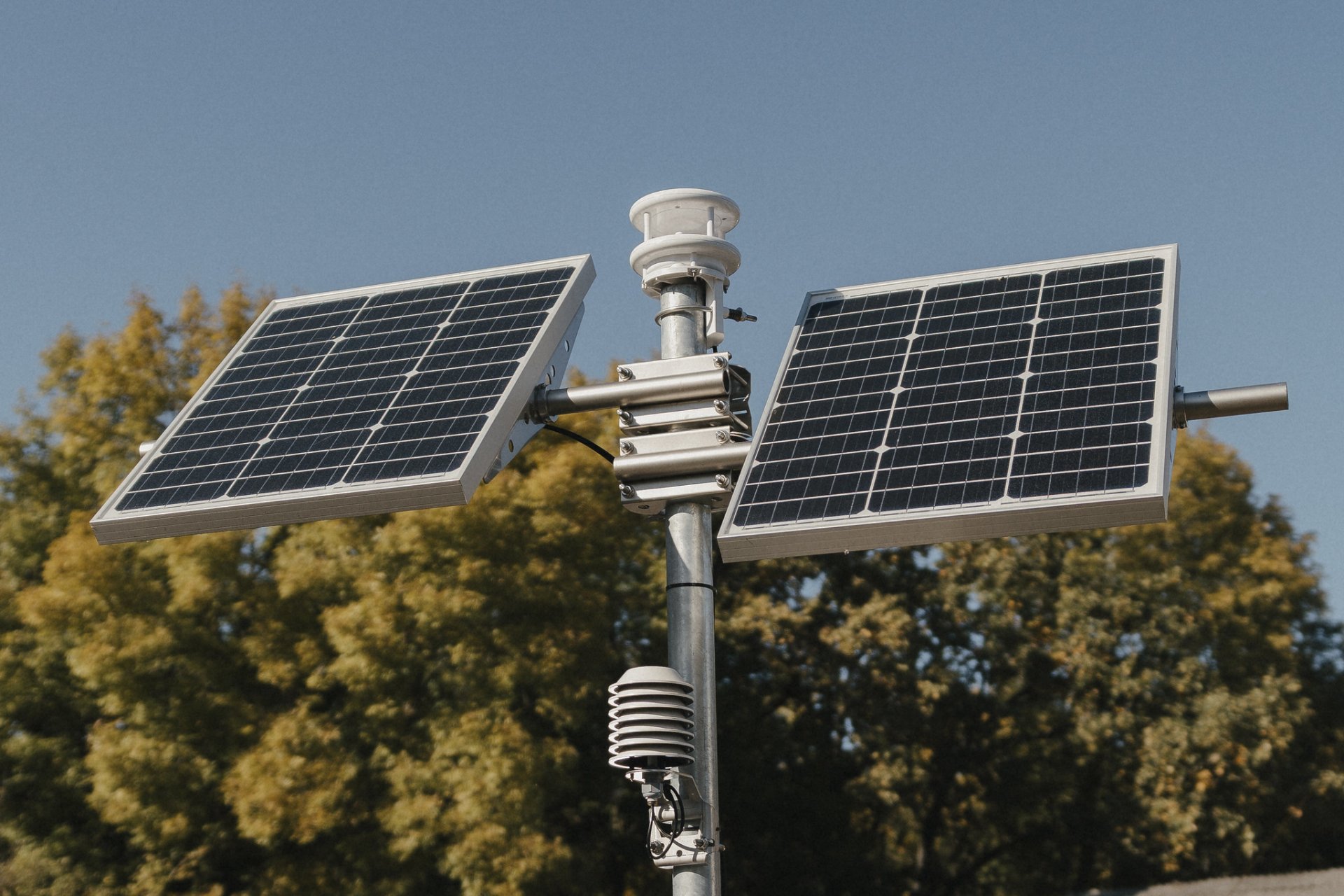
New agrometeorological stations to help farmers in Moldova combat drought and frost
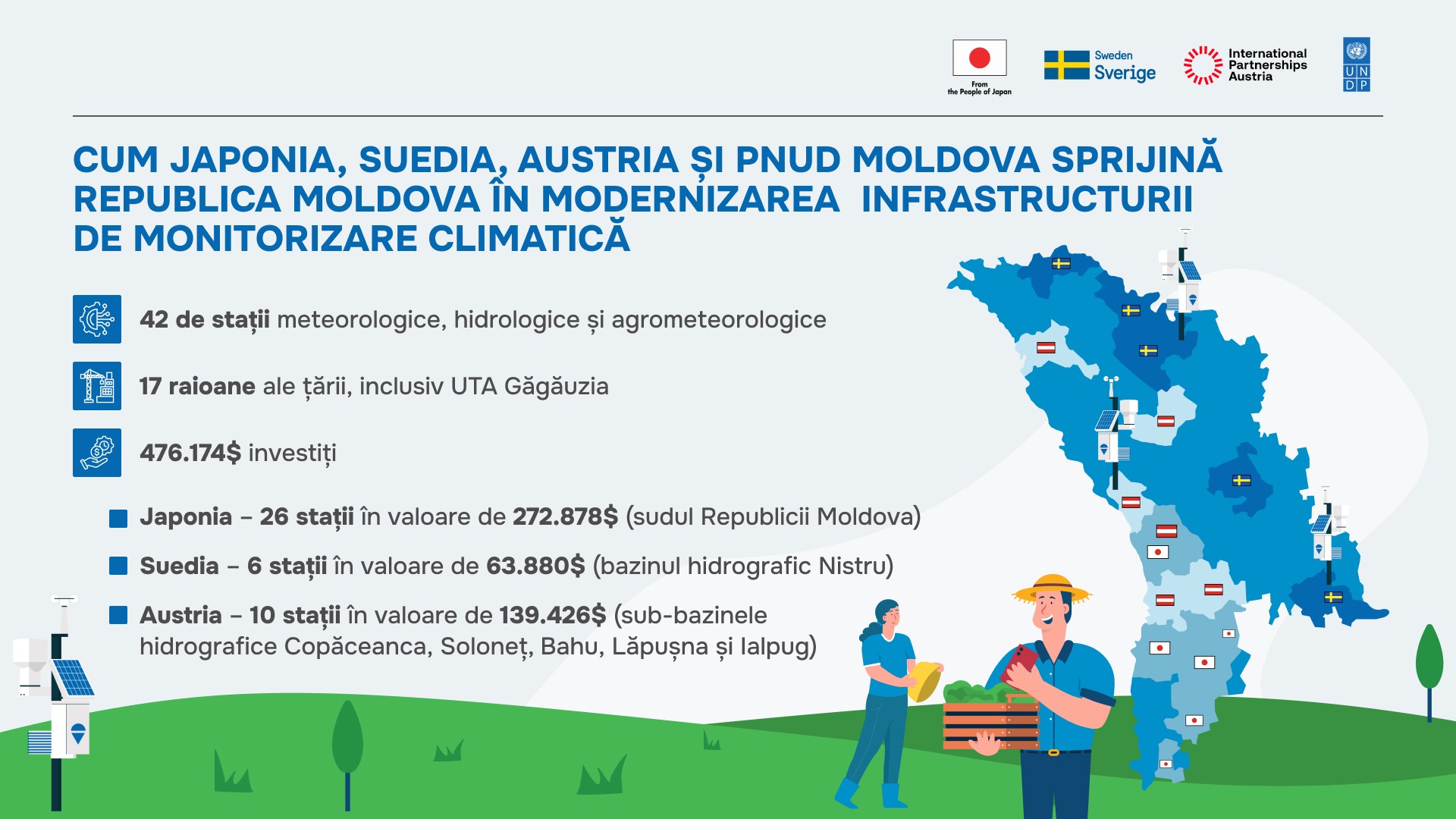
The Republic of Moldova is taking an important step in strengthening its resilience to climate change by fully modernizing the national meteorological, hydrological, and agrometeorological monitoring system. Through a joint effort of development partners from Japan, Sweden, and Austria, coordinated by the United Nations Development Programme (UNDP), the country is benefiting from 42 state-of-the-art stations designed to protect the population and the agricultural sector from extreme weather events.

The total investment, which exceeds 476,000 US dollars, enables the provision of accurate, real-time data for residents and farmers in 17 districts, as well as in the Autonomous Territorial Unit Gagauzia. The new equipment, managed by the State Hydrometeorological Service, forms a unified early warning system for droughts, frosts, heavy rains, and floods.

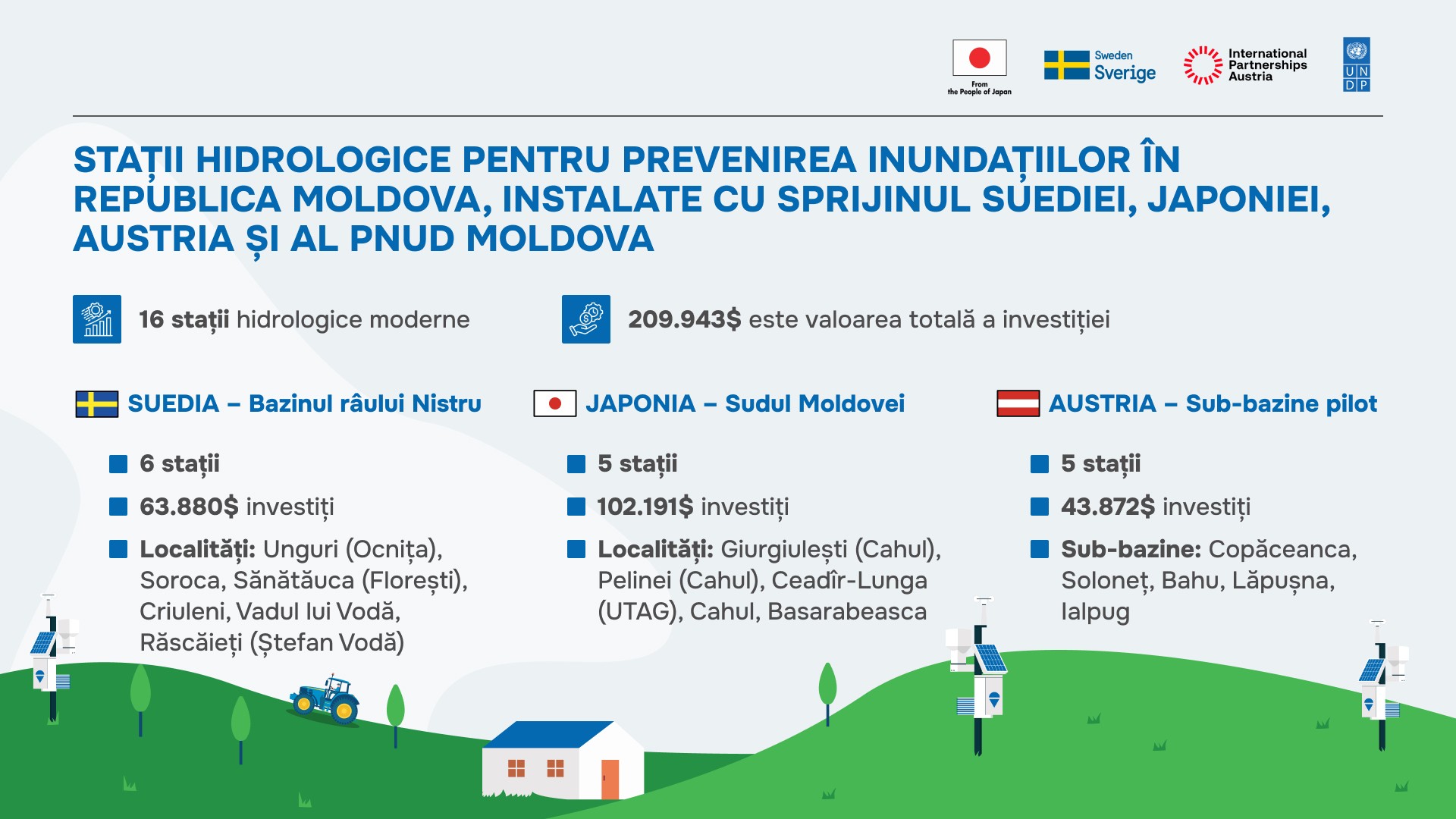
The hydrological network has been strengthened with 16 automatic stations that monitor water basins from north to south.

"This expansion allows the authorities to forecast flash floods, especially on small rivers, providing the necessary time to mobilize intervention resources, as the geographical distribution of investments has been carried out strategically. Sweden financed the modernization of six stations along the Dniester River, in the localities of Unguri, Soroca, Sanatauca, Criuleni, Vadul lui Vodă, and Răscăieți. Japan supported the installation of five stations in the southern area, in Giurgiulești, Pelinei, Ceadîr-Lunga, Cahul, and Basarabeasca. Austria is supporting the installation of five stations in Copăceanca, Soloneț, Bahu, Lăpușna, and Ialpug sub-basins, a process that is to be completed by late 2026," explains UNDP.

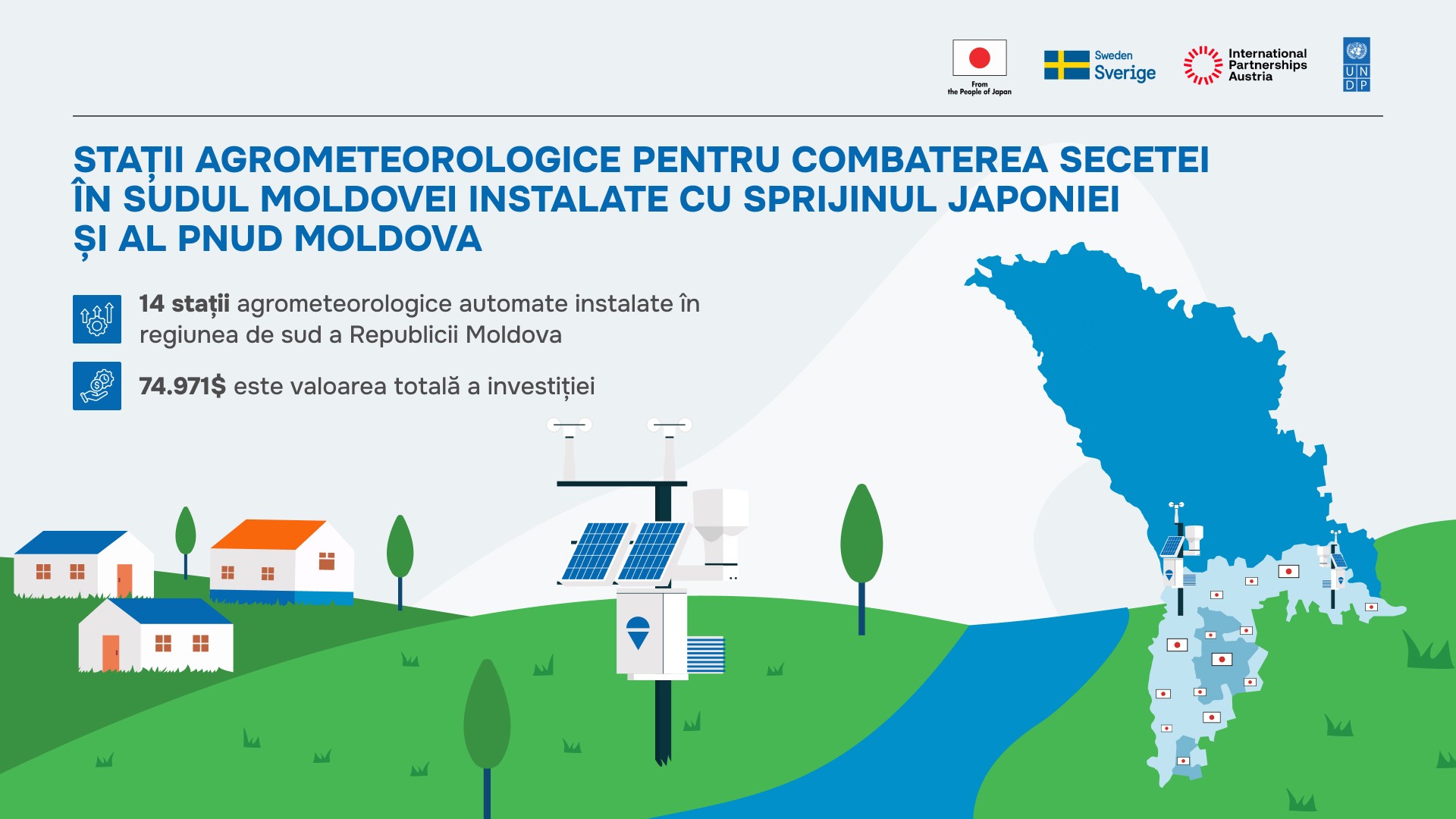
The southern region, which is most exposed to aridization processes and prolonged droughts, has been equipped with 14 automatic agrometeorological stations, installed with the support of the Government of Japan.

"These tools are vital for farmers, providing them with essential information on the optimal time for irrigation, protection against late frosts, or the harvesting period. Accurate data allows farmers to choose the most resistant varieties for local microclimates, reducing the massive financial losses recorded in recent years," according to UNDP.

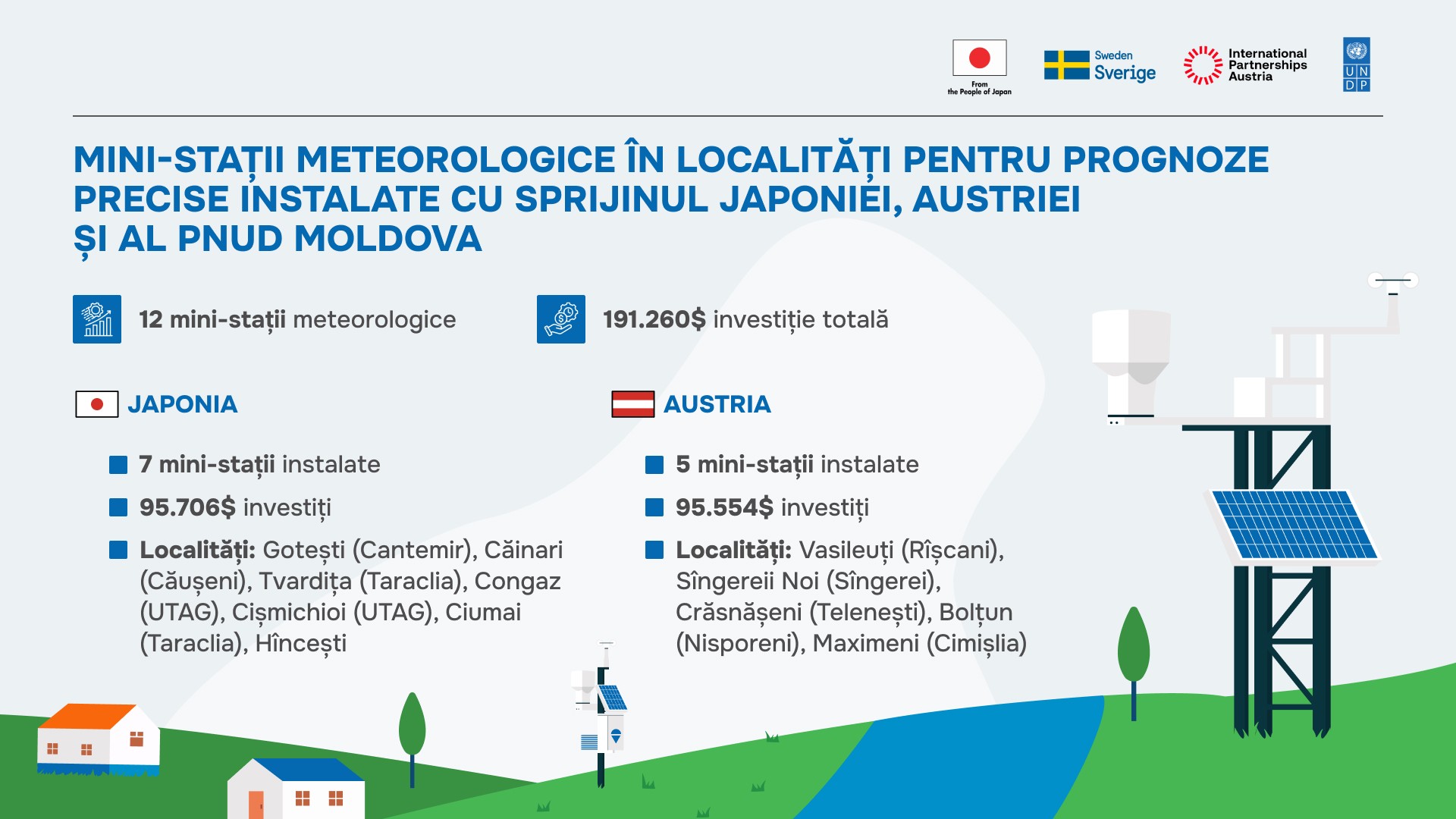
Additionally, to increase the accuracy of local forecasts, 12 mini meteorological stations are being integrated into the national network to serve villages across Moldova.

Thus, seven units funded by Japan are already operational in the localities of Gotești, Căinari, Tvardița, Congaz, Cișmichioi, Ciumai, and the town of Hîncești. Another five stations, funded by Austria, are to be installed in Vasileuți, Sîngereii Noi, Crăsnășeni, Bolțun and Maximeni.

These mini-stations allow local public authorities to issue early warnings specific to each locality, giving citizens the opportunity to protect their households and property against severe weather conditions.
 Facebook
 Instagram
 X/Twitter
 Telegram
Moldovan president delivers message at Economic Forum in Bratislava
VIDEO // Moldovan deputy PM says more than half of regular passenger routes not being operated at present
Mechanism of setting prices for fuels to be changed in Moldova during emergency state period
VIDEO // Road transport fares temporarily adjusted by government decision in Moldova
Energocom company says electricity demand fully covered in Moldova for March 26
Giurgiulești Free Port becomes strategic objective and receives new facilities for investors
Over 2,200 tons of fuel imported in Moldova on Wednesday
Record tax revenue to state budget in a single day
Vignette payment now available online via EVO government platform
DOC // Published in Official Journal of Moldova: special measures to protect energy system, reduce consumption during state of emergency enter into force
Tax exemptions for eastern districts of Moldova to be gradually eliminated
Salary increases for more categories of public sector employees not to be postponed in Moldova
What state of emergency in energy sector means: explanations of Moldova's Energy Ministry
Energocom: electricity needs for March 25 fully covered in Moldova
ANRE reduced electricity prices for Premier Energy and FEE Nord consumers
New agrometeorological stations to help farmers in Moldova combat drought and frost
Another Shahed-type drone detected while unauthorizedly flying over national airspace in Transnistrian segment
National airspace overflown by Shahed drone
 National Bank of Moldova
Prime Minister at Romania Government Roundtable Conference
Moldovan president’s working visit to Finland postponed later date
PM meets Ambassador of Czech Republic to Moldova
Moldovan president has meeting with delegation of European affairs committees from, Baltic, Nordic states, Poland
Interreg Europe Programme in Moldova: funding opportunities, interregional cooperation

Moldova’s airspace violated again: Shahed drone found in Dubăsari–Orhei area
Discover Moldova with #MOLDPRES: The “Hundred Mounds” as symphony of silent hills, geological monument of European importance
Moldovan president’s working visit to Finland postponed later date
PM meets Ambassador of Czech Republic to Moldova
Moldovan president has meeting with delegation of European affairs committees from, Baltic, Nordic states, Poland
Perspectives on Moldova's European integration: experts says joint declaration announced today by officials from seven states good political signal
Moldovan energy minister thanks partners from Romania, Ukraine, EU for vital support to Moldova’s power system
Interreg Europe Programme in Moldova: funding opportunities, interregional cooperation
Nicolae Testemitanu Medical University of Moldova launches new master’s programme, Health Promotion and Protection
Moldovan PM to pay official visit to Bucharest
Moldovan runner sets course record at half marathon in Patras, Greece
European Union member states' MPs call for speeding up EU accession talks with Moldova; declaration to this effect signed in Chisinau
Chisinau Airport launches summer season with 70 international routes
Almost 24 thousand tons of gasoline and 3,300 tons of diesel imported into Moldova in last three days
MOLDPRES INTERVIEW // Customs Service Director: Moldova has necessary experience to contribute to development of European customs system
First diesel price cut since outbreak of Middle East conflict
Receive the latest news directly to your email

Receive the latest news directly to your email