
Moldova seeks to attract more freight to TRACECA corridor and proposes facilities for carriers
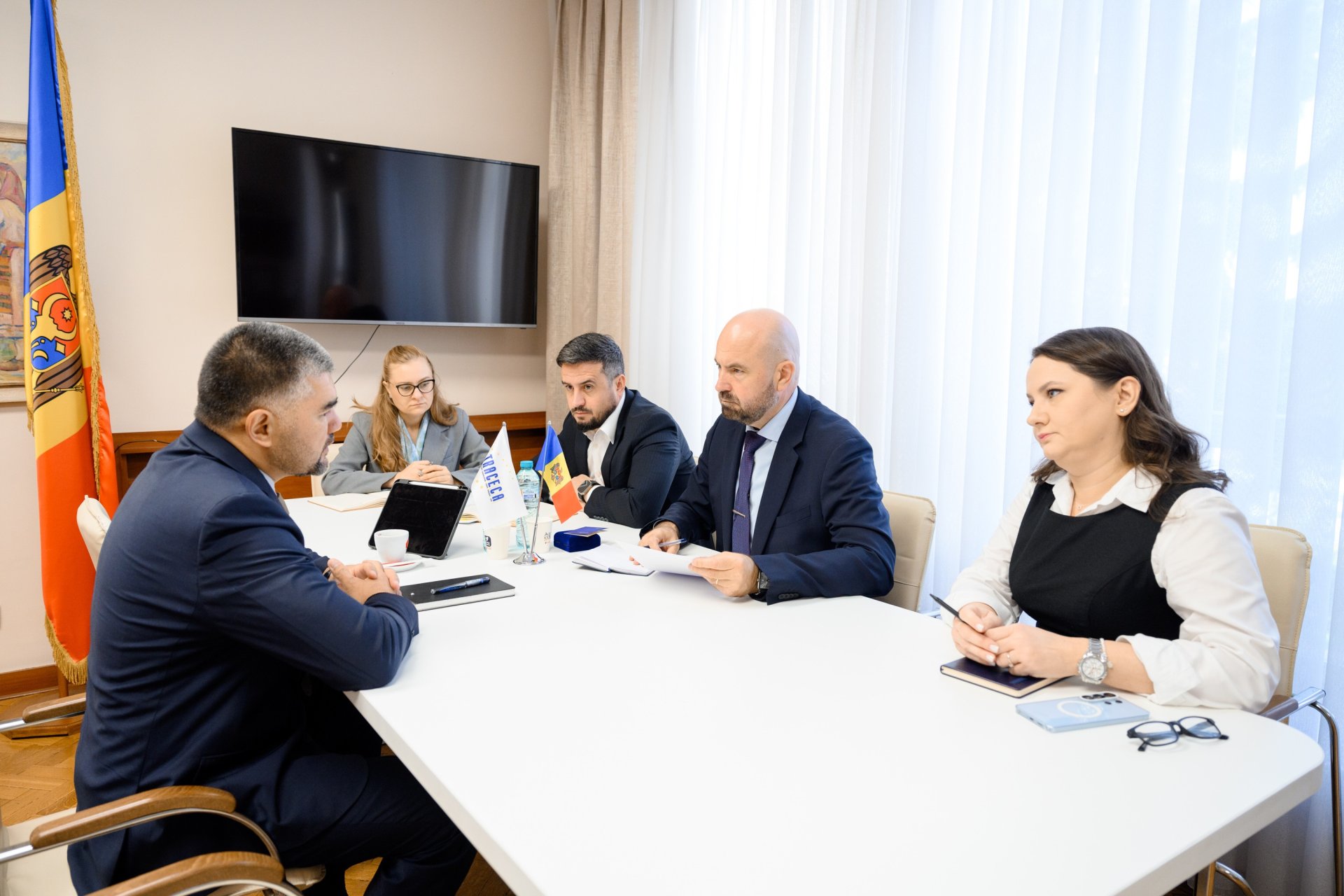
The Republic of Moldova aims to strengthen its role as a logistics hub between Eastern and Western markets and attract a larger share of international freight flows. Deputy Prime Minister, Minister of Infrastructure and Regional Development Vladimir Bolea and TRACECA Secretary General Jasurbek Choriev discussed the issue.

According to the Ministry of Infrastructure and Regional Development, the officials discussed TRACECA priorities and the concept of the organization’s Strategy for 2027–2036. The document is expected to focus on the development of transport corridors, the harmonization of standards, the digitalization of documents, multimodal transport, and the involvement of the private sector in identifying problems along international routes.

In this context, Jasurbek Choriev invited the Republic of Moldova to appoint private-sector representatives to the new TRACECA Business Council. The body is expected to bring the problems faced by carriers to the attention of participating states and contribute to identifying common solutions.

Vladimir Bolea said that the Republic of Moldova is developing its railway, road, port, and airport infrastructure to strengthen its position as a logistics hub between East and West. According to the minister, Chișinău also advocates aligning TRACECA mechanisms with European Union standards and systems, particularly in the areas of documentation, digitalization, and information exchange.

The official emphasized that changes in trade routes resulting from the war in Ukraine have created new opportunities for the TRACECA corridor, but also additional transport costs. In this context, Vladimir Bolea proposed analyzing preferential tariffs for carriers from TRACECA countries so that the use of the corridor generates concrete economic benefits.

Another topic discussed was the introduction of the TRACECA Single Transit Permit, a document that would replace national permits and be valid along the entire route, from the point of departure to the destination. Five TRACECA countries—Azerbaijan, Kazakhstan, Kyrgyzstan, Ukraine, and Uzbekistan—signed the agreement on this permit in May 2026, while the other participating states are carrying out the necessary internal procedures to join.

The discussions also focused on expanding the corridor by attracting new strategic partners, particularly China and Pakistan, to develop logistics connections between Europe and Asia.

At the end of the meeting, the TRACECA Secretary General invited Vladimir Bolea to the organization’s extraordinary meeting, scheduled for November 27 in Baku, where TRACECA’s reforms and strategic development directions are to be examined.

TRACECA is a cooperation program aimed at developing trade and transport connections between Europe, the Black Sea region, the Caucasus, and Central Asia. The organization brings together 14 member states of the Multilateral Basic Agreement, including the Republic of Moldova, Romania, Ukraine, Bulgaria, Türkiye, Georgia, Azerbaijan, and Central Asian countries.
 Facebook
 Instagram
 X/Twitter
 Telegram
Moldova International Exchange initiates admission process for capital market
PHOTO GALLERY //11th edition of Moldova Business Week starts in Chisinau
Moldova Business Week 2026 starts in Chișinău
Chișinău and Bălți residents to pay more for heating
New natural gas tariffs for final consumers approved by ANRE
PHOTO // PM promotes Moldova's investment opportunities in New York
PHOTO, VIDEO // NBM launches commemorative coin dedicated to ASEM’s 35th anniversary
Moldovan government promises maximum transparency in gas procurement
Energocom company of Moldova requests gas prices' adjustment after 42-per cent rise in European quotations
Vulcănești–Chișinău Power Line: defective equipment at Chișinău substation repaired
VIDEO // Officials and international experts present opportunities for Moldova’s organic agriculture in Chisinau at Southeast European Conference
Moldovan PM responds to opposition MPs on cutting fuel excise duty, value-added tax
Moldovan energy minister gives explanations on how Transnistrian region to be supplied with energy resources during next cold season
Moldovan government negotiates direct contracts with major gas producers; PM makes clarifications
Parliament speaker denounces violation of Moldova’s airspace
Moldovan president says Russia’s war against Ukraine directly endangers lives of Moldova's citizens
Foreign Affairs Ministry condemns violation of Moldova’s airspace by five drones: “Russia’s war against Ukraine continues to generate concrete threats for Moldova”
VIDEO // Drone fragments detected in more settlements of Moldova; police investigate explosions reported
More drones fly over airspace of Moldova
National Wine Day 2026 in Moldova: 25 years of tradition, award-winning wines, industry conquering international markets
PHOTO GALLERY // National Wine Day during 25 years: celebration of Moldovan wine in photographs from MOLDPRES Archive
 National Bank of Moldova
Moldovan PM to pay working visit to Brussels
Measurement of performance, monitoring of government's priorities discussed at Moldova's government
Preparing of Moldovan authorities to access EU funds: Poland’s experience presented in Chisinau
PM attends annual meeting of Moldova's honorary consuls
Parliament's foreign policy commission hears Foreign Affairs Ministry's report on economic diplomacy's goals of Moldova

Measurement of performance, monitoring of government's priorities discussed at Moldova's government
Three honorary consuls of Moldova awarded Diplomatic Merit medal
Preparing of Moldovan authorities to access EU funds: Poland’s experience presented in Chisinau
Candidates for position of Gagauzia's bashkan must know Romanian language; Moldova's Constitutional Court rejects challenge by Party of Socialists
Bomb threat at Eugen Doga International Airport – Chisinau; passengers evacuated
PM attends annual meeting of Moldova's honorary consuls
ARMENPRESS // Court orders Azerbaijani serviceman who shot Armenian woman held in pre-trial detention
Parliament's foreign policy commission hears Foreign Affairs Ministry's report on economic diplomacy's goals of Moldova
Moldovan president proposes Moldova–Finland dialogue on resilience in Helsinki
Summary of Moldovan parliament's plenary meeting held on October 2, 2026
President of Finland says strategic window open now, Moldova must use it
Moldovan president in Helsinki says country's response to become stronger
VIDEO // Moldovan president in Helsinki says war reaching territory of Moldova; Finnish head of state: ''Moldova’s place is in the EU”
Moldovan PM has meeting with Austria’s Ambassador: European integration, strengthening economic cooperation on discussions' agenda
DOC // Two honorary consuls of Moldova awarded Order of Honour
Moldova does not rule out expelling Russia’s Ambassador after drone incidents; Moldovan parliament speaker says everything possible
Receive the latest news directly to your email

Receive the latest news directly to your email