
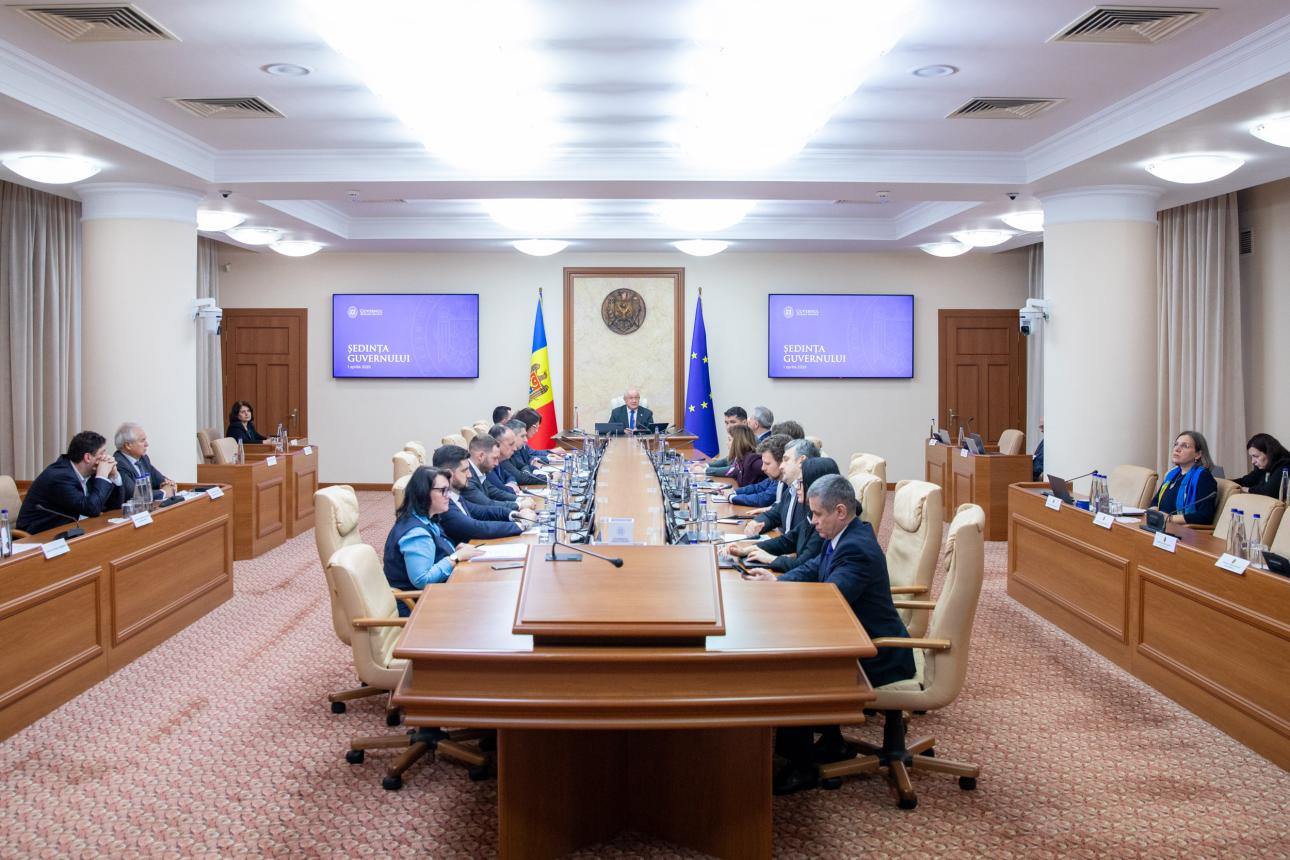
Government tightens penalties for drug-related offences
Penalties for drug-related offences will be tightened, and measures to protect children and young people will be strengthened. The Government has approved the necessary amendments to prevent and combat more effectively the illegal circulation of drugs and other narcotic substances.

This adjustment is important in the context of the growing share of synthetic drugs and the use of digital platforms for their distribution, as well as the involvement of criminal groups, including at cross‑border level.

According to the draft, the penalty for involving minors in drug-related offences will increase from 3–7 years to 5–8 years of imprisonment. At the same time, persons who have committed drug-related offences for the purpose of sale or distribution will no longer be able to avoid criminal liability.

The new provisions introduce criminal sanctions for the use of online platforms and communication applications in drug trafficking, with penalties ranging from 2 to 12 years of imprisonment, depending on the gravity of the offence. Previously, the law did not explicitly provide for sanctions for these acts.

The law will also include new psychoactive substances, ethnobotanical products and drug substitutes, in order to address emerging forms of trafficking and consumption. Penalties will be tightened for serious cases as well, including when minors are involved, when violence is used, or when organised criminal groups are active.

In addition, employees in the fields of health care, social assistance and education will have additional responsibilities for preventing drug use in the institutions where they work.

The draft also provides for modern control tools, including an electronic register that will allow the tracking of parcels and will reduce their use for transporting prohibited substances.

Through these amendments, the aim is to reduce drug circulation, discourage involvement in such offences, better protect children and other vulnerable persons, and provide more effective intervention tools to the competent institutions.

Between 2019 and 2025, state institutions have significantly intensified the actions in this area, with more than 7,000 offences and about 20,000 contraventions detected and investigated. The figures demonstrate both the increasing scale of the phenomenon and the improvement of identification and intervention mechanisms.
 Facebook
 Instagram
 X/Twitter
 Telegram
Moldovan PM has discussions with European Commissioner for Democracy, Justice and the Rule of Law
Moldovan PM has meeting with Romania’s economy minister
Moldovan President attends General Assembly of Judges
President’s address to General Assembly of Judges
TeConsult strengthens role in open government: second edition of training program completed
Moldovan parliament takes note of MP's resignation
Moldovan government approves new measures to protect consumers, ensure access to fuel
Road passenger transport fares to be adjusted in Moldova
Moldovan president on first official visit of a Moldovan head of state to Slovakia: deepened bilateral partnership, joint commitment to Moldova’s EU accession
Weekly meeting of Joint Control Commission held in Bender today
President Maia Sandu’s speech at joint press conference with President of the Slovak Republic Peter Pellegrini
Moldovan deputy PM for reintegration has meeting with high official of United Kingdom
Veterinary, phytosanitary experts from both banks of Dniester hold working meeting
Government approved set of measures to protect energy system and reduce consumption during state of emergency
VIDEO // Moldovan President welcomed by Latvian counterpart at Riga Castle
Ministry of Finance announces halt to acceptance of funding applications for compensation under First Home program
Government staff reshuffle
Prime Minister about state of emergency: We will not maintain it for even one day longer than necessary
 National Bank of Moldova
Moldovan President’s speech at joint press conference with President of the Republic of Latvia
New rules to protect health of workers exposed to occupational risks
Cases of violence to be monitored uniformly at national level for early prevention and more effective intervention
Moldovan driving licences to be recognized in Ireland
Moldovan PM has meeting with Romanian counterpart

Moldovan driving licences to be recognized in Ireland
Moldovan President pays official visit to Latvia
As of 1 April drivers may drive without using low beam headlights during day
Higher pensions and social benefits: 6.84 percent indexation applied as of today
Moldovan PM has meeting with Romanian counterpart
Moldovan government's secretary general in Strasbourg says good reforms achieved through strong partnerships, dialogue, solutions for people’s well-being
Moldovan PM has discussions with Romania's president
Romanian president says Moldova can always count on Romania’s support
VIDEO // Moldovan parliament speaker at Bucha Summit says Ukrainians deserve just victory, Ukraine to prevail
Moldovan deputy PM for reintegration has meeting with Secretary-General of Federal Ministry for European and International Affairs of Austria
Moldovan PM invites members of American Chamber of Commerce in Romania to invest in Moldova
Over 1,800 hectares of forest to be planted in 15 districts along Dniester River, under World Bank–supported programme
Moldovan parliament speaker participates in Bucha Summit
Moldovan president conveys message at Romania Government Roundtable conference
Daniel Mititelu wins public competition for position of Moldova's National Energy Regulatory Agency
Moldovan expert says Moldova becomes strategic constant in Romania
Receive the latest news directly to your email

Receive the latest news directly to your email