
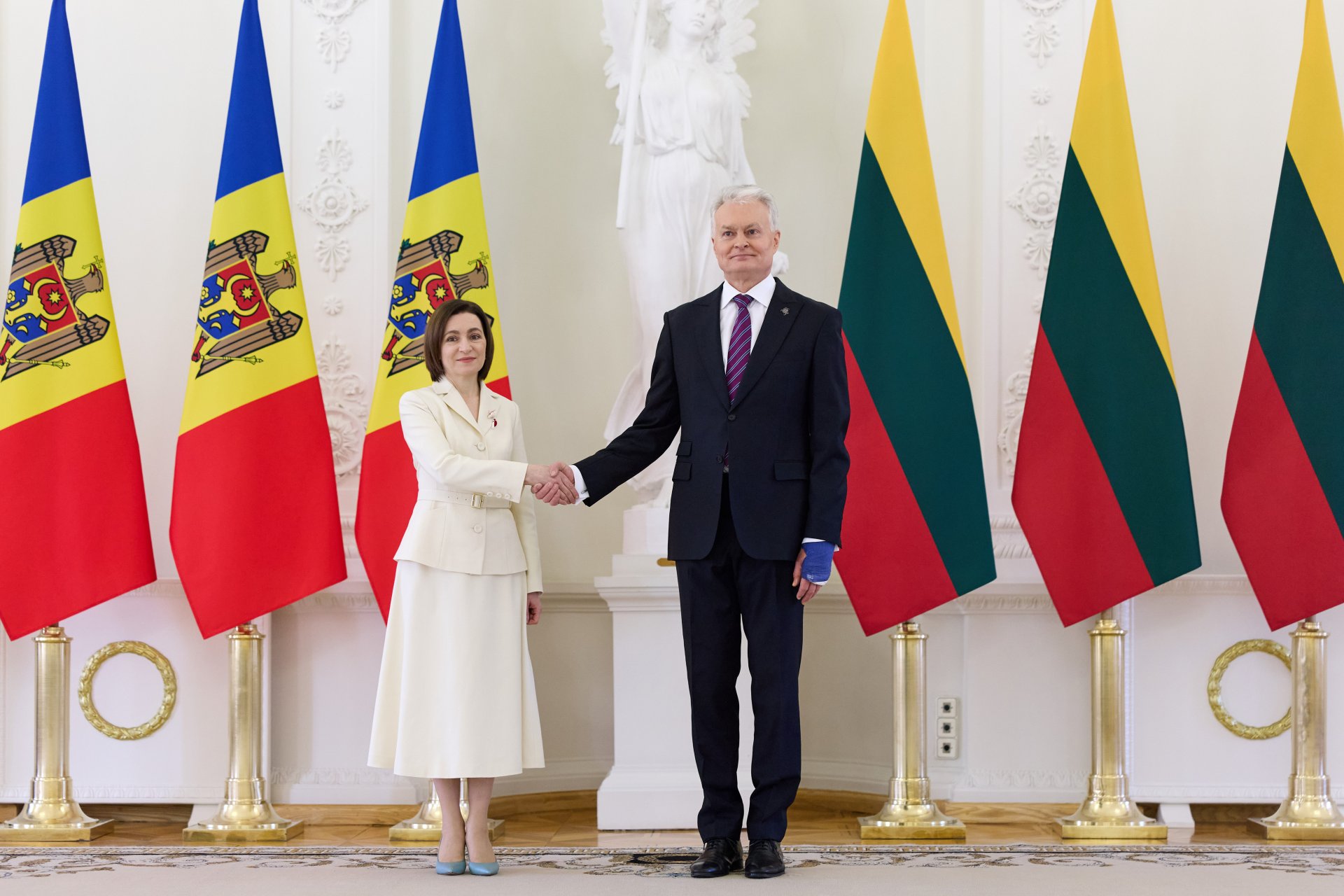
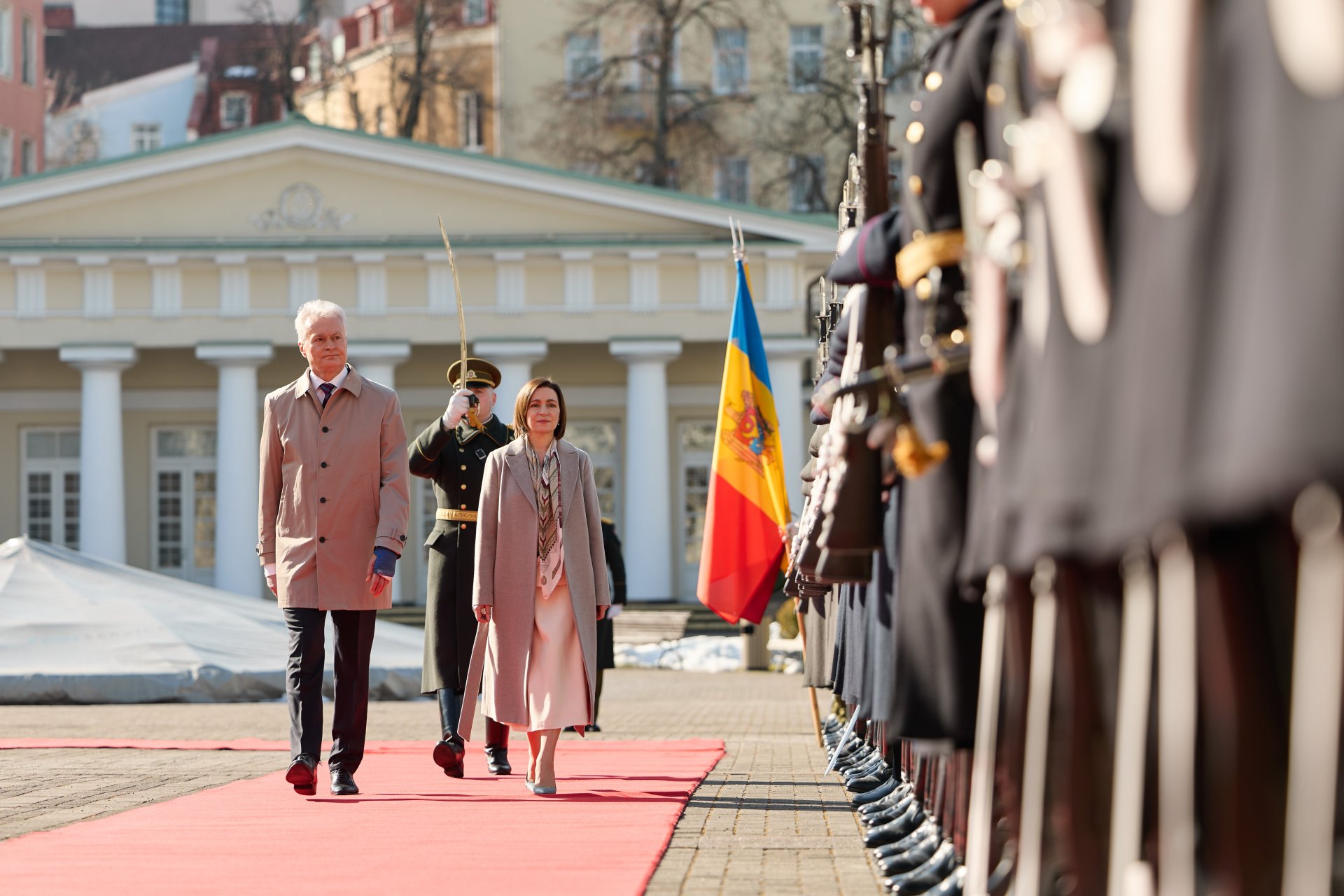
PHOTO // Lithuanian President: Accession of the Republic of Moldova and Ukraine to EU by 2030 - strategic objective of country
The accession of Moldova and Ukraine to the European Union by 2030 is a strategic objective of Lithuania. We welcome the progress made by Moldova in implementing reforms, despite truly difficult circumstances. We encourage you to continue and accelerate the reforms needed in the EU integration process so that their benefits are felt by society. The message was conveyed by President of the Republic of Lithuania Gitanas Nausėda, during a joint press conference with head of state Maia Sandu in Vilnius.

The Lithuanian official underlined that justice reform and the fight against corruption are essential elements in the accession negotiations with the European Union.

“In the integration process, Lithuania supports Moldova’s efforts to make full use of the opportunities offered by the EU–Moldova Free Trade Agreement. We also welcome the country’s accession to the SEPA payment system and its inclusion in the EU system of free mobile roaming. We want to continue cooperation in the process of implementing reforms, as tools for accelerating Moldova’s path towards integration into the European Union,” stated Gitanas Nausėda.

The President of Lithuania also reaffirmed his commitment to helping Moldova counter the unprecedented attacks coming from Russia.

“We are ready to share our experience in the information technology and communications sectors, especially in the field of electricity governance and cyber security. The support provided to Moldova has already reached the amount of half a million euros and continues to grow. We remain firmly committed to sharing our experience in implementing bilateral cooperation projects in areas such as law enforcement, border management and strengthening institutional capacities,” specified Gitanas Nausėda.

For her part, President Maia Sandu stressed that she is honored to be in Vilnius on the occasion of the 36th anniversary of Lithuania’s declaration of independence from the Soviet Union, proclaimed on 11 March 1990.

“The Republic of Moldova was the first country to recognize Lithuania’s independence. In 1990, Lithuania dared to declare its independence, and Moldova had the courage to recognize this independence before we ourselves became independent. This is the foundation of everything we have achieved together – a long-term partnership in the fields of defense and security. This partnership continues to grow. Lithuania is strengthening our democracy, and Moldova is one of its development cooperation partners. Lithuania is helping the Republic of Moldova to strengthen its army, bolster its cyber resilience and combat information manipulation. In the reality in which we live, this is very important. In Brussels, in the European Council and in all the institutions where our accession to the European Union is discussed, Lithuania supports us and we are grateful for this,” said Maia Sandu.

Maia Sandu also noted that Lithuanian investors were the first to harness the economic potential of our country – a practical expression of confidence in the reforms carried out by the Government in Chișinău.

“Starting in May, there will be a direct flight between Chișinău and Vilnius. This is a symbol of how close our countries are to one another. We want more Lithuanian companies to discover Moldova. Investment opportunities are real, the business environment is improving, and the EU accession process is creating new conditions for growth,” said Maia Sandu.

She pointed out that the Republic of Moldova is following in Lithuania’s footsteps on the road to the European Union, and along this path the country is undergoing an extensive process of reforms in key sectors.

“In 1990 you chose independence, and in 2004 you joined the European Union. This is the result of long-term work. We will follow the same path, but the world around us has changed. Lithuania started its journey in peace, at a time when many believed that democracy had triumphed in Europe. We, however, are walking this path in a world of shadows, in a darker world. Our citizens know this and are asking us to move faster. We rid ourselves of dependence on Russian gas in three years. Previous governments failed to do this in 30 years. We are fighting corruption, reforming the judicial system and reforming all areas of society. We are contributing to Europe’s security and sending our peacekeepers and firefighters to partner countries,” the official emphasized.

Referring to the war in the neighboring country, Maia Sandu stated that Ukraine must win, not just hold the line at the front. “The courage shown by Ukrainians in defending their state and the security of the entire continent deserves our support – through weapons, resources and political will. We must concentrate our efforts. Moldova is fully determined to take the necessary actions to contribute to this objective. Moldova’s resources may indeed be modest, but our voice is strong. We will always support Ukraine everywhere – in all institutions, at every table, in every format – because we know from our own experience and from the experience of Ukrainian families who have come to us that this is not someone else’s war,” Maia Sandu concluded.

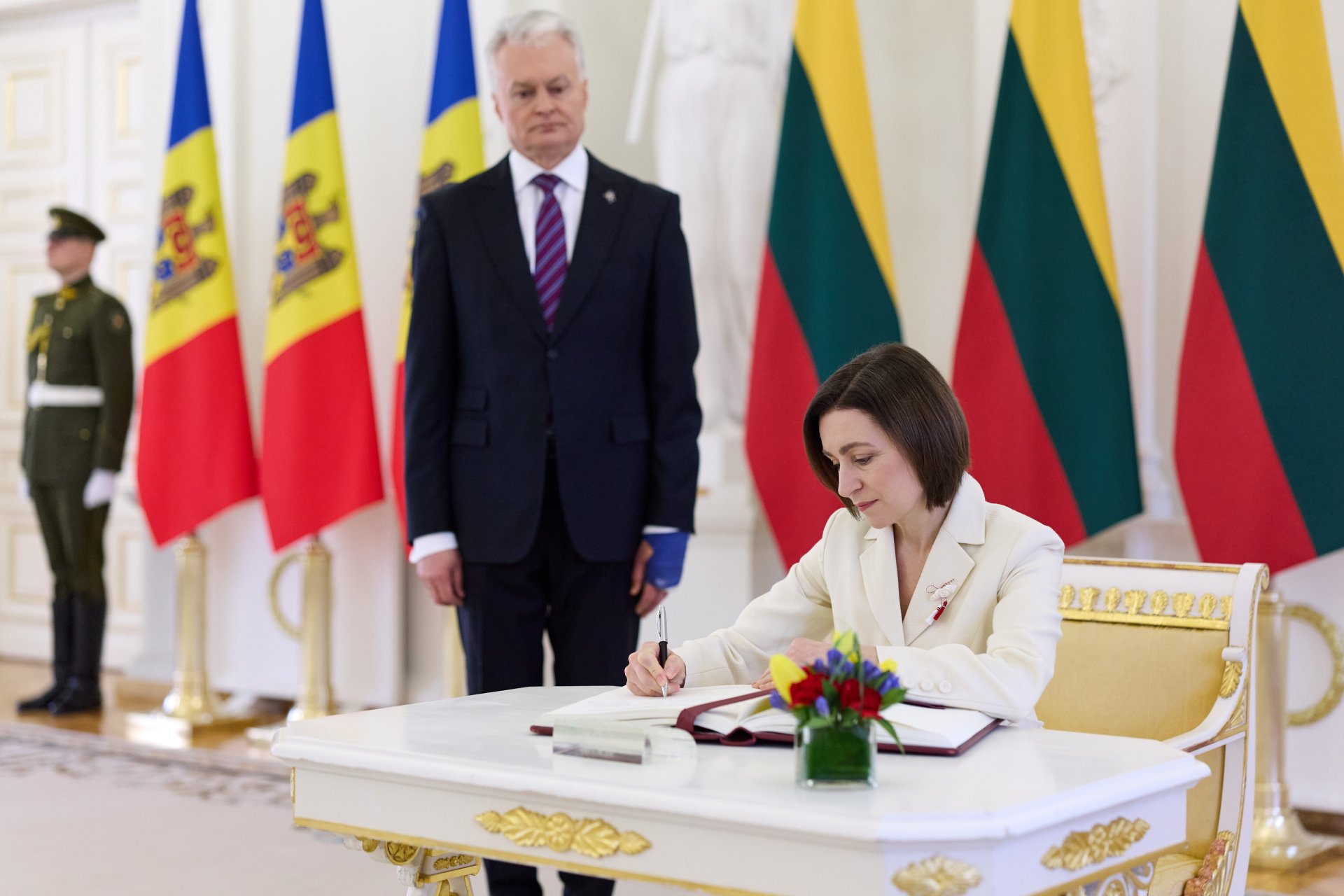
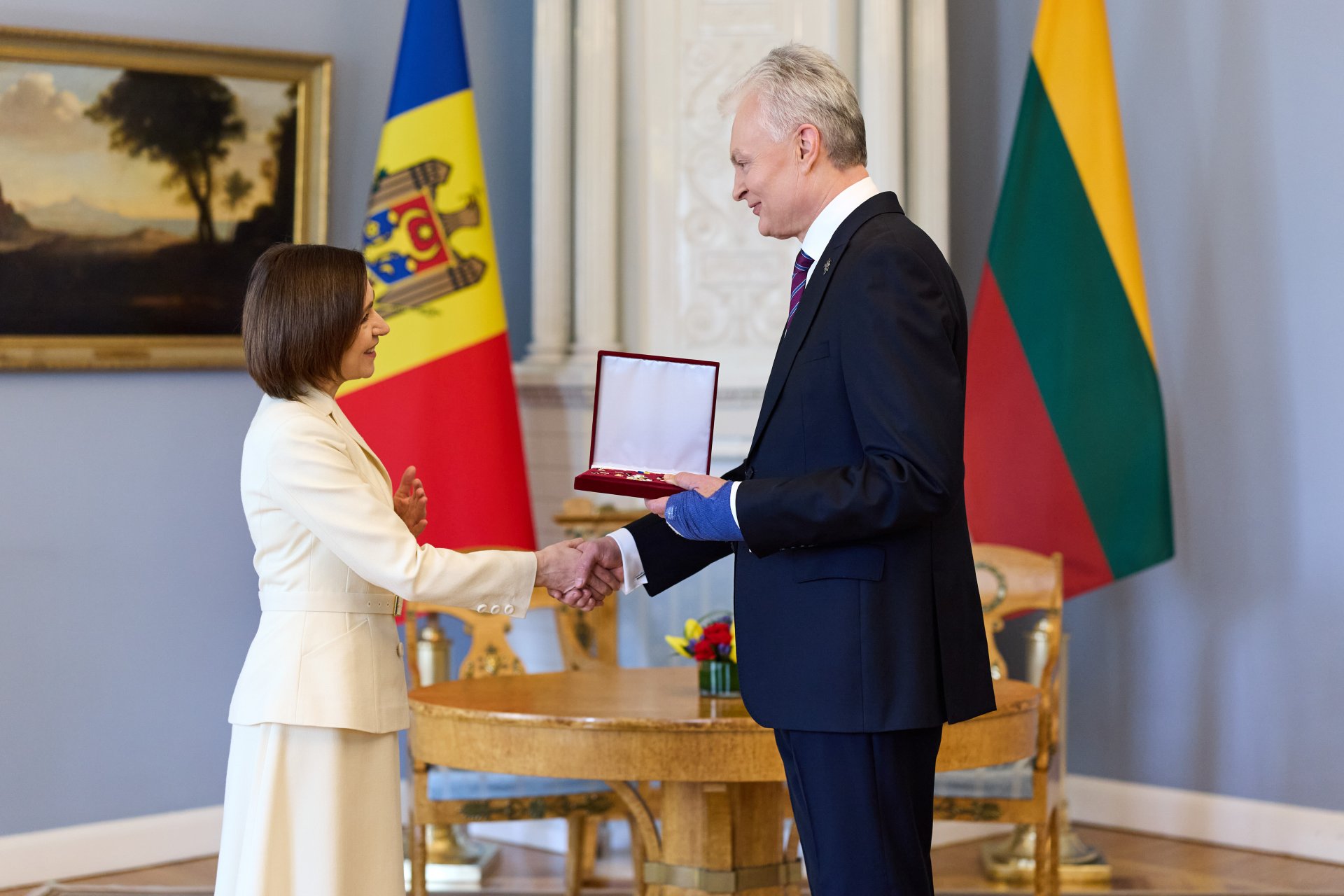
During her official visit to Vilnius, Maia Sandu awarded the President of the Republic of Lithuania, Gitanas Nausėda, the Order of the Republic. The distinction is granted as a sign of high appreciation for his outstanding contribution to the development and strengthening of Moldovan–Lithuanian relations of friendship and good cooperation, as well as for his full support for the European path of the Republic of Moldova.

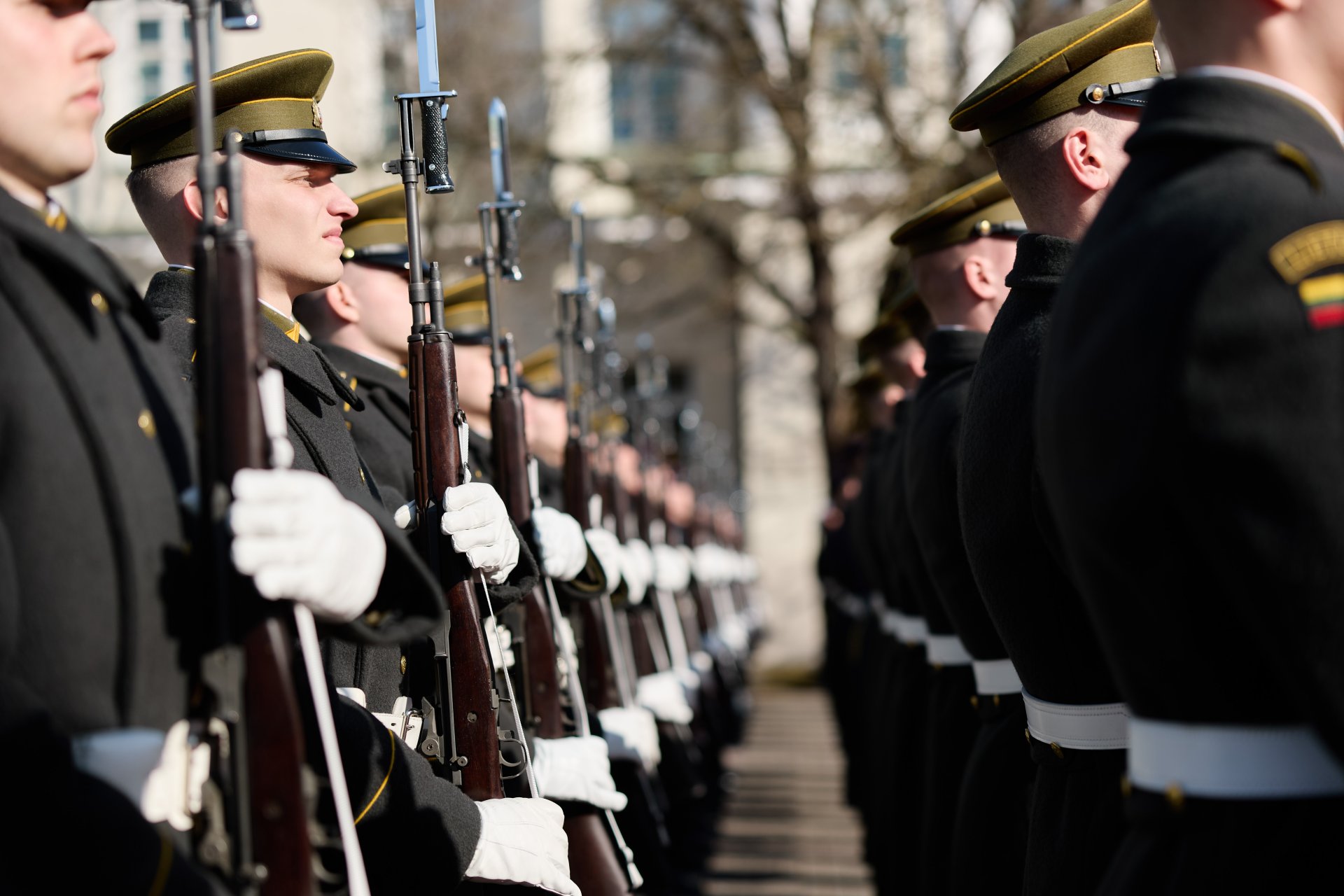
Maia Sandu is paying an official visit to Vilnius on 10–11 March this year, at the invitation of President Gitanas Nausėda. The visit takes place on the occasion of the 36th anniversary of the restoration of Lithuania’s independence from the Soviet Union, proclaimed on 11 March 1990 – an act that Moldova was the first country to recognize. On this occasion, the head of state will deliver a speech in the plenary of the Vilnius Parliament during a solemn session.

The visit agenda includes meetings with Lithuanian counterpart, Prime Minister Inga Ruginienė and Speaker Juozas Olekas. The discussions will focus on the European path of the Republic of Moldova, strengthening security and resilience in the region, continued support for Ukraine, as well as bilateral cooperation, including investment opportunities for Lithuanian companies in our country.
 Facebook
 Instagram
 X/Twitter
 Telegram
PHOTO // Honorary Consulate Office of the Republic of Moldova inaugurated in Hamburg
Historic decision: Moldova leaves statutory bodies of CIS
PHOTO // Moldova’s Ambassador to Romania presented letters of credence to President of Romania
Government declares energy sector alert in connection with Middle East war
High-level Moldova–United Arab Emirates call amid regional tensions
Economic cooperation and European path of Moldova discussed in Hamburg
Moldovan–British cooperation discussed in parliament during official visit
VIDEO // Republic of Moldova marks four years since submitting application for European Union membership
Moldovan-Romanian bilateral cooperation strengthened through new diplomatic mandate: Ambassador of Moldova presented copies of accreditation letters in Bucharest
Parliament speaker says, after 34 years, Moldovans have duty to build bridges, where there were walls
PHOTO // Decade of Memory and Gratitude launched in Chisinau; Moldovan president says state without memory vulnerable state
EU Entry/Exit System extended to more border crossing points of Moldova as of March 2
Moldovan PM conveys message on 34 years since outbreak of Transnistria War
Perspectives concerning Moldova's territorial reintegration; expert says reunification can happen through society’s collective refusal to play Russia’s game
PHOTO // Lithuanian President: Accession of the Republic of Moldova and Ukraine to EU by 2030 - strategic objective of country
Around 25 percent of gross final electricity consumption covered last year by renewable energy
Lithuanian President awarded Order of Republic
Measures to ensure security of gas supply to Transnistrian region
Deputy Prime Minister for Reintegration meets with Minister of Foreign Affairs of Romania
Crisis Cell: 30 Moldovan citizens evacuated from United Arab Emirates
Citizens can collect February heating compensation
 National Bank of Moldova
Lithuanian President awarded Order of Republic
Deputy Prime Minister for Reintegration meets with Minister of Foreign Affairs of Romania
Moldovan PM has meeting with oil products importers
Transnistrian file discussed with researchers from United States
Deputy Prime Minister: Reintegration - complicated, lengthy process with many unknowns

Over 300 draft laws for harmonization with EU legislation to be examined by Parliament this year
DOC // Moldova to establish oil products' stocks sufficient for 90 days of consumption
Moldovan women’s voices at United Nations; Deputy parliament speaker says no woman should have to suffer in silence anymore
Discover Moldova with #MOLDPRES: Railway tourism, new opportunity to promote country – picturesque journeys through villages, vineyards, authentic landscapes
Moldovan PM has meeting with oil products importers
Transnistrian file discussed with researchers from United States
VIDEO // Moldovan authorities give assurances about fuel stock levels; Energy minister says Moldova has sufficient volumes current, medium-term consumption
PHOTO // Moldova's General Police Inspectorate equipped with 17 mobile sectors for field interventions
Moldova's General Police Inspectorate initiates two criminal proceedings on death of woman
Director of Ruse University's branch from Taraclia, ARBOM head meets President of Bulgaria
VIDEO // Government of Japan provides grant for renovation of social center in south Moldova through Kusanone programme
Attention, travelers! Work of Moldovan-Ukrainian border crossing points temporarily suspended over technical deficiencies
VIDEO // “Round Dance of Tractors” symbolically opens Moldova’s agricultural season: event held on eve of Moldagrotech Spring 2026 exhibition
Moldovan wines win 119 medals at MUNDUS VINI Spring Tasting 2026 international competition in Germany
PHOTO // USMF "Nicolae Testemițanu" national leader by articles indexed in scientometric databases Web of Science and Scopus
Deputy Prime Minister: Reintegration - complicated, lengthy process with many unknowns
Receive the latest news directly to your email

Receive the latest news directly to your email