
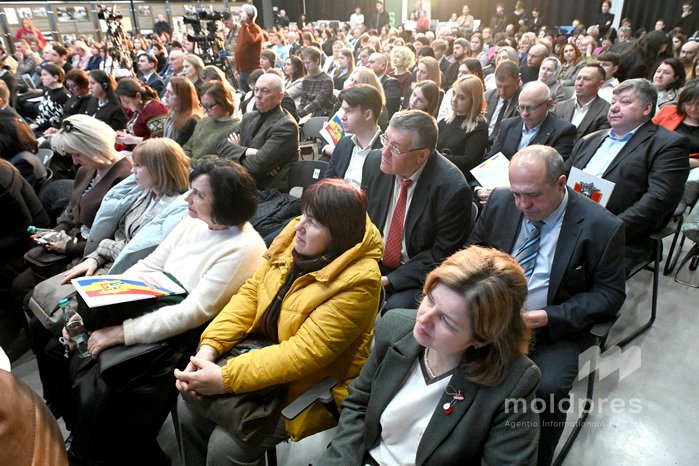
PHOTO // Decade of Memory and Gratitude launched in Chisinau; Moldovan president says state without memory vulnerable state
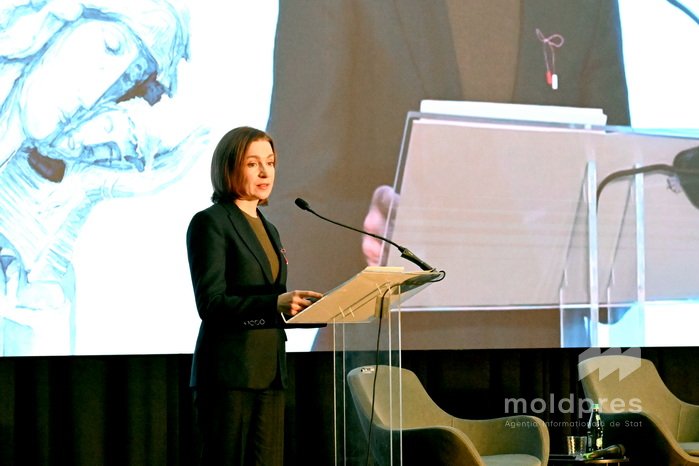
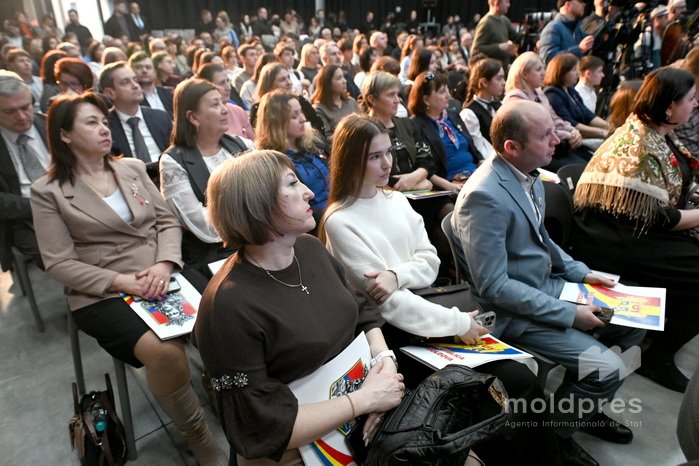
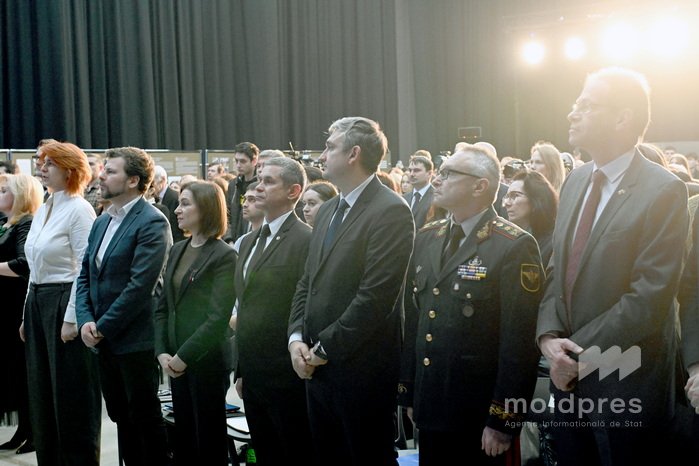
The culture of memory means truth and a state without memory is a vulnerable state. In an era of manipulation and an increasingly aggressive cognitive war, developing critical thinking about historical sources and narratives must be a pillar of national resilience. President Maia Sandu today made statements to this effect, at the Scientific Conference on the Culture of Memory and Gratitude: Heritage, Present, Future, organized on the occasion of the launch of the Decade of Memory and Gratitude. The events take place in the context of marking 34 years since the start of the war on the Dniester River.

The president noted that March 2 is a day with a special emotional charge, the moment when we remember those who, in 1992, defended the independence and territorial integrity of Moldova.

Maia Sandu said that, in democratic societies, memory is not dictated, but built from documents, research, testimonies, education and public responsibility. According to her, the culture of memory means truth and a state without memory is a vulnerable state.

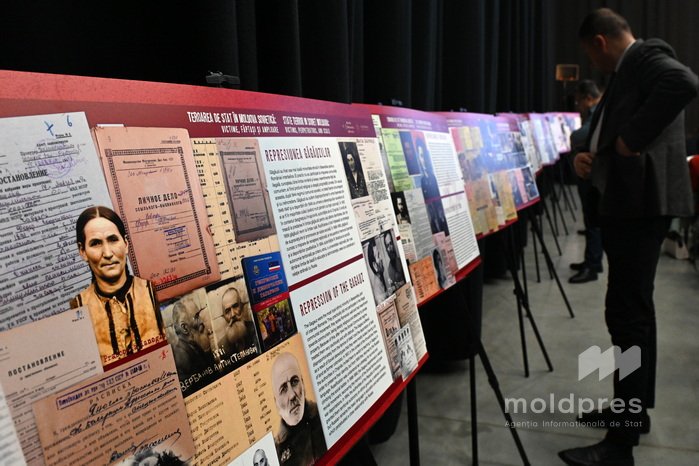
“Memory culture means not accepting the relativization of evil. Not confusing the aggressor with the victim. Not leaving room for justifications that, over time, become comfortable lies. In the case of Moldova, the memory of the war on the Dniester River is a lesson about the fragility of peace. It shows us how easily the constitutional order of a state can be attacked, how quickly an attempt can be made to short-circuit its democratic path. The culture of memory also means gratitude. Gratitude to those who defended the country, gratitude to those who, in the Soviet Union, survived deportations, camps and famine without losing their dignity and gratitude to those who kept alive the awareness of truth in the years when expressing identity was forbidden,” said Maia Sandu.

According to her, the culture of memory comes with responsibility – the responsibility of the education system, of archives and museums, of the press, and of each of us.

The head of state stated that “in an era of manipulation and an increasingly aggressive cognitive war, the development of critical thinking about historical sources and narratives must be a pillar of national resilience.”

“Today, we are facing a test of democratic maturity: whether we can defend our truth and dignity in an era of manipulation and an increasingly aggressive cognitive war. We live in times when propaganda does not only seek to persuade, but also to exhaust. It does not only seek to prove, but also to create confusion. And one of the main targets of this strategy is memory: placing the past in a fog where nothing is clear anymore. That is why, developing critical thinking about historical sources and narratives must be a pillar of national resilience. Schools and universities have an essential role here: to teach young people to read documents, to compare sources, to understand context, to distinguish facts from interpretations, and to recognize manipulation. Meanwhile, archives, museums, research institutes and the community of historians must become guarantees that memory is based on evidence and not on myths,” the president emphasized.

Maia Sandu also spoke of the culture of memory as a choice of direction. According to her, a society that assumes the truth about totalitarianism and aggression also assumes European values.

“Because today’s Europe was built on the lesson of memory: never again to repeat the crimes, the deportations, famine as a political instrument and wars of aggression. Therefore, European integration is first and foremost a moral project. And on this path, Moldova needs cohesion and reconciliation. Not reconciliation with lies, but reconciliation founded on historical truth, empathy for the suffering of our predecessors and responsibility toward future generations,” Maia Sandu argued.

At the same time, the head of state said that “memory is not about the past as a museum, but about the past as a lesson, and, above all, about the future as a commitment. Let us make truth a form of defense and memory a form of solidarity,” the Moldovan president concluded.

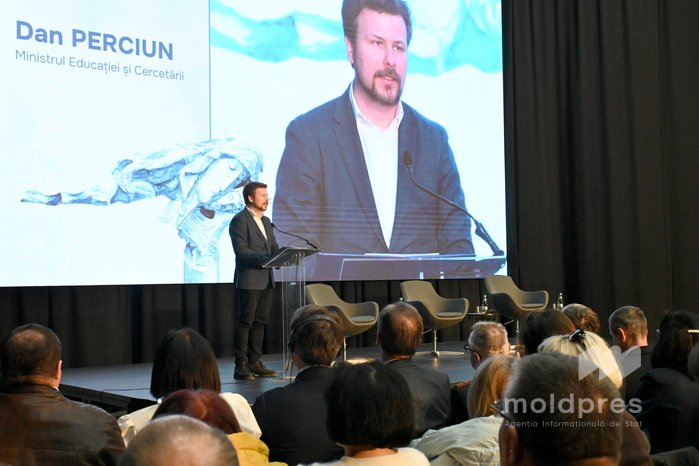
Minister of Education and Research Dan Perciun said that “to cultivate memory about the war, about the crimes of the communist regime, about families, about deportations does not mean to remain anchored in suffering, but to build our future in a responsible way.”

“We are here today to honor the memory of those who defended our state and to say, with respect and gratitude, that their sacrifice is not forgotten. Memory is not only about emotion and ceremony, it is also about public responsibility – the responsibility to understand correctly, to document, to explain and to pass on the truth. It means assuming not only the duty to commemorate, but also the duty to know,” said Dan Perciun.

According to him, a culture of memory protects us against the recurrence of abuse.

“It helps us develop moral antibodies against any form of totalitarian ideology. Memory is the way we turn pain into vigilance and history into defense. We have the obligation to explain to our children what happened, to no longer accept lies as state policy,” the minister said.

Dan Perciun pointed out that the 1992 war was not an abstract lesson, but a living experience of our resilience as a society. The official also spoke about the negative effects of propaganda and manipulation.

“Emotion without truth can be manipulated. Truth without emotion can be forgotten. We need both: research and a living transmission to younger generations. This is all the more important in today’s geopolitical context. We live in an era in which history is instrumentalized. We see how false narratives are used to justify wars, to legitimize aggression and to rewrite identities. We see how propaganda tries to turn victims into culprits and aggressors into liberators,” the official said.

The minister added that Russia’s invasion of Ukraine had shown, in the most brutal way, how dangerous it is when historical lies become state ideology. “The lesson for us is clear – forgetting is not neutral; forgetting creates the ground for the repetition of abuse. Therefore, the culture of memory is, in the most concrete sense, a matter of security – the security of values, of democratic institutions and of our capacity to resist manipulation,” said Dan Perciun.

He stressed that memory must unite, not divide and that, in a pluralistic society, historical truth is not a weapon against someone, but a foundation for everyone.

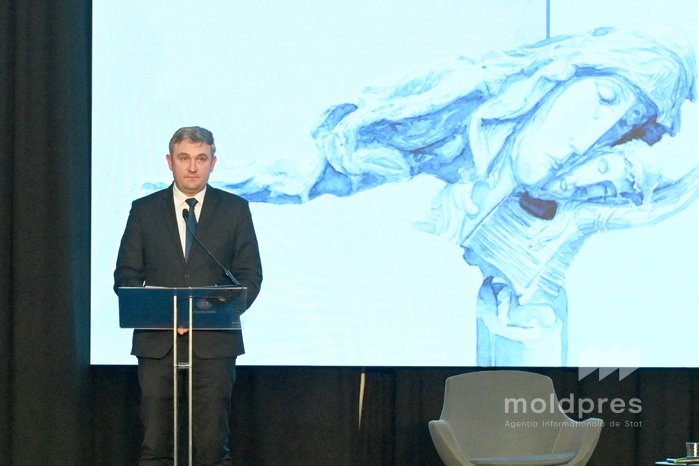
For his part, Culture Minister Cristian Jardan said that, this year, on March 2 – the day when Moldovans commemorate the heroes of the war on Dniester River – remembrance is turning into a moment of discussion, dialogue and better understanding of the concept of a culture of memory.

“In fact, in Moldova, almost every family preserves memories related to the tragic events of recent history. These are experiences lived directly or passed down by parents, grandparents, relatives, neighbors, and, most importantly, these tragic events have affected the entire population between the Prut and the Dniester, regardless of the language they spoke or the ethnicity they belonged to. We must talk as much as possible about these events,” said Minister Cristian Jardan.

According to the official, clarity about the past influences the direction and values of a society. “Respect, human rights, democracy and civic participation are based on knowledge of history. And passing this memory on to younger generations is a condition for social stability and for the normal working of a state,” the culture minister concluded.

Cristian Jardan underlined that, on the European path, it is very important to know the past as well as possible, in order to build a resilient society, aware of its role and capable of building a better future.

Present at the event, Minister of Defence Anatolie Nosatii noted that the war on the Dniester River had marked our destiny as a state and as a society. It took lives and destroyed destinies, but at the same time, it taught us that peace and independence must be cherished and defended by all means.

“History needs the knowledge of truth, of factual data and of the most memorable events that have shaped our present and that will continue to endure in the future. The war on the Dniester River will remain in memory as a tough and dramatic trial for Moldova, but also as a turning point that decided the further course of our country. Only through unity, knowledge and responsibility can we have a stable, democratic and prosperous future in an independent and sovereign country,” Anatolie Nosatii concluded.

The Decade of Memory and Gratitude will include activities that bring memory into schools, communities and public space, through scientific conferences in all districts, student visits to museums in Chisinau, attendance at performances on the theme of family and screenings in all schools of the documentary film, We Are Home, directed by Andrei Buruian. In addition, a string of public lessons will be organized in all vocational schools and the national contest, Living Memory of the Defenders of State Integrity, will be held.
 Facebook
 Instagram
 X/Twitter
 Telegram
VIDEO // Moldovan parliament speaker comments on opposition's criticism of new Parliament Code
Alina Cebotariov takes over leadership of Competition Council
MPs held moment of silence in memory of victims of 7 April 2009
Deputy Prime Minister: Moldova preparing case file through which it will request compensation from Russian Federation for damage to energy infrastructure and pollution of Dniester River
DOC // Moldova completely withdraws from Commonwealth of Independent States: denunciation decrees promulgated, published in Official Journal
Moldovan MPs to convene at plenary meeting on April 9; agenda includes amendments to tax, environmental, security legislation
PHOTO, VIDEO // Moldovan president welcomed by Irish counterpart in Dublin
Environment Minister about mandate priorities and response to mayor: Chișinău residents need solutions, not political circus
Ministry of Justice without state secretary
Prime Minister: Risks still high. Repealing state of emergency would be irresponsible decision
PHOTO // Ambassador of the Republic of Moldova to Ukraine presented letters of credence to President Volodymyr Zelenskyy
VIDEO // Strong Town Halls Reform in Moldova: minimum threshold of 3,000 inhabitants per town hall and decrease in districts from 32 to 10
Moldova to have three new ambassadors
President pays official visit to Ireland
PHOTO // Taraclia-based Museum of History and Culture renovated through European Village programme with investments of over 7 million lei
Governor of National Bank of Moldova attends constituency meeting of IMF, World Bank: inflationary pressures, financial stability on agenda
New hearings in prosecutors' evaluation process in Moldova: four sessions scheduled for late April
Moldova's General Police Inspectorate launched internal investigation into police officer who drew up report in name of deceased person
Dialogue between Moldova's central and local authorities in Comrat
Number of fraud attempts rising in Moldova: over 500 attempts reported to 112 in just one week
New local elections: 40 polling stations to be open in 12 localities of Moldova
 National Bank of Moldova
Political representatives in process of negotiations for Transnistrian settlement convene at second working meeting of 2026
Dialogue between Moldova's central and local authorities in Comrat
Head of State at commemoration of victims of 1946–1947 famine: When truth is told, even after decades, it brings justice
President’s message at commemoration event for victims of 1946–1947 famine
Moldovan PM pays tribute to maestro Gheorghe Urschi

Head of State at commemoration of victims of 1946–1947 famine: When truth is told, even after decades, it brings justice
President’s message at commemoration event for victims of 1946–1947 famine
President condemns Russian attacks and calls for additional sanctions against Russia: War will stop only when Russia stops
PHOTO // Dniester River under constant monitoring thanks to European states that provided Ministry of Environment with intervention equipment
PHOTO // Victims of 1946–1947 famine commemorated in Mingir
General Prosecutor’s Office announces legislative initiatives to strengthen preventing and combating domestic violence, developed following analysis of recent cases, including that of Ludmila Vartic
PHOTO // Moldova could become strategic hub for U.S. business
New local elections: CEC announces number of candidates and referendum participants
CSP gives green light: Acting Prosecutor General passes external evaluation
Silver and bronze medals for Moldova at World Sambo Cup
ARMENPRESS: Armenia to restrict drone, private flights during EU summit
Romanian Embassy in Moldova says creation of Relations with Romania Service strengthens bilateral cooperation
Improved access for people with disabilities in Moldova: 30 ramps to be installed in public institutions hosting polling stations
VIDEO // Moldovan government transfers land needed to continue work on bridge across Prut river at Ungheni, connecting Moldova and Romania
Ana Racu elected vice-chair of UN Committee Against Torture
Victims of the organized famine from 1946–1947 to be commemorated in central Moldova settlement
Receive the latest news directly to your email

Receive the latest news directly to your email