
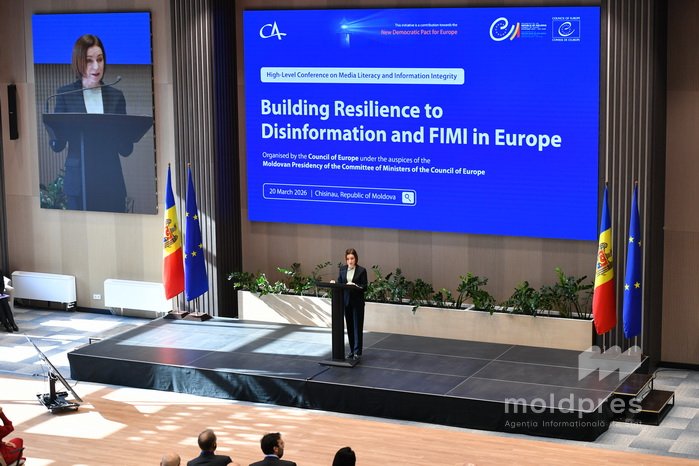
President: In cognitive war, consolidation of democracy also depends on citizens’ ability to resist manipulation
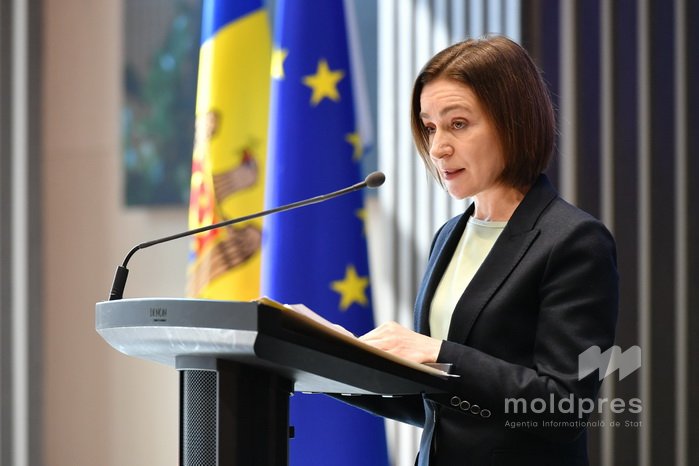
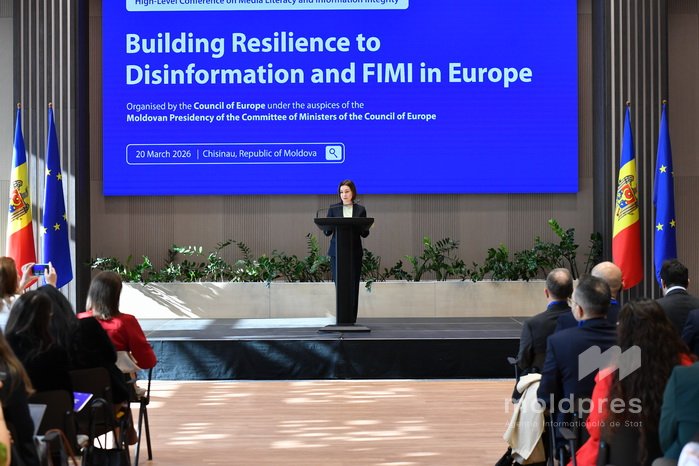
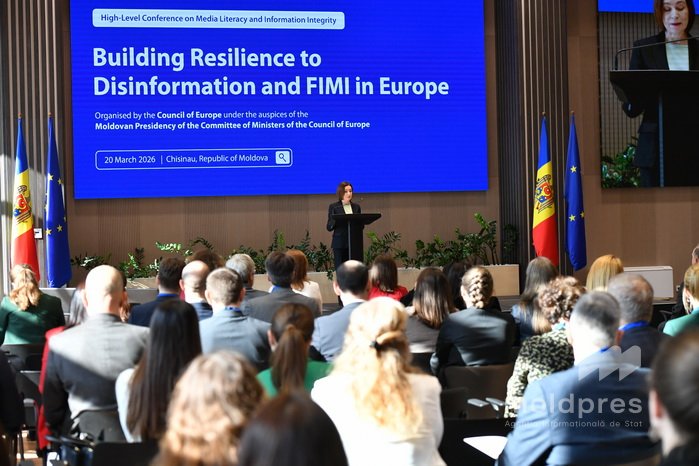
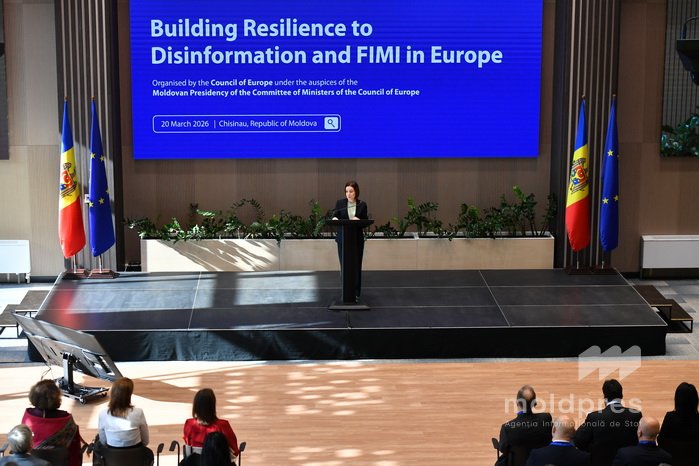
In a cognitive war, the consolidation of democracy depends not only on institutions, but also on our citizens’ ability to resist manipulation. President Maia Sandu made the statement during a high-level conference on media literacy and information integrity, held today in Chisinau.

Maia Sandu emphasized that the cognitive war is “a war that imposes efforts to hijack the way people think, what they believe in and how they act, targeting trust and perception.”

“In the Republic of Moldova we have gone through this experience, especially in recent years. During recent electoral periods, we have encountered coordinated attempts to challenge the democratic process, not only through disinformation, but also through a combination with illicit financial flows, the manipulation of narratives and other aspects aimed at distorting the public discourse,” Maia Sandu said.

She warned that this affects not only the Republic of Moldova but also other states in the region, with the aim of “reducing unity in Europe and slowing down democratic consolidation processes.”

“We must understand that the front line is no longer limited to the administrative borders of a territory. It is about our societies. And those who carry out such operations have the capacity to learn, to adapt, to change their methods. They move from one platform to another, they exploit new technologies, they disguise themselves as legitimate voices, which makes detection much more complicated,” the head of state warned.

The President stressed that, under these conditions, it is necessary to invest in resilience at the level of the whole society, and that the media and media literacy are essential.

“In a cognitive war, the consolidation of democracy depends not only on institutions, but also on our citizens’ ability to resist manipulation. And this is particularly relevant for younger generations, who are the most exposed to digital environments and, at the same time, are the most important for the future of democracies. The work of the Council of Europe in supporting national-level strategies and in developing practical tools in this field is essential,” the head of state specified.

At the end of her speech, Maia Sandu underlined that “protecting democracy means protecting the freedom of every mind to remain authentic.”

“Today’s discussions concern the type of society in which we want to live in the future. Will we allow others to shape the way our citizens think, or will we take responsibility for protecting the freedom of thought? In the end, this is what is at stake. Not just elections, not just institutions. What is at stake is the independence of human reasoning and, ultimately, protecting democracy today means protecting the freedom of every mind to remain authentic,” Maia Sandu concluded.

A High-Level Conference on media literacy and information integrity is taking place today in Chisinau, organized by the Council of Europe under the auspices of the Presidency of the Committee of Ministers of the Council of Europe held by the Republic of Moldova.

Participants aim to explore innovative ways to combat disinformation, foreign information interference and manipulation, as well as hate speech, which erodes public trust and undermines the integrity of democratic processes across the European continent.

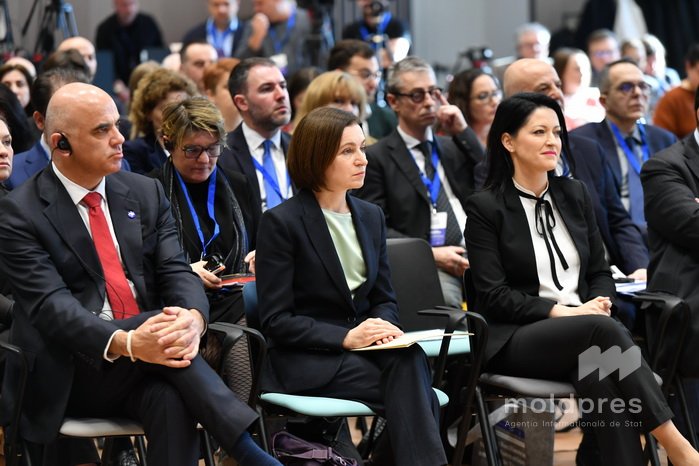
The conference brings together representatives of governments, international organizations, academia, civil society and the media, providing an opportunity to exchange critical experiences and to discuss specific mechanisms for building a more trustworthy information environment and for promoting media and information literacy.

The event will also include the launch of two policy documents adopted by the intergovernmental committee of the Council of Europe responsible for media and the information society, aimed at supporting states in developing national media and information literacy strategies and in taking complementary measures to combat disinformation and strengthen information integrity.
 Facebook
 Instagram
 X/Twitter
 Telegram
New local elections: Around 30% of voters turned out by 6:00 p.m.
New local elections. Over 10,400 citizens voted by 12:00
Citizens expected at polls to participate in new local elections and local referendums
President of Estonia after meeting with Moldovan President: Moldova belongs to Europe. We greatly appreciate your progress on this path
DOC // Russia intends to grant citizenship to residents of Transnistrian region
PHOTO, VIDEO // Head of State welcomed by Estonian President in Tallinn
VIDEO // Citizens’ Assembly on local public administration reform held in Chișinău
PHOTO GALLERY // Chisinau, capital of European diplomacy: images from Council of Europe's meeting
LIVE VIDEO, TEXT // Ministerial Session of Committee of Ministers of Council of Europe opened in Chișinău
Moldovan, Czech foreign affairs ministers discuss cooperation, support for Moldova's European agenda in Chisinau
Moldovan foreign affairs minister, Monaco's diplomacy head discuss bilateral cooperation, Council of Europe's priorities
VIDEO // Deputy PM comments on Moldova holding presidency of Council of Europe's Committee of Ministers
Secretary General of Council of Europe: “In a time of geopolitical tensions, Europe needs responsibility and accountability”
Monaco assumes presidency of Committee of Ministers of Council of Europe for the first time
VIDEO // Access to Culture returns: funding for development of cultural life in Moldova
Moldovan foreign affairs minister has meeting with Chinese counterpart; facilitating access of domestic products to Chinese market on agenda
EU accession negotiations could be opened in next June; parliament speaker says Moldova, Ukraine deserve this step
Moldovan parliament speaker, after Putin’s decree, says Russia wants to make up for losses on front
VIDEO // Opposition walks out session hall at today's parliament meeting; Moldovan parliament speaker says not to tolerate insults, degrading behavior
Moldovan parliament speaker rejects accusations by Tiraspol separatist regime on alleged interference with “so-called presidential elections”
Moldovan parliament speaker says agreement with IMF important indicator for international partners
 National Bank of Moldova
Participation of Deputy Prime Minister for Reintegration in OSCE Permanent Council Meeting
Prime Minister at anniversary of National Confederation of Employers
Moldova, IMF reach agreement on new three-year cooperation programme
Moldovan president on working visit to the Netherlands: deepening bilateral partnership, support for EU accession
Projects implemented with support of European Investment Bank evaluated during meeting at government

New rules for corruption and organized crime investigations
DOC // Activity of zoos to be regulated by new law
DOC // Particip.gov.md platform to be modernized to ensure easier access to information on draft decisions proposed by authorities
BITEI Festival 2026 opens in Chisinau; event's programme
Adopted in final reading: From 1 June, day laborers to be registered electronically
Wheat export requirements from Moldova to Indonesia to be amended starting 1 June
Parliament simplifies financial reporting for enterprises
VIDEO // CSP approved three interim appointments to leadership positions within Prosecutor’s Office
Moldova's ambassador to Kazakhstan presented copies of letters of credence
Prime Minister on World Day for Cultural Diversity: Only through unity, dialogue and mutual understanding can we build European, modern and united Moldova
President at Globsec Forum in Prague
DOC // Condominiums to face new administration and voting rules
Orthodox Christians celebrate Ascension of the Lord
Two bomb alerts in single night at Chișinău Airport
Moldovan energy minister demands compliance with completion deadline for works at Chisinau Electric Substation
IMF says new programme with Moldova to help advance reforms aimed at backing more sustainable economic growth
Receive the latest news directly to your email

Receive the latest news directly to your email