
New rules for corruption and organized crime investigations
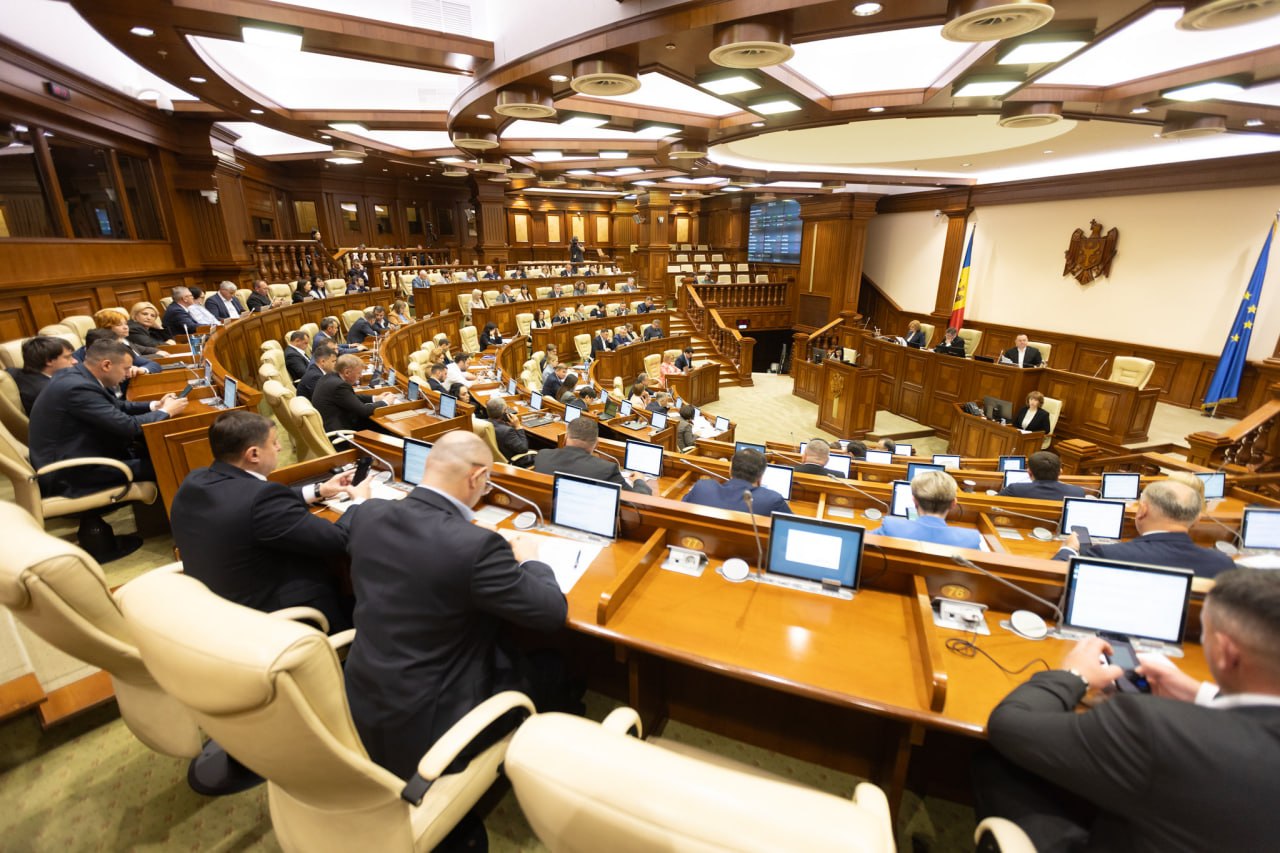
The competences of institutions involved in investigating corruption, financial fraud, and organized crime cases will be clearly defined. A draft law to this effect was adopted today in the first reading by 57 members of Parliament.

The legislative initiative was presented in the plenary session by Minister of Justice Vladislav Cojuhari, and aims to make mechanisms for combating these offenses more efficient. The document, drafted by the Ministry of Justice, sets new rules for allocating cases between the National Anticorruption Center (CNA), the Anticorruption Prosecution Office, and the Prosecution Office for Combating Organized Crime and Special Cases (PCCOCS).

The Minister of Justice explained in the plenary that the amendments are necessary to eliminate overlaps in competence and to focus institutional resources on complex cases.

“The goal is to clearly delineate the competences of the institutions involved, so that each can focus on its area of expertise and on truly complex cases,” the cited source stated.

According to the draft, the CNA will investigate exclusively serious cases of bank fraud in which the damage exceeds 250 average monthly salaries in the economy. Cases involving smaller damages will be examined by tax authorities, while the CNA will also have the competence to investigate money laundering as an autonomous offense.

The Anticorruption Prosecution Office will handle high-level corruption cases, including those involving senior officials such as the President of the country, the Speaker of Parliament, the Prime Minister, members of Parliament, judges, and the leadership of law enforcement and security institutions.

At the same time, the PCCOCS will be responsible for cases of terrorism, organized crime, and other particularly serious offenses, with minor cases being removed from its remit. The State Tax Service and the Customs Service will take over small-scale economic, financial, and customs cases, in accordance with the law.

The draft also provides for the creation of joint investigative teams in complex cases, to ensure more effective cooperation between investigative institutions. In addition, the right to challenge preventive measures is extended to cover all stages of criminal proceedings, up until the final judgment on the merits is delivered.

According to the authors, the amendments are part of the commitments undertaken by the Republic of Moldova in the process of European integration. The draft law is to be examined in the second reading.
 Facebook
 Instagram
 X/Twitter
 Telegram
Former Chisinau deputy mayor reveals alleged illegalities; Chisinau City Hall comes up with reactions
Fines and license plates seized for drivers with non‑compliant vehicles
National Public Health Agency says risk of Bundibugyo virus' spread stays low for Moldova
Promo-LEX organization of Moldova reports serious violations in case of a young detainee on left bank of Dniester
Vlad Turcanu resigns as head of Teleradio-Moldova Company amid Eurovision 2026 scandal: “The vote cast is my responsibility”
PHOTO REPORT: China through eyes of MOLDPRES // One world, one family: How Chinese celebrate family, women, social cohesion in modern era
Parliament of Moldova holds annual forum with civil society and external partners
General Police Inspectorate recorded 12 incidents and alleged violations during new local elections
PHOTO // Nicolae Testemițanu USMF students managed emergencies and simulated clinical cases at SimOlympic
Speaker about Satoshi’s Eurovision performance
PHOTO // Universities across country showcase educational offer at new fair held in Orhei
PHOTO // Călărași Park modernized through project worth over 17 million lei
VIDEO // Speaker’s message before Eurovision
VIDEO // Support message from President before Eurovision final: Moldova deserves to be heard
Adopted in final reading: From 1 June, day laborers to be registered electronically
Wheat export requirements from Moldova to Indonesia to be amended starting 1 June
Parliament simplifies financial reporting for enterprises
VIDEO // CSP approved three interim appointments to leadership positions within Prosecutor’s Office
 National Bank of Moldova
Participation of Deputy Prime Minister for Reintegration in OSCE Permanent Council Meeting
Prime Minister at anniversary of National Confederation of Employers
Moldova, IMF reach agreement on new three-year cooperation programme
Moldovan president on working visit to the Netherlands: deepening bilateral partnership, support for EU accession
Projects implemented with support of European Investment Bank evaluated during meeting at government

Prime Minister on World Day for Cultural Diversity: Only through unity, dialogue and mutual understanding can we build European, modern and united Moldova
President at Globsec Forum in Prague
DOC // Condominiums to face new administration and voting rules
Orthodox Christians celebrate Ascension of the Lord
Two bomb alerts in single night at Chișinău Airport
Moldovan energy minister demands compliance with completion deadline for works at Chisinau Electric Substation
IMF says new programme with Moldova to help advance reforms aimed at backing more sustainable economic growth
Tourism integrated into state’s economic policies in Moldova; sector moves to Economic Development and Digitalization Ministry
VIDEO // Moldovan president gives interview with DW, RFI during official visit to Strasbourg
Moldova, IMF reach agreement on new three-year cooperation programme
Moldovan president on working visit to the Netherlands: deepening bilateral partnership, support for EU accession
Yellow Code for atmospheric instability: rain, thunderstorms, hail, strong winds forecast nationwide in Moldova
Education week launched in Moldova; Parliament speaker says Moldova’s future depends on quality education
Projects implemented with support of European Investment Bank evaluated during meeting at government
Over 68 per cent of Moldova’s exports go EU market: electrical equipment, vegetable products lead rankings
VIDEO // Dutch PM welcomes Moldovan president in the Netherlands
Receive the latest news directly to your email

Receive the latest news directly to your email