
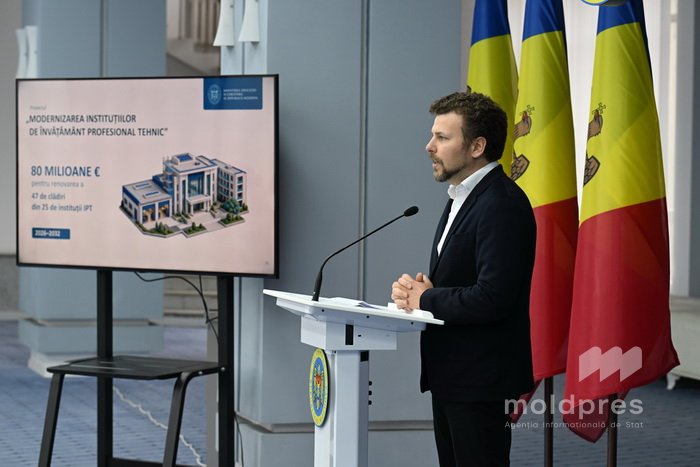
Eighty million euros invested in vocational schools of Moldova: 47 buildings to be renovated
A total of 25 vocational schools, colleges and centres of excellence of Moldova will be modernized and renovated as part of an 80 million-euros-worth project. The investment provides for the comprehensive renovation of 47 buildings, including educational facilities and dormitories.

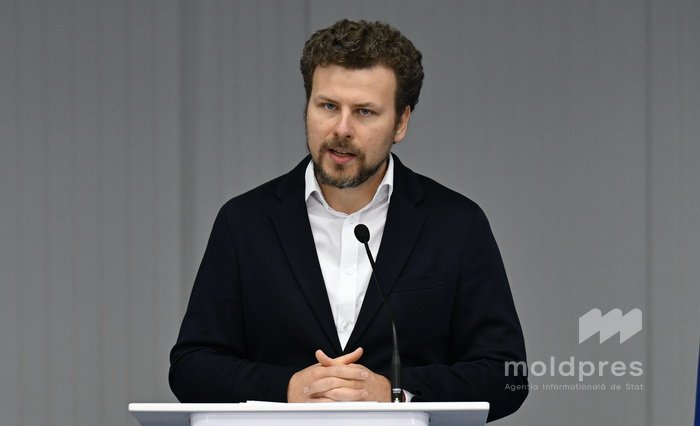
According to Education and Research Minister Dan Perciun, the project represents one of the largest investments in recent years in the infrastructure of vocational and technical education and aims to improve study, practical training and accommodation conditions for students.

“This investment in the vocational and technical education system is extremely important to us. It is an essential system for the competitiveness of Moldova. Here, we train both future skilled workers and future employees of our economy—young people who can create added value for the Moldovan economy. Especially given the rapid advancement of artificial intelligence, which risks making it more difficult to identify certain types of jobs, the skills young people acquire through vocational and technical education will ensure that, for many years to come, they have a salary, a job and the opportunity to build their future here, in Moldova,” said Dan Perciun.

The minister specified that 47 buildings, including educational facilities and dormitories, would be renovated at institutions in various regions of the country.

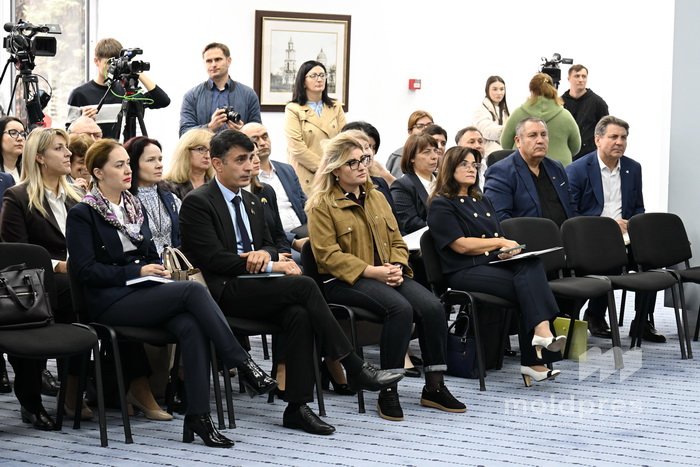
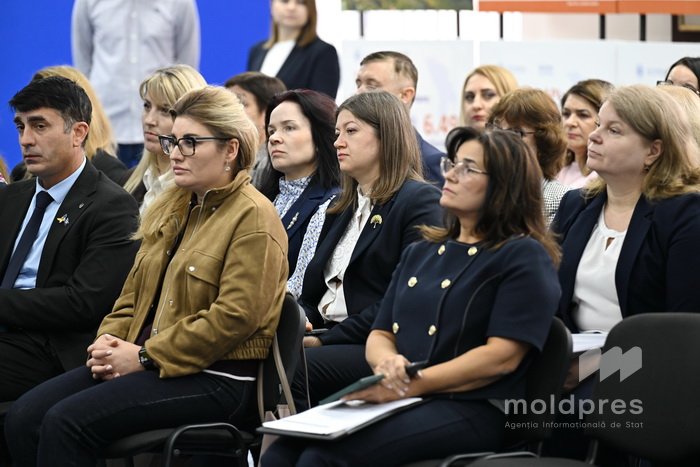
“As part of this project, we will renovate 47 buildings, focusing both on educational facilities at some institutions and on dormitories, so that we can provide our students with competitive study conditions. The institutions joining us today and participating in this press conference are from across the country, from Rascani and Edinet to Cahul, Ceadar-Lunga, Balti, Soroca and the municipality of Chisinau,” the official noted.

The project will be financed from three sources. The government of Moldova will contribute 40 million euros, equivalent to 50 per cent of the total budget, through the Reform and Growth Facility. Another 33 million euros will be provided by the Council of Europe Development Bank, while€7 million euros will come as a grant awarded through the Neighbourhood Investment Platform.

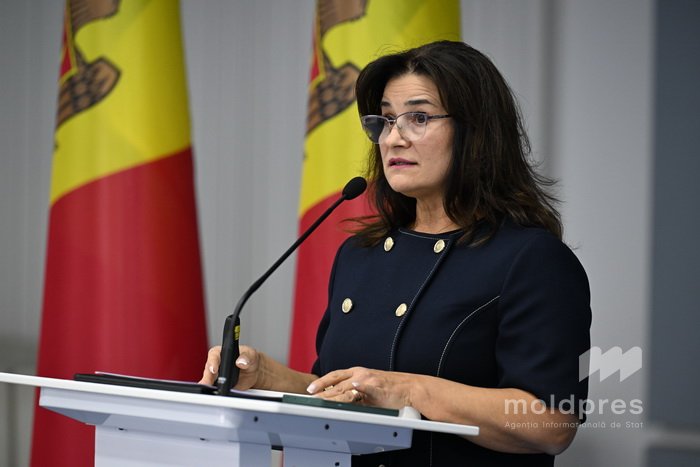
Liudmila Stihi, State Secretary of the Education and Research Ministry, highlighted the importance of the project for the development of vocational and technical education and its alignment with European standards.

“This is a major project, of the kind that vocational and technical education institutions have not benefited from much in recent years. The project responds to the goals of the Education Development Strategy 2030 and its implementation programme for 2026–2030. It is also part of the reform agenda associated with Moldova’s Growth Plan and of the effort to align with European standards in the context of Moldova’s negotiations on accession to the European Union,” Liudmila Stihi said.

The impact of the investment will also be felt at the regional level. Ecaterina Miron, director of Vocational School No. 2 in the municipality of Cahul, said that modernizing the institution would help improve students’ professional training and strengthen links with the business community.

“For our institution, it is an honour and a tremendous opportunity to become a regional school of reference. Modernized technical facilities will make us more competitive, while the construction of an electronics and electrical engineering workshop from the ground up will completely transform the quality of the educational process, enabling us to develop specific skills sought by economic operators,” said Ecaterina Miron.

The project will focus on four strategic sectors of the Moldovan economy: agriculture, information technology (IT), energy and construction. In total, the investment will benefit more than 23,000 students, representing approximately 41 per cent of the young people currently enrolled in vocational and technical education.

The initiative is part of the objectives of the Education 2030 Development Strategy and aims to create modern learning and vocational training conditions adapted to the current requirements of the labour market.
 Facebook
 Instagram
 X/Twitter
 Telegram
LIVE // Moldova Security Forum 2026 taking place in Chișinău
Civil society invited to discussions on European integration of Moldova
“Black Swans in the Black Sea” launched in Chișinău
Perception of human rights' observance improve in Moldova - study
PHOTO // Experience of Green Justice project could underpin new environmental justice initiative in Moldova
Medical technologies, artificial intelligence at center of new partnerships proposed by Moldova's State University of Medicine and Pharmacy
Moldovan authorities to strengthen security measures at border crossing points following incident at Palanca
PHOTO // First national open educational resources platform launched in Moldova
Moldovan health minister says there is no risk of escalation, in connection with suspected case of pneumonic plague in Russia
Environment Minister: Country’s water intake stations must be adapted to new realities
Unauthorized flight detected in Moldova's airspace
Moldova's Superior Council of Magistracy finds that judge Alina Gorceac passes external evaluation
StratCom: Norway's military support attacked by manipulation on anonymous Telegram channels
VIDEO // Defense Minister ahead of Moldova Security Forum: Security means more than defense
Moldovan parliament speaker, ambassadors of Norway, Turkey discuss Moldova’s relations with two countries
PHOTO // Moldovan deputy PM for European integration, civil society discuss EU accession roadmap
Eighty million euros invested in vocational schools of Moldova: 47 buildings to be renovated
Boxer Alexandru-Achile Buhaniuc wins silver medal at European U17 Boxing Championships
PHOTO GALLERY // Farmer from Briceni modernizes farm and prepares new investments in fruit growing
Government launches Moldova Prepared Program to train citizens to cope with crisis situations
PHOTO // Mural inspired by Moldovan hora tradition unveiled in Italian town
 National Bank of Moldova
Moldovan parliament speaker, ambassadors of Norway, Turkey discuss Moldova’s relations with two countries
Prime Minister discussed issues with milk producers and processors in Glodeni and Rîșcani
Moldovan president, U.S. senator discuss Moldovan-American cooperation, Moldova’s role in regional security
Moldovan PM tells business people government willing to build Europe’s most entrepreneur-friendly country
Environmental protection experts discuss critical hydrological situation in Dniester River basin

Ministry of Education honors participants with best results at Great National Dictation
MFA: Moldovan citizens not among victims of attack on airport in Riyadh, Saudi Arabia
Drone detected in Anenii Noi district
VIDEO // Leova water intake station operating normally
Moldovan citizens to receive energy compensation this cold season as well
VIDEO // Moldova could import natural gas from Ukraine
VIDEO // Prime Minister: Moldova must invest in country’s security and strengthen capabilities of National Army, despite limited budgetary resources
Drone unauthorizedly flew over national airspace and exploded in Anenii Noi district
VIDEO // President: Priority for Moldova in defense is improving air defense
National Robotics Team wins FIRST Global Challenge 2026 in Korea
EcoVoucher Programme: More than 3,300 families replaced old appliances with energy-efficient equipment
VIDEO // President: Our domestic agenda involves preparing Moldova to sign EU accession treaty by late 2028
Athlete Maxim Caraion wins gold medal again at World Skate Games 2026
Nicu Popescu: More functional and enlarged European Union, which also includes Moldova in everyone’s interest
Speaker: Modernizing National Army and adapting defense capabilities to new security realities require updating strategic documents
Moldovan president, U.S. senator discuss Moldovan-American cooperation, Moldova’s role in regional security
Receive the latest news directly to your email

Receive the latest news directly to your email