
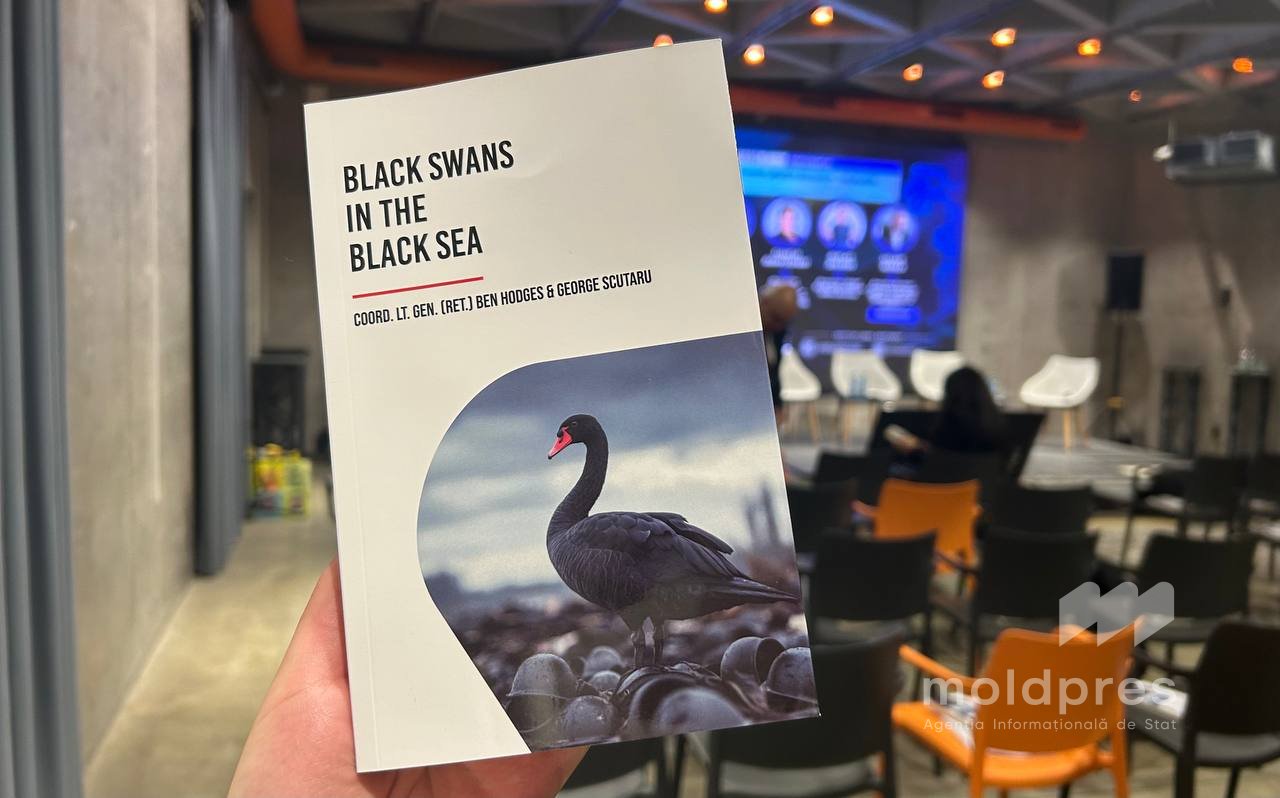
The vulnerabilities of the Republic of Moldova in the face of possible destabilization scenarios in the Black Sea region, as well as the role Romania can play in strengthening security and protecting critical infrastructure, are among the topics analyzed in the volume „Black Swans in the Black Sea”, launched in Chișinău by the New Strategy Center. The book, coordinated by retired Lieutenant General Ben Hodges and George Scutaru, examines possible developments that could affect regional and European security.

The launch of the volume comes at a time when the Black Sea region is at the center of geopolitical competition between Russia and the West. The war in Ukraine, energy security, the protection of critical infrastructure, and the role of the South Caucasus have transformed the region into a strategic space for European security. For the Republic of Moldova, located in the immediate vicinity of Ukraine and the Black Sea, these developments have direct implications for national and regional security.


„How will we protect our critical infrastructure while being under siege from the Russian Federation? How will we protect the Republic of Moldova? All these incidents that have occurred recently show us Russia’s intentions to test the limits—not only Moldova’s limits, but also our limits as EU and NATO countries,” George Scutaru said.


According to Scutaru, Romania and the other states in the region must also prepare to protect energy infrastructure, particularly in view of the expected increase in gas production in the Black Sea.


„This region will have enough gas not only to meet our needs in Romania, but also to help many countries around us, first and foremost the Republic of Moldova,” he said.


George Scutaru also spoke about the need for Ukraine to remain stable after the end of the war, warning that any destabilization of the country would pose a risk to the entire region.


„For Romania, it is important to see and have Ukraine as a stable, predictable country, fully integrated into the institutions of the European Union. An unstable Ukraine will be a security problem for its neighbors and for other countries in Europe. For this reason, it is necessary to support Ukraine,” Scutaru added.


Regarding Black Sea security, he emphasized that responsibility cannot rest with a single country and that the involvement of NATO, the EU, and the main European and Euro-Atlantic powers is necessary.

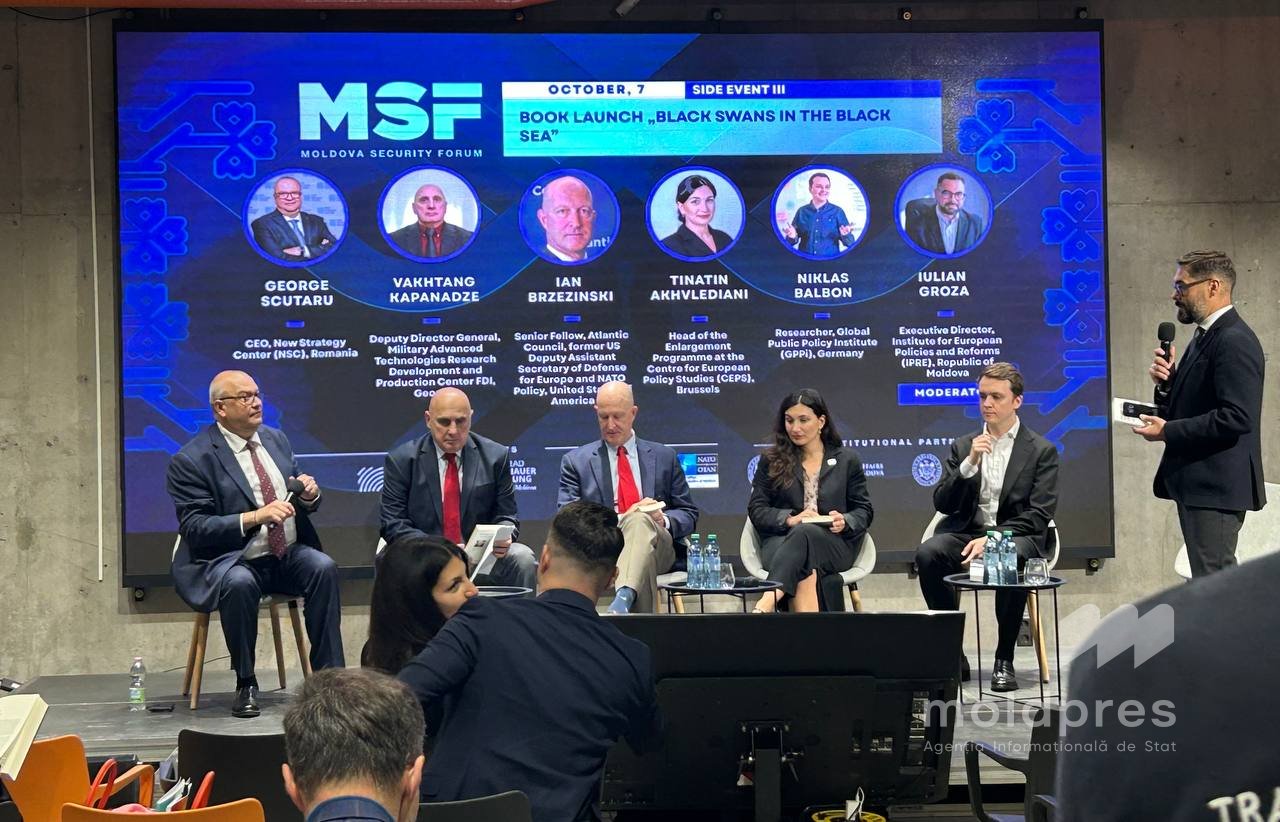
Vakhtang Kapanadze, Deputy Director General of Georgia’s Military Advanced Technologies Research Development and Production Center, presented a scenario involving the possibility of a Russian intervention through Georgia toward Armenia. Russia could use a combination of military, political, economic, and hybrid instruments to strengthen its influence in the South Caucasus. The scenario analyzed also takes into account a possible ceasefire in Ukraine, a situation that, according to Kapanadze, could allow Russia to redirect resources to other areas.

The scenario is based on the assumption that Moscow could try to exploit possible political instability in Armenia to strengthen its influence over the government in Yerevan.


„The objective would be to support anti-government forces and create conditions for changing the government in Yerevan. The outcome would not necessarily be a traditional Russian invasion. The scenario involves a much more complex operation, involving political destabilization, military pressure, political influence, and support for forces opposing the Armenian government. (...) This is a worst-case scenario developed for conflict simulation. It is not a prediction that this is exactly how events will unfold in reality. The purpose is to test how a potential crisis could develop, what factors could influence it, and what the possible political and economic consequences could be. (...) The Caucasus should not be examined as a group of isolated conflicts, but as an interconnected strategic environment in which political, military, and geopolitical power influence one another,” Vakhtang Kapanadze explained.


Kapanadze identified several possible objectives of Moscow: regaining political influence in Armenia, strengthening its strategic position in the South Caucasus, controlling or disrupting transport routes, and increasing its military capabilities near the Middle East.

The volume „Black Swans in the Black Sea” is part of a broader initiative by the New Strategy Center to bring essential topics related to Black Sea security into the public debate each year.


„It is a good title, it is good for journalists, but at the same time it also refers to many scenarios that affect the security environment in the Black Sea,” George Scutaru said.


The book addresses possible geopolitical, military, and economic developments in the Black Sea region and the South Caucasus. The volume includes contributions from the Republic of Moldova, Ukraine, Turkey, Bulgaria, Romania, the United States, the United Kingdom, France, and Germany—states with important interests in the Black Sea region.

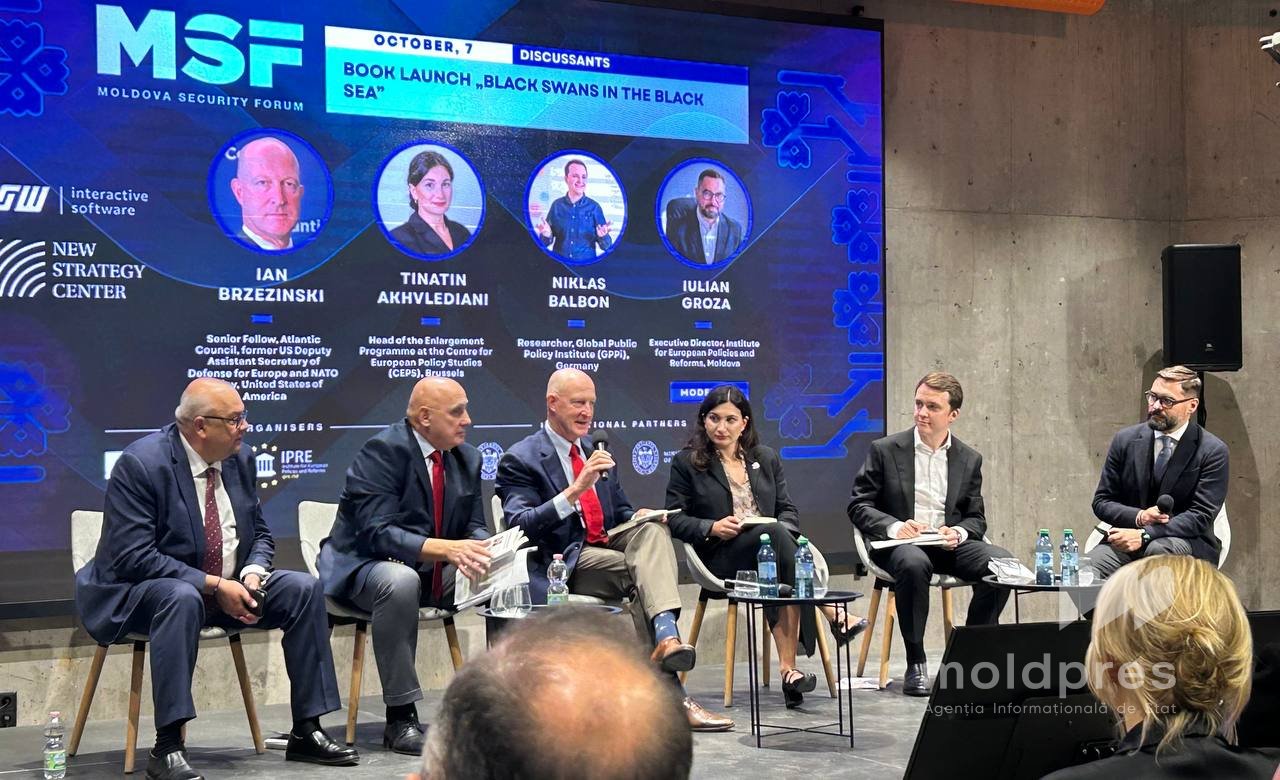
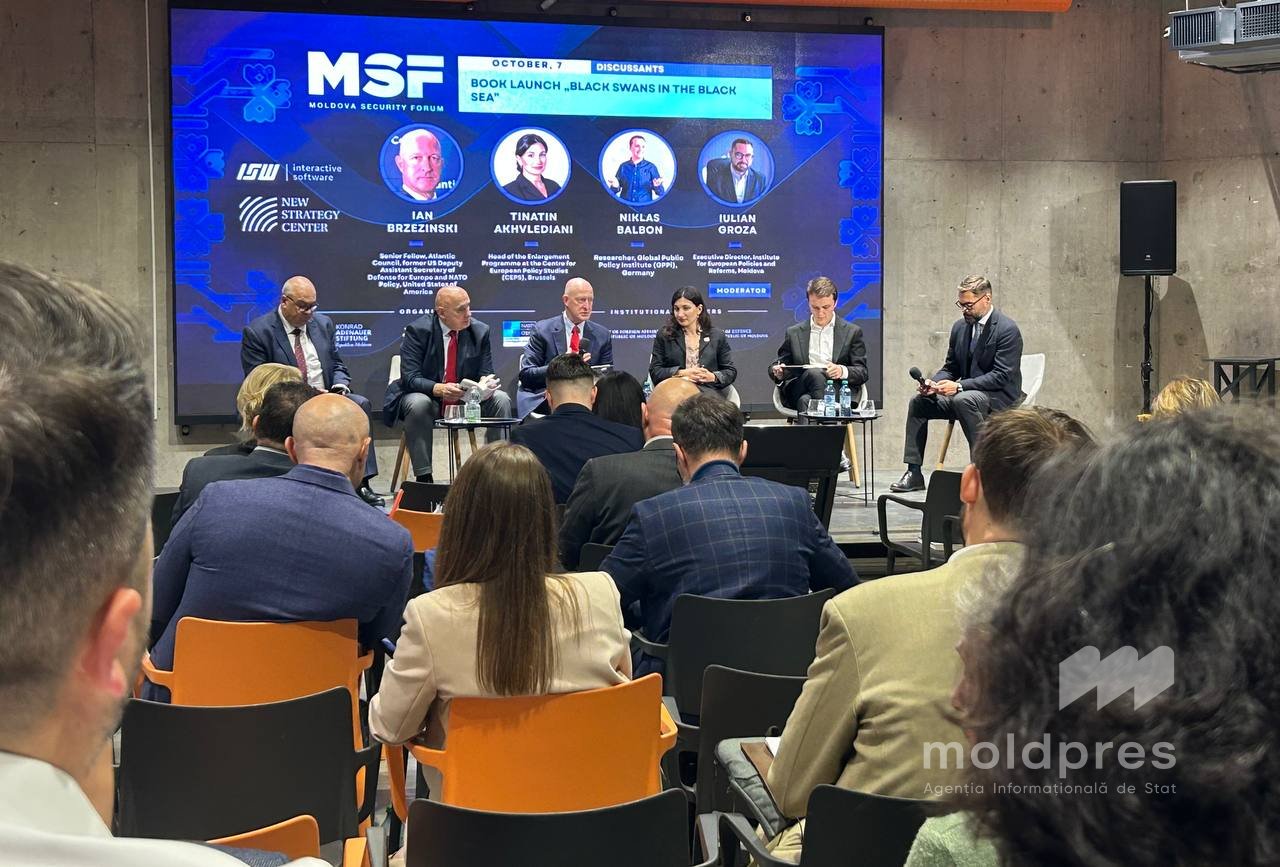
The launch of the volume takes place ahead of the opening of the Republic of Moldova Security Forum 2026, which brings together experts and officials to analyze and discuss ways to strengthen democratic resilience and security through strategic vision and multilateral cooperation. The forum addresses the main security challenges facing the region, as well as the cooperation solutions needed to strengthen the resilience of states in the Black Sea neighborhood.
 Facebook
 Instagram
 X/Twitter
 Telegram
Projectile fell in area of Palanca-Maiaki-Udobnoe border crossing
National Wine Day, 25th edition, brings together around 100,000 people and over 110 producers in PMAN
Teachers celebrate professional day on October 5
VIDEO // President on Teacher's Day: Thank you for work you do every day for every child
PHOTOS // Head of state, at National Wine Day, says Moldovan wine getting better, reaching farther around the world
Severe weather warning in Spain; Embassy of Moldova issues recommendations for citizens
PHOTO // Moldova sets Guinness world record with world's largest human grapevine
Drones entering Moldova’s airspace left craters, debris across extensive areas
Bomb threat at Chisinau-based Eugen Doga Airport unconfirmed; passengers' access to terminal resumed
Bomb threat alert at Eugen Doga International Airport – Chisinau: passengers, staff evacuated
National Army detects six unauthorized flights in Moldova’s airspace on October 3
VIDEO // Drone fragments detected in more settlements of Moldova; police investigate explosions reported
More drones fly over airspace of Moldova
Bomb alert at Eugen Doga International Airport – Chisinau proves to be hoax; Airport operations resumed
Moldova Security Forum // Defense Minister: War in Ukraine changed Europe’s security environment
Parliament to review structure and personnel strength of National Army in closed session
VIDEO // President at Moldova Security Forum 2026: Russia is trying to test our limits, but every time we have managed to cope. In European family, we will be even stronger
Foreign Minister at Security Forum: Moldova is stronger and more resilient than a few years ago
VIDEO // Government proposes reorganizing local administration into 273 city halls and three regions
Moldova Security Forum 2026 // Head of NATO Liaison Office in Chișinău: Moldova on front line of protecting democracy and sovereignty
Irina Florea wins bronze for Moldova at World Sambo Championships
 National Bank of Moldova
Government presents proposal for new administrative-territorial map
President’s address at Moldova Security Forum
Moldovan parliament's standing bureau approves agenda for plenary meeting of October 8
Strengthening cooperation, exchange of best practices between parliamentary secretariats of Moldova, Romania in support of country’s EU accession process
Moldovan Presidency publishes register of gifts received in July–September 2026, which remain in institution’s assets or may be repurchased

LIVE // Moldova Security Forum 2026 taking place in Chișinău
Civil society invited to discussions on European integration of Moldova
“Black Swans in the Black Sea” launched in Chișinău
Perception of human rights' observance improve in Moldova - study
Moldovan parliament's standing bureau approves agenda for plenary meeting of October 8
PHOTO // Experience of Green Justice project could underpin new environmental justice initiative in Moldova
Medical technologies, artificial intelligence at center of new partnerships proposed by Moldova's State University of Medicine and Pharmacy
Strengthening cooperation, exchange of best practices between parliamentary secretariats of Moldova, Romania in support of country’s EU accession process
Moldovan Presidency publishes register of gifts received in July–September 2026, which remain in institution’s assets or may be repurchased
Moldovan authorities to strengthen security measures at border crossing points following incident at Palanca
PHOTOS // Austria’s experience in protected areas' management, habitats' restoration studied by specialists of Moldova
Moldova, Turkey strengthen economic cooperation; trade reaches 638.7 million dollars
Parliament speaker, U.S. Ambassador discuss strengthening Moldovan-American partnership
United States, Moldova strengthen cooperation on cybersecurity
VIDEO // Deputy PM for reintegration says Moldova's advancement along European integration path to create sustainable, much more attractive framework for country's reintegration
ARMENPRESS: UN Human Rights Council unanimously adopts Armenia-initiated resolution
Receive the latest news directly to your email

Receive the latest news directly to your email