
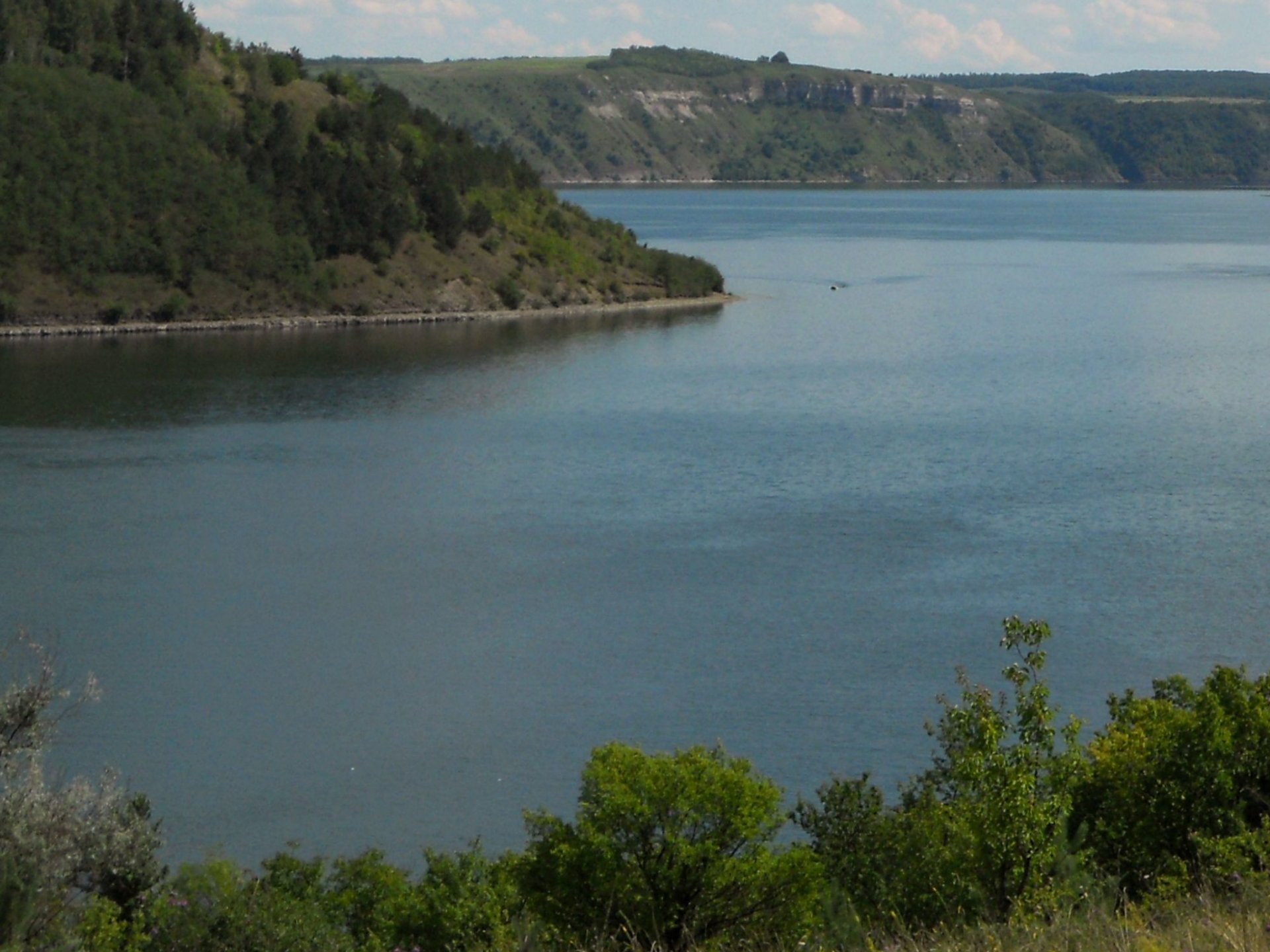
Inflow to Novodnistrovsk reservoir dropped to alarming level
The hydrological situation on the Dniester is worsening after the inflow into the Novodnistrovsk reservoir dropped on Sunday to only 23 cubic meters per second, the lowest level recorded for this period.

According to Minister of Environment Gheorghe Hajder, in the first ten days of August the average daily flow was approximately 38 m³/s. At the same time, water discharges toward the Republic of Moldova remain at around 75 m³/s, which is causing the reservoir level to decrease continuously.

The Minister of Environment warns that the reduced flows are a serious signal both for the Dniester ecosystem and for the river’s capacity to maintain its natural balance and ensure water supply for the population.

“It is an extremely serious signal,” said Gheorghe Hajder, emphasizing the need for constant monitoring of the situation and for measures to ensure the responsible use of water resources.

The Ministry of Environment states that it is maintaining contact with the Ukrainian authorities and is continuously analyzing hydrological data and operational information. The institution says it is in touch with all responsible authorities and will inform the public about the evolution of the situation and any necessary measures.

In the context of the water deficit, the authorities also recommend reducing losses, adapting intake infrastructure, avoiding unjustified consumption, and using available resources responsibly.

The hydrological state of alert was introduced following a significant reduction in water resources in the Dniester basin. On 27 July, the water level in the Nistrean storage reservoir was 113.24 meters, compared with the normal level of 121 meters. At the same time, there is a risk that the discharge from Novodnistrovsk will drop below the safety threshold of 100 m³ per second, which could affect the operation of intake stations and water supply.

The authorities will assess alternative supply sources, inventory intake points on the Dniester and its tributaries, and prepare backup water wells. At the same time, operators will update continuity plans, including by reducing network losses, while the Ministry of Environment will continuously monitor the hydrological situation. To coordinate these measures, the Government has approved the immediate entry into force of provisions allowing the activation of the National Crisis Management Commission, headed by the Prime Minister. The Commission will ensure continuous assessment of the situation, coordination of the institutional response, and the prompt adoption of necessary decisions.
 Facebook
 Instagram
 X/Twitter
 Telegram
Moldovan, Romanian officials approach bilateral cooperation
DOC // Ion Ojog promoted to military rank of brigadier general
PHOTO // Training for Independence Day parade
DOC // Published in Official Journal: allowances of up to 300,000 lei for teachers deciding to work at other schools following reorganization
Aircraft unlawfully flew over airspace of Moldova
Over 15,000 people employed through ANOFM
VIDEO // Over 2,000 service members to march on Independence Day
Travel alert for Catania following increased activity of Mount Etna
Great National Dictation to be held on Romanian Language Day
Police release new details on Crocmaz explosion: Debris points to possible ‘drone-missile’ type device
PHOTO UPDATE // Explosion in Crocmaz after combat drone crash
Prime Minister after drone explosion in Crocmaz: Fact that we are outside war zone does not protect us
UPDATE // Traffic eased at Otaci border customs post
Air alert in Ukraine: Traffic on Maiaki–Udobnoe bridge suspended
Inflow to Novodnistrovsk reservoir dropped to alarming level
President urges children to share stories about books read this summer; most avid readers invited to Presidency
Moldovan electoral body announces start of electoral period for new local elections and referendum of 1 November
VIDEO // Foreign Minister about cooperation with Romania: Strategic relationship between two states based on shared language, history and traditions is major asset for our country
MOLDOVA#35 – What We Have Built // Deputy Prime Minister: We Have Followed Complex Economic Path. Next Step Is Full Integration into European Economy
Over 12,000 jobs offered by ANOFM
Prime Minister attended Sports Festival held in Nisporeni
 National Bank of Moldova
Information session for businesses on both banks of Dniester on application of VAT and excise duties to goods imported into Moldova
Prime Minister attended Sports Festival held in Nisporeni
Information session for economic agents on both banks of Dniester River on application of VAT and excise duties to goods imported into Moldova
Mayors from northern regions participated in first round of consultations at Government on investments for merged localities
Plan for construction of Moldova HiTech Park – new technology and innovation center presented in Stăuceni

Around 500 town halls adopted final decisions on voluntary amalgamation
PHOTO // European Generations team wins second edition of EU & My Grandparents
Citizens returning to Moldova informed about employment opportunities and support measures offered by ANOFM
Information session for economic agents on both banks of Dniester River on application of VAT and excise duties to goods imported into Moldova
Mayors from northern regions participated in first round of consultations at Government on investments for merged localities
PHOTO GALLERY // EU & My Grandparents contest 2026
ARMENPRESS: Armenian citizenship applications exceed 32,000 in 2025, historical high, Deputy Minister says
Moldovan carriers will no longer pay road taxes in Armenia for ECMT trips
Foreign Minister meets with new Head of Council of Europe Office in Chișinău
UPDATE // Traffic flowed smoothly at Leușeni border crossing
USMF „Nicolae Testemițanu” published final results of admission contest for higher education
Moldovan driving licences can be exchanged in Ireland without driving test
Grandparents and grandchildren discover Europe together at contest
Maia Sandu meets with Lilia Neagu and Asea Andruh-Scorpan
Jewish Community of Moldova has new Chief Rabbi
Moldovan firefighters helping to extinguish large forest fire in Greece
Receive the latest news directly to your email

Receive the latest news directly to your email