
Moldovan authorities launch feasibility studies for waste management in two regions of Moldova
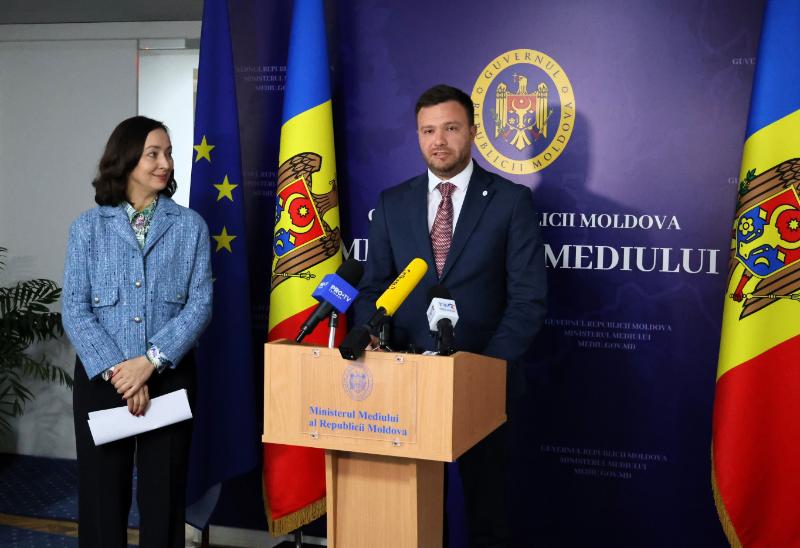
The Ministry of Environment today organized a news conference on the launch of the feasibility study for Waste Management Regions 4 and 7. According to the competent minister, Sergiu Lazarencu, the event marks an important step in the Solid Waste Project in Moldova, aimed at improving national waste management and contributing to environmental protection.

The feasibility studies will identify the most efficient and sustainable solutions for solid waste management in the two regions.

“The issue of waste management has been neglected for decades, reaching a critical situation with litter thrown everywhere. This crisis is the direct result of poor policies and a lack of vision on behalf of previous governments. In the last four years, we have made considerable efforts to clean the country of rubbish, identifying resources from development partners, in order to build the necessary infrastructure,” highlighted Lazarencu.

The feasibility studies, funded as part of the Solid Waste Project in Moldova, will analyze in detail the current waste management situation in regions 4 and 7, covering the districts of Ungheni, Calarasi, Nisporeni, Ocnita, Edinet, Briceni, Donduseni, the municipality of Chisinau, Straseni, Ialoveni, Hancesti, Criuleni, Orhei, Anenii Noi, Balti, Drochia, Rascani, Glodeni, Falesti, Floresti, Soroca, Sangerei, Soldanesti, Rezina, Telenesti and Dubasari. The main goal is to identify the most suitable technologies and infrastructure for the collection, transportation, treatment and final disposal of waste, considering economic, social and environmental aspects.

“This year, we aim to start building waste infrastructure in regions 5 and 8, and the feasibility studies launched today represent a crucial step for extending these efforts into regions 4 and 7. All constructed infrastructure will be managed by regional operators at the mayoralties, ensuring sustainability and efficiency of the waste management system,” said the minister of environment.

Attending the news conference, Stella Renita, the official from the European Investment Bank (EIB) in charge of financing public sector projects in Moldova, said that the feasibility studies for the two areas would cost 1.7 million euros.

It is estimated that the feasibility studies will be completed by the end of 2026 and will be at the basis of the investment decisions in waste management infrastructure in the targeted regions.

“The initiation of these studies reaffirms the commitment of the Ministry of Environment and partners to implement modern and sustainable solutions for waste management in Moldova, with the goal of protecting the environment and improving the quality of life of citizens,” said the EIB representative in our country.

The Moldova Solid Waste project is part of a national effort to improve the waste management system through the regionalization of services in eight areas. Under this project, Moldova benefits from loans amounting to approximately 50 million euros from the European Bank for Reconstruction and Development and the European Investment Bank. These funds are meant to finance infrastructure for waste collection, transfer, sorting, composting and disposal, as well as the closure of the present non-compliant landfills.

According to the Ministry of Environment, there are currently over two thousand illegal dumpsites in Moldova.
 Facebook
 Instagram
 X/Twitter
 Telegram
Yellow fog warning issued in Moldova; visibility to drop below 200 meters
Moldovan students to participate in 24 national olympiads and competitions in 2027
Energy compensation could reach 670,000 families this winter
StratCom: False claim about drone factory coordinated and amplified on Telegram, feeding Russian narrative about “militarization of country”
National Army reservists strengthen military skills during training exercise
Two Ukrainian border guards detained after illegally crossing Moldova’s border near Vasilcău
Moldova's National Police to benefit from new cooperation project with Germany; initiative aims to strengthen operational, investigative capacities
Moldova's General Police Inspectorate, Czech Republic sign agreement to strengthen digital expertise; project provides modern equipment, training for police officers
Moldovan interior minister meets new U.S. Ambassador to Moldova
PHOTO // Chisinau-based Nicolae Testemitanu State University of Medicine and Pharmacy hosts exhibition – project offering glimpse into world of people with down syndrome
About 50 schools from Moldovan capital benefit from investments worth over 1.1 billion lei for modernization
4.8-magnitude earthquake strikes Vrancea seismic zone
Ministry of Environment announces slight improvement in situation on Dniester river following recent rains
Drone falls into resident’s garden in north Moldova settlement; device does not carry explosive payload
Cooperation between Moldova, International IDEA discussed in Chisinau
Moldovan president to visit Hungary
Moldova's parliament speaker calls on Moldovan, Ukrainian border authorities to find solutions to prevent incidents on Dniester
Moldovan foreign affairs minister meets Argentina’s Ambassador
 National Bank of Moldova
Summary of Moldovan parliament's plenary meeting held on October 22, 2026
Balti city mayor to be assisted by own cabinet; Moldovan parliament passes relevant draft in first reading
Moldovan MPs vote on draft on tax, customs facilities for import of 24 musical instruments meant for national collection of musical instruments
Moldovan parliament votes in first reading: construction of Straseni–Gutinas power line, modernization of Straseni substation to be declared of national public utility
Access to education, quality public services in focus during visits by secretary general for reintegration to Tiraspol, Bender, Varnita

Access to education, quality public services in focus during visits by secretary general for reintegration to Tiraspol, Bender, Varnita
Romania's new PM to pay first visit to Chisinau on October 27
Moldovan parliament adopts fiscal, customs policy package for 2027
Moldovan government's deputy secretary general says Moldova’s European path runs through country's villages, benefits of reforms must be felt locally
Cooperation between Moldova, International IDEA discussed in Chisinau
Moldovan president to visit Hungary
Adopted by parliament: taxi platforms to be required to process payments through financial institutions licenced in Moldova
Access to cadastral information extended to more categories of individuals, institutions in Moldova
Persons with disabilities since childhood to be able to combine disability, survivor’s pensions; Moldovan parliament adopts relevant draft
Works for modernization of district heating systems from Chisinau, Balti declared to be of national public interest
Moldova's parliament speaker calls on Moldovan, Ukrainian border authorities to find solutions to prevent incidents on Dniester
Moldovan foreign affairs minister meets Argentina’s Ambassador
PHOTO GALLERY // Moldova Team for Dakar 2026 Youth Olympic Games officially presented
Moldovan parliament speaker announces solutions to protect personal data, control payments after journalistic investigation into taxi platform
Speaker after Constitutional Court’s decision in von Hebel case: We will amend law where necessary
Environmental impact, energy efficiency made mandatory when purchasing vehicles with public funds in Moldova
Receive the latest news directly to your email

Receive the latest news directly to your email