
Moldovan Education Ministry launches national Romanian language learning programme for 2026–2028
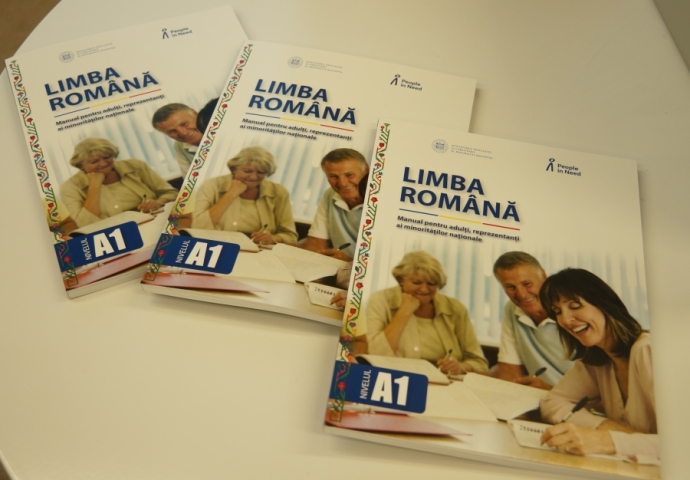
The Education and Research Ministry (MEC) has launched the National Romanian Language Learning Programme for the years 2026–2028. It places increased emphasis on the development of oral communication and the functional use of the Romanian language in real educational, social and professional contexts, as well as on aligning school outcomes with national mechanisms for certifying language competences.

Within the Programme, special attention is given to national minorities, people returning from the Diaspora, refugees, as well as children and pupils newly arrived from other linguistic and cultural communities. For these groups, linguistic and educational support mechanisms are planned, along with curricular adaptation measures, differentiated Romanian language learning pathways and educational interventions meant to facilitate educational and social integration.

Compared to the previous Programme, the project for 2026–2028 introduces a more clearly competence-oriented approach by aligning the teaching, learning and assessment of the Romanian language with the proficiency levels set out in the Common European Framework of Reference for Languages.

Another important innovation of the Programme is the systemic integration of multilingual education and the expansion of the use of the Content and Language Integrated Learning (CLIL) approach in educational institutions with instruction in national minority languages, with the aim of strengthening the use of Romanian as a language of teaching and communication. At the same time, the Programme provides for the modernization of the curriculum, the diversification and digitization of educational resources, as well as the development of a unified framework for the initial and continuous training of teachers who teach Romanian as a non-native language.

The Programme also includes specific measures to support allophone pupils who encounter difficulties in learning the Romanian language and literature, through the implementation of dedicated remedial programmes. These interventions aim to strengthen Romanian language communication skills and contribute to improving school results, including in lower secondary graduation assessments and the national baccalaureate exam.

Teachers' motivation measures, a central element of the new Programme

A central element of the new Programme is the improvement of human resources in the education system. Measures are planned to motivate teachers who teach Romanian, including by encouraging advancement in the hierarchy of teaching degrees, as a strategic tool for increasing professional quality and retaining staff, especially in educational institutions located in areas predominantly inhabited by national minorities.

The Programme’s interventions target the development of retraining programmes for teachers who choose to teach Romanian language and literature to allophone pupils.

At the same time, efforts are aimed at strengthening the professional communication skills in Romanian of teachers already involved in this process, in order to raise their qualification level up to C1 for a significant proportion of the teaching staff in allophone schools.

The Programme also supports professional development by providing institutional support for getting higher teaching degrees.

Motivated young specialists through increased scholarships and allowances

Also, the Programme provides for the implementation of measures to motivate and retain young specialists, including increasing the amount of scholarships for students specializing in Romanian Language and Literature, granting a relocation allowance and ensuring earmarked transfers to support the employment and retention of young teachers in the education system, with a focus on institutions in disadvantaged areas and predominantly allophone communities.

The draft Programme attaches increased importance to early education, technical vocational education, higher education and adults' education, ensuring the continuity of language competence development throughout the entire educational and professional pathway. At the same time, mechanisms for monitoring, evaluation and data use are strengthened in order to underpin public policy decisions and enhance the impact of interventions.

The National Programme on Learning the Romanian Language by National Minorities for the years 2023–2025 has enabled thousands of people to benefit from courses to improve their Romanian language skills.
 Facebook
 Instagram
 X/Twitter
 Telegram
New regulations on reducing methane, other climate pollutants in Moldova: drafts presented to public
PHOTO // United States reaffirms support for modernization, economic development of Ungheni municipality of Moldova
Attention, travelers! Heavy traffic at Leuseni border crossing point on outbound direction from Moldova
Acting Minister of Defense about drone crashed near Copanca: Detection by radars depends on distance, altitude and terrain features
Recruitment into National Army under scrutiny by Ombudsman following multiple complaints
Investments in research infrastructure in universities: three institutions to implement projects with funding of 9.25 million euros
Alexei Buzu at UN Forum in New York: Sustainable development means resilient, equitable Moldova with opportunities
Ministry of Defense: Gheran-2 drone crashed in Copanca to be safely detonated by sappers
Drone in Copanca crashes near house, two people evacuated
Moldovan firefighters heading to Greece to help extinguish forest fires
Alert in south of Moldova: Gheran-2 drone exploded near village of Copanca
PHOTO // Several students and resident doctors from USMF “Nicolae Testemițanu” took part in academic mobility program in China
PHOTO GALLERY // His Eminence Antonie, new Metropolitan of Bessarabia enthroned during solemn ceremony
PHOTO // New Metropolitan of Bessarabia enthroned as Archbishop of Chișinău, Metropolitan of Bessarabia and Exarch of Lands
Moldovan government led by Vasile Tofan to take oath of office on July 22
Moldovan PM in parliament says intends to be prime minister who unites country, has courage to implement necessary reforms
LIVE TEXT // Moldovan PM-designate in parliament says fully intend to carry mandate through up to next parliamentary elections
Breaking news
Moldovan government led by Vasile Tofan wins parliament’s confidence vote
PHOTO GALLERY // Moldovan PM-designate presents new government’s programme in parliament: images from day of requesting vote of confidence
Moldovan PM-designate says financial support provided to amalgamated mayoralties – 3,000 lei for each resident – to be allocated according to assumed commitments
Moldova's designated PM proposes new vision for harnessing state-owned assets
 National Bank of Moldova
Moldovan government led by Vasile Tofan to take oath of office on July 22
PM says success to be measured through investments, better public services, people who choose to build future in Moldova
Moldovan president has meeting with mayors of Gagauz autonomy
Speech of candidate for position of Moldova's PM, delivered in parliament's plenum
Moldovan president has meeting with members of People’s Assembly of Gagauzia

Moldovan parliament speaker says Tofan Government to receive parliament’s vote, to immediately get to work
Moldova aims to open all EU negotiation chapters in next six months
Moldovan Ambassador in Moscow summoned to Russian Foreign Affairs Ministry
Moldovan PM-designate says government must cut out cancer of corruption from justice system
Moldovan president has meeting with mayors of Gagauz autonomy
At least seven billion lei to be mobilized in coming years for public, private investments in Moldova's agri-food sector
Over one thousand voluntary amalgamation decisions approved in Moldova
Moldovan designated PM says Gagauzia an important bridge to Turkey
Moldovan PM-designate speaks about government team
Moldovan PM-designate says local administration reform difficult, can no longer be avoided
Moldovan PM-designate says ambition is for Moldova to become most entrepreneur‑friendly European country
Moldova's prime minister-designate says shares people’s indignation as for ''outrageous'' salaries, does not tolerate such cases
Moldovan PM-designate says government must focus on real efficiency, not just tick populist box
PM-designate says rapprochement between two banks of Dniester to be pursued peacefully, step by step, without escalation
Concluding EU accession negotiations, preparing signing of Accession Treaty by 2028 among goals of Moldova's Tofan Government
Prime minister-designate in parliament has plan for Moldova, determined to fight for stronger economy
Receive the latest news directly to your email

Receive the latest news directly to your email