
Alert measures in energy sector adjusted by Government to strengthen market security and stability
The Government today approved a decision providing for the adjustment of alert measures in the energy sector. Thus, the initial actions were revised so as not to impose excessive constraints on the economy and port infrastructure, while maintaining an adequate level of energy security.

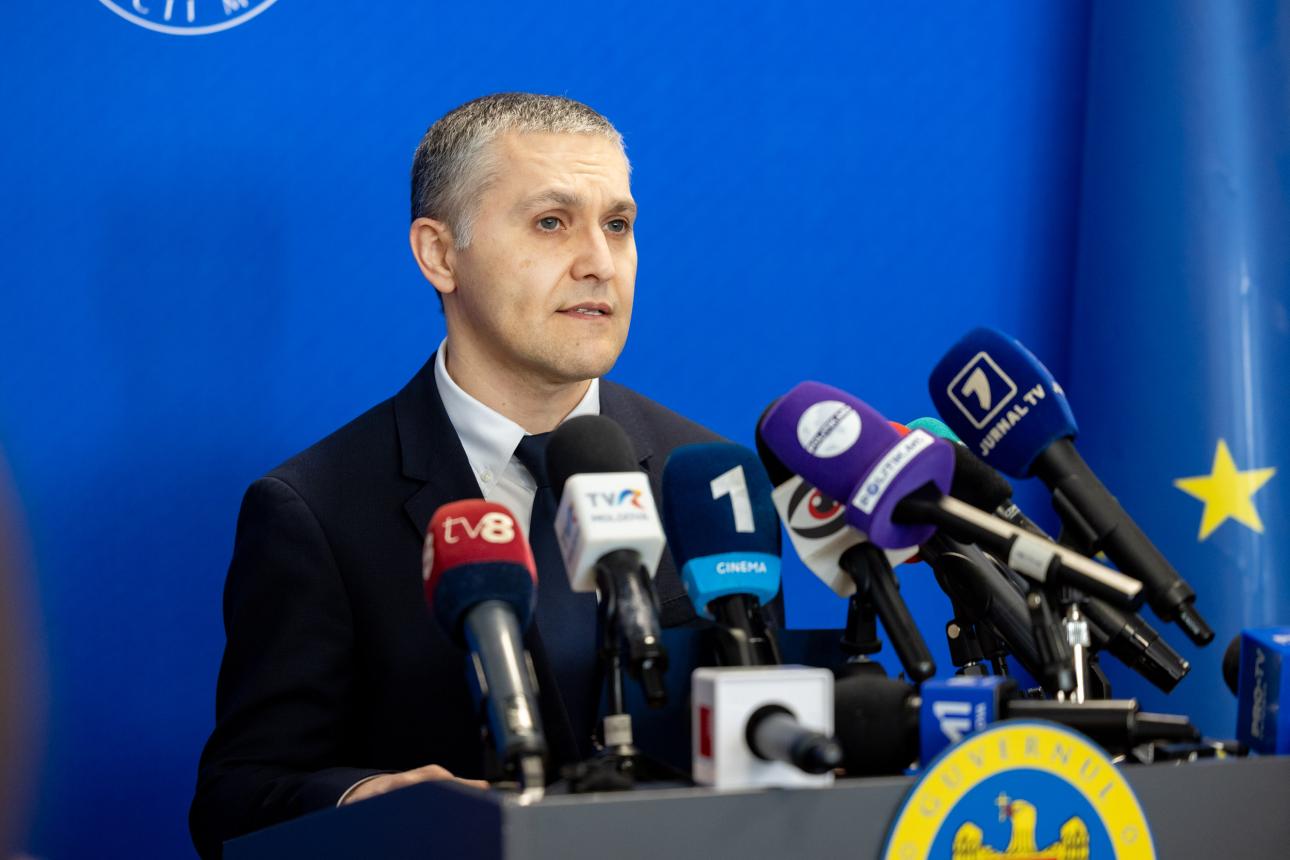
Director of the National Crisis Management Center Serghei Diaconu stated that the changes were proposed after several analysis and interinstitutional coordination actions were carried out for managing the alert status, with needs being identified for introducing adjustments to the already established measures in order to make state intervention more efficient and proportionate.


“These measures are preventive and proportionate and allow us to intervene in a timely manner to avoid major dysfunctions and to maintain the stability of the energy market. We also mention that these measures aim to prevent the occurrence of an energy resource deficit, to ensure the continuity of supply to final consumers, to stabilize the market, and to protect domestic consumption in the context of heightened regional volatility,” said Serghei Diaconu.


Thus, the minimum stock level required for the re-export of fuel from the Giurgiulești International Free Port (PILG) was reduced from 8,000 tons to 5,000 tons of gasoline, while for diesel it was maintained at 25,000 tons.


“The most important proposals concern introducing a limitation on the gasoline stock in PILG from 8,000 tons to 5,000 tons. We are in a better situation regarding gasoline imports, we have an excess and there is no reason to keep this gasoline in the port. But we are maintaining the limit of 25,000 tons in PILG so that we also have the necessary diesel stocks. In order not to keep and create unjustified bottlenecks, we consider this adjustment necessary,” explained Serghei Diaconu.


At the same time, following the amendments approved by the Government, the sale of diesel in consumer containers will be allowed up to a maximum of 20 liters.


“We have several reported cases of speculation and abuse, as well as unjustified purchases by private individuals at petrol stations in non-compliant containers. That is precisely why we are proposing to temporarily limit the sale of diesel in consumer containers to a maximum of 20 liters to prevent such excessive purchases and abuses. I repeat, this is not about limiting to 20 liters in total; you can fully fill your vehicle’s tank, that is, the entire capacity of the car, plus fill one compliant container of 20 liters. But we have situations where people come with containers of more than 200 liters, and that creates pressure on the market,” stressed the CNMC director.


At the same time, the ban on electricity exports during the 06:00–09:00 time slot has been lifted, with restrictions being maintained only for the evening peak hours (17:00–21:00).


“In the electricity segment, another proposal is the adjustment of export restrictions. Thus, we are moving to relax morning exports; we will continue to restrict only green electricity exports in the afternoon period, because we currently have an excess and we want this balancing to be fair, both in favor of citizens and in favor of energy producers,” Diaconu emphasized.


In addition, electricity market participants who do not hold contracts on the domestic market will no longer be remunerated for positive imbalances (unplanned surplus energy delivered).


“In the draft decision we specify that the possibility will be removed for electricity producers or suppliers who do not have contracts on the domestic market to request remuneration for positive imbalances. This is a measure to eliminate abuses and to rule out the tricks of those who are exploiting this period for illicit profits,” concluded the CNMC director.


The authorities gave assurances that these interventions are preventive and temporary, aimed at stabilizing the market and ensuring the continuity of essential services for the population under conditions of regional uncertainty.

On March 4, the Government declared an alert status in the energy sector for a period of 60 days, in connection with the external situation. According to the authorities, the measure is preventive and aims to protect domestic consumption and maintain the stability of the energy system.
 Facebook
 Instagram
 X/Twitter
 Telegram
Deputy Prime Minister: Moldova–EU Investment Conference shows we are reliable partner and will continue to move forward
LIVE TEXT // Investment Conference in Chișinău. Deputy Prime Minister: Moldova advancing toward full integration into European market
Entrepreneurs on both banks of Dniester can participate in training program to develop export capacities
Natural gas transit tariff on route to Ukraine to be cut by 90 percent; Moldovan energy minister: “It will make the route more economically feasible”
Record number of registrations for Moldova – EU investment conference
EBRD to provide additional financing for rehabilitation of Chișinău–Leușeni road and Chișinău bypass
Subsidies worth 178 million lei for Moldova's farmers authorized in last May
Moldova to build up larger natural gas reserves: bill proposed by Ministry of Energy
Fuels continue to get cheaper
PHOTO GALLERY // Best local entrepreneurs awarded at Moldovan Business Gala
Moldova hosts annual conference of banking supervisors from Central and South-Eastern Europe
Moldova’s walnut exports exceed 40 million dollars annually
30 MW Photovoltaic park with battery storage to be built in Vadul lui Vodă
Moldovan National Road Transport Agency launches nationwide inspections of heavy trucks
Number of electric cars might double in Moldova by 2030; authorities prepare solutions to expand charging stations
PHOTO // Moldova learns from France’s experience in urban mobility, public transport's modernization; deputy PM’s visit to Paris
Over 300 tons of used appliances collected for recycling through EcoVoucher Programme in Moldova
Moldovan-Hungarian cooperation in focus for foreign ministers of Chisinau and Budapest
European Commission President: EU to open first negotiation cluster with Moldova on days to come
Moldova, Romania coordinate efforts to advance EU accession negotiations
Over 250 rescuers from Europe to take part in MD–EU MODEX 2026 exercise organized in Moldova
 National Bank of Moldova
Moldovan deputy PM for reintegration has meeting with French senators
Moldovan parliament speaker thanks UNICEF representative in Moldova for support in social reforms, child protection
Moldovan president attends ceremony on 24th anniversary of foundation of National Anticorruption Centre
Prime Minister at Moldova Digital Summit 2026: Our ambition is not only to join EU, but to help build Europe’s digital future
Over 1 billion euros in new investment partnerships, financing announced for Moldova

VIDEO // Over 5 million lei seized following searches in fraud file in Moldova; five people detained
Record on electricity exchange in Moldova: largest volume of traded power since its launch
Deputy Prime Minister: EU Growth Plan for Moldova creates conditions for modernizing economy at unprecedented pace
Sergiu Caraman remains head of Superior Council of Magistracy
Moldovagaz to supply natural gas to Transnistrian region by late 2026
VIDEO // Alexei Buzu: Government allocates 145 million lei for development of amalgamated localities in Călărași
Deputy parliament speaker says Moldova must strengthen defense capabilities
Works at Chisinau Electrical Substation progressing; Romanian Ambassador says Romania stays reliable partner of Moldova in strengthening energy security
EUROPEAN VILLAGE // Over 27 million lei invested in modernizing infrastructure in central Moldova settlement
Moldovan Foreign Affairs Ministry issues travel alert for Qatar, Kuwait: “Security situation stays volatile”
Economic, investment opportunities of Moldova promoted at Annual Meeting of Board of Governors of European Bank for Reconstruction and Development
Environmental NGOs' representatives trained in alternative methods for resolving environmental conflicts in Moldova
PHOTO // Moldovan deputy parliament speaker says Grand Duchy of Luxembourg, as EU founding member, firmly supports Moldova's European path
ARMENPRESS: IRI observers: Armenia’s June 7 elections conducted calmly and fairly
Discover Moldova with #MOLDPRES // Sweet business in Prut Meadow
MOLDPRES REPORT // Smart technology for old apartment blocks: Chinese solutions that might fix parking, waste problems in Moldova’s cities
Receive the latest news directly to your email

Receive the latest news directly to your email