
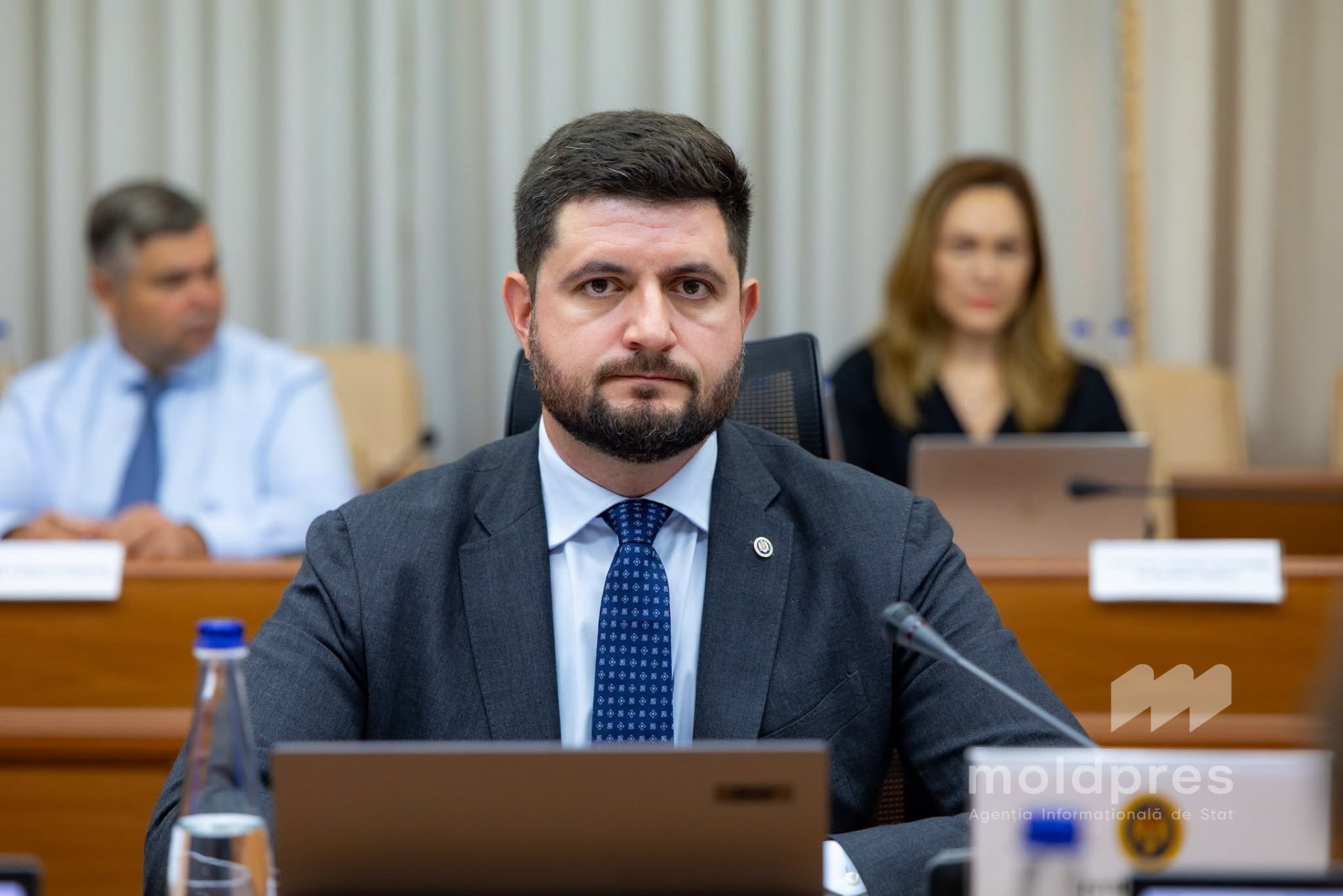
Moldovan energy minister explains why security stocks cannot be used to reduce gas prices
Energy Minister Dorin Junghietu has provided clarifications regarding the proposal by Vadim Ceban, interim chairman of the Board of Directors of the Moldovagaz company, to use security stocks, in order to mitigate the impact of rising gas prices on consumers. The minister explained that these reserves represent the country’s strategic reserve and cannot be treated as ordinary commercial volumes.

According to Dorin Junghietu, security stocks were established for situations in which gas supplies are seriously disrupted or extremely low temperatures lead to exceptionally high consumption.

“Security stocks are not meant to make gas a little cheaper, but to ensure that we have gas in general, in exceptional circumstances,” the minister emphasized.

Junghietu explained that other gas volumes are available to manage price increases, namely the stocks accumulated by suppliers under the legal storage obligation. A price increase, even if it affects consumers and the economy, does not automatically constitute an exceptional situation in the gas sector.

The legislation establishes criteria for declaring such a situation, including a reduction in imports by more than 20 per cent compared with demand or extremely low temperatures recorded for seven consecutive days, resulting in excessive consumption.

The energy minister said that, even in the event of an exceptional situation, security stocks are not released automatically. Available market solutions must be used first, while the decision to use the strategic reserve may be taken only by the competent authority responsible for managing crisis situations.

According to Junghietu, the Energy Ministry continuously monitors and assesses the situation in the sector; however, it does not declare an exceptional situation on its own and cannot independently decide to release security stocks.

“The fact that this gas was purchased earlier at a lower price does not change its intended purpose. Using it now could temporarily reduce the cost of certain purchases, but it would not eliminate the costs. The reserve would later have to be replenished, possibly at higher prices,” the minister noted.

At the same time, Junghietu warned that depleting part of the strategic reserve would reduce the level of protection for consumers in the event of a potential genuine interruption of supplies.

Moldova presently has 56.3 million cubic meters of gas in its security stocks, an amount estimated to cover approximately ten days of winter consumption. The minister noted that this reserve is not a surplus and cannot be replenished immediately, particularly in crisis conditions, when gas may become more expensive and more difficult to procure or transport.

Dorin Junghietu says that any temporary effect on prices must be assessed against the risk of reducing the state’s ability to intervene in the event of a genuine energy emergency. According to the minister, decisions on the use of strategic reserves must be made in accordance with legal provisions and based on a comprehensive assessment of the risks.
 Facebook
 Instagram
 X/Twitter
 Telegram
Iași–Ungheni railway line to be rehabilitated and electrified
Moldovan Railways prepares new investments to strengthen railway connection to Giurgiulesti Port
Draft Fiscal Policy for 2027 presented in Parliament
Energocom purchased natural gas for August at €57.80/MWh
DOC // Moldova prepares national aviation sector for implementation of Single European Sky requirements
Higher tax exemptions, revised VAT and new excise duties: 2027 tax policy draft reaches Parliament
Cold-season assistance program in finalization stage
Government proposes measures to prepare for next cold season
Moldova Railways to be reorganized and transformed into joint-stock company
Moldovan finance minister explains key fiscal policy provisions: increased personal allowance, reduced value added tax on basic products, higher excise duties, vice tax
Moldovan authorities to launch audit into delays to Vulcanesti–Chisinau power line project
Tender on Chisinau Airport's expansion to be reevaluated following decision by National Agency for Settlement of Complaints
VIDEO // Prime Minister about new tax policy, which will bring 5.1 billion lei to budget
Fiscal policy for 2027 approved by Government
Over 20 companies from Moldova present products in Baia Mare, Romania
Moldovan PM to attend 81st session of United Nations General Assembly
VIDEO // Prime Minister about privatization of Zarea Hotel: Our goal - to generate as much money as possible for state budget, while also making good use of important property in central Chișinău
PHOTO // Fragments that may have come from drone found on land near Colonița
 National Bank of Moldova
Moldovan PM meets with Head of Council of Europe Office in Chisinau
Moldovan PM to attend 81st session of United Nations General Assembly
Prime Minister visits Zarea Hotel: We want transparent auction and as many bidders as possible
New edition of program „Sub cușma lui Guguță” launched at Parliament
Reforming recruitment in civil service: from legal framework to implementation

Five youth centers to receive €500,000 for equipment and technical support
PHOTO // Fire Shield 2026 exercise concludes
New edition of program „Sub cușma lui Guguță” launched at Parliament
DOC // New rules for recognition of professional qualifications obtained abroad
Joseph Mark Burkhalter sworn in as U.S. Ambassador to Moldova
Reforming recruitment in civil service: from legal framework to implementation
Speaker about protests in Transnistrian region: Reintegration process irreversible
Moldova strengthens public finances in line with European standards with Slovenia’s support
Palanca border crossing point temporarily suspended due to communication network failure
Moldovan parliament speaker provides details on administrative and territorial reform
Summary of Moldovan parliament's plenary meeting held on September 17, 2026
Moldovan parliament speaker, after meetings in Budapest, says Hungary supports Moldova in its efforts
Roman Rosca takes over as chair of special parliamentary commission for monitoring and oversight of Moldova’s reintegration policy
Working of small farms in built-up areas of localities to be regulated by law in Moldova
Moldova accedes to convention in marine environmental protection sector
Moldovan parliament speaker explains need to create Moldova Project: “We must concentrate expertise in a single entity”
Receive the latest news directly to your email

Receive the latest news directly to your email