
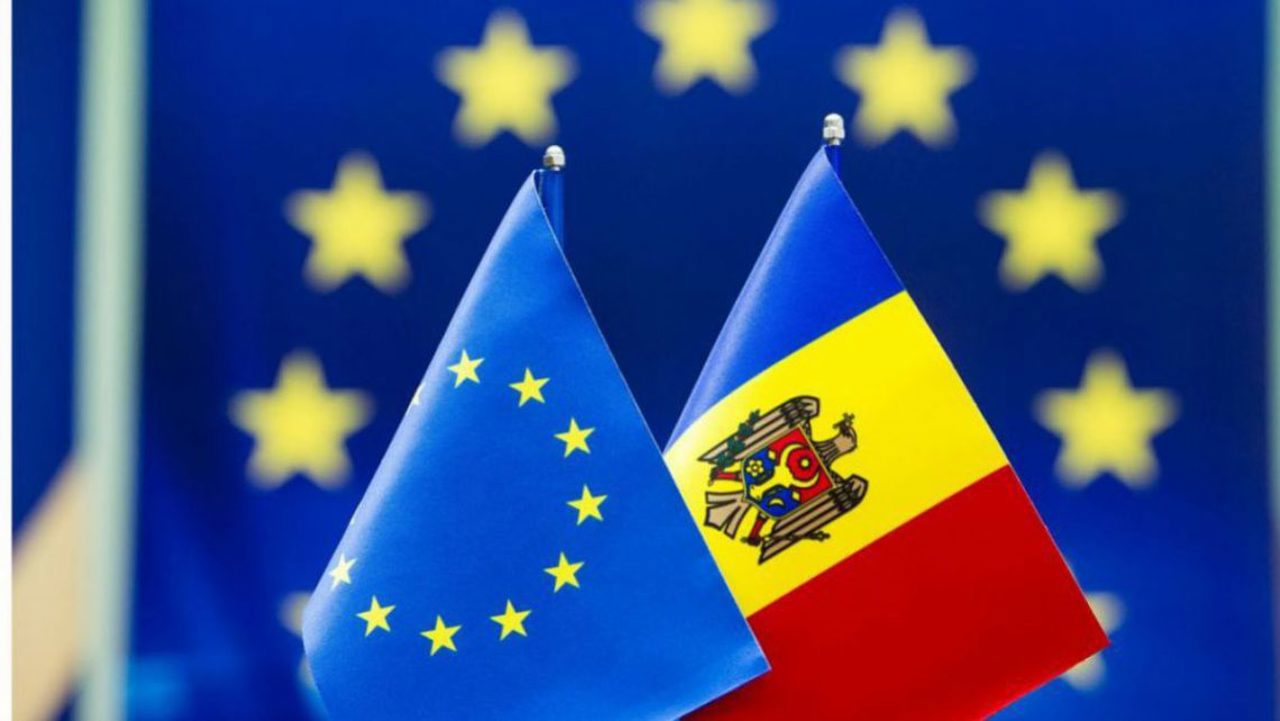
Republic of Moldova aims to close two EU negotiation chapters in 2027
The Republic of Moldova plans to close in early 2027 negotiation chapters 25 – Science and research and 26 – Education and culture in the process of joining the European Union. The commitments undertaken focus on modernizing the education system, increasing funding for research and innovation, improving access to education, and strengthening cooperation with European institutions. The topics were discussed during public consultations organized by the Ministry of Education and Research, in cooperation with the Bureau for European Integration.

Ministry representatives say that the commitments included in the negotiating positions correspond to national priorities and aim to improve policies in the fields of education, research, youth and sport.


“In fact, we were not forced to adopt any legislation or activities that would fall outside the areas we manage. Everything we included in the negotiating position is fully in line with our national priorities and with what we want to achieve in order to improve the situation in education and in the areas of youth and sport. The European Commission will also assess our progress based on this negotiating position, through meetings that we will hold monthly. Thus, we aim to close, as soon as possible, at the beginning of next year, as planned, negotiation chapters 25 and 26, which are indeed among the chapters that are opened and closed first,” said Ludmila Pavlov, deputy secretary general of the Ministry of Education.


In the field of science and research, the authorities aim to increase public funding, attract more private investment and external funds, and strengthen the participation of institutions from the Republic of Moldova in European research programs, particularly Horizon Europe.

According to ministry representatives, state budget funding for research and innovation amounted to 0.23% of GDP in 2025. Although budget allocations have increased compared with previous years, the authorities acknowledge that additional investment is needed to develop the sector.


“One of the commitments is to increase funding, and we still have a lot of work to do in this regard. In terms of funding for research and innovation from the state budget, according to statistics, we are not doing very well, as it accounted for only 0.23% of GDP in 2025. However, compared with previous years, we have seen an increase in the budget allocations provided in 2025. (...) This is an upward trend, and the European Commission assessed it positively in its reports,” explained Igor Chiosa, the acting head of the ministry’s department responsible for research and innovation.


Another objective is to bring the national research system closer to the European one, including by developing infrastructure and strengthening cooperation between academia and the business community. The authorities aim to make more effective use of technology transfer programs and innovation vouchers, as well as to support the participation of research organizations in European initiatives.


“Our main commitment in the European integration process under this chapter is to align national policies with European ones, strengthen national capacities, and participate in European programs, first and foremost Horizon Europe, as well as in other initiatives at the European level,” the ministry representative noted.


By 2027, the authorities aim to continue modernizing research infrastructure, improve transparency and integrity in the field, and increase the economic impact of scientific results.

In education, one of the main commitments is to approve a new curriculum for general education by the end of 2026. Its implementation is expected to begin gradually in September 2027. The new curriculum will emphasize digital skills, the green transition, democratic citizenship, multilingualism, and skills in science, technology, engineering, and mathematics (STEM).

At the same time, the Ministry of Education and Research aims to invest in teacher training and ensure that at least 70% of teachers receive training in digital skills by 2027.


“There can be no quality education without good teachers. This applies throughout the entire education system. You know that we have been implementing the ‘Investing in Teachers’ program since 2023. We have committed to ensuring that at least 70% of teaching staff receive training in digital skills by 2027. We will continue to make education spending more efficient, while also increasing it and strengthening human resources,” the ministry representative said.


The authorities also seek to reduce disparities in the quality of education between rural and urban areas, expand inclusive education programs, and support children from vulnerable groups, including children with disabilities, refugees, and migrants. Planned measures include developing a network of nurseries for children under two and promoting equitable access to education.

In technical vocational education, priorities include expanding dual education, increasing financial support for participating employers, and modernizing the infrastructure of educational institutions. The authorities also aim to update vocational training programs in line with labor market requirements.

In higher education, the commitments include the internationalization of studies, promoting academic integrity, and obtaining international accreditation for at least 25% of doctoral programs by 2027.

Another important objective is the association of the Republic of Moldova with the Erasmus+ program, which would expand mobility opportunities for teachers and young people, as well as access to volunteering activities and exchanges of experience.


“An important commitment we have is joining the Erasmus Plus program. This is a European Union initiative that allows all countries with associated-country status to access the program as associated countries. Our most important task at this stage is to establish a national entity that will manage the Erasmus Plus program, strengthening mobility opportunities for teachers and young people, as well as access to volunteering activities and exchanges of experience,” the ministry representative said.


In the field of youth, the authorities plan to develop youth centers, professionalize youth workers, and adopt the regulatory framework needed to implement the Volunteering Law. The European Youth Card is also scheduled to be officially launched in the Republic of Moldova in November.

In sport, the commitments focus on promoting good governance, integrity, and equal access, as well as developing grassroots and high-performance sport.

The negotiating positions for chapters 25 and 26 were presented during public consultations organized on October 26, 2026, at the Government headquarters.

Chapter 25: Science and research – Covers integration into the European Research Area, access to framework funding programs such as Horizon Europe, technological development, and cooperation with scientific entities from the EU.

Chapter 26: Education and culture – Covers key areas such as modernizing the education system, vocational training, youth policies, sport, and the protection of cultural heritage.
 Facebook
 Instagram
 X/Twitter
 Telegram
Moldova ready to open all remaining negotiation clusters for EU accession; Moldovan president discusses matter with EU Council President
Moldova completed 68% of actions undertaken for Energy negotiating chapter
Republic of Moldova to present negotiating positions for EU accession Clusters 2 and 3
Moldova to receive EU accession roadmap by year-end
VIDEO // Moldovan deputy PM for European integration says Moldova might conclude EU accession negotiations in early 2028
VIDEO // Moldovan government welcomes European Commission's analysis on EU's preparedness for enlargement
VIDEO // European Commissioner for Enlargement says Moldova to receive a roadmap for EU accession on October 28
Moldovan government's secretary-general, after Association Council meeting: “The reforms we are completing are turning into opportunities for the country’s development”
Moldova advances toward EU at an “impressive” pace; European Commissioner for Enlargement: “We expect to open all negotiating clusters by the end of this year”
LIVE // Kaja Kallas, Marta Kos and Vasile Tofan hold press conference after Moldova-EU Association Council meeting
VIDEO // Tenth meeting of Moldova–EU Association Council held in Brussels
Moldovan PM, EU commissioner make joint statements on Growth Plan, Moldova’s European path
PHOTO // Moldovan PM, ambassadors of EU member states discuss priorities, reforms for advancing European path
PHOTO // European integration can accelerate mobilization of green investments in Moldova; study presented in Montenegro
Moldovan Prime Minister in talks with Ukrainian President
Prime Minister's message of appreciation for Ukraine: Your resistance allows us to live in peace
Anti-Corruption Prosecutor Vadim Prisacari fails external evaluation
Technical-military cooperation agreement between Moldova and Ukraine signed in Kyiv
 National Bank of Moldova

Moldovan Prime Minister in talks with Ukrainian President
Prime Minister following meeting with Ukrainian counterpart: Every day Ukrainians defend their cities, families and freedom, they also contribute to security of Moldova
Speech by Prime Minister following meeting with Ukrainian counterpart
Prime Minister attends Kyiv International Economic Forum
Prime Minister's speech at Kyiv International Economic Forum

Speech by Prime Minister following meeting with Ukrainian counterpart
Moldova's European path and regional security discussed by Foreign Ministers of Moldova and Cyprus
Republic of Moldova fully covered electricity consumption on October 19–25
Romania’s Prime Minister to visit Chișinău on Tuesday
VIDEO // Ukrainian citizen illegally crossed border into Moldova by motorized paraglider and requested asylum
Powered paraglider illegally entered airspace of the Republic of Moldova
Republic of Moldova to promote tourism offering at WTM London 2026
Republic of Moldova and Cyprus seek to deepen interparliamentary cooperation
Prime Minister attends Kyiv International Economic Forum
Prime Minister's speech at Kyiv International Economic Forum
Moldovan parliament speaker, Metropolitan of Moldova Vladimir discuss spiritual values, society's unity
Moldovan Education Ministry introduces mandatory training to prevent plagiarism, fraud at universities
Foreign affairs minister of Moldova, President of Cyprus discuss strengthening Moldovan-Cypriot relations, Moldova’s European agenda
VIDEO // Moldovan PM in Kyiv says Moldova reconfirms firm support for Ukraine
Online services for submitting, issuing permits restored after cyberattacks in Moldova
Chisinau Airport to operate direct flights to 61 destinations during next winter season
Receive the latest news directly to your email

Receive the latest news directly to your email