
Over 100 civil servants of Moldova trained in applying Regulatory Impact Assessment
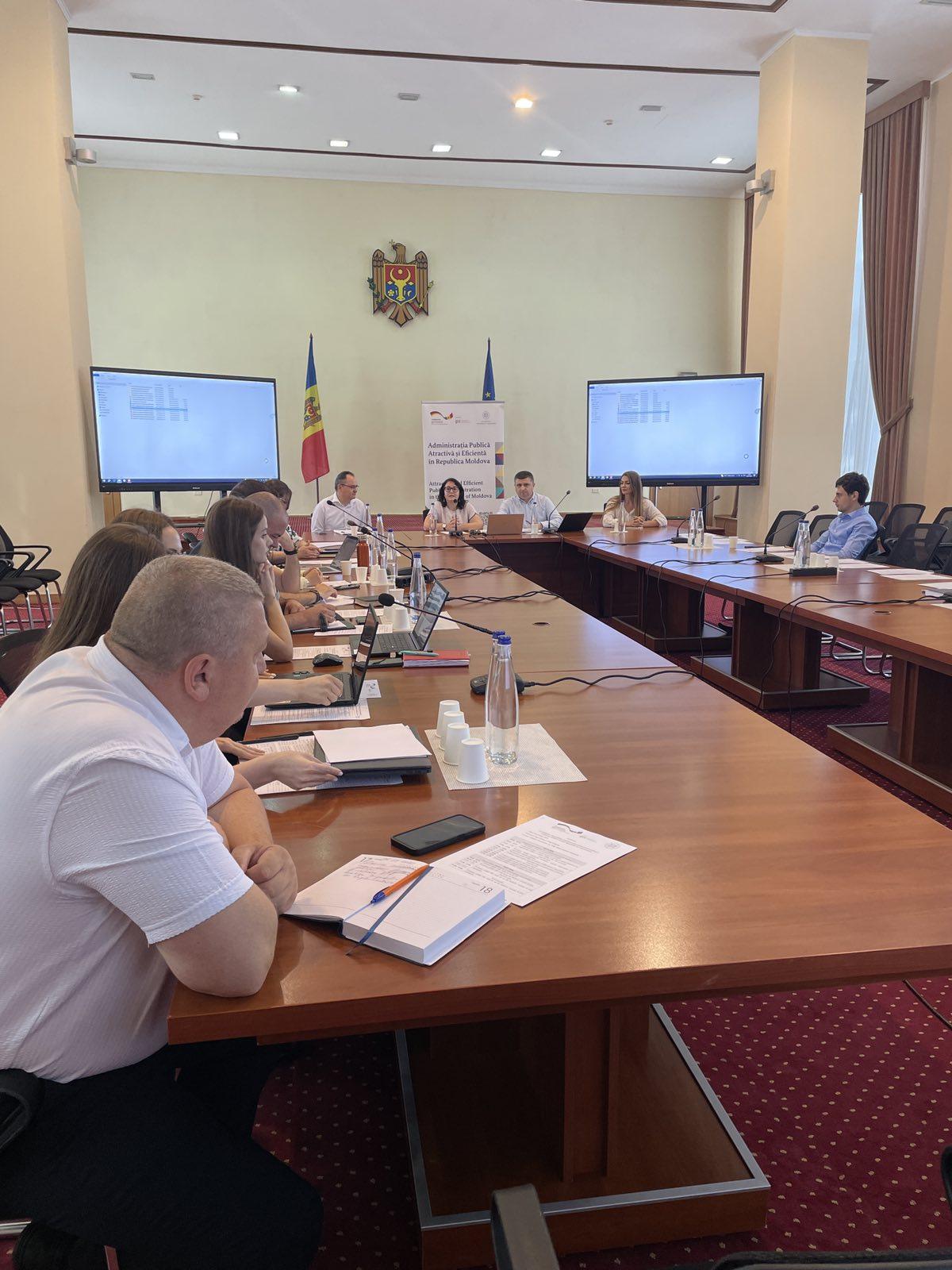
The State Chancellery in June-July 2026 organized a new series of training sessions on the application of the Regulatory Impact Assessment (RIA) methodology, attended by around 100 civil servants from central public administration authorities.

The discussions aimed to strengthen the capacities of civil servants responsible for drafting and promoting draft regulatory acts, by developing the skills needed to apply the RIA methodology. During the sessions, participants analyzed issues related to identifying and defining regulatory problems, setting goals, assessing intervention options, estimating costs and benefits, as well as analyzing the impact on the public and private sectors, society, the environment and other relevant areas.

Strengthening competences in the field of regulatory impact assessment is an essential element for improving the quality of the regulatory drafting process and for promoting evidence-based decision-making. At the same time, this activity contributes to the implementation of the 2023–2026 Programme on the Implementation of the Public Administration Reform Strategy for 2023–2030, which envisages achieving the objective of making sure that 100 per cent of regulatory acts are accompanied by a regulatory impact assessment. It also supports the fulfillment of the commitments undertaken by Moldova in the context of the European Union accession process, through the Public Administration Reform Roadmap.

Through such activities, the State Chancellery continues to invest in the professional development of civil servants and in strengthening the institutional capacity of central public administration authorities to develop quality public policies and regulatory acts, in line with the principles of good governance and the standards of the European Union.

The training programme was organized by the State Chancellery with the support of the project, Attractive and efficient public administration in Moldova, funded by the Government of Germany and implemented by the German Development Cooperation Agency (GIZ).
 Facebook
 Instagram
 X/Twitter
 Telegram
President participates in Coalition of Willing meeting in Paris
President met with Ambassadors of EU member states and G7 countries accredited to Moldova
President nominates Vasile Tofan as candidate for Prime Minister
Attention Media! Head of State to hold press briefing on 11 July
Bootcamp of Joint Internship Programme of European Union and Moldovan Government
Government’s State Secretary for Reintegration meets with Ambassador of Croatia
Participation of Deputy Prime Minister for Reintegration in roundtable on Transnistrian conflict settlement process, held in Vilnius
Republic of Moldova implemented over 90% of reform measures planned for first half of 2026
President met with Head of Council of Europe Office in Chișinău
Dynamics of vehicle registration with national and neutral license plates in Transnistrian region
Working visit of State Secretary of Government for Reintegration to localities of Copanca and Grădinița, Căușeni district
Bilateral meetings with Lithuanian officials during working visit of Deputy Prime Minister for Reintegration to Vilnius
Discussions with representatives of Norwegian Refugee Council on activities carried out in Moldova
Almost 360 thousand residents of Transnistrian region hold citizenship of the Republic of Moldova
Moldova's designated PM discusses local public administration reform with local authorities
Attention, travelers! Heavy traffic at Leuseni border crossing point on outbound direction from Moldova
Venice Commission experts assess draft Parliament Code of Moldova
Parliament speaker says Moldova must strengthen defense, align with sanctions against Russia
Four settlements from north Moldova district merge into single mayoralty: 18.5 million lei in investments provided by government
Parliament speaker says opening of new cluster of negotiation chapters confirms EU’s confidence in Moldova
German Bundestag MPs pay official visit to Moldova
 National Bank of Moldova
Report on Moldova's progress in implementing 2030 Agenda presented at United Nations
In Kyiv, Ukraine – South-East Europe Summit reaffirms regional cooperation for peace and shared resilience
Joint Declaration of Ukraine – South-East Europe Summit
Moldovan President meets with Ukraine's President in Kyiv
Construction of bypass road around city of Drochia progresses: Government approves new phase of project

Joint Declaration of Ukraine – South-East Europe Summit
Moldovan President meets with Ukraine's President in Kyiv
Cabinet led by Vasile Tofan to seek vote of confidence from deputies on Tuesday
Acting Prime Minister expects new Government to be sworn in next week, while ministers avoid saying whether they will remain in office
Construction of bypass road around city of Drochia progresses: Government approves new phase of project
Over 9,000 state-funded places for future students approved by Government
Acting Minister of Defense about drone crashed near Copanca: Detection by radars depends on distance, altitude and terrain features
Acting Prime Minister after opening negotiations on Cluster 6: We have shown perseverance and quality. We must continue implementing reforms
Construction works on national road R7 “R14 - Drochia - Costești - border with Romania” could be declared of public utility and national interest
Government accepts resignation of APP head
Deputy Prime Minister presented in European Parliament the Republic of Moldova’s priorities in security and defence
Recruitment into National Army under scrutiny by Ombudsman following multiple complaints
President on Ukraine Statehood Day: Thank you for reminding us what it means to fight for freedom
Deputy Prime Minister for Reintegration meets Ambassador of United Kingdom of Great Britain and Northern Ireland
PHOTO // Vasile Tofan held talks with small entrepreneurs
Tourism turns Orheiul Vechi into driver of local economy: accommodation revenues increased sixfold in recent years
Receive the latest news directly to your email

Receive the latest news directly to your email