
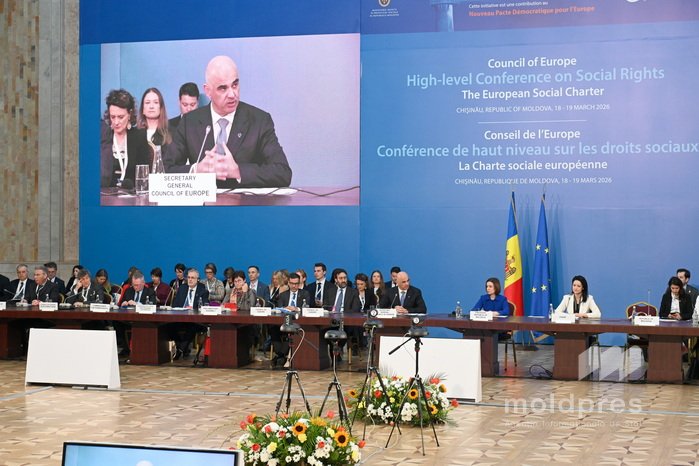
Meeting in Chisinau // Romanian political analyst says European Social Charter brought from legal sphere into core of geopolitical debates
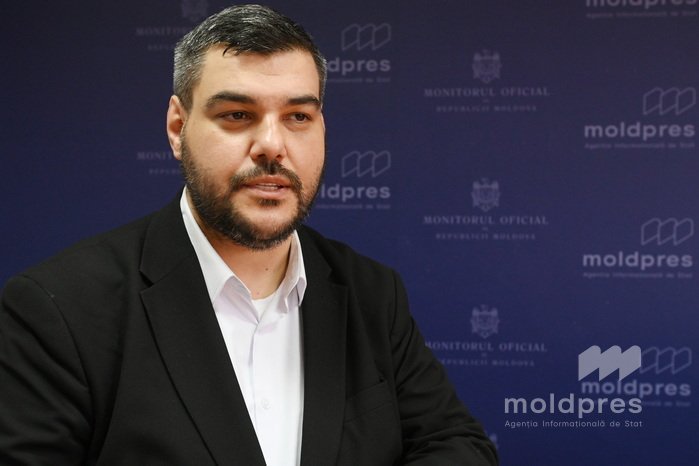
The meeting in Chisinau dedicated to the European Social Charter goes beyond a simple technical conference and becomes a strategic moment for Moldova in the European context. Romanian analyst Mihai Isac has made statements to this effect in a commentary for MOLDPRES. In his opinion, the event directly links social rights to democratic security, positioning Chisinau as an active player in Europe’s major debates, especially during the period in which the country holds the presidency of the Committee of Ministers of the Council of Europe.

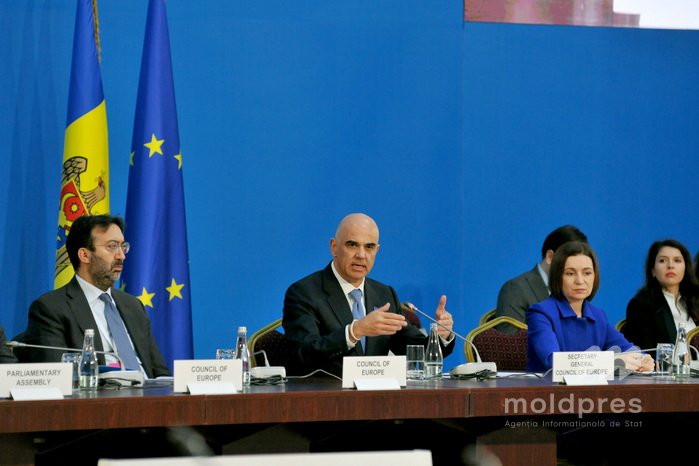
The commentary also highlights the strong messages conveyed by European leaders, including Maia Sandu and Alain Berset, according to whom social rights are essential for the stability of democracy, especially in the context of the war in Ukraine and current economic and social challenges.

At the same time, Mihai Isac draws attention to the fact that the meeting marks an important shift: the European Social Charter is being brought from the legal sphere into the core of geopolitical debates, with direct implications for Europe’s future and for the European path of Moldova.

Mihai Isac: The official stake is threefold, including strengthening the implementation of the European Social Charter, assessing the reform of the Charter system and preparing a final political declaration. In parallel, eleven topic-related events were scheduled in Chisinau on digitalization, youth, Roma inclusion, multilevel governance, demographic resilience, Moldova and Ukraine, as well as the link between the European Social Charter and the European Pillar of Social Rights.

The importance of the fact that the meeting takes place in Chisinau lies in the political context. Moldova holds the presidency of the Committee of Ministers as of November 14, 2025, till May 15, 2026, and among its stated priorities, there are support for Ukraine, the New Democratic Pact for Europe, and combating disinformation. On the human rights dimension, Chisinau has explicitly included the protection and implementation of social rights. In addition, the Labour and Social Protection Ministry (MMPS) underlined that this is the first time Moldova has hosted such a large number of international social-policy officials and the meeting has an additional symbolic weight, given that 2026 marks 30 years since the revised European Social Charter.

Social rights can no longer be treated as a secondary chapter of public policies

The central political message of Maia Sandu was that social rights can no longer be treated as a secondary chapter of public policies, but as a condition for the survival of democracy. The Moldovan president explicitly said that “social rights are essential for the survival of democracy” and stressed that, when people feel protected and have opportunities, they become less vulnerable to manipulation and more confident about the future.

Alain Berset placed the same idea in a broader European framework, namely the fact that there is no democratic security without social rights. In his opening speech, the Secretary General of the Council of Europe directly linked war, economic shocks and growing inequalities to the need to bring social justice back to the centre of democratic stability.

Besides Maia Sandu and Alain Berset, other key figures of Europe’s human rights architecture were also on the agenda in Chisinau, such as Petra Bayr, Marc Cools, Mattias Guyomar, Michael O’Flaherty, Carlo Monticelli and Aoife Nolan. From the interventions and already published messages, it appears that the meeting sought to bring together the political, legal and public policy levels. O’Flaherty and De Schutter even warned, in a joint appeal launched on the occasion of the conference, that the fight against poverty is, in essence, a fight for democracy.

The challenges highlighted in speeches and topic-related sessions are quite concrete, including the cost of living, poverty and social exclusion, the decline of trust in institutions, the war in Ukraine and the effects of forced displacement, population’s ageing, climate change, as well as the future of work under the impact of artificial intelligence, platform work and non-standard forms of employment. In addition, the side events brought to the forefront the risks of digitalizing social systems, Roma inclusion, youth rights and the link between the European Social Charter and the European Pillar of Social Rights.

Agreement on social security with Ukraine

In the case of Ukraine, the conference was not only a framework for political solidarity, but also one for social convergence. An event dedicated to Moldova and Ukraine focused on community social services for children, persons with disabilities and people affected by poverty or displacement, as well as on aligning legislation with the European Social Charter and the EU social acquis. Ukrainian Minister Denys Uliutin referred to the need to build “social resilience”, while his counterpart from Chisinau insisted on modernizing social protection and ensuring equal access to services for citizens and refugees.

As for the agreement on security agreement with Ukraine, it is important for the portability of pensions and other benefits. Persons who have worked in both states are to benefit from rights calculated proportionally, based on contribution periods and the principle of totalization. The MMPS officially confirmed the signing of an amendment to the memorandum with the Czech Republic for the RESTART reform, an extremely useful precedent for Moldova.

The novelty of the Chisinau meeting: moving the European Social Charter from a treaty to the realm of major geopolitical debates

Beyond the event itself, the fundamental novelty of the meeting in Chisinau is that it moves the European Social Charter from being perceived mainly as a legal treaty into the realm of Europe’s major geopolitical and democratic debates. The preparatory documents show that the meeting is expected to feed into both the reform of the Charter system and a future 2026–2030 Action Plan, focused on concrete measures, closer institutional cooperation and additional commitments from participating states.

We should also mention the attempts by pro-Russian political elements to hijack the event by organizing protests. During the protest, participants violated the law and chanted: “Down with the dictatorship!” and “Down with the genocide!”.

Among the protesters, there were Dina Carpinschi, Sergiu Ungureanu and Vitalie Bejenari, as well as pro-Russian politicians known in the public space for repeated appearances at pro-Russian protest actions and for associations with circles close to Ilan Shor, definitively sentenced to 15 years in prison in the Bank Fraud file.
 Facebook
 Instagram
 X/Twitter
 Telegram
Russia’s ambassador summoned to Foreign MInistry
Moldovan parliament to convene at plenary meeting on March 21; denunciation of Agreement on Founding of Commonwealth of Independent States on agenda
European Commissioner for Enlargement says European Commission ready to provide support to Moldova through the EU Civil Protection Mechanism, in context of situation on Dniester River
Moldovan parliament speaker to pay working visit to Brussels
Moldovan Speaker, Ambassador of India discussed economic and educational cooperation
Council of Europe urges Moldova to complete investigation into 2018 expulsion of Turkish teachers
Moldovan Deputy Prime Minister to visit Italy
PM says Russia’s war against Ukraine has more and more consequences affecting Moldova directly
Moldovan parliament speaker says citizens need to know that problem of Dniester River's pollution appears after Russia bombed Hydroelectric Power Plant in Ukraine
Moldova to host Black Sea Region Security Conference under aegis of International Crimea Platform
Romania pledges experience sharing, support for Moldova’s EU accession
Foreign Ministry: 28 Moldovan citizens requested consular assistance in Middle East
European Integration Office marks two years since creation
Simple motion on Moldovan Defence Ministry’s policies fails
Meeting in Chisinau // Romanian political analyst says European Social Charter brought from legal sphere into core of geopolitical debates
Prosecutors from all over Moldova to meet at General Assembly on March 20: priorities for 2026 on agenda
PHOTO // Moldovan PM, on visit to Balti city, says authorities recommend use of water only for household purposes in next 48 hours
Moldova–NATO cooperation discussed in Chisinau
 National Bank of Moldova
Moldovan government's secretary general participates in European Social Charter Conference
Moldovan deputy PM has meeting with Chargé d’Affaires of United States in Moldova
Moldova's delegation participates in meeting of Joint Control Commission in Bender
Strengthening social cooperation – on agenda of President’s meeting with Italy’s Minister of Labour and Social Policies
Head of State attends High-Level Conference on Social Rights – European Social Charter

Moldova's delegation participates in meeting of Joint Control Commission in Bender
Water supply restored in north Moldova today as of 13:00
Holiday vouchers now available also for rural guesthouses of Moldova
Citizens wishing to take out loan can find out total cost
PHOTO GALLERY // Republic of Moldova hosts High-Level Conference on European Social Charter
Strengthening social cooperation – on agenda of President’s meeting with Italy’s Minister of Labour and Social Policies
Czech Republic supports implementation of RESTART reform
Deputy Prime Minister holds meetings at U.S. Department of State: Strengthening foreign policy and advancing strategic priorities on agenda
Head of State attends High-Level Conference on Social Rights – European Social Charter
VIDEO // Environment Ministry installs seven new absorbent dams to stop pollution on Dniester River
Base rate on main monetary policy operations maintained at 5 percent
VIDEO // Prime Minister announces resumption of drinking water supply in four districts in north of country
LIVE TEXT // European Social Charter Meeting
Around 3,400 tons of gasoline and diesel imported into Moldova on Wednesday
Council of Europe Commissioner for Human Rights in Chișinău: Consolidated efforts needed to ensure social rights
High-Level Conference on European Social Charter: Social rights - foundation of Europe’s security and stability
Receive the latest news directly to your email

Receive the latest news directly to your email