
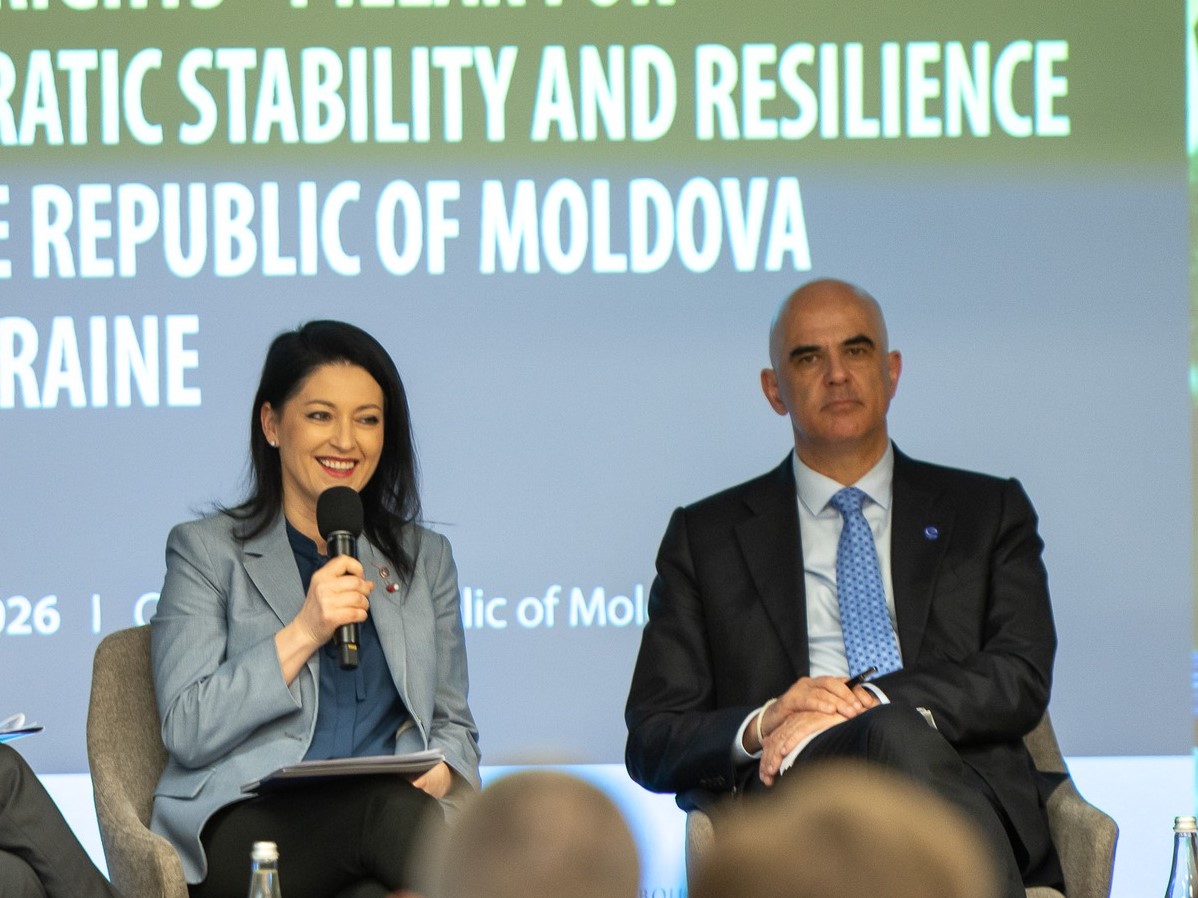
High-Level Conference on European Social Charter: Social rights - foundation of Europe’s security and stability
Social rights and democratic institutions are the key to the stability of European societies in the context of global crises, said Alain Berset, Secretary General of the Council of Europe at the High-Level Conference on European Social Charter, which is taking place today in Chisinau.

The official underlined that the war in Ukraine, the conflicts in the Middle East and other international tensions have direct effects on social and economic security, highlighting the need for sustained investment in health, housing and strong institutions.


“We must keep the current context in mind: the war in Ukraine has already entered its fifth year, and the conflict in the Middle East continues to affect the region. These crises generate cascading effects on the member states of the Council of Europe, impacting the economy, security and human rights. That is why it is crucial to work together to respond to these challenges and to protect the fundamental rights of our citizens. Social rights are not optional; they are the foundation of a strong democracy and of European security,” Berset said.


The official noted that past financial crises have shown us how vulnerable our societies can be.


“Rising prices, difficult access to housing and medical services, child poverty and the risk of social exclusion affect millions of people. These issues underline the importance of collective commitments and effective social protection. Social rights, health and education are not ‘soft’ elements – they are fundamental to the stability of our democracies. Democratic security begins to erode when these rights are not protected. We must strengthen resilience and democratic security, combat disinformation, external interference, the impact of climate change and the challenges posed by artificial intelligence to the labor market. Democratic security does not replace military security; both are necessary and must be developed simultaneously. European democracies must not choose between their values and their strategic interests – we need both. The new Democratic Pact for Europe was created to respond to these challenges and to turn democratic security into a shared responsibility,” Berset added.


The Secretary General recalled that the European Social Charter, also called the “social constitution of Europe”, is an essential instrument for protecting workers, combating inequalities and promoting social justice. Implementing its provisions at the national level is crucial for preventing poverty and social exclusion.

The conference in Chisinau brings together representatives of the 46 member states of the Council of Europe and marks an important moment in the Republic of Moldova’s presidency of this organization. So far, participants have discussed the ratification and implementation of the Charter, as well as the challenges related to digitalisation, climate change and geopolitics.

On the sidelines of the event, two important agreements will be signed in Chisinau: the Social Security Agreement with Ukraine and an agreement to support the implementation of the RESTART reform with the Czech Republic.

The Republic of Moldova ratified the revised European Social Charter on 8 November 2001 and accepted additional provisions in August 2024. At present, our country has accepted 71 of the 98 paragraphs of the Charter. At the same time, the Republic of Moldova has not accepted the 1995 Additional Protocol, which provides for the establishment of a collective complaints system.
 Facebook
 Instagram
 X/Twitter
 Telegram
PHOTO // Moldovan parliament speaker in Ljubljana says Slovenia’s experience on road to EU valuable lesson for Moldova
Annual meeting of Conference of Regional and Local Authorities for Eastern Partnership held in Chisinau
Moldovan parliament speaker in Istanbul discusses Moldova-Turkey relations, elections in Gagauzia
Chisinau maintains position on withdrawal of Russian troops and demilitarization of Transnistrian region
5+2 format no longer works
PHOTO // Moldovan PM commemorates victims of September 11, 2001 terrorist attacks in Chisinau
European Commissioner reconfirms EU support for advancing reforms in European integration process
European Commissioner holds talks with Prime Minister
MOLDPRES INTERVIEW // Moldovan deputy PM for reintegration: “Reintegration cannot happen through a single decision. Citizens must feel that moving closer to the right bank brings them benefits”
Moldovan President, European Commissioner for Equality approach progress in implementing reforms
European Commissioner on first visit to Chișinău: Moldova - important partner in strengthening Europe’s resilience
Adrian Băluțel appointed co-chair of Moldova–EU Parliamentary Association Committee
How future Constitutional Court judges will be selected. Parliament changes rules
Speaker: Elections in Gagauzia must be fair
PM, at Etno Fest Taraclia, says diversity of cultures, traditions makes Moldova richer
Moldovan Foreign Affairs Ministry condemns incident near Colonita settlement
Moldovan Border Police monitor situation after explosion nearby border with Ukraine; no fragments found in Moldova
Moldova European leader in growth of tourist arrivals in first half of 2026
 National Bank of Moldova
Moldovan PM has meeting with mayors from Gagauz autonomy
Moldovan PM discusses with entrepreneurs from southern region, visits more local businesses
PM, at Etno Fest Taraclia, says diversity of cultures, traditions makes Moldova richer
Art Comes to Life – immersive exhibition hosted by Moldova's parliament
Data of 2024 Census used in public policy development in Moldova

Moldovan energy minister explains why security stocks cannot be used to reduce gas prices
Data of 2024 Census used in public policy development in Moldova
Estonia to continue providing expertise to Moldova in EU accession process
Moldovan PM meets with Head of Council of Europe Office in Chisinau
Over 20 companies from Moldova present products in Baia Mare, Romania
Moldovan PM to attend 81st session of United Nations General Assembly
Prime Minister visits Zarea Hotel: We want transparent auction and as many bidders as possible
VIDEO // Prime Minister about privatization of Zarea Hotel: Our goal - to generate as much money as possible for state budget, while also making good use of important property in central Chișinău
PHOTO // Fragments that may have come from drone found on land near Colonița
PHOTO // Ștefan cel Mare Academy inaugurates drone operator training laboratory
VIDEO // More than 218 million lei directed toward objectives of Convergence Fund, although mechanism has not yet begun operating
Five youth centers to receive €500,000 for equipment and technical support
PHOTO // Fire Shield 2026 exercise concludes
New edition of program „Sub cușma lui Guguță” launched at Parliament
DOC // New rules for recognition of professional qualifications obtained abroad
Joseph Mark Burkhalter sworn in as U.S. Ambassador to Moldova
Receive the latest news directly to your email

Receive the latest news directly to your email