
Moldovan president’s speech at PACE // Political analyst says defining Council of Europe as a ‘guarantor,’ not a ‘neutral observer’ represents call for moral, legal positioning
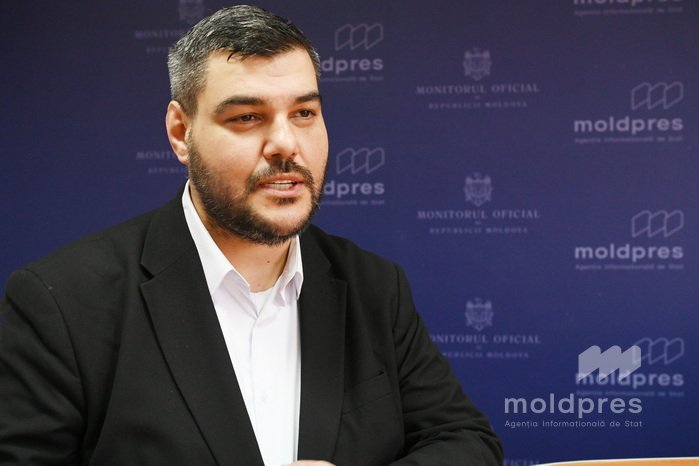
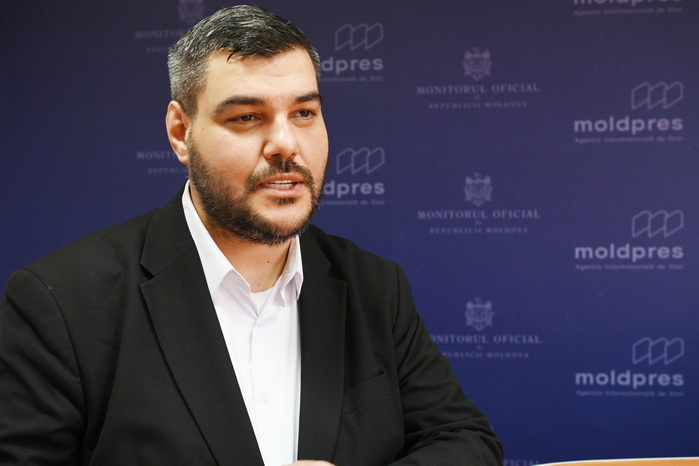
The message delivered by President Maia Sandu from the rostrum of the Parliamentary Assembly of the Council of Europe (PACE) matters not only through its content, but also through the place where it is delivered. The Council of Europe is the institution that has built the “backbone” of European democracy through the European Convention on Human Rights, anti-corruption standards and monitoring mechanisms, and PACE is the stage where these standards are turned into political pressure on governments. The opinion was expressed by Romanian political analyst Mihai Isac, contacted by MOLDPRES.

The analyst underlines that Maia Sandu’s message about the existence of two wars – a military one, waged by the Russian Federation in Ukraine, and a hybrid one, carried out inside European democracies – shifts the discussion from the area of a distant conflict to that of internal security.

“When Sandu says that Europe is facing two wars, one military, waged by Russia in Ukraine, and one hybrid, waged within democracies, she moves the discussion from the register of the ‘distant front’ to the register of ‘internal security’: it is not just about Ukraine, but about public trust, elections, illicit money, manipulation and the capture of institutions. At the same time, defining the Council of Europe as a ‘guarantor’ and not a ‘neutral observer’ is a call for moral and legal positioning: peace is not just the cessation of fire, but the restoration of rules through accountability,” Isac noted.

Referring to the military war, the analyst considers that Maia Sandu’s call regarding the Register of Damage is an essential step in the architecture of justice and reparations. This instrument could become the basis for real compensation mechanisms and would be relevant even for the consequences of the Russian invasion of the 1990s against Moldova. In the context, Isac notes that the existence of the separatist regime in Transnistria, supported by a Russian occupation army, stays a major factor of insecurity.

“For the first type of war, the realistic ‘response’ that the Council of Europe can intensify concerns the architecture of justice and reparations. The Register of Damage mentioned in the speech is conceived as an instrument that collects and structures claims and evidence, a necessary step before an effective compensation mechanism. Such a register would also be welcome for the elimination of the consequences of the Russian military invasion of the 1990s, launched against  Moldova. This can push member states toward concrete decisions, including expanding participation and funding, accelerating the technical process, such as digital procedures and cooperation on evidence. But above all, it can bolster political support for the next stages, including a commission to settle claims and a compensation framework that uses the register as a working basis.

“At the same time, accountability can feed into other initiatives discussed at European level, including legal instruments dedicated to the phenomenon of aggression, whether military or not, precisely to avoid the scenario described by President Sandu, namely a pause in which the Russian Federation prepares a new war.

“Let us not forget that, in the east of Moldova, there is a Russian occupation regime, supported by an occupation army of several thousand soldiers. Transnistria is a stronghold of Moscow’s intelligence services,” the analyst stressed.

As for the hybrid war, the main stake is turning the concept of “hybrid threat” into concrete and verifiable policies. The analyst lists possible directions for action: stricter rules on political financing and electoral advertising, traceability of money, combating money laundering, protection of digital infrastructures, support for independent media and media literacy. According to Isac, the Council of Europe has its own instruments to exert pressure and stimulate such policies.

“For the second type of war, the stake is translating the notion of ‘hybrid threat’ into verifiable policies. We can talk about tougher rules on political financing and electoral advertising, traceability of the money that enters campaigns and influence networks, cooperation against money laundering and illicit financial flows, protection of digital infrastructures and support for independent media, as well as media education in member states.

“Here the Council of Europe has its own levers, including evaluations, recommendations and pressure through specialized bodies or through the agenda of the Committee of Ministers. And the fact that the speech was delivered in the context of a PACE session in which Moldova enjoys increased visibility in Strasbourg may increase the chances that these issues will be turned into resolutions, monitoring activities and assistance programmes for vulnerable states.

“De facto, Sandu is asking Europe to treat the ‘invisible war’ as a common problem of democratic security. The conclusion is clear: if you do not cut off the money, the channels and the vulnerabilities, the military front and the information front will feed each other. The intelligence services of the Russian Federation have proved an enviable adaptability in this way of waging war,” the expert pointed out.

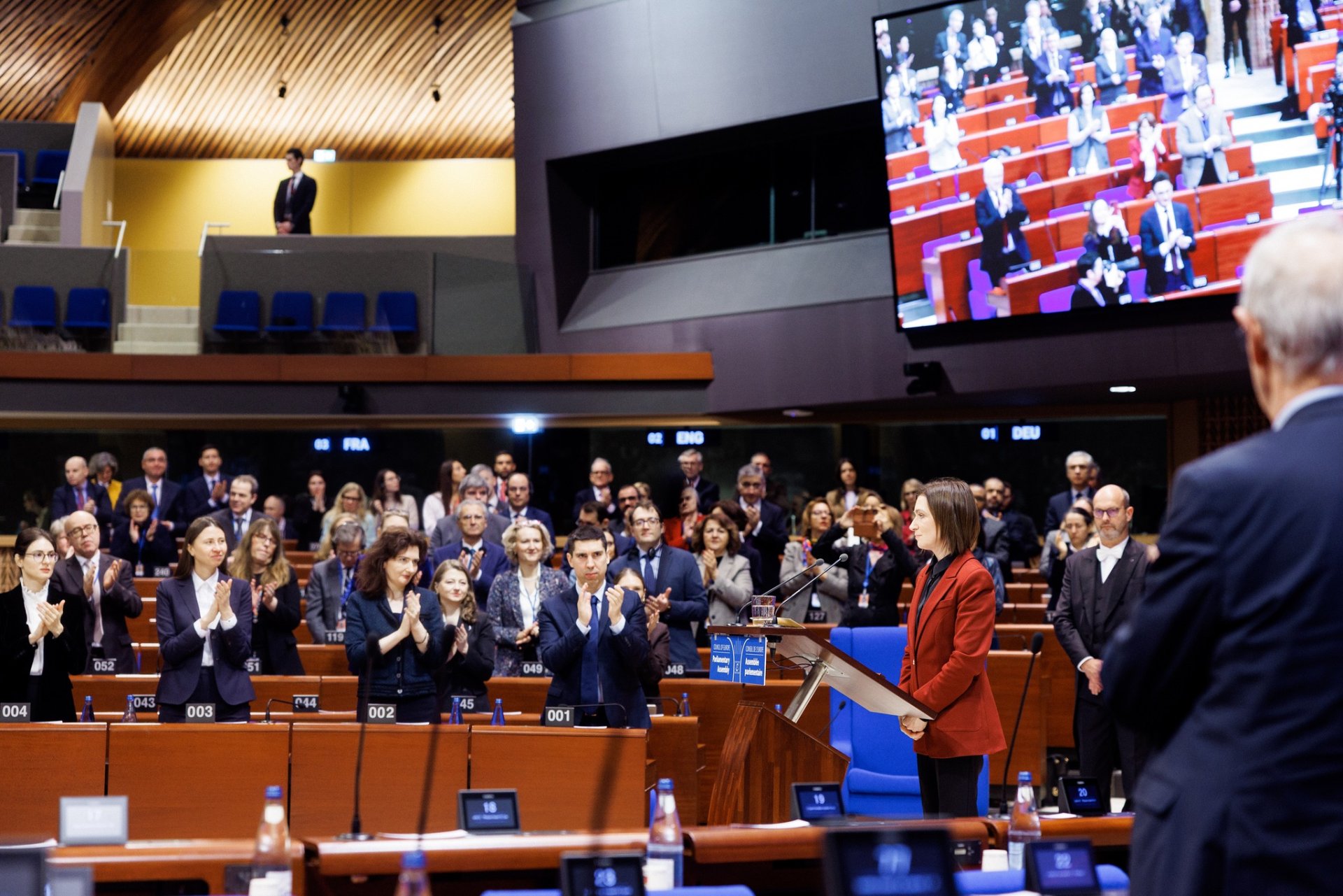
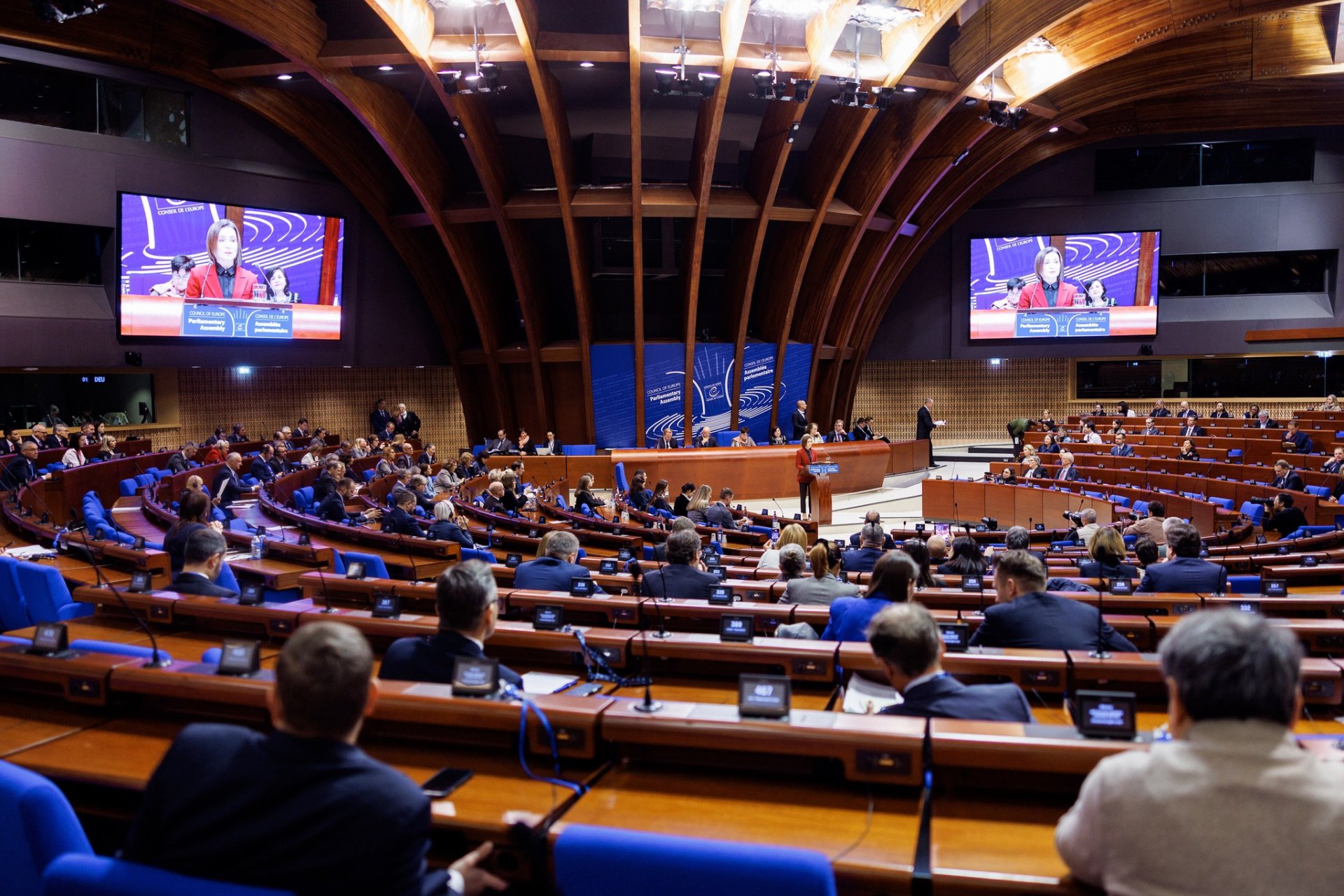
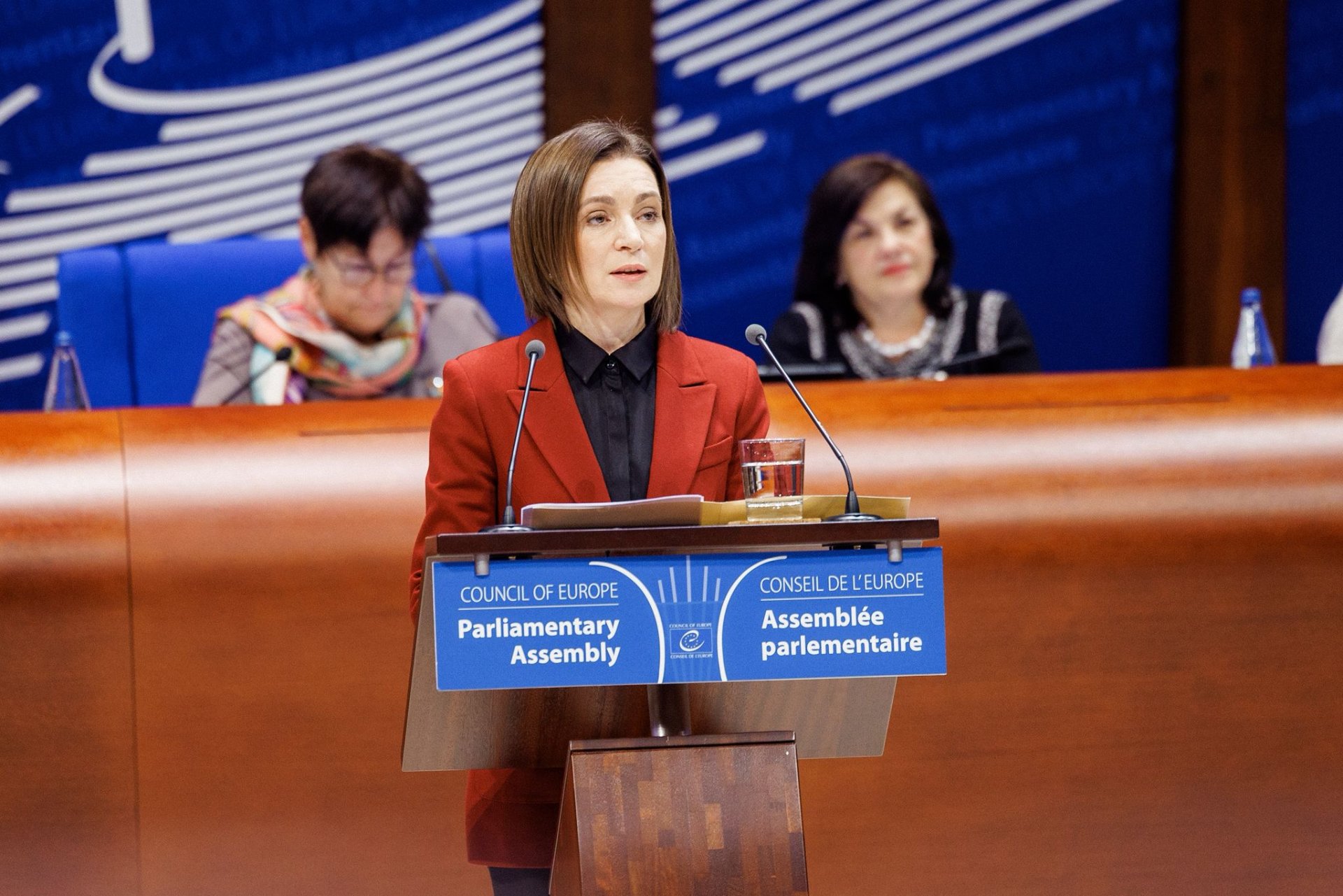
President Maia Sandu delivered a speech at the Parliamentary Assembly of the Council of Europe (PACE), in which she warned that Europe was currently facing two wars: a military one, waged by Russia against Ukraine, and another, hybrid one, directed against European democracies.
 Facebook
 Instagram
 X/Twitter
 Telegram
Romania supports Moldova's economic integration; Romanian president says Romania to continue to support Moldova's integration into European Union, integration of two economies
Prime Minister at The Economist conference on accelerating EU accession process: Moldova moves forward despite challenges
PAS to have new MP in Parliament
Ben Gurion Airport in Tel Aviv remains closed until 16 April
National airspace overflown by Shahed drone
Perspectives on Moldova's European integration: experts says joint declaration announced today by officials from seven states good political signal
European Union member states' MPs call for speeding up EU accession talks with Moldova; declaration to this effect signed in Chisinau
Moldovan president to meet Moldovans living in Ireland
PHOTO // Republic of Moldova opened Honorary Consulate in Almaty, Kazakhstan
President on 108 years since Union of Bessarabia with Romania
Prime Minister conveys message on anniversary of Bessarabia's Union with Romania
Speaker - 108 years after Union of Bessarabia with Romania
PHOTO // Moldovan foreign affairs minister meets Romanian senators
Moldovan government holds extraordinary meeting to introduce new measures on emergency state period
CNMC: Eenergy sector remains fragile, ending state of emergency requires caution
Foreign Ministry: We condemn violation of airspace. Such actions endanger citizens’ security
Support for export promotion: 16 business associations to receive 14.6 million lei through Bridge Export Program
Over 20 media projects to get funding from media subsidy fund
 National Bank of Moldova
President met with U.S. Senator
Proposals for improving efficiency of ministries discussed at roundtable
Prime Minister visited agricultural business in Unguri village, Ocnița district
Prime Minister visited rescuers and firefighters unit in Ocnița
Weekly meeting of Joint Control Commission of 2 April 2026

Simple motion on public policies implemented by Ministry of Labour and Social Protection failed
Proposals for improving efficiency of ministries discussed at roundtable
PHOTO GALLERY // Premiere at Mihai Eminescu National Theater: “Intrigue and Love,” directed by Alexandru Cozub
Moldova to sign social security agreements with Quebec (Canada), Albania, Croatia and Ireland
Around 622,000 vulnerable families receive energy compensation
Prime Minister visited agricultural business in Unguri village, Ocnița district
Minister of Labor and Social Protection: Deficit of state social insurance budget decreased to 3.6 billion lei in 2026
Prime Minister visited rescuers and firefighters unit in Ocnița
Eastern European plants used in Chinese medicine: book by Wang Yifeng launched in Chișinău
PHOTO GALLERY // About 160 companies gathered at Moldconstruct and Moldenergy exhibitions: innovation and cutting-edge technologies
Weekly meeting of Joint Control Commission of 2 April 2026
Energy and infrastructure – essential pillars in Ukraine’s reconstruction
Specialized international exhibitions Moldconstruct and Moldenergy open at Moldexpo
Deputy Prime Minister for Reintegration meets Ambassador of Romania to Moldova
Speaker about permanent withdrawal from CIS statutory bodies: Moldova has sovereign and independent right to decide which union to be part of
Moldovan government representatives to present to parliamentary factions actions taken during emergency state, proposals on future developments
Receive the latest news directly to your email

Receive the latest news directly to your email