
President: Moldova has not passed critical threshold of justice reform. 2026 - decisive for system’s credibility
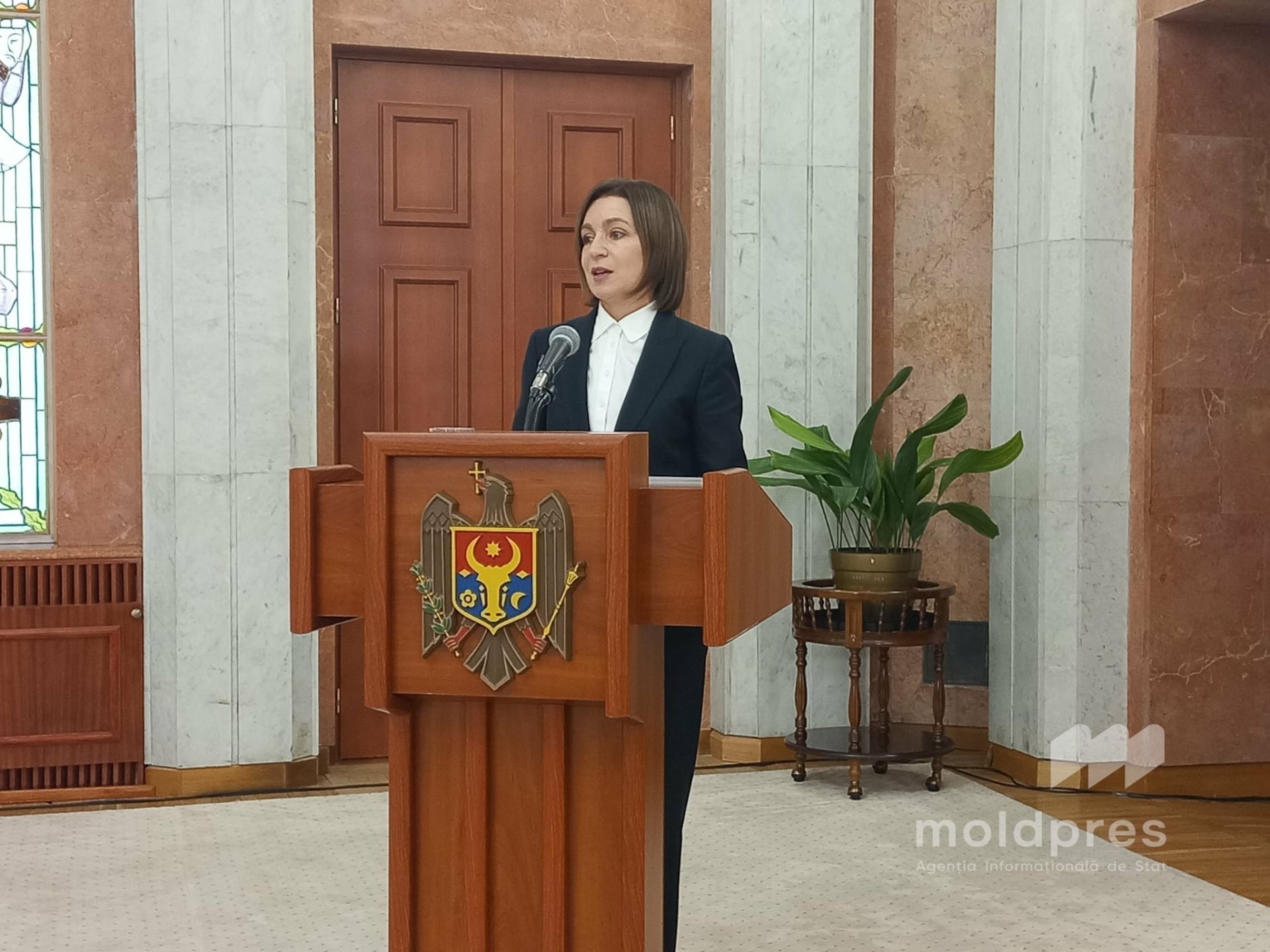
Justice reform remains a major priority for 2026, and the extraordinary external evaluation of judges must continue. President Maia Sandu made the statement at a press conference held on 22 January, in which the head of state outlined the priorities for this year.

Maia Sandu emphasized that the Republic of Moldova has not yet passed the critical threshold of justice reform and there are still internal and external forces trying to undermine the process. According to the President, what will happen this year is decisive for the credibility of the justice system and citizens’ trust in reforms.

“Justice reform priorities for 2026, as you know, must include the continuation of the extraordinary external evaluation process. At the end of last year, I requested the expansion of the list of judges who must undergo this evaluation, based on several cases of delays in handling important files – cases that are on the public agenda and where we see delays of 8–9–10–11 years, clear cases where judges are not doing their job and are jeopardizing correct decisions on these cases,” Maia Sandu stated.

The head of state warned that the Republic of Moldova is still in a critical phase of justice reform, and attempts to stop this process aim at keeping corrupt individuals within the system. She called for vigilance from the authorities, journalists, and citizens. “There are still internal and external forces that want to compromise the reform, want to stop it, that want to keep corrupt people in the system, people they want to use, to bribe, knowing that they are outside the law and they will not be sanctioned when they break the law. We must remain vigilant – we, you, and the citizens; we cannot say that we have passed the most important threshold in this reform. What will happen this year is very important for the credibility of the justice system and for citizens’ trust in the reforms we are implementing,” the President underlined.

Regarding the creation of the Anti-Corruption and Organized Crime Prosecution Office (PACO), Maia Sandu declared that the authorities are not rushing to make a decision, taking into account the recommendations of the Venice Commission. The President specified that it is necessary to complete the extraordinary external evaluation process both at the Anti-Corruption Prosecutor’s Office and at the PCCOCS, since both institutions are targeted by the reform.

“Let us see how many prosecutors we will have in these institutions after the evaluation and, based on that, decide how we move forward in order to strengthen the capacity to fight corruption, especially high-level corruption and organized crime,” Maia Sandu said.

The head of state stressed that the authorities’ objective is to create one or two strong institutions capable of delivering real results.

“Two weak institutions are not a solution. What matters is to have strong institutions and the certainty that honest people and good professionals work there,” she pointed out.

Maia Sandu held a press conference on 22 January, where she presented the priorities for 2026 and answered journalists’ questions.
 Facebook
 Instagram
 X/Twitter
 Telegram
Moldovan PM says Moldova remains in solidarity with Ukraine, supports just, lasting peace
Three political parties of Moldova risk fines after failing to submit financial management reports
New local elections to be held in two south Moldova villages
PHOTO // Deputy Prime Minister meets with President of Albania
Ethics Committee likely to be set up in Parliament
Parliament convenes for 2026 spring session, according to order signed by speaker
Moldova's unification with Romania, a ‘self-evident’ option for Moldovans with Romanian citizenship; foreign affairs minister explains in which cases concerned decision can be taken
Foreign affairs minister says Moldova initiates denunciation of 3 agreements on country’s membership in Commonwealth of Independent States; to no longer be part of CIS
VIDEO // President: Moldova and Albania - two European states following same path
Moldova and Albania strengthen cooperation amid regional challenges
Albania and Moldova united by European values
President of Albania on official visit to Chișinău
Moldovan Foreign Affairs Ministry condemns entry of Russian-origin drone into territory of Moldova
Moldovan president to address the plenum of Parliamentary Assembly of Council of Europe
Moldovan deputy PM, UNHCR acting representative in Moldova discuss managing situation of Ukrainian refugees
Moldovan president says unjust peace in Ukraine, which would not be lasting, would mean risk for Moldova
Moldovan president says Moldova does not have right to fail, EU accession project enjoying popular support
Prosecutor General’s Office of Moldova proposes tougher legislation to combat illegal arms trafficking
EU Ambassador to Moldova says hybrid threats persist, yet, Moldova continues to defend democratic values
Moldovan president says Moldova’s withdrawal from CIS does not mean cutting bilateral relations with states still members of Commonwealth
First testings conducted on Vulcanesti–Chisinau overhead power line
 National Bank of Moldova
Over 138 million lei in social benefits in 2025 provided to Moldova's citizens residing in Transnistrian region
Deputy PM for reintegration has meeting with Ambassador of United Kingdom to Moldova
Local public administration reform in Moldova consulted with mayors, members of Center for European Local Administration
Prime Minister in talks with representatives of several major companies to present investment opportunities in Moldova
Deputy Prime Minister for Reintegration: practical reintegration plan not feasible

President: Moldova has not passed critical threshold of justice reform. 2026 - decisive for system’s credibility
Drone found in Crocmaz village contains explosive device
President about drones found in Moldova: We need to invest in airspace protection capabilities
Speaker: Mayors to play crucial role in leveraging EU funds for local projects
Head of State: Moscow’s accusations against Intelligence and Security Service false
Moldovan President to visit Poland
Prime Minister in talks with representatives of several major companies to present investment opportunities in Moldova
VIDEO // President sets priorities for 2026: European integration our safety anchor in face of uncertain future
VIDEO // Parliamentary Committee for European Integration to prioritize EU legislation, European funds, integration into energy and payments areas
Liberalization of natural gas market: As of 1 April 2026, large non-household consumers to operate on free market
Intelligence and Security Service rejects allegations made by Russian Federation authorities
Foreign Ministry: Drone detected in Crocmaz, of Russian origin, represents serious violation of sovereignty of Moldova
Hundreds of public services for citizens, entrepreneurs, diaspora available on single platform: EVO portal launched in Chișinău
Deputy Prime Minister for Reintegration: practical reintegration plan not feasible
Deputy Prime Minister about plan for country’s reintegration: All attempts to negotiate reintegration elements with Tiraspol rejected
Drone found in Crocmaz village
Receive the latest news directly to your email

Receive the latest news directly to your email