
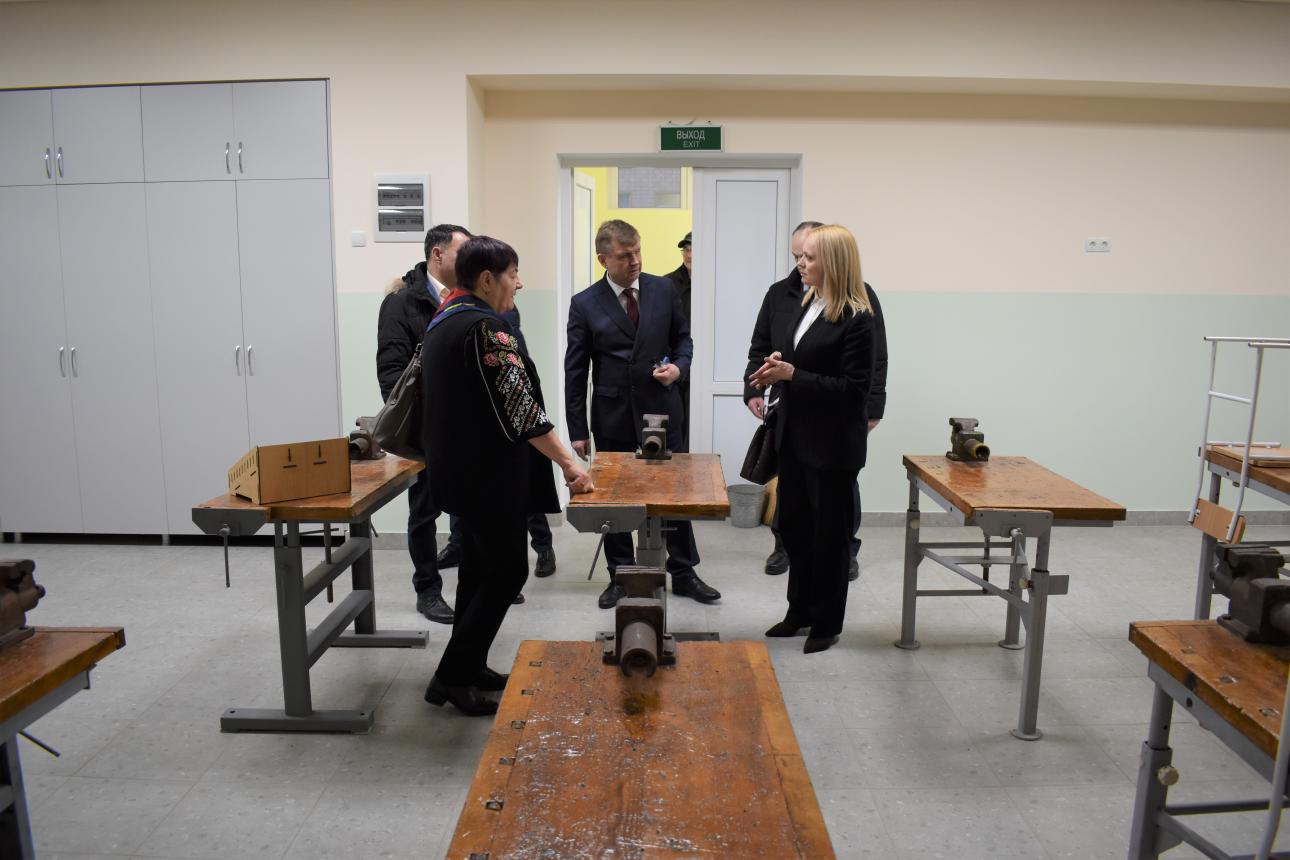
Deputy Prime Minister for Reintegration Valeriu Chiveri says that switching to teaching in Romanian in all schools in the Transnistrian region could be carried out relatively easily, if there were political will from the Tiraspol administration. The statements were made in the context of the proposal launched by Chișinău authorities regarding the expansion of education in Romanian in schools on the left bank of the Dniester.

According to the deputy prime minister, there are still 26 schools in the region where studies are conducted in the so‑called “Moldovan language” using Cyrillic script, in addition to the educational institutions that operate according to the curricula of the Ministry of Education and Research in Chișinău.

“We have set out to switch studies to the Romanian language, which would mean that all subjects would be taught in this language. I do not see a major problem if there were political will. Let us remember the year 1989, when the transition from Cyrillic to Latin script took place. It was done practically overnight, and at that time Romania helped us. Today, we have Chișinău’s experience and, if necessary, we could once again count on Romania’s support,” Chiveri stated.

The deputy prime minister emphasized that the change would not involve major costs, either financially or in terms of methodology or teaching. “This can be achieved relatively easily if there is political will in Tiraspol. When we proposed this initiative, we were thinking about the children’s future,” the official noted.

“For example, a child who studies in Mălăiești or in Grigoriopol, and the one who studies on the left bank, in Tiraspol, at ‘Lucian Blaga’ Lyceum, have the same rights, but these are not respected; they should have the same rights as the pupils from Grigoriopol who go to Doroțcaia. We understand that conditions are not very favorable, but the children study in Romanian and have an educational and professional future. We want this to be extended throughout the region,” the deputy prime minister explained.

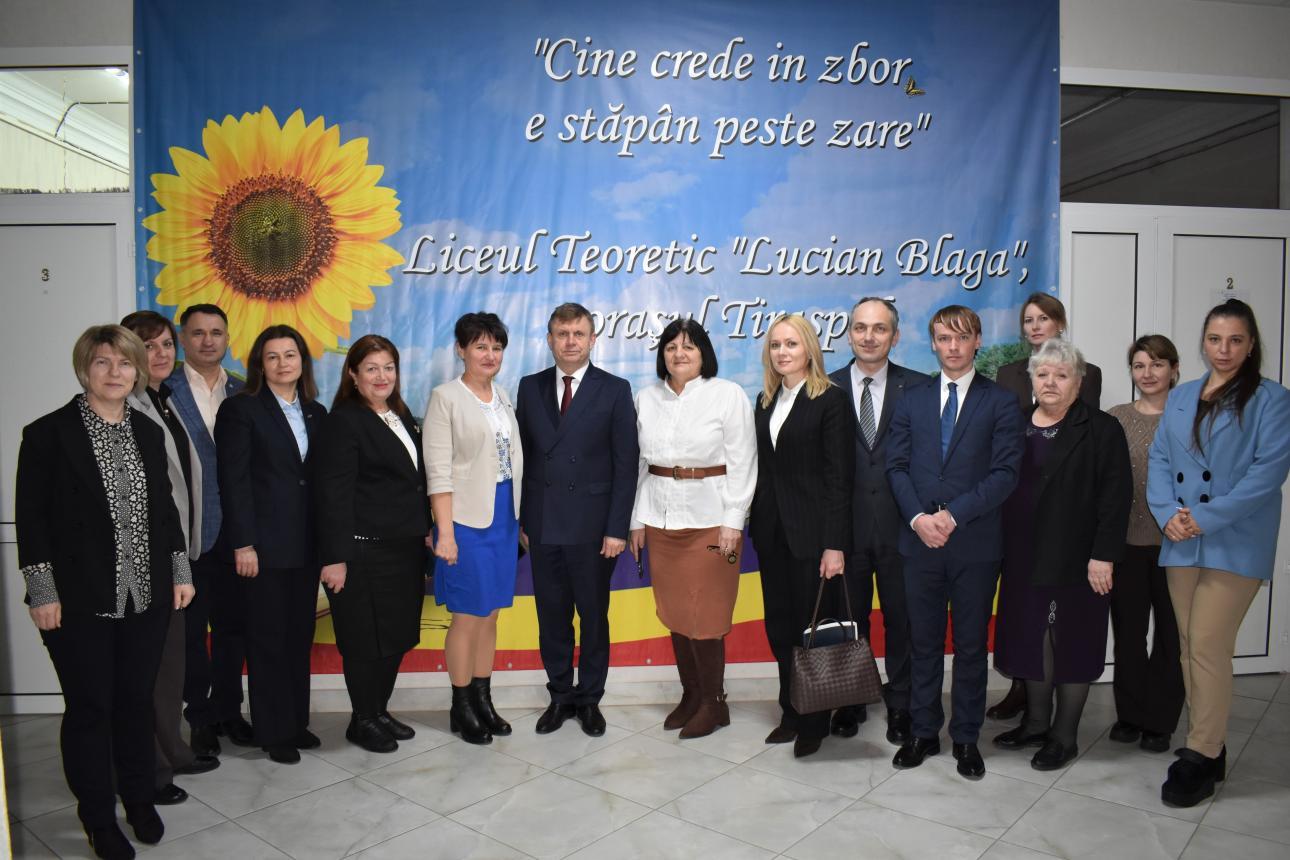
Chiveri mentioned that pupils from the localities on the left bank of the Dniester should have the same educational rights as children in the rest of the country. At present, over 2,040 pupils study in Romanian‑language lyceums and gymnasiums in the region, despite existing difficulties and pressures. The deputy prime minister recently visited “Lucian Blaga” Theoretical Lyceum in Tiraspol, one of the institutions that operates according to the education curriculum from Chișinău. “I bow to those who have the courage to withstand pressure and to maintain education in Romanian in this area,” he said.

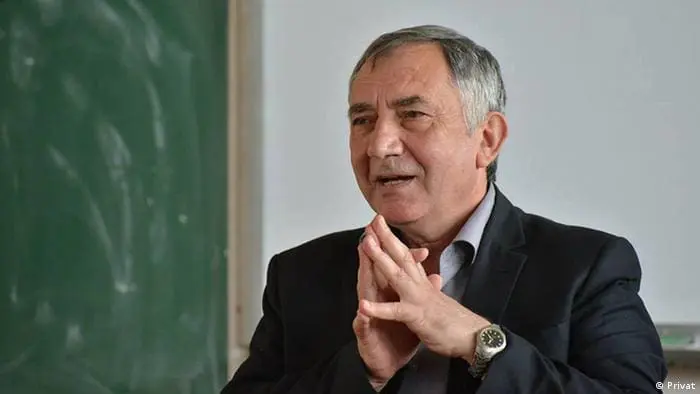
Former principal of the lyceum, Ion Iovcev, considers the initiative of the authorities in Chișinău to be “a correct step.” According to him, education represents the strongest form of resistance and the safest investment in the future. Ion Iovcev led “Lucian Blaga” Theoretical Lyceum in Tiraspol, with teaching in Romanian, for almost three decades, contributing to the preservation of education and cultural identity in the region.

“Education is the key. What could not be resolved by force can be achieved through school. However, the implementation must be carefully thought out. Romanian‑language schools in the region mostly do not have their own buildings, sports halls or cafeterias. It is also important that these institutions preserve their Romanian character and that there is an environment in which pupils can speak freely in Romanian. Education remains the strongest form of resistance and the safest investment in the future,” Ion Iovcev told MOLDPRES.

The proposal regarding the transition of schools in the Transnistrian region to teaching in Romanian was discussed during the first meeting between the political representatives of Chișinău and Tiraspol after a pause of one year and four months, held at the headquarters of the Organization for Security and Co‑operation in Europe (OSCE) in Tiraspol. During the discussions, the authorities in Chișinău also announced their intention to create a convergence fund to support the reintegration process.

Although Tiraspol’s initial reaction was not a positive one, Chiveri stressed that the dialogue is continuing.

“We are in a dynamic process. What is not accepted today can be discussed and achieved tomorrow,” the deputy prime minister said.

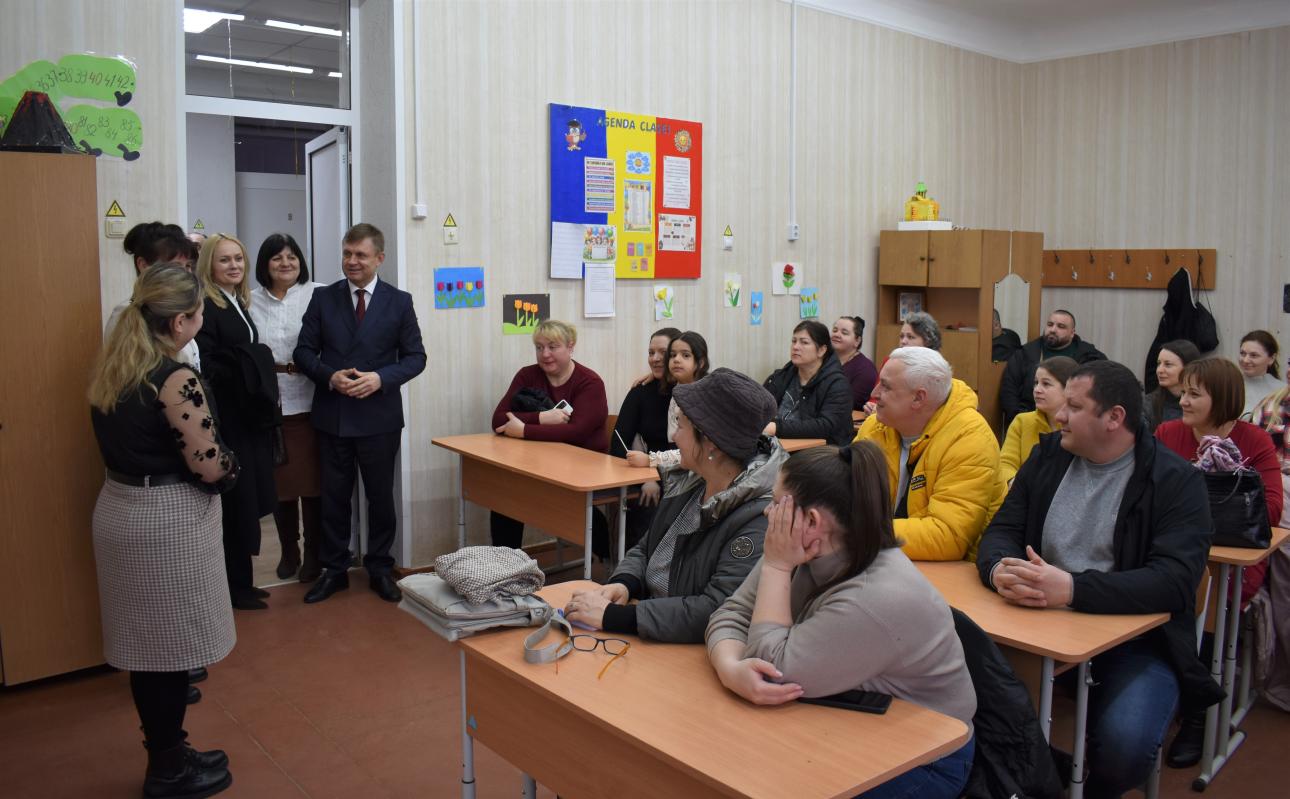
In the context of the 26 February visit to the Transnistrian region, Valeriu Chiveri paid a working visit to “Lucian Blaga” Theoretical Lyceum in the city of Tiraspol and “Alexandru cel Bun” Theoretical Lyceum in the municipality of Bender. The deputy prime minister held discussions with the administrations of the institutions and with the teaching staff.
 Facebook
 Instagram
 X/Twitter
 Telegram
High-level Moldova–United Arab Emirates call amid regional tensions
Economic cooperation and European path of Moldova discussed in Hamburg
Moldovan–British cooperation discussed in parliament during official visit
VIDEO // Republic of Moldova marks four years since submitting application for European Union membership
Moldovan-Romanian bilateral cooperation strengthened through new diplomatic mandate: Ambassador of Moldova presented copies of accreditation letters in Bucharest
Parliament speaker says, after 34 years, Moldovans have duty to build bridges, where there were walls
PHOTO // Decade of Memory and Gratitude launched in Chisinau; Moldovan president says state without memory vulnerable state
EU Entry/Exit System extended to more border crossing points of Moldova as of March 2
Moldovan PM conveys message on 34 years since outbreak of Transnistria War
Perspectives concerning Moldova's territorial reintegration; expert says reunification can happen through society’s collective refusal to play Russia’s game
Moldovan foreign affairs minister to pay official visits to Germany, Azerbaijan
Moldova marks 34th anniversary of joining United Nations
Local referendum to recall mayor of Sadîc scheduled for May
British MPs in Chișinău: security and cooperation on discussion agenda
 National Bank of Moldova
Health at center of Moldovan president's visit to southern region
Moldovan government proposes simplification of voluntary amalgamation procedure
Reform of local public administration: consultations held with over 3,700 local elected officials, citizens in 29 districts of Moldova
Dialogue on parliamentary platform regarding country’s reintegration policies
Moldovan government encourages individual taxpayers to direct 2 per cent of income tax paid on last year’s earnings to non-commercial, non-profit organizations

Moldovan President condemns Russian attacks on Ukrainian cities
Crisis Cell: Embassies maintain direct contact with Moldovan citizens in Middle East and provide consular assistance
PHOTO // Mărțișor celebrated in Baku at event with Moldovan diaspora
PHOTO // Roadmen working on days-off to fill potholes on national roads
Fairs offering local products organized in several districts of capital
Deputy Prime Minister for Reintegration: Fair and lasting peace in Ukraine could create certain conditions for withdrawal of Russian military forces from Transnistrian region
PHOTO // Painting exhibition inaugurated at Moldova's parliament
Health at center of Moldovan president's visit to southern region
Moldovan government proposes simplification of voluntary amalgamation procedure
PHOTO // Moldovan president visits south of country: modernization of two ports in Giurgiulesti, construction of Cahul regional hospital, talks with young people
Moldovan foreign affairs minister, representatives of Azerbaijani Economy Ministry, SOCAR discuss economic, energy cooperation in Baku
PHOTO // Moldovan foreign affairs minister has talks with Azerbaijani parliament speaker; boosting dialogue between two legislatures on agenda
Reform of local public administration: consultations held with over 3,700 local elected officials, citizens in 29 districts of Moldova
PHOTO GALLERY // Wolves of Calancea, Osoianu sisters gave concert in Chisinau
New rules against digital piracy: Moldovan parliament approves administrative sanctions
Moldovan parliament appoints two international experts to prosecutors' evaluation commission
Receive the latest news directly to your email

Receive the latest news directly to your email