
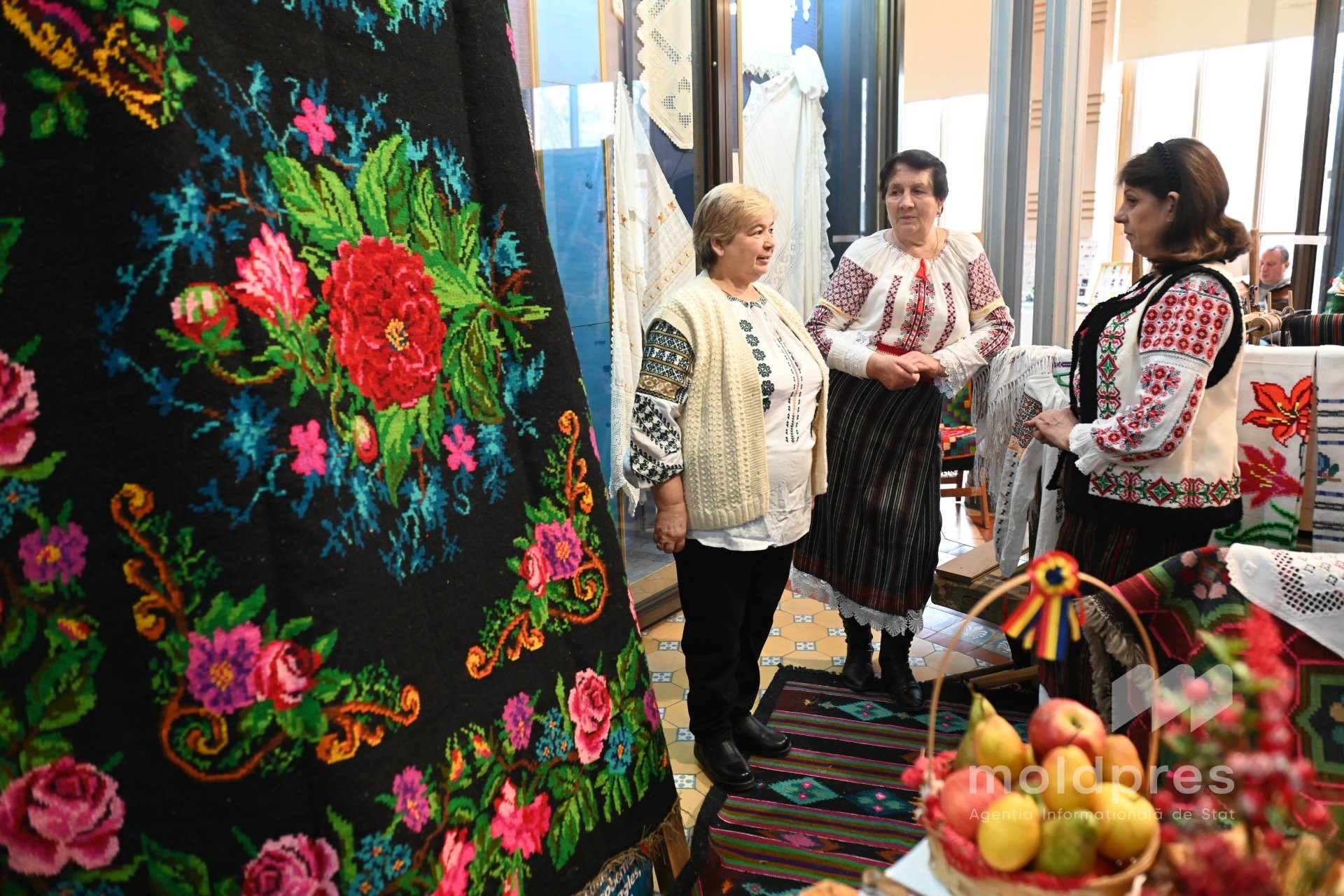
Women make up the majority of the population of the Republic of Moldova and are present in almost all areas of social and economic life. They are teachers, doctors, entrepreneurs, farmers, or political leaders, and their role in community development is increasingly visible.

Statistics, however, show that beyond this active presence, women continue to face significant differences compared to men in terms of income, access to certain professions, or participation in leadership positions. Taken together, demographic, economic, and social data outline a complex portrait of women in the Republic of Moldova – a portrait that includes both visible progress and persistent challenges.

Majority in the population, but on a different life path

Preliminary data from the 2024 population census show that the Republic of Moldova has approximately 2.4 million inhabitants, and women account for 52.9% of the total population.

The sex ratio indicates that there are about 87 men for every 100 women, with the difference being more pronounced among the adult and elderly population. In contrast, in childhood the situation is reversed: in the 0–14 age group there are about 106 boys for every 100 girls.

An important indicator reflecting these differences is life expectancy. In the Republic of Moldova, women live on average 76.4 years, while men live around 67.5 years – a gap of almost nine years.

This reality makes women the majority in the population structure, especially at older ages.

Labour market: active presence, but not equal

Women are present in the labour market, but their participation remains lower than that of men.

In 2024, the employment rate for women was 39.7%, compared to 47.1% for men. One of the factors influencing this difference is the responsibility for childcare.

Statistics show that the employment rate of women aged 25 to 49 is 66.6% for those without children, but drops to 55.6% for women who have at least one child under the age of 16.

Even so, employed women have greater stability in the labour market: over 85% of them work on the basis of an employment contract, compared to about 74% of men.

Education, health, and services – sectors dominated by women

The structure of the labour market shows that women work predominantly in the services sector. Approximately 59.7% of employed women work in this area.

The most feminized sectors are:
- education, where women account for over 80% of employees;
- health and social assistance – around 80%;
- financial services – almost 69%;
- hotels and restaurants – over 65%;
- trade – over 54%.
On the other hand, women are much less represented in sectors such as construction, where they make up about 7% of employees, or transport and storage – about 22%.
This distribution reflects both labour market traditions and professional stereotypes that influence career choices.
Lower wages for the same economy
Although they contribute actively to economic development, women continue to earn less than men.
Statistical data show that the gender pay gap is approximately 15.6%. In practice, the average salary of women is around 84% of the average salary of men.
Experts largely explain this gap by the fact that women are concentrated in lower-paid sectors, such as education or social services.
More and more women entrepreneurs
In recent years, women have become increasingly active in the business environment.
In the Republic of Moldova, about 34% of active enterprises are led by women. Nevertheless, businesses managed by women generate only about 23% of the total revenues of companies.
This difference suggests that many women-led businesses are microenterprises or small enterprises.
Access to finance remains a major challenge. A recent study shows that 64.2% of the women surveyed have never applied for a loan from a commercial bank, even though many of them would need financial resources to develop their businesses.
Women – a pillar of rural agriculture
In rural areas, the role of women is essential for the functioning of agricultural households and for sustaining the local economy.
Women represent over 45% of the labour force in agriculture, forestry, and fishing. They are involved both in agricultural production and in managing family farms or processing activities.
In recent years, the number of women accessing grants, subsidies, and rural development programs has increased, but access to finance and infrastructure remains limited in many regions.
Politics – a field where women are gaining ground
Women’s participation in political life has grown considerably in recent years.
There are 40 women MPs in the Parliament of the Republic of Moldova out of a total of 101 members, which represents about 40% of the legislature – the highest level in the country’s history.
This development has also been influenced by electoral legislation that requires a minimum quota of 40% for each sex on candidate lists.
Women also hold leadership positions in the legislature: one of the deputy speaker positions is held by a woman, and five of the 11 standing committees are chaired by women.
In local public administration, women are increasingly present among local and district councillors, but remain less represented in mayoral posts or other executive positions.
Between responsibilities and opportunities
Women’s participation in economic and political life is influenced by several factors, such as access to finance, social stereotypes, or family responsibilities.
At the same time, support programs for entrepreneurship, legislative reforms, and gender equality policies are gradually helping to reduce these disparities.
Portrait of a society in transformation
Statistical data show that women are a major force in Moldovan society. They are present in sectors essential to the functioning of the state and the economy and are becoming increasingly visible in entrepreneurship, agriculture, and politics.
At the same time, pay gaps, limited access to finance, or lower representation in certain sectors indicate that the process of equalizing opportunities is still ongoing.
The portrait of the woman in the Republic of Moldova is therefore one of balance between tradition and change: a reality in which women continue to consolidate their role in society, contributing actively to the country’s economic and social development.
 Facebook
 Instagram
 X/Twitter
 Telegram
Moldovan PM says children represent most important future of Moldova
Moldovan president launches children’s reading competition for June 1
Increased support for families in Moldova: birth allowance reaches 21,866 lei
Moldova has over 833,000 children; Public Services Agency says more than 9,000 babies born in first five months of 2026
Moldova marks International Children’s Day: diverse schedule of activities for whole family
PHOTO // President: It is important to keep alive customs and values that bring us together
Prime Minister: Dniester unites us more than it divides us
President: Dniester - essential for people’s health and safety of our communities
Water, roads and public services: why authorities insist on local reform
President urges citizens to double-check before transferring money to scammers
PHOTO GALLERY // Largest exhibition dedicated to children opened at Moldexpo
MOLDPRES REPORT // Solar energy, batteries and electric transport: green technologies developed in China that could be of interest to Moldova
Attention, travelers! Heavy traffic at Leușeni border crossing point on exit from Moldova
PM's emotional message at end of school year
Moldovan parliament speaker describes Russia’s intention to move Russian Center of Culture to Tiraspol as political provocation
Stricter rules for taxi platforms: payments to be required to obligatorily go through banks of Moldova
Moldovan parliament speaker says each day of delay of elections in Gagauzia works against autonomy
Voted in parliament: Moldovan citizens who worked legally in Canada to be able to receive social benefits
Moldovans working in Ukraine to be able to receive pensions, other social benefits
Moldova hosts Kettlebell World Championship
Over 1 billion euros in new investment partnerships, financing announced for Moldova
 National Bank of Moldova
Over 1 billion euros in new investment partnerships, financing announced for Moldova
Topical issues addressed at meeting of Joint Control Commission
Moldovan president, European Commissioner for Enlargement discuss reforms, next steps in accession process
Moldova strengthens institutional capacity to counter hybrid threats with support of EU Partnership Mission in Moldova
President’s speech at joint press conference with European Commissioner for Enlargement

VIDEO // ARBOM offers 80 tickets for Moldova - Bulgaria match to supporters from Taraclia
Moldovan head of state says Russia’s interference constant, efforts must be made to counter it
Moldova secures additional funding for connection to European Road Network
ARMENPRESS: EU to provide additional support to Armenia amid Russian import restrictions
Moldova attracts over 1 billion euros in investments through new strategic partnerships announced at first Moldova–EU Investment Conference
Topical issues addressed at meeting of Joint Control Commission
Moldovan president, European Commissioner for Enlargement discuss reforms, next steps in accession process
EU Commissioner for Enlargement says Moldova on first position in its preparations for European Union membership
Moldovan president says all EU member states reconfirm Moldova ready to open accession negotiations
Moldova strengthens institutional capacity to counter hybrid threats with support of EU Partnership Mission in Moldova
Departed well-known composer of Moldova honored in Chisinau: maestro’s music returns to salon bearing his name
VIDEO // Moldova and Ukraine reaffirm: Our future in EU
President’s speech at joint press conference with European Commissioner for Enlargement
VIDEO // News from Brussels on starting preparations for Cluster I in accession negotiations of Moldova to European Union applauded in Parliament
Strong support for Ukraine reaffirmed in Chisinau Parliament
Applause in Parliament in memory of Eugen Doga
Receive the latest news directly to your email

Receive the latest news directly to your email