
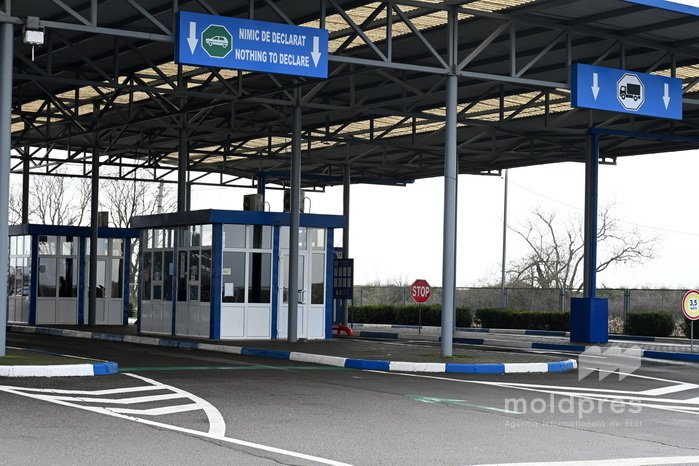
Moldova, Romania to sign Agreement on extending coordinated control at Leuseni–Albita border crossing point
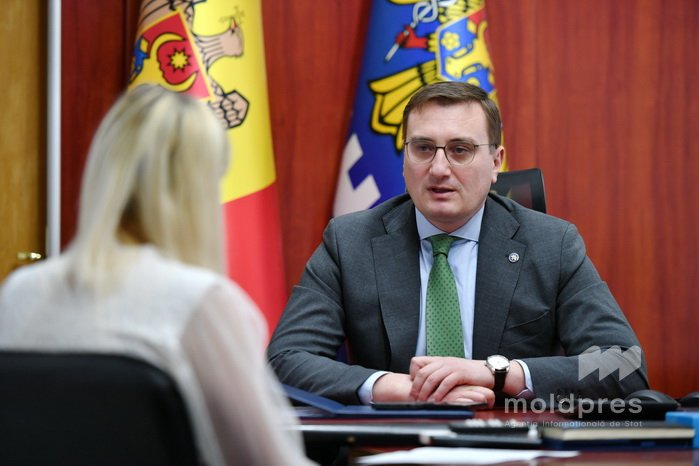
Moldova and Romania in April 2026, are to sign the Agreement on extending coordinated control at the Leuseni–Albita border crossing point. The document is updated annually, following an analysis of cross-border flows and other technical indicators. Head of the Customs Service Radu Vrabie has made statements to this effect in an interview given w with MOLDPRES, due to be published on March 30, this year.

According to the Customs Service’s leadership, at present, on the border with Romania, coordinated control is applied at two customs posts: Leuseni–Albita and Giurgiulesti–Galati, on the outbound direction from the country.

“We intend to continue this practice, with a view to establishing coordinated control at other border customs posts/state border crossing points as well, such as Ungheni–Ungheni. We aim to have bidirectional coordinated control, meaning both on the territory of Moldova and on the one of Romania. This mechanism has delivered results and, over time, we see that things have improved. There are still technical matters to be finalized, but it is a process that is in constant improvement. At the Leuseni–Albita border post, the Agreement on coordinated control is extended annually. Thus, we carry out an analysis of the flows and deficiencies. After that, together with the Border Police, we submit a proposal to our counterparts of Romania, in order to extend this Agreement. The document is to be signed in April 2026,” said Radu Vrabie.

As for the border crossing points on the frontier with Ukraine, the head of the Customs Service noted that, despite the war, all posts were operating under normal conditions.

“We have seven border customs posts that operate on the basis of a treaty between Moldova and Ukraine, where joint control is in place. Together with our colleagues from Ukraine, we intend to analyze the 67 border crossing points inherited from the Soviet period – international, interstate, and local – in order to see which of them justify their existence, both from the perspective of passenger traffic and the one of goods. We will come up with a proposal for optimization: fewer points, but better equipped. These actions will not affect people’s lives; they will adapt the system to current economic realities,” said Radu Vrabie.

The official emphasized that facilitating traffic at customs posts was one of the institution’s priorities. Thus, according to the Customs Service’s leadership, the measures undertaken in this regard “aim to facilitate trade, especially exports, in order to give economic operators from Moldova the possibility to reach destination markets as quickly as possible.”

“In recent years, especially after the outbreak of the war, most trade has shifted to the western border, with Romania. Four years ago, there were long queues. Nevertheless, my colleagues, together with those from the Border Police, managed to handle these flows. Presently, cross-border traffic is being managed smoothly and professionally. We are in a favorable situation: we have very good relations with both neighbouring states. At the beginning of my mandate, I took part in a trilateral meeting in Chernivtsi, where we established several actions, especially regarding the fight against fraud and the enhancement of control efficiency. I have also recently paid a visit to my counterpart from the Romanian Customs Authority, where we discussed bilateral cooperation and Romania’s support in the process of European integration,” added Radu Vrabie.

The head of the Customs Service also announced a string of measures to ease cross-border traffic during the Easter holidays, when many citizens from abroad return home, while others leave on vacation.
 Facebook
 Instagram
 X/Twitter
 Telegram
New regional center for child victims of crime opened in south Moldova city
Parliamentary hearings held after incident in Cahul; Moldovan MPs come up with recommendations to strengthen security in military units
Former Chisinau deputy mayor reveals alleged illegalities; Chisinau City Hall comes up with reactions
Fines and license plates seized for drivers with non‑compliant vehicles
National Public Health Agency says risk of Bundibugyo virus' spread stays low for Moldova
Promo-LEX organization of Moldova reports serious violations in case of a young detainee on left bank of Dniester
Vlad Turcanu resigns as head of Teleradio-Moldova Company amid Eurovision 2026 scandal: “The vote cast is my responsibility”
PHOTO REPORT: China through eyes of MOLDPRES // One world, one family: How Chinese celebrate family, women, social cohesion in modern era
Parliament of Moldova holds annual forum with civil society and external partners
General Police Inspectorate recorded 12 incidents and alleged violations during new local elections
PHOTO // Nicolae Testemițanu USMF students managed emergencies and simulated clinical cases at SimOlympic
Speaker about Satoshi’s Eurovision performance
PHOTO // Universities across country showcase educational offer at new fair held in Orhei
PHOTO // Călărași Park modernized through project worth over 17 million lei
VIDEO // Access to Culture returns: funding for development of cultural life in Moldova
Moldovan foreign affairs minister has meeting with Chinese counterpart; facilitating access of domestic products to Chinese market on agenda
EU accession negotiations could be opened in next June; parliament speaker says Moldova, Ukraine deserve this step
Moldovan parliament speaker, after Putin’s decree, says Russia wants to make up for losses on front
VIDEO // Opposition walks out session hall at today's parliament meeting; Moldovan parliament speaker says not to tolerate insults, degrading behavior
Moldovan parliament speaker rejects accusations by Tiraspol separatist regime on alleged interference with “so-called presidential elections”
Moldovan parliament speaker says agreement with IMF important indicator for international partners
 National Bank of Moldova
Participation of Deputy Prime Minister for Reintegration in OSCE Permanent Council Meeting
Prime Minister at anniversary of National Confederation of Employers
Moldova, IMF reach agreement on new three-year cooperation programme
Moldovan president on working visit to the Netherlands: deepening bilateral partnership, support for EU accession
Projects implemented with support of European Investment Bank evaluated during meeting at government

New rules for corruption and organized crime investigations
DOC // Activity of zoos to be regulated by new law
DOC // Particip.gov.md platform to be modernized to ensure easier access to information on draft decisions proposed by authorities
BITEI Festival 2026 opens in Chisinau; event's programme
Adopted in final reading: From 1 June, day laborers to be registered electronically
Wheat export requirements from Moldova to Indonesia to be amended starting 1 June
Parliament simplifies financial reporting for enterprises
VIDEO // CSP approved three interim appointments to leadership positions within Prosecutor’s Office
Moldova's ambassador to Kazakhstan presented copies of letters of credence
Prime Minister on World Day for Cultural Diversity: Only through unity, dialogue and mutual understanding can we build European, modern and united Moldova
President at Globsec Forum in Prague
DOC // Condominiums to face new administration and voting rules
Orthodox Christians celebrate Ascension of the Lord
Two bomb alerts in single night at Chișinău Airport
Moldovan energy minister demands compliance with completion deadline for works at Chisinau Electric Substation
IMF says new programme with Moldova to help advance reforms aimed at backing more sustainable economic growth
Receive the latest news directly to your email

Receive the latest news directly to your email