
National Public Health Agency says risk of Bundibugyo virus' spread stays low for Moldova
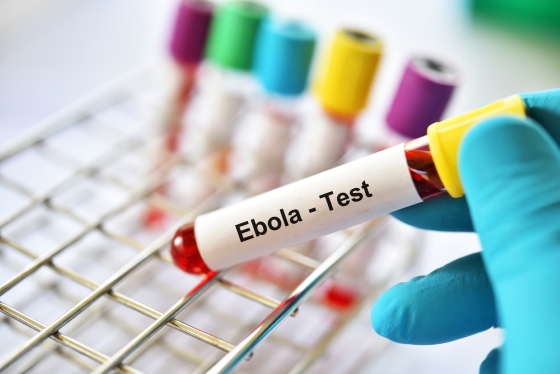
The National Public Health Agency (ANSP) has issued clarifications following the World Health Organization (WHO) declaring a public health emergency of international concern after the emergence of disease outbreaks caused by the Bundibugyo virus, a variant of the Ebola virus, in the Democratic Republic of the Congo and Uganda. The institution notes that the risk of virus’ spread stays low for Moldova.

According to updated data, in the Democratic Republic of the Congo (DRC) (Ituri Province) eight laboratory-confirmed cases, 246 suspected cases, and 80 deaths have been reported in at least three areas: Bunia, Rwampara, and Mongbwalu. In Uganda, two cases have been confirmed, including one death, recorded in Kampala in people who traveled from the DRC.

At the same time, health authorities report that at least four deaths have been recorded among healthcare workers in the affected areas, which underscores the importance of strictly observing infection control measures.

ANSP says that it continuously monitors the development of the international epidemiological situation and maintains cooperation with WHO and other public health authorities, in order to rapidly implement prevention and control measures, depending on how risks evolve.

For the moment, WHO does not recommend travel restrictions, but suggests avoiding non-essential travel to affected areas.

The Bundibugyo virus is part of the Filoviridae family, the same genus as the Ebola Zaire virus and causes a severe viral hemorrhagic fever, with rapid evolution and a high risk of complications.

The incubation period is 2–21 days, and transmission occurs through direct contact with the blood or other bodily fluids of an infected person or animal. According to ANSP, the risk of importing the disease into Moldova is considered low.

Symptoms include sudden fever, weakness, muscle pain, headache, and sore throat, followed by vomiting, diarrhea, and skin rash, and in severe cases, internal and external bleeding. At present, there are no approved specific vaccines or treatments; only supportive therapy is applied.

ANSP recommends that the population seek information exclusively from official sources and avoid spreading unverified information, and that people traveling to affected areas strictly follow hygiene measures and avoid contact with sick individuals or wild animals.
 Facebook
 Instagram
 X/Twitter
 Telegram
PHOTO // Two more courtyards modernized under European Courtyard Program inaugurated in Chișinău
International Day of Families to be marked on Saturday with festival at Botanical Garden in Chișinău
Diaspora Moldovans can find jobs in Moldova; online career fair returns for its second edition
Public irrigation systems from two settlements of Moldova to be rehabilitated under Integrated Agriculture and Irrigation Development Programme
PHOTO // Journalists from 90 countries create global communication network within programme in Beijing dedicated to media interconnectivity
Moldovan PM conveys message to all families on International Day of Families
DOC // Anti-plagiarism standards in universities, published in Moldova's Official Journal: new rules for bachelor’s, master’s theses
Moldovan PM conveys message on International Day of Families
Moldova and Czech Republic deepen defense partnership
PHOTO // Moldova to receive 60 million euros to modernize irrigation systems
Moldovan Judges' Evaluation Commission completes evaluation of all judges with leadership positions
Moldovan parliamentary commission for national security and defense to consider case of minor dead in military unit in Cahul
Parliament terminates another agreement with CIS
Drivers with vehicles registered abroad to be fined more easily in Moldova
Moldovan president after Eurovision: “We should not allow anyone or anything to affect the relationship between Romania and Moldova”
Moldovan government's secretary says leadership aims to build local, regional administrations due to become real engines of development for communities
Parliamentary hearings held after incident in Cahul; Moldovan MPs come up with recommendations to strengthen security in military units
European cooperation, regional energy security at center of Moldovan foreign affairs minister's address in Berlin
VIDEO //Moldovan president awarded European Order of Merit: “This distinction belongs to the people of Moldova”
Moldovan president in Strasbourg says Moldova ready for opening of negotiations with EU on all clusters
Former Chisinau deputy mayor reveals alleged illegalities; Chisinau City Hall comes up with reactions
 National Bank of Moldova
Moldovan government's secretary says leadership aims to build local, regional administrations due to become real engines of development for communities
President Maia Sandu’s speech at the European Parliament on the occasion of receiving the European Order of Merit
Valeriu Chiveri: Transnistrian settlement and European integration must be treated as two distinct processes
Germany reconfirms support for European path of Moldova
Speaker at meeting with Germany’s Minister of State for Europe: Your support is very important for our EU accession process

Moldovan green energy projects can receive funding of one million dollars
Valeriu Chiveri: Transnistrian settlement and European integration must be treated as two distinct processes
Fines and license plates seized for drivers with non‑compliant vehicles
Moldova relies on Germany’s support to speed up European integration
National Public Health Agency says risk of Bundibugyo virus' spread stays low for Moldova
President begins visit to Strasbourg
BTA: Ahead of Berlin Visit, Bulgarian PM Vows Spending Restraint
Moldovan deputy PM says more investment agreements to be announced at Moldova–EU investment conference
Promo-LEX organization of Moldova reports serious violations in case of a young detainee on left bank of Dniester
ARMENPRESS: Authorities investigate alleged assassination plot against Pashinyan after video surfaces showing armed suspects issuing threats
Moldovan Economic Development Ministry launches governmental programme “We Succeed,” to create simpler, more competitive business environment
Vlad Turcanu resigns as head of Teleradio-Moldova Company amid Eurovision 2026 scandal: “The vote cast is my responsibility”
International Museum Day marked in Moldova with special cultural programmes
MOLDPRES INTERVIEW // Director Lucia Țurcan: Center of Excellence in Construction aligns with European standards – ERASMUS+ projects, modern technologies and more practical training for students
Germany reconfirms support for European path of Moldova
Speaker at meeting with Germany’s Minister of State for Europe: Your support is very important for our EU accession process
Receive the latest news directly to your email

Receive the latest news directly to your email