
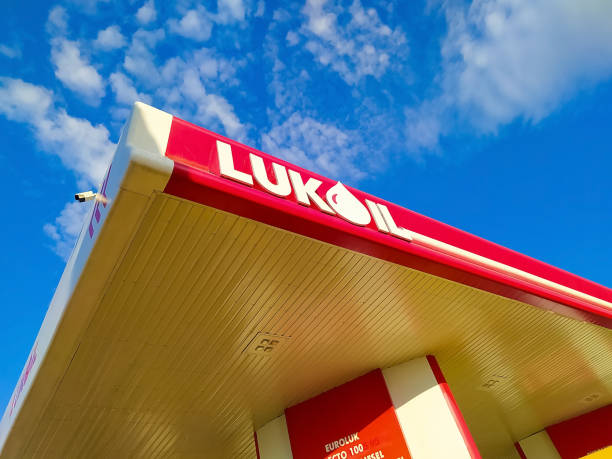
LUKOIL fuel stations in Moldova may continue operating until autumn
The presence of LUKOIL fuel station network on the petroleum products market in the Republic of Moldova could be extended for another six months. Minister of Energy Dorin Junghietu announced that the company’s activity could be prolonged until October 29, the decision being motivated by the need to maintain stability in fuel supply, especially in regions where there are no alternative filling stations.

According to the official, the measure is being examined in the context in which the oil giant holds a significant share of over 20% of all filling stations in the country. The impact of a potential immediate withdrawal would be felt most acutely in rural areas and in certain districts where LUKOIL is the only operator present, as a sudden suspension of operations could leave entire communities without access to gasoline and diesel.

At the end of last year, the Ministry of Energy announced that Lukoil could continue its retail activity until the spring of 2026. At that time, the U.S. Treasury, through the OFAC office, issued an additional license for Lukoil’s retail operations, extending the possibility for the gas stations to function until March or April 2026.

According to Junghietu, this decision came as a result of commercial discussions conducted by Lukoil with several potential buyers of its assets in the Republic of Moldova, a process that can last up to six months, given the complexity of the company’s operations in the region and worldwide.

The measure was intended to ensure continuity of services for consumers and stability in the sector while the transaction process for Lukoil’s assets in the Republic of Moldova is finalized.

The sanctions imposed in October 2025 by the United States on Lukoil and Rosneft marked a major shift in the energy sector. These measures targeted both the parent companies and their subsidiaries, affecting exploration, production, refining activities, and their gas station networks. The sanctions were adopted to limit the financial support these companies were providing to the Russian economy, involved in the war in Ukraine.

As a consequence, Lukoil began selling its international assets, including gas stations in Europe, to avoid the impact of the sanctions. In the Republic of Moldova, the authorities closely monitored the situation to ensure fuel supply and manage possible adjustments on the local market, while private operators gradually took over retail activities.

This series of sanctions forced countries dependent on Russian companies to rethink their energy strategies and rapidly adapt to the new market conditions, underlining the importance of security and diversification of energy supply.
 Facebook
 Instagram
 X/Twitter
 Telegram
Subsidies worth 178 million lei for Moldova's farmers authorized in last May
Moldova to build up larger natural gas reserves: bill proposed by Ministry of Energy
Fuels continue to get cheaper
PHOTO GALLERY // Best local entrepreneurs awarded at Moldovan Business Gala
Moldova hosts annual conference of banking supervisors from Central and South-Eastern Europe
Moldova’s walnut exports exceed 40 million dollars annually
30 MW Photovoltaic park with battery storage to be built in Vadul lui Vodă
Moldovan National Road Transport Agency launches nationwide inspections of heavy trucks
First contract for Union Highway A8 signed; project to connect Moldova by road with European network
Incentives for investments in green energy in Moldova: customs duties eliminated for storage batteries, wind turbines
Moldovan parliament speaker tells farmers state came up with response it can afford at present
New step toward strengthening energy security: Moldova to establish emergency reserves of petroleum products
Fuel prices are going down in Moldova; petrol price drops below threshold of 31 lei
State to be able to respond more quickly in event of energy emergency
Deputy parliament speaker says Moldova must strengthen defense capabilities
Works at Chisinau Electrical Substation progressing; Romanian Ambassador says Romania stays reliable partner of Moldova in strengthening energy security
EUROPEAN VILLAGE // Over 27 million lei invested in modernizing infrastructure in central Moldova settlement
Moldovan Foreign Affairs Ministry issues travel alert for Qatar, Kuwait: “Security situation stays volatile”
Economic, investment opportunities of Moldova promoted at Annual Meeting of Board of Governors of European Bank for Reconstruction and Development
PHOTO // Moldovan deputy parliament speaker says Grand Duchy of Luxembourg, as EU founding member, firmly supports Moldova's European path
Discover Moldova with #MOLDPRES // Sweet business in Prut Meadow
 National Bank of Moldova
Moldovan president attends ceremony on 24th anniversary of foundation of National Anticorruption Centre
Prime Minister at Moldova Digital Summit 2026: Our ambition is not only to join EU, but to help build Europe’s digital future
Over 1 billion euros in new investment partnerships, financing announced for Moldova
Topical issues addressed at meeting of Joint Control Commission
Moldovan president, European Commissioner for Enlargement discuss reforms, next steps in accession process

Romanian language teachers of Moldova to benefit from intensive training courses organized in Romania
Moldovan Foreign Affairs Ministry issues travel alert for State of Israel
Nicolae Testemitanu Medical University of Moldova hosts first edition of conference on management of antimicrobials' use in tuberculosis
Moldovan president congratulates acting Armenian PM on securing parliamentary majority
PHOTO GALLERY // “Melania’s Advice”, new premiere at Mihai Eminescu National Theatre
MOLDPRES INTERVIEW // Moldovan economic development minister: “One billion euros invested in the economy of Moldova means accelerating transformations, moving closer to the EU level of development”
Moldova and Switzerland to cooperate in labour and employment
Over half a million passengers at Eugen Doga International Airport – Chisinau in last May: most popular destinations
PHOTO // Group of MPs on visit to Washington
Moldovan winemakers win 80 medals at one of largest international competitions
€40 million investments in school modernization: 20 institutions to be renovated
Foreign Ministry in talks with Ukrainian authorities about drone exploded in Orhei: Responsibility for any drone that reaches our country’s territory lies with Russia
Ministry of Defense: Fragments of aircraft found in Orhei examined by responsible institutions
Foreign Ministry condemns incident in Orhei: Threat to security and violation of state’s sovereignty and territorial integrity
Five recycling companies to receive up to 425,000 euros to develop circular economy in Moldova
Luxembourg MPs visit Moldova for talks on European integration
Receive the latest news directly to your email

Receive the latest news directly to your email