
Public sector employees’ salaries to increase starting 1 January 2027
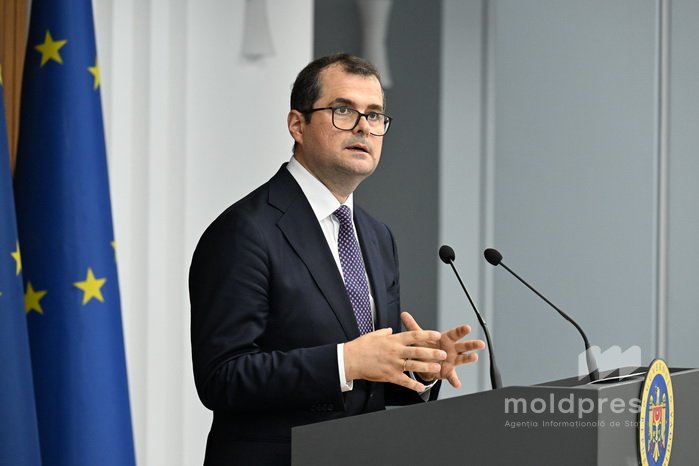
Public sector employees will receive higher salaries starting January 1, 2027. To ensure these increases, the wage fund for 2027 will grow by more than 5 billion lei and will exceed 38 billion lei. The reform involves raising the base salary, reducing the gap between the lowest and the highest salaries, cutting the number of reference values, and introducing new rules for granting performance bonuses and ensuring fairness in the allocation of one-off bonuses. The new measures were presented today by Prime Minister Vasile Tofan.

Thus, the base salary is increased and will incorporate most of the bonuses. The base salary will represent at least 70% of total remuneration, while the variable part will be at most 30%.


“This will provide people with financial stability, but it will also reduce the loopholes for salary abuses, which we know exist. The fixed bonus is 1,300 lei and a significant part of the existing bonuses will be absorbed into the base salary,” explained Vasile Tofan.


The second measure concerns correcting pay inequities by narrowing the gap between the lowest and highest salaries in the public sector. This means that lower salaries will grow faster than higher ones.


“If previously the highest salary on the pay scale was 15 times higher than the lowest salary, we are significantly reducing these differences so that we have a ratio of 1:10.5. This means that low salaries will grow faster than high ones, pay inequalities will be reduced, and we will protect employees with low incomes,” stated the Prime Minister.


At the same time, the performance bonus will not be allowed to exceed 4% of the base salary and will be transformed from an automatic top-up into a genuine incentive.


“Currently this bonus is granted to 99% of employees and represents 10% of the base salary. In reality, if we are honest, it is no longer a performance bonus when 99% of people receive it. De facto, it is an addition to the base salary. We are increasing base salaries and we want performance to be properly rewarded. Those who work more and have a greater impact should be compensated on merit. Therefore, the performance bonus will not be able to exceed 4% of the base salary and will be granted to a smaller number of people, while the rest will have a higher base salary. The essence of the performance bonus will be aligned with reality, so that those who work harder, perform better and have more impact are compensated accordingly,” he said.


Another aspect concerns one-off bonuses. Fairness in the payment of one-off bonuses will be ensured, and the one-off bonus fund will be capped at a maximum of 2% of the annual base salary fund, compared with the current rate of 5%.


“The goal is to progressively increase base salaries across the entire public sector, not to rely on a variable component that does not ensure predictability. By raising base salaries, we want people to be certain about how much they earn and not depend on all kinds of bonuses,” the official said.


At the same time, the number of reference values will be reduced from 10 in 2026, to 6 in 2027, and to 4 in 2032.


“What does this mean? Base salaries are formed from two elements: the reference value and a coefficient, both set by law. The coefficient is correlated with the level of education, years of service, and the difficulty of the work. The reference value is the amount in lei corresponding to the basic coefficient of 1. When you have too many reference values, inequity and inequality arise between similar fields. Fewer reference values ensure that more people are paid fairly and also bring transparency and predictability. People in the same position, regardless of institution, should not receive pay that differs so radically,” he noted.


As a result of the proposed changes, starting January 1, employees in the education sector, which includes about 60,000 people, will see an increase in base salaries of 10–15%, while in higher education the increase will be around 5%.

Employees in public order will have salaries that are 15% higher. In health and social services, the increase will average 17%. In defense, it will be 19%. In public administration, salaries will also increase by approximately 15%.

Salaries in culture, youth, and sports will likewise increase on average by 15%. In justice, the increase will be 9%. Other occupational categories with some of the lowest salaries will receive an average increase of 20%.


“Differentiated growth according to years of service, level of education and other criteria will ensure that these increases are fair. For example, in general education, a teacher, educator, or primary school teacher with Grade 2 will have a base salary of 15,008 lei, an increase of over 1,800 lei or about 13%. A teacher, educator, or primary school teacher without a grade will have a salary of 12,335 lei, an increase of 1,555 lei or more than 14%,” said Vasile Tofan.


A high school principal, Category 1, will have a salary of almost 22,000 lei, an increase of over 3,600 lei or more than 20%. A head cook will have a salary of 9,450 lei, which is 2,553 lei more.

In the social field, for example, a social worker with higher education will have a base salary of 11,845 lei, or 2,386 lei more. A social care worker with secondary education will have a salary of 8,022 lei, 1,359 lei more. A professional parental assistant with vocational–technical education will have a salary of 10,206 lei, or almost 2,000 lei more.

In health, a nurse with specialized secondary education and five years’ experience will receive 10,794 lei, compared to 8,808 lei at present. A police officer with five years’ experience will receive about 14,465 lei versus the current 11,993 lei, i.e. 2,472 lei more, or almost 22% higher than the current salary.

Tofan stressed that the goal of the wage reform in the public sector, a complex and ambitious reform, is to solve a series of structural problems, correct certain inequities and ensure long-term salary increases, not just for this year.


“Dear public sector employees, dear teachers, police officers, doctors, civil servants, firefighters! The success of the Republic of Moldova, the success of our country, including accession to the EU, depends to a great extent on you. A European state means a strong public sector, with professional, honest people, where work is fairly paid and respected. At the same time, it means spending responsibly and prudently. Every leu added to salaries must be backed by budget growth, and for this we need to restart the economy. All these things cannot be done overnight, but I am confident that we will achieve them. Thank you for your daily work and for continuing to believe in, support, and work for the good of the Republic of Moldova,” concluded Tofan.
 Facebook
 Instagram
 X/Twitter
 Telegram
Moldova offers Ukraine 50% railway transit discount to attract millions of euros to CFM
Ceiling for foreign exchange operations without NBM authorization to be increased to 100,000 euros
VIDEO // Moldova ready to facilitate transit of Ukrainian grain
Prime Minister orders changes to tax procedures after entrepreneur misses tax relief due to late filing
Moldelectrica to be reorganized: decision approved by Government
DOC // Moldova ratified Cape Town Agreement on fishing vessel safety
PHOTO // Ungheni Bridge over Prut takes shape: physical progress of works reaches 55%
Energocom paid average of 133.86 euros per MWh of electricity in July
DOC // Rail transport to be eligible for co-financing to boost mobility in localities
PHOTO GALLERY // Arionești–Otaci road open to traffic following rehabilitation
Energocom reserved necessary electricity for today: Energy available on external markets remains more expensive, especially during peak hours
PHOTO // Traffic now open on new section of road R8.1 between Arionești and Otaci
Prime Minister at Diaspora Forum: We must improve people’s lives and restart engines of economy
VIDEO // Moldelectrica: Final consumers were not affected by damage to Bălți–Dnestrovsk Line
Deputy Prime Minister meets with U.S. Congress delegation
Public sector employees’ salaries to increase starting 1 January 2027
President meets with Turkish MP, Vice President of ruling AK Party
President received bipartisan delegation of U.S. House Appropriations Committee
 National Bank of Moldova
Speaker spoke with Turkish Parliament member about development of Gagauzia and strengthening partnership with Turkey
Moldova and Turkey to strengthen economic and investment partnership
Prime Minister held talks with Latvian counterpart
Wage Law: Government announces one-off compensation payments from October and public sector salary increases starting 1 January 2027
President meets with Turkish MP, Vice President of ruling AK Party

Deputy Prime Minister: CFM must attract transit of Ukrainian grain to increase revenues
LIVE // Salary increases to be applied starting 1 January 2027
Public sector employees with gross salary below 20,000 lei to receive one-off payment in October
Energocom to supply Termoelectrica with almost 1.9 million MWh of gas during cold season
Parliament convenes in extraordinary session. MPs to meet on 24 - 25 August
VIDEO // Moldova’s Ambassador to Kazakhstan presents letters of credence
PHOTO GALLERY // Teachers protested in Great National Assembly Square demanding salary increases from September 1. Government promises solutions
Republic of Moldova received humanitarian aid from 35 countries in first half of year
Prime Minister and Education Minister joined teachers demanding pay raises
Government approves Implementation Program for Education 2030 Development Strategy
Moldovan driving licences to be recognized in Latvia
Famine caused by Soviet totalitarian regime in 1946–1947 is to be officially recognized as crime against humanity
Government initiates negotiations with NATO on regulating exchange and protection of classified information
Clearer rules for storing petroleum products intended for emergency situations
Government increases budget for supporting investments in manufacturing industry to 4 billion lei
Government accepts resignation of Director of State Agency on Intellectual Property
Receive the latest news directly to your email

Receive the latest news directly to your email