
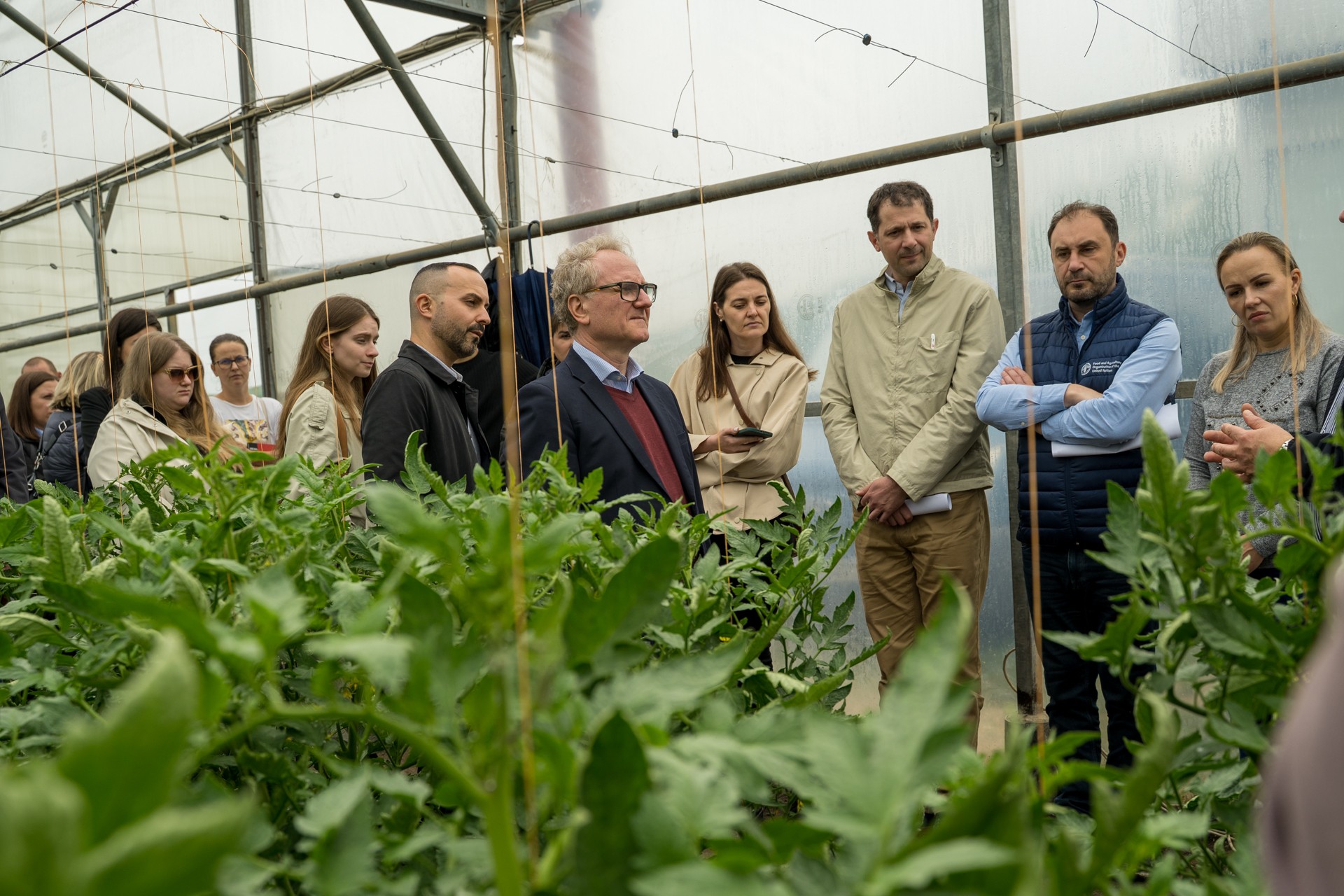
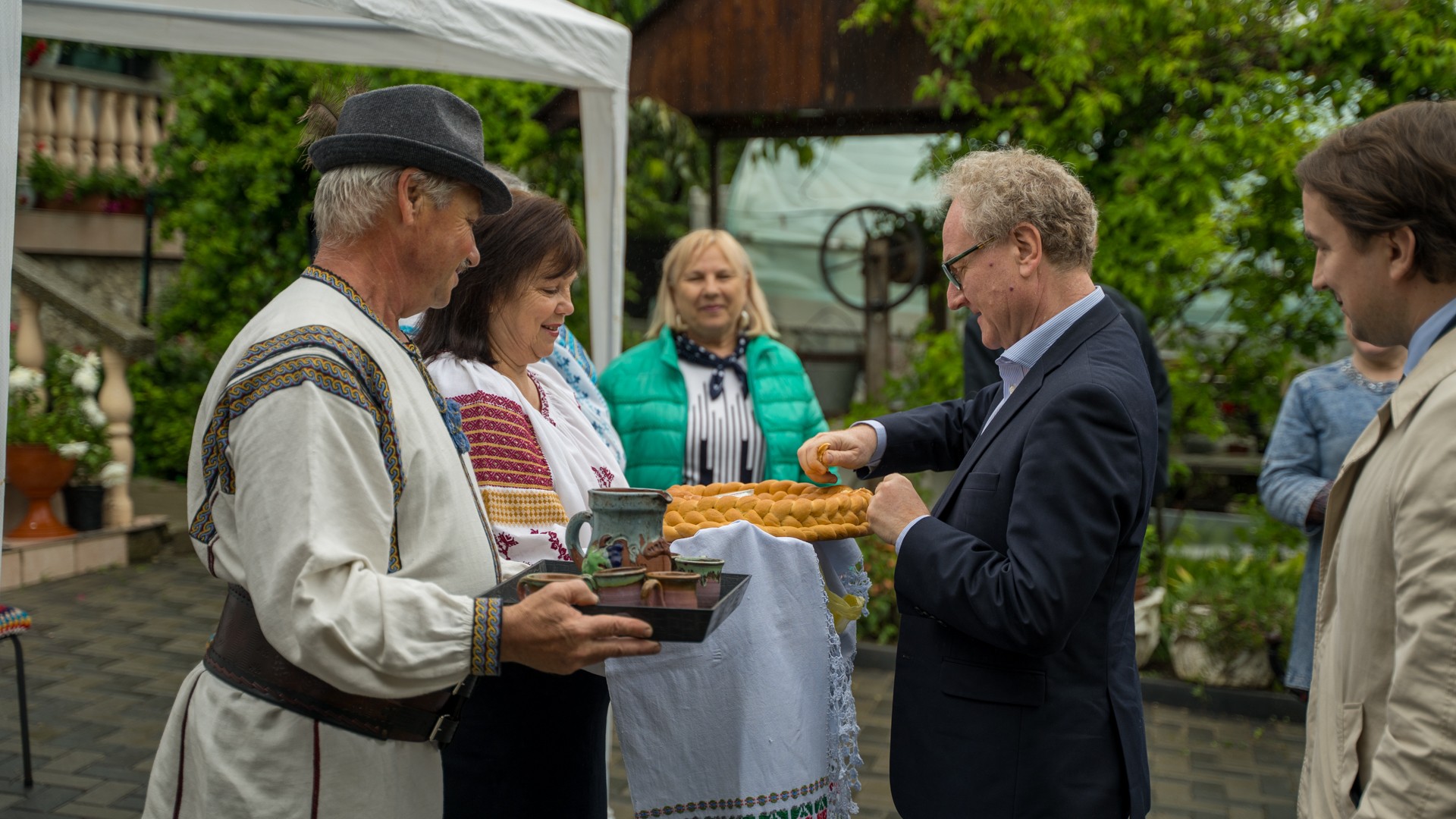
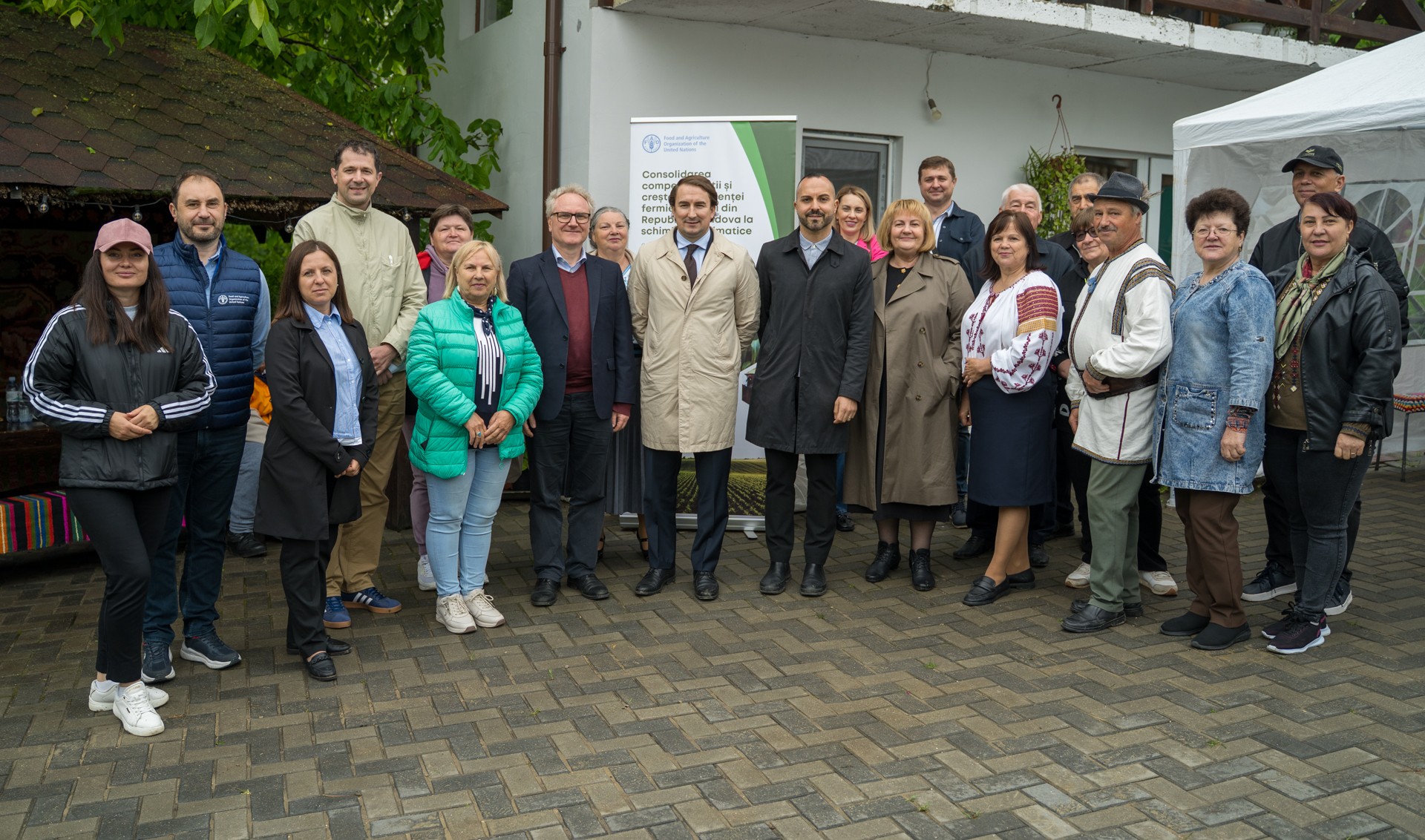
UN Food and Agriculture Organization launches farmer field schools in central Moldova district: climate-resilient vegetables, market access
Small vegetable producers of Moldova will benefit from practical training and support for the development of their agricultural businesses with the launch of the Farmer Field Schools programme initiated by the Food and Agriculture Organization of the United Nations (FAO) in Hancesti.

The programme is implemented under the project, Strengthening competitiveness and climate resilience of small-scale farmers from Moldova, co-financed by Switzerland through the Inclusive and Resilient Markets programme. In total, eight field schools dedicated to the vegetable sector will be organized, targeting mainly small farmers and rural households, with a focus on women and young farmers.

The participants will learn how to apply modern, sustainable and climate-adapted agricultural practices, so they can improve their productivity, crop quality and market access.

Secretary General of the Ministry of Agriculture and Food Industry Sergiu Gherciu stressed that agriculture should be seen as a business, not only as a traditional activity.

“We are talking about small farms that must be able to generate income. Our farmers know how to produce, but we need to work more on marketing, sales and access to market,” the official said.

According to FAO Moldova project manager, Nicolae Tiltu, small producers supply most of the vegetables consumed in the country, but they face both the effects of climate change and increasingly strict market requirements.

“This project supports them on both fronts — to produce more sustainably and more resiliently and to deliver products which meet market requirements,” he noted.

For his part, Country Director of the Swiss Agency for Development and Cooperation Guido Beltrani highlighted the economic potential of small farms.

“We expect that farmers who go through this programme will be able to deliver products of constant quality, including to external markets,” Beltrani said.

Data by the National Statistics Bureau show that about 80 per cent out of 263.1 thousand tons of vegetables produced in Moldova in 2025 came from peasant households and small farms.

Among the participants in the programme, there is Lucia Cășuneanu, manager of a farm in the village of Buteni, Hancesti district, specializing in growing vegetables in protected areas on an area of about two hectares.

“We would like to get our products on store shelves, but we still do not have an offer that meets the requirements of retail chains. Through the field school, we want to get information that will help us develop and bring our product as close as possible to the consumer,” the farmer said.

Through this programme, FAO and its partners aim to turn small vegetable farms into more competitive and climate-resilient businesses, thus contributing to the economic development of rural communities from Moldova.
 Facebook
 Instagram
 X/Twitter
 Telegram
30 MW Photovoltaic park with battery storage to be built in Vadul lui Vodă
Moldovan National Road Transport Agency launches nationwide inspections of heavy trucks
First contract for Union Highway A8 signed; project to connect Moldova by road with European network
Incentives for investments in green energy in Moldova: customs duties eliminated for storage batteries, wind turbines
Moldovan parliament speaker tells farmers state came up with response it can afford at present
New step toward strengthening energy security: Moldova to establish emergency reserves of petroleum products
Fuel prices are going down in Moldova; petrol price drops below threshold of 31 lei
State to be able to respond more quickly in event of energy emergency
Moldovan carriers to receive additional 300 permits for routes to Azerbaijan
Import duties on energy storage batteries and wind turbines to be abolished
Moldovan energy minister calls for compliance with deadlines for completing works needed to start energizing Vulcanesti–Chisinau power line
Moldova to receive 150 million euros to modernize strategic roads
Moldovan energy minister says every leu invested in energy efficiency generates significant economic impact
Energy compensations to be maintained in next cold season
Energy invoices to be digitalized in Moldova in next five years: real-time access to data on consumption, energy costs
UN Food and Agriculture Organization launches farmer field schools in central Moldova district: climate-resilient vegetables, market access
VIDEO // Moldova women’s national team holds Romania to 0-0 draw in Nisporeni
Moldova national team draw with Bulgaria at friendly match played in Chisinau
PHOTO // European Commissioner for Enlargement meets mayors of Moldova: EU to help modernize another 20 schools
Over 1,000 Diaspora Moldovans register for Online Career Fair
PHOTO // European Commissioner for Enlargement urges young people to defend democracy, combat disinformation
 National Bank of Moldova
Moldovan president attends ceremony on 24th anniversary of foundation of National Anticorruption Centre
Prime Minister at Moldova Digital Summit 2026: Our ambition is not only to join EU, but to help build Europe’s digital future
Over 1 billion euros in new investment partnerships, financing announced for Moldova
Topical issues addressed at meeting of Joint Control Commission
Moldovan president, European Commissioner for Enlargement discuss reforms, next steps in accession process

Moldovan president attends ceremony on 24th anniversary of foundation of National Anticorruption Centre
Environment Minister announces when fish safety to be checked
Moldova prepares new edition of Red Book
Prime Minister at Moldova Digital Summit 2026: Our ambition is not only to join EU, but to help build Europe’s digital future
PHOTO GALLERY // Chișinău hosts Moldova Digital Summit 2026: two days dedicated to innovation and digital transformation
Republic of Moldova to receive 250 million dollars from World Bank to advance reforms
Moldova Digital Summit 2026 starts in Chișinău
Moldova prepares case against Russia over Dniester pollution
Chișinău and Bratislava discuss next steps in EU accession negotiations
International post-disaster needs assessment mechanism launched in Chișinău following Dniester river pollution crisis
EU Commissioner in talks with Prime Minister and Deputy Prime Ministers
Right to fair trial – most frequently reported problem by Moldovan citizens in 2025: Ombudsman’s report presented in parliament
Moldovan parliament sets up inquiry committee on phone, online scams: damages exceeding 270 million lei
Moldovan parliament speaker describes Russia’s intention to move Russian Center of Culture to Tiraspol as political provocation
PHOTO GALLERY // Major event in Chisinau: EU announces 1 billion euros in investments in Moldova
Stricter rules for taxi platforms: payments to be required to obligatorily go through banks of Moldova
Receive the latest news directly to your email

Receive the latest news directly to your email