
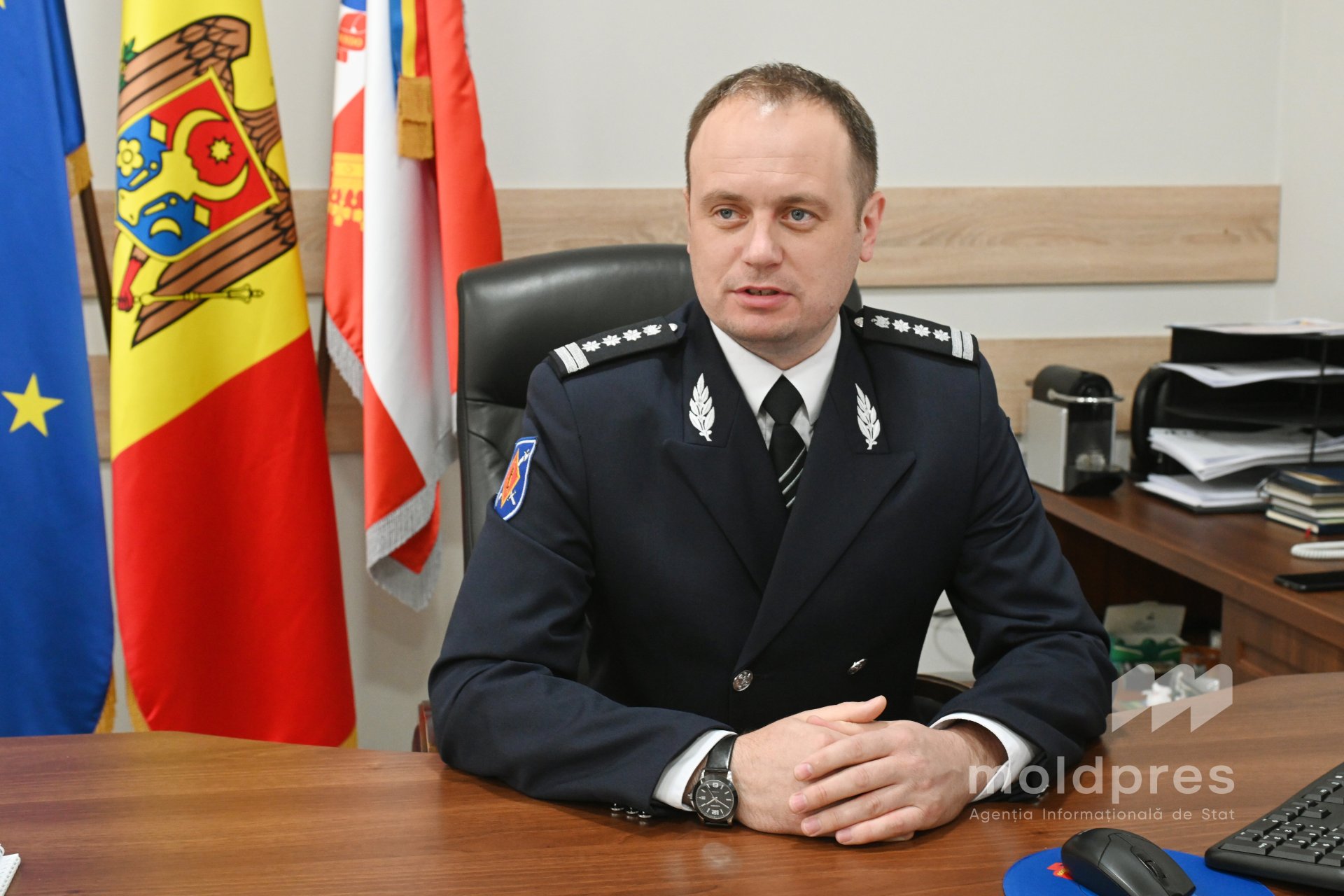
MOLDPRES INTERVIEW // Constantin Rusnac, first vice-rector of Stefan cel Mare Academy: “We train professionals who serve the law, the citizen and the country”
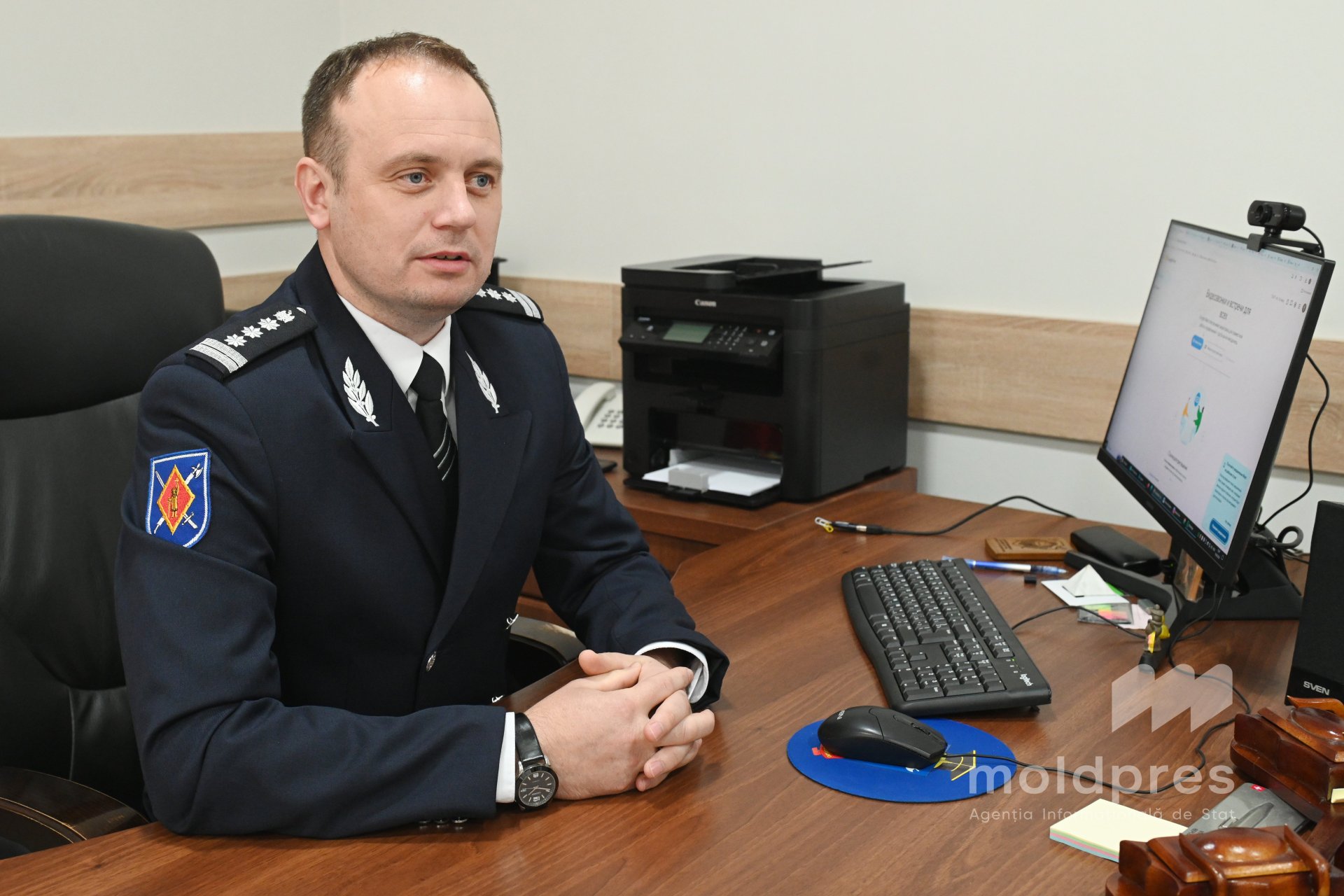
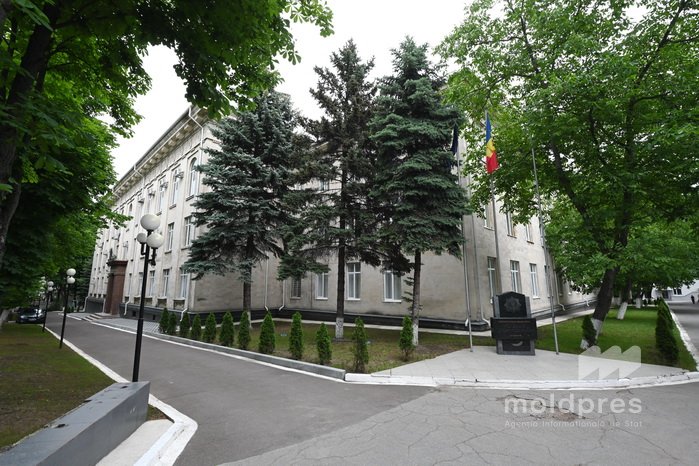
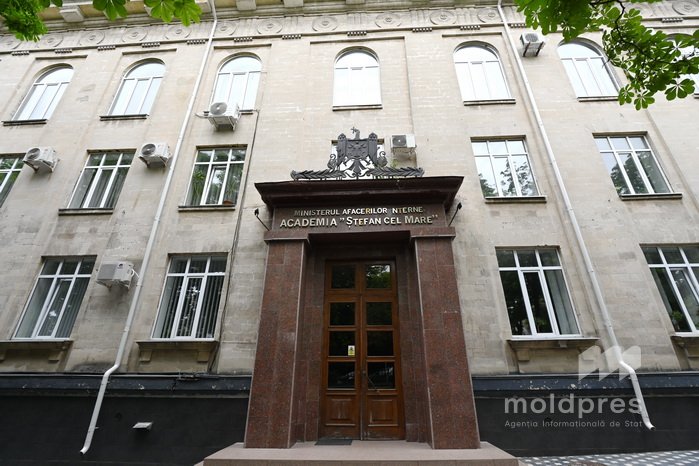
The Stefan cel Mare Academy of the Interior Ministry (MAI) was founded 35 years ago. It is institutionally and scientifically accredited, aligned with the educational standards of the European Union, subordinated to the MAI and guided in its activities by the directives of the Education and Research Ministry (MEC). The Academy trains specialists for administrative authorities and institutions subordinated to the MAI, as well as for other law enforcement bodies of Moldova. We discussed study conditions, educational offer and the admission process for the new academic year with Constantin Rusnac, First Vice-Rector for Studies and Quality Management.

MOLDPRES: The MAI’s Stefan cel Mare Academy has been active for more than three decades. During this time, its professors have trained staff both for the MAI system and for other law enforcement bodies. How has the institution’s activity evolved in the context of changes in the field of internal affairs?

Constantin Rusnac: The Stefan cel Mare Academy is, without any exaggeration, the backbone of the professional training system in the field of internal affairs of Moldova. During more than three decades of existence, our institution has trained thousands of specialists – police officers, border officers, lawyers, managers – who work today both at the MAI and in other structures of the rule-of-law state.

The Academy’s evolution has kept pace with the deep reform of the internal affairs system in the country. The demilitarization of the police, the adoption of new European standards, the reform of the General Police Inspectorate have compelled us as an academic institution to adapt our curricula, teaching methodologies and pedagogical approaches. Today, our study plans reflect both the requirements of the national system and the European standards of professional training in the field of security and public order.

An essential element of our evolution is the diversification of study forms and the expansion of the range of accredited programmes. Today, we are an institution with an integrated educational system that covers every stage of a career in the MAI:

- The Integrated Law Enforcement Training Center Directorate provides initial and continuous training of non-commissioned officers, while the Ungheni Special Competence Training Department, as its component structure, complements the system by developing specialized competences in the fields of border security, civil security and public security.

- The Professional Development Directorate – initial, continuous, and managerial training for officers, tailored to the needs of the MAI.

- Bachelor’s, Master’s, and Doctoral studies – the complete university track, from specialization to advanced scientific research.

From the first day in uniform to management positions – the Stefan cel Mare Academy is there at every step.

MOLDPRES: Over more than thirty years of activity, the Academy has sought to develop its infrastructure and modernize its material and technical base. What study conditions do you offer young people?

Constantin Rusnac: We are fully aware that the quality of professional training presently does not depend solely on the quality of teaching staff or the content of study programmes, but is essentially determined by the learning environment in which our students develop.

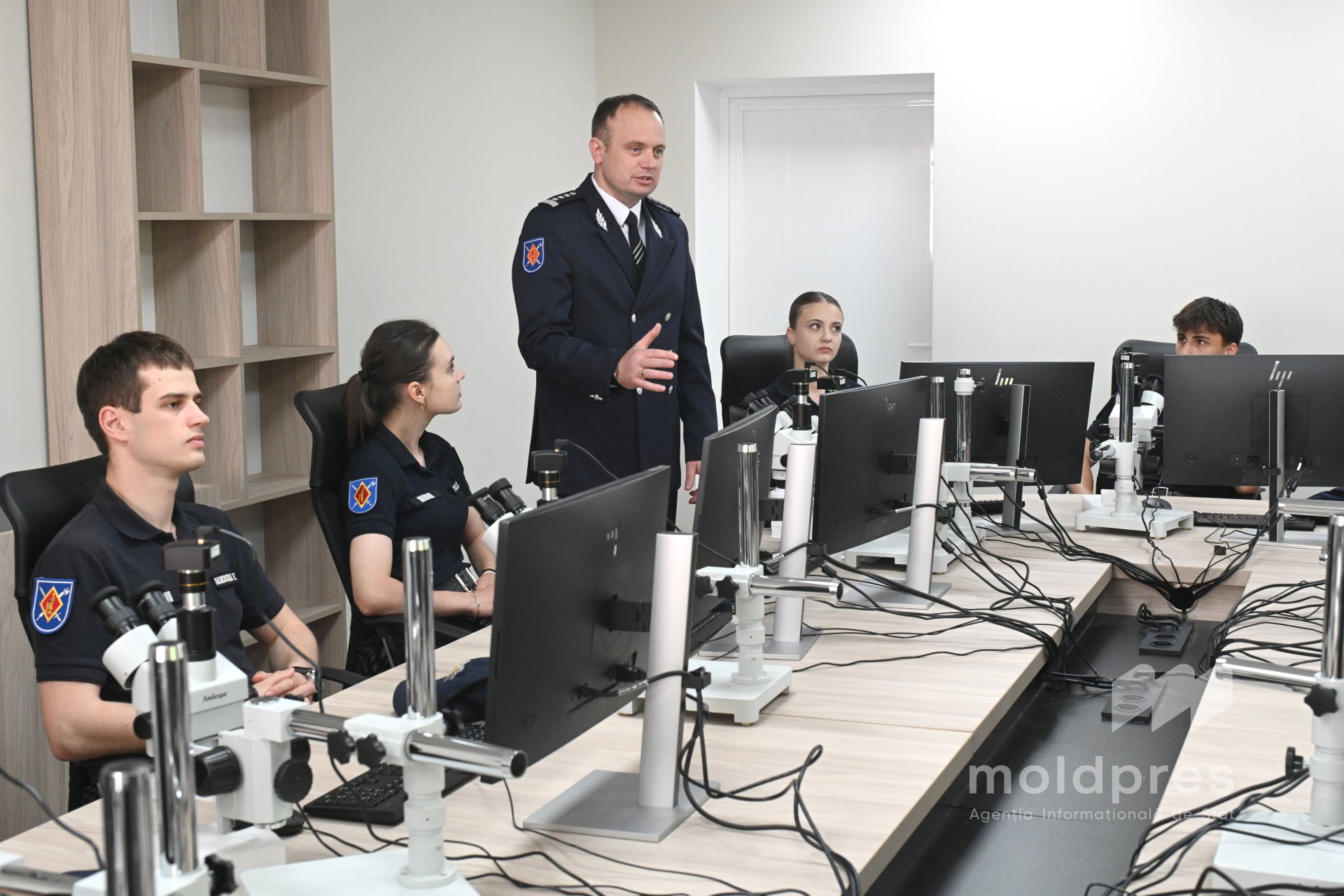
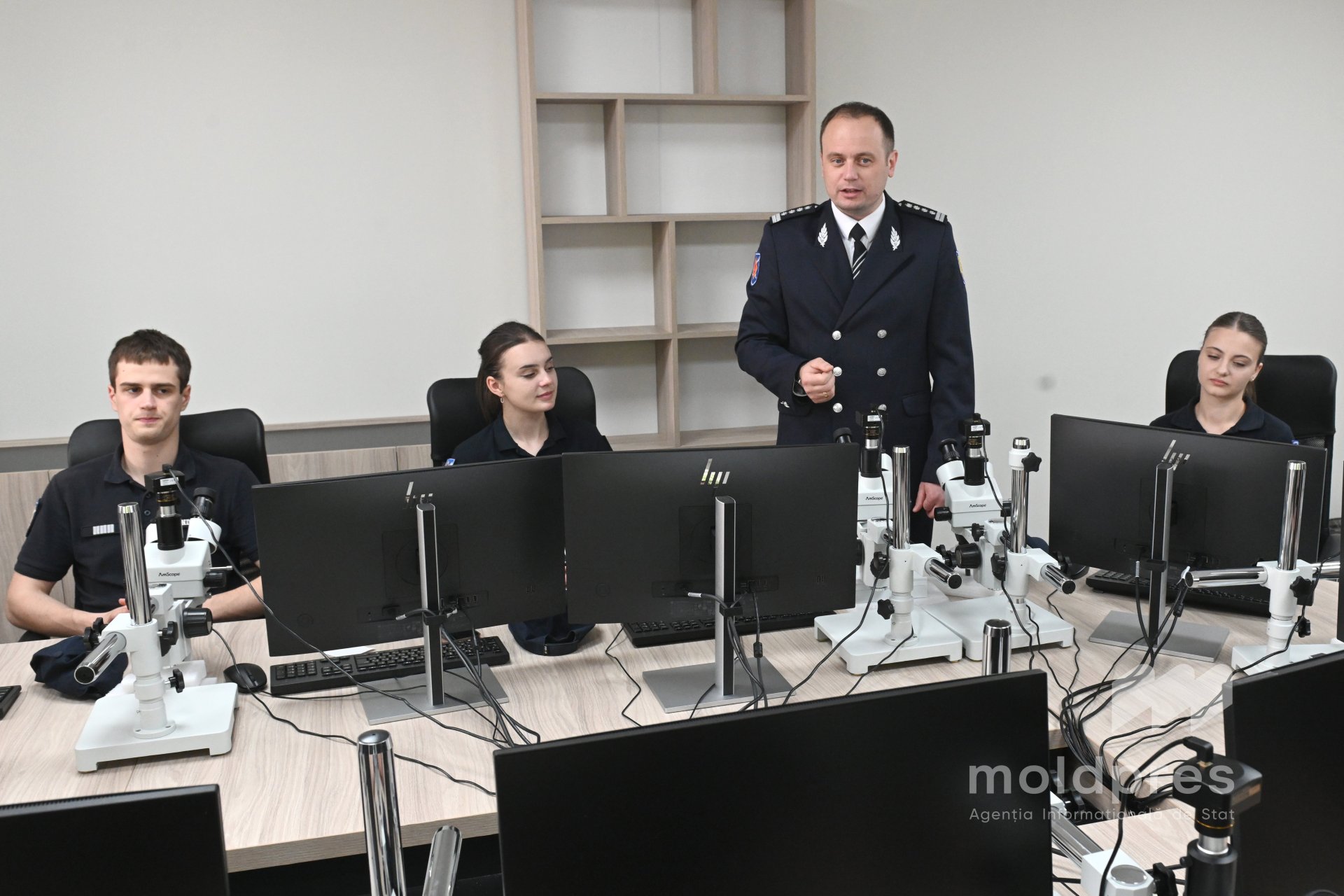
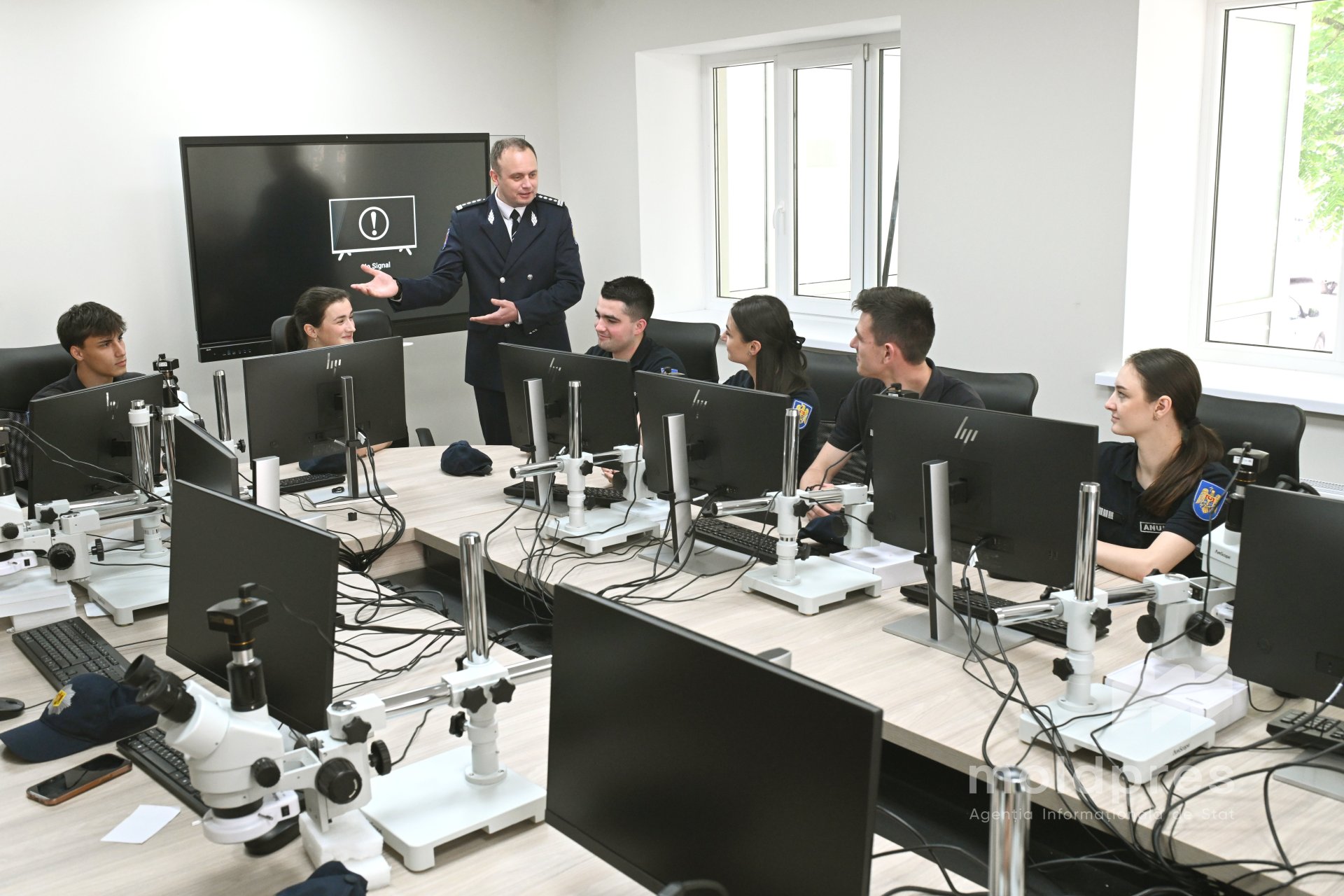
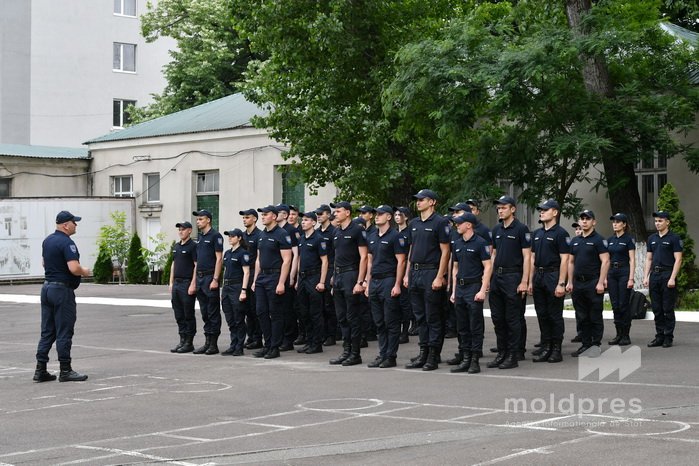
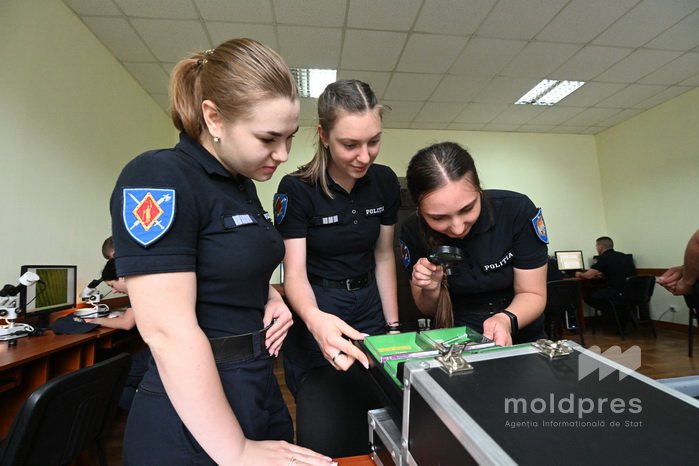
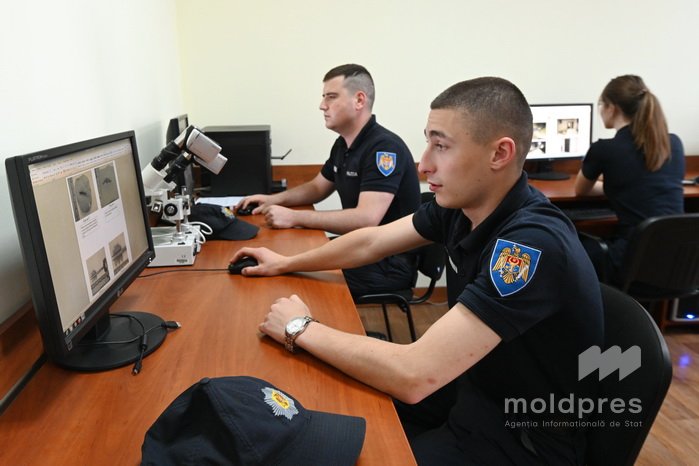
The Academy has modernly equipped classrooms, specialized laboratories – including a multifunctional forensic range – special equipment rooms and special investigation activity rooms, a digital library and an e-Learning platform. Student dormitories provide decent accommodation conditions, while medical and sports services complement the support provided for learning. Our students also have access to the swimming pool of the Dinamo Club, a real advantage for maintaining physical fitness.

Practical training occupies a central place in our pedagogical strategy. Students benefit from internships in administrative authorities and subordinated institutions of the MAI, during which they apply theoretical knowledge in real conditions.

In essence, the daily schedule is organized, so as to ensure both the discipline specific to the institution and the necessary space for personal development.

If a student excels in a particular field – science, sports, or technical sector – the Academy actively supports them: through scientific circles, conferences, Erasmus+ mobilities and international partnerships. Every young person can find here a framework in which to prove themselves.

At the same time, we are concerned with continuously improving working conditions for our employees, because a motivated teacher is, ultimately, the best guarantee of the quality of studies.

MOLDPRES: The admission period to higher education institutions of Moldova is nearing. What educational offer does the Academy bring for the 2026–2027 academic year?

Constantin Rusnac: We are pleased to announce that, for the 2026–2027 academic year, the MAI’s Stefan cel Mare Academy is again offering a diversified and attractive educational offer for young people who wish to dedicate their lives to public service in the field of security and public order. We are also one of the few higher education institutions of Moldova accredited for all three university cycles – Bachelor’s, Master’s, and Doctoral studies.

At Cycle I – Bachelor’s studies, we offer programmes in three main fields:

Law (0421.1) – 4 years, 240 ECTS (full-time) or 5 years (part-time), state-funded/fee-based, with specializations in criminal investigation, forensic expertise, special investigation activities, public order and legal assistance.

Public Administration (0400.1) – 3 years, 180 ECTS (full-time), fee-based, with specialization in public administration.

Security Services (1039.1) – 3 years, 180 ECTS (full-time), state-funded, with programs in Civil and Public Security and Border Security, Migration and Asylum.

At Cycle II – Master’s studies – we offer advanced training programmes in the fields of criminal law, contravention law, criminal investigation activity, special investigation activity, economic law, migration law and refugees' protection.

Admission is organized both for state-funded places financed by the MAI and for fee-based places, including part-time. The process of submitting files for Cycles I and II takes place online via the platform https://eadmitere.gov.md/. We encourage all interested young people to access the admissions page: https://academy.police.md/admiterea.

At Cycle III – Doctoral studies – the Criminal Sciences and Public Law Doctoral School is active, providing training for researchers and highly qualified specialists in the field.

In addition, the Professional Development Directorate offers initial, continuous, and managerial training courses for officers, while the Integrated Law Enforcement Training Center provides initial and continuous training for non-commissioned officers.

MOLDPRES: In which fields can young graduates find employment after finishing the Academy, and what opportunities open up for them? Do you have any programme that facilitates the placement of graduates on the labor market?

Constantin Rusnac: Graduates of the MAI’s Stefan cel Mare Academy have before them a broad and valuable professional field. The main employers are the institutions subordinated to the MAI: the General Police Inspectorate, the General Border Police Inspectorate, the Information Technologies Service, the General Inspectorate for Migration, the General Carabinieri Inspectorate, the Technical-Criminalistic and Judicial Expertise Center, the Internal Protection and Anti-Corruption Service, the MAI’s Operational Management Inspectorate, the General Inspectorate for Emergency Situations, as well as the Intelligence and Security Service of Moldova, the National Anticorruption Center, the prosecution service, the courts and public administration bodies.

Our graduates enjoy a significant advantage on the labor market: they benefit from legal and operational training, which makes them competent both in field work and in management. The Academy has a Career Guidance and Counseling Service that helps students and graduates orient themselves in the professional space. The internships organized in partnership with operational units form a true bridge between studies and employment.

MOLDPRES: How do you see the role of the new generation of specialists in strengthening citizens’ trust in state institutions?

Constantin Rusnac: Citizens’ trust in state institutions is not given by default. It is built day by day, through every correct interaction, through every act of integrity, through every professional decision grounded in law and respect for the individual.

We are training the generation that will bear this responsibility. That is why, integrity, professional ethics and respect for human rights are not just curricular provisions – they are fundamental values that we cultivate in each student. Beyond technical and legal competences, we aim to shape people of character – responsible professionals, devoted to their mission and, above all, loving their country and nation. An officer who feels that he/she serves not only an institution, but their own community and people, will always act with dignity and courage.

I am convinced that the new generation of specialists, trained in the spirit of European values, transparency, public responsibility, national identity and genuine patriotism, will decisively contribute to consolidating the rule of law and strengthening citizens’ trust in the institutions of Moldova.

MOLDPRES: How does the Academy manage to combine the discipline specific to the MAI system with the personal development of young people?

Constantin Rusnac: This is indeed one of our greatest challenges and, at the same time, one of the institution’s greatest sources of pride. Discipline – understood not as constraint, but as inner structure and sense of responsibility – is a prerequisite for authentic personal development.

At the Academy, students learn to work in teams, to make decisions under pressure, and to manage conflicts and crisis situations. All these require not only technical training, but also emotional maturity, social intelligence, and moral strength. Student scientific circles and sports and cultural activities contribute substantially to shaping the complete personality of the professional future.

I am firmly sure that the balance between institutional rigor and freedom of intellectual expression is not a paradox, but a necessity. A good professional must be not only disciplined, but also able to think critically, innovate and understand the complexity of the world in which they work.

MOLDPRES: What message do you have for young people who want to choose a career in the field of security and public order?

Constantin Rusnac: I would tell them, first of all, that this choice is one of the noblest a young person can make. Putting yourself at the service of the citizen, protecting the rule of law, striving every day to make the world we live in a little safer and fairer – this is a mission that gives meaning to professional life.

At the Stefan cel Mare Academy of MAI, they will find not only rigorous studies and a recognized diploma, but also a community, a training environment that will prepare them for the real challenges of their career. A career in the MAI system offers stability, prospects for advancement, real opportunities for continuous training and, not in the least, the satisfaction of knowing that your work matters. We are waiting for motivated, honest young people, ready to serve the country with professionalism.

MOLDPRES: European integration is a priority for Moldova. In the context of rapprochement with the EU, what perspectives open up for the Academy?

Constantin Rusnac: European integration represents both an extraordinary opportunity and a major responsibility for our institution. Moldova has taken important steps on the European path, and the justice and internal affairs system is one of the key areas in the accession negotiations.

The Academy is already integrated into European academic and professional cooperation networks. We participate in the Erasmus+ programme and have cooperation agreements with police academies and law institutions from more EU member states, including through collaboration with the European Security and Defence College. Students and teaching staff benefit from academic mobilities that provide access to European experience.

In this respect, the road to Europe is not just a goal for us – it is a reality that we build day by day, both in the classrooms and through the institutional partnerships we are strengthening.

Thank you.

Reporter: Ala Ciobanu.
 Facebook
 Instagram
 X/Twitter
 Telegram
MOLDPRES INTERVIEW // ANSC Director: We make sure that path of public money to hospitals, schools or infrastructure fair and transparent
MOLDPRES INTERVIEW // Vice President of Romanian Academy says academic, research environment of Moldova advanced, can be efficiently integrated into European, international structures
MOLDPRES INTERVIEW // Rector of University from Romanian city says if someone overturns your history, national identity, it means you don’t have enough knowledge
MOLDPRES INTERVIEW // Director of South Regional Development Agency says Agency creating better living conditions, easier life for thousands of residents
MOLDPRES INTERVIEW // Lithuanian Ambassador about prospects of Moldova’s EU accession: If you make things real, they will become achievable
MOLDPRES INTERVIEW // Moldovan finance minister says government aims to modernize financial system for benefit of businesses, citizens
MOLDPRES INTERVIEW // Ambassador of State of Qatar to Moldova: We are working to improve ways of attracting Qatari investors to Moldovan market
MOLDPRES INTERVIEW // President of Moldova's Chamber of Commerce and Industry says country must use opportunities provided by European integration to attract investments, become competitive
MOLDPRES Interview // Minister of Internal Affairs: Interior Ministry applies European security standards and is ready to advance in EU accession process
MOLDPRES INTERVIEW // Moldovan energy minister says foremost interest citizens to have secure energy at affordable prices
Moldovan justice minister says, according to European Commission’s Report, Moldova made greatest progress among EU candidate states, including in justice field
INTERVIEW MOLDPRES // Moldovan defense minister says Russia's war in Ukraine highlighted vulnerability of defense sector, need of building strong, prepared, resilient army to current challenges
INTERVIEW WITH MOLDPRES // Deputy PM says wants Moldova where a child from any village has same opportunities as a child from Chisinau
INTERVIEW MOLDPRES // Deputy Prime Minister on Ukraine Peace Agreement: No discussion about Moldova can take place without Chișinău's participation
PHOTO // Garden of 100 roots inaugurated in Nisporeni on eve of National House centenary
Deputy Prime Minister to visit Cyprus for discussions on European integration and cooperation
Cyberattack on digital public services: authorities block about 11 million access requests
PHOTO // Austria’s National Day marked in Chisinau
 National Bank of Moldova
Moldovan President meets with Hungarian President and Prime Minister
President attends commemoration in Budapest marking 70th anniversary of 1956 anti-communist revolution
Moldovan PM meets young people who won three medals for Moldova at World Robotics Championship
Moldovan PM, vice-president of European Investment Bank discuss accelerating development projects in Moldova
Moldovan deputy PM for reintegration participates in marking 30 years of work of theoretical lyceum from Grigoriopol

President attends commemoration in Budapest marking 70th anniversary of 1956 anti-communist revolution
Violence can escalate to femicide: How to recognize warning signs and where victims can seek help
PHOTO GALLERY // Romanian Armed Forces Day celebrated in Chișinău with exhibition dedicated to international military missions during interwar period
PHOTO // President honors courage of Hungarian people, 70 years after 1956 anti-communist Revolution
Ukraine condemns violation of Moldova’s airspace
Moldovan president condemns incident in Telenesti district: “Russia’s war continues to endanger citizens’ lives”
Staff member of Russia's Embassy in Moldova to be declared persona non grata after explosive-laden drone crashed in Telenesti district
Moldovan PM meets young people who won three medals for Moldova at World Robotics Championship
Facilitated access to EU market: European Investment Bank provides 150 million euros to modernize agri-food sector through Moldova's Orchard II programme
Moldovan PM, vice-president of European Investment Bank discuss accelerating development projects in Moldova
Two cases of national airspace violations recorded in Moldova in past week; Defence Ministry reiterates need to strengthen air defense capabilities
Moldovan deputy PM for reintegration participates in marking 30 years of work of theoretical lyceum from Grigoriopol
Drone falls in central Moldova village; police secure area
First at November 1, 2026 elections in Moldova: voters to be able to vote using digital ID from EVO app
National Bank of Moldova simplifies foreign exchange rules: transfers, investments of up to 100,000 euros without authorization
PHOTO, VIDEO // Moldovan head of state president welcomed by Hungarian president at Sándor Palace in Budapest
Receive the latest news directly to your email

Receive the latest news directly to your email