
National mechanism for protection, legal assistance, financial compensation of crime victims to be strengthened in Moldova
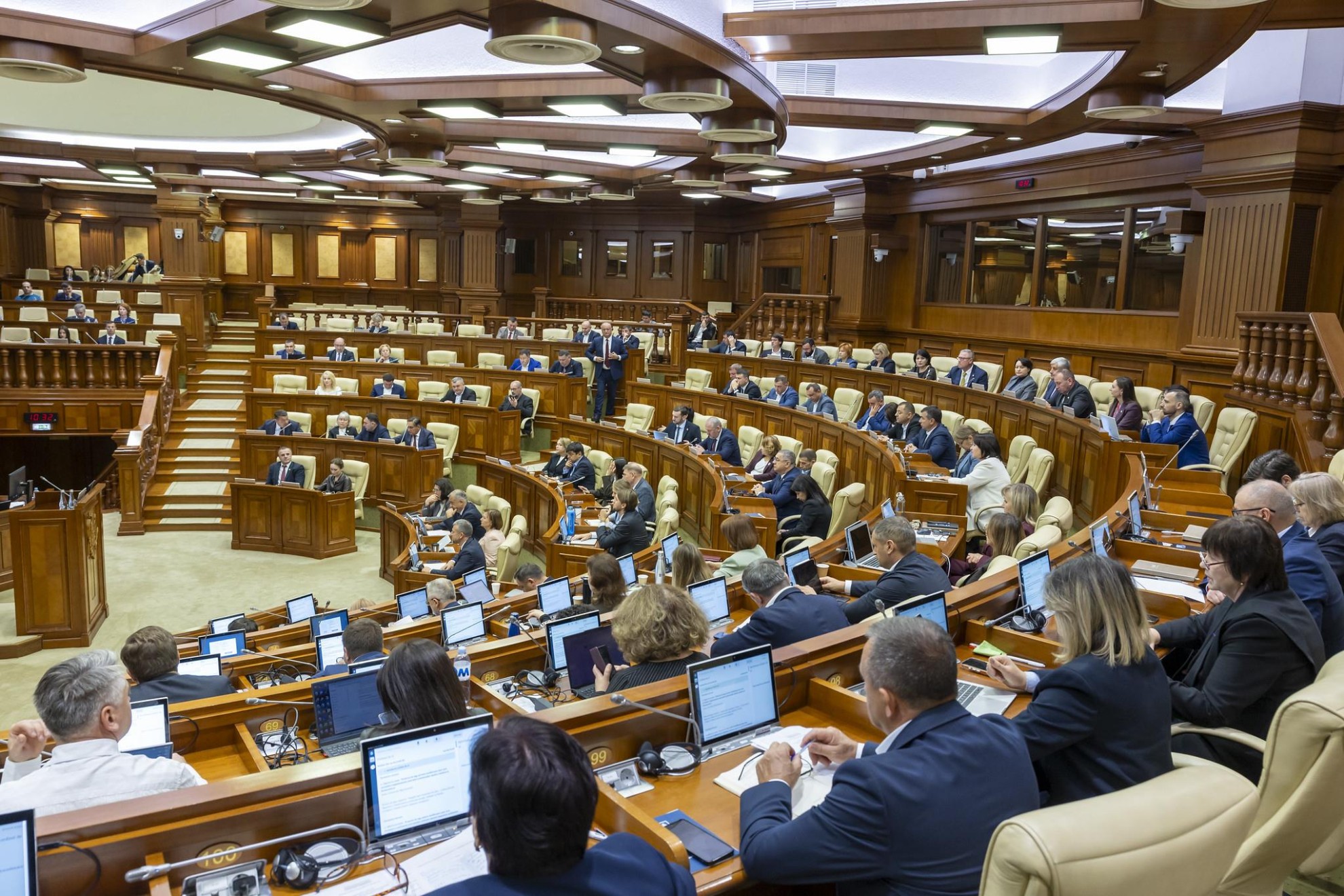
Chisinau, September 24, 2026 – The national mechanism for the protection, legal assistance and financial compensation of crime victims will be strengthened. The parliament has approved, in the first reading, a draft law establishing a unified regulatory framework for the protection and rehabilitation of crime victims.

The draft law, prepared by the Justice Ministry, transposes more European directives into national legislation. The main goal of the initiative is to ensure that victims have effective access to information, support services, protection measures, legal assistance and, where appropriate, financial compensation from the state for the damage caused by the commission of a crime.

To this end, the authors propose amendments to the Code of Criminal Procedure, so that victims may benefit from additional procedural safeguards. They include the right to have documents translated into a language understood by the victim, as well as the right of the victim or injured party to be interviewed by a person of the same sex. The measure aims to create a safe environment and reduce the risk of revictimization.

This right may be limited when an interview conducted by a person of the same sex would affect the proper conduct of the criminal proceedings, for example, in the case of an urgent procedure or a lack of available personnel. If there are no prosecutors or criminal investigation officers of the same sex, or if they are disqualified, the interview may be conducted by available personnel, with appropriate psychological support provided to the victim.

In addition, during the trial examination phase, repeated interviews of the injured party will be limited, in order to reduce the risk of revictimization. Victims may benefit from free medical assistance and shelter services provided by specialized services. In urgent situations, certain services may be provided, even if the person does not yet have all the required documents, which may be submitted later.

Another right provided for by the draft law is the one of victims to be informed, upon request and without undue delay, about the release or escape of a detained, arrested or convicted person, as well as about the necessary protection measures. This provision is particularly relevant in situations where there is a real danger to the victim’s safety, determined by the nature of the crime, the offender’s previous behavior or a history of violence, including domestic violence, harassment, threats or other forms of coercion.

The draft law also revises the definition of a victim, so that it expressly includes the natural person who has suffered moral, physical or material damage, as well as family members – the spouse, cohabiting partner, children and relatives up to the fourth degree – and other persons who were dependent on the victim at the time of their death.

Authorities will be required to provide victims, in clear and accessible language, with information about available support services, the criminal investigation body, procedural rights, protection measures and other relevant information. An individual assessment mechanism for crime victims will also be established, both within and outside criminal proceedings. The assessment will make it possible to identify victims’ specific needs and determine the special measures required to prevent secondary victimization, intimidation and retaliation.

The legislative initiative also provides for the expansion of the categories of victims eligible for financial compensation. This measure may also benefit victims of crimes against liberty, victims of sexual offenses, victims of domestic violence, child victims and persecuted persons.

The draft law on the rehabilitation of crime victims will be examined by the parliament in the second reading. Following its adoption, it will enter into force on the date of Moldova’s accession to the European Union.


Directorate of Communication and Public Relations of Moldova’s Parliament
 Facebook
 Instagram
 X/Twitter
 Telegram
Clearer, more visible health warnings on tobacco products' packaging in Moldova
Legal framework for integration of foreigners in Moldova to be strengthened
National legislation on electronic evidence to be aligned with international standards
Energy communities: clearer rules for establishment and registration
Modernization works for district heating systems in Chișinău and Bălți to be declared matter of national public utility
Obtaining permits and approvals for renewable energy production to be simplified
Parliament to examine legislative measures to strengthen NBM independence in line with European standards
Moldovan and Romanian lawmakers to discuss cooperation in education
Moldovan PM says government must have necessary tools before crises materialize
Moldovan parliament declares nationwide state of emergency in energy, hydrological sectors for 60 days
Moldovan PM, European Commission official discuss accelerating growth plan projects
Moldovan PM's speech at parliament's plenary meeting on establishment of emergency state
Moldovan president, delegation of Czech senators discuss Moldova’s European path, bilateral cooperation
Government improves financing mechanism for regional and local development projects
Moldovan PM, in interview with Bloomberg, says European path creates huge economic opportunities for Moldova, as well as for investors who come to country
MOLDPRES INTERVIEW // Slovak Ambassador: Moldova deserves to be part of EU in near future. It can complete accession process by 2030
VIDEO // Russia tried to destabilize our country and spent hundreds of millions of dollars for this purpose. Moldova resisted, Prime Minister says
PM, former U.S secretary of state discuss regional security, investment opportunities of Moldova
The first meeting of Growth Plan's Monitoring Committee: Moldova maintains high pace of reforms' implementation
More than 50 UN member states called on Russia for complete, immediate and unconditional ceasefire in Ukraine
VIDEO // Prime Minister - interview with CNN: We welcome United States involved in energy support projects for Moldova
 National Bank of Moldova
Moldovan parliament ratifies new agreement between Moldova, Romania on strategic transport infrastructure
Works of modernization of district heating systems in Chisinau, Balti to be declared of national public utility; draft passed in first reading
Process for getting permits to produce energy from renewable sources to be simplified in Moldova
PM, former U.S secretary of state discuss regional security, investment opportunities of Moldova
The first meeting of Growth Plan's Monitoring Committee: Moldova maintains high pace of reforms' implementation

ARMENPRESS // James Cameron to meet Yerevan fans in November
The first meeting of Growth Plan's Monitoring Committee: Moldova maintains high pace of reforms' implementation
Moldovan president's speech at ceremony marking 80th anniversary of founding of State University of Moldova, centenary of Romanian university education in Bessarabia
More than 50 UN member states called on Russia for complete, immediate and unconditional ceasefire in Ukraine
VIDEO // Prime Minister - interview with CNN: We welcome United States involved in energy support projects for Moldova
Moldovan parliament approves new rules for tobacco products' packaging
Moldovan parliament speaker says Russia triggers tensions, seeks to sow fear by unauthorized overflights of airspace
Moldova discusses strengthening airspace protection capabilities with Romania and Ukraine, Speaker says
Republic of Moldova reaffirms commitment to refugee protection at UN meeting dedicated to 1951 Convention
Parliament votes, in first reading, on legislative measures to strengthen independence of National Bank of Moldova in line with European standards
Moldovan parliament adopts legislative amendments to make procedure for selecting, appointing candidates for position of Constitutional Court judge more transparent
Medical, pharmaceutical qualifications got in EU to be able to be recognized in Moldova; parliament adopts draft law
Caps for foreign exchange operations without National Bank's authorization to increase gradually; Moldovan parliament passes draft in second reading
Enhanced protection for persons targeted by abusive lawsuits: Moldovan parliament votes on anti-SLAPP legislative package in second reading
Drone found in Florești had onboard camera, features specific to Gerbera type
Emotional moment in Parliament: six children opened plenary session with special sign language performance
Receive the latest news directly to your email

Receive the latest news directly to your email