
Process for getting permits to produce energy from renewable sources to be simplified in Moldova
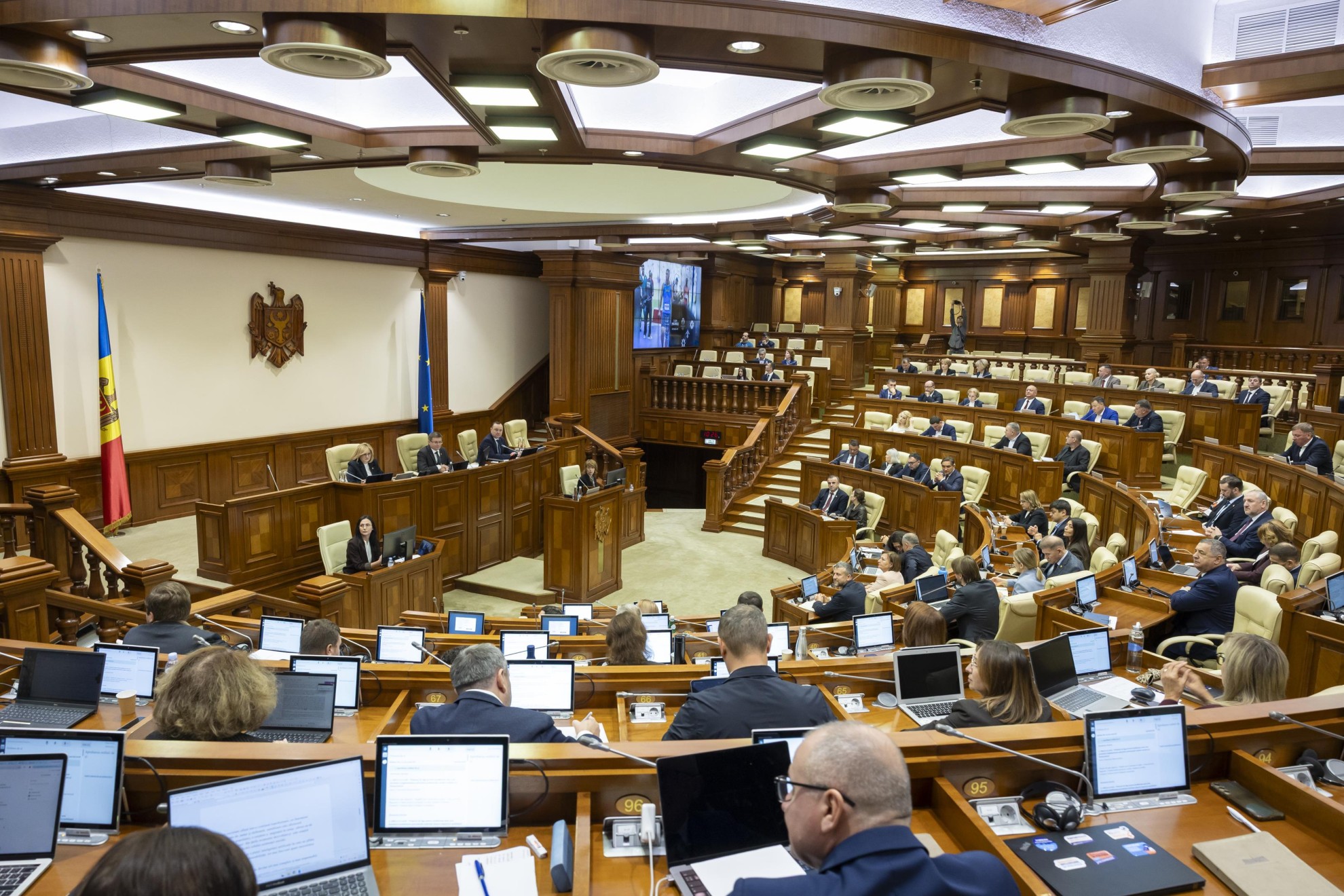
Chisinau, September 24, 2026 – The process for getting permits and approvals for producing energy from renewable sources will be simplified. The parliament has approved, in the first reading, a draft law aimed at streamlining the process of authorization for renewable energy production projects and promoting the sustainable development of the biofuels market.
The legislative initiative belongs to the Energy Ministry and its drafting is part of Moldova’s commitments to align national legislation with European standards in the field.
The draft law provides for the introduction into legislation of requirements for identifying and designating acceleration areas for renewable energy projects, as well as for developing plans for the siting of grid and storage infrastructure. These areas will be selected primarily based on criteria that favor the use of land and infrastructure that has already been affected or is less sensitive from an environmental protection perspective. At the same time, both for acceleration areas and for grid and storage infrastructure siting plans, the draft law explicitly excludes territories where the development of renewable energy projects could have an unacceptable environmental impact or be incompatible with conservation objectives.
The document also establishes maximum deadlines for getting the necessary permits, decisions and approvals. Thus, large power plants may be authorized within no more than 24 months, while those with a capacity of up to 150 kW will be authorized within a maximum of 12 months. In acceleration areas, the deadline will be reduced to no more than 12 months, while for self-consumption installations, including the ones installed on buildings, it will be a maximum of three months. Photovoltaic panels with a capacity of up to 100 kW installed by prosumers, as well as low-capacity heat pumps may be authorized within a single month.
Shorter deadlines are also provided for the reconstruction or modernization of existing power plants. If the installation is located in an acceleration area and its capacity does not increase by more than 15 per cent, the procedure may be completed within 30 days.
A digital platform will also be created to bring together, through a single access point, all processes and information relevant to the development of a renewable energy project. This mechanism is meant to consolidate in one place the permits, approvals, authorizations and decisions required for the construction, operation, reconstruction and modernization of renewable electricity power plants. Presently, developers must interact with multiple authorities and institutions, each with its own platforms, forms and deadlines, which generates high administrative costs and extends the authorization process.
The government will create, operate and update the national spatial data infrastructure on energy resources. In geospatial format, it will include information on the potential for producing energy from renewable sources, as well as on the land, underground areas and inland waters available for the development of renewable power plants and related grid and storage infrastructure.
To create favorable conditions for the large-scale integration of renewable technologies into buildings, central and local authorities will be required to include provisions on the integration of renewable energy sources when drafting and revising urban planning and spatial planning documentation. These provisions will cover, among other things, the installation of photovoltaic and solar thermal panels, heat pumps, storage systems and self-consumption solutions.
The draft law also provides for a change to the remuneration mechanism for electricity supplied to the grid by prosumers. For new installations, suppliers will purchase surplus electricity at the day-ahead market price, replacing the current mechanism based on an average price. Individuals who already own installations will benefit from the current mechanism until the end of 2027.
With regard to the biofuels market, the draft proposes establishing a Registry to monitor transactions, record greenhouse gas emissions and issue certificates for renewable fuels meant for transport. At the same time, importers and wholesale traders of gasoline and diesel will be required to place a minimum share of biofuels on the market.
According to the National Integrated Energy and Climate Plan, the government has set the objective that, by 2030, at least 27 per cent of final energy consumption will be covered by renewable sources. In recent years, renewable energy projects have developed significantly nationwide. For example, over the past five years, the installed capacity for producing energy from renewable sources has increased 11.6-fold.
The draft law will be examined by the parliament in the second reading.
Communication and Public Relations Directorate of Moldova’s Parliament

 Facebook
 Instagram
 X/Twitter
 Telegram
Legal framework for integration of foreigners in Moldova to be strengthened
National legislation on electronic evidence to be aligned with international standards
Energy communities: clearer rules for establishment and registration
Modernization works for district heating systems in Chișinău and Bălți to be declared matter of national public utility
Obtaining permits and approvals for renewable energy production to be simplified
Parliament to examine legislative measures to strengthen NBM independence in line with European standards
Moldovan and Romanian lawmakers to discuss cooperation in education
Moldovan PM says government must have necessary tools before crises materialize
Moldovan parliament declares nationwide state of emergency in energy, hydrological sectors for 60 days
Moldovan PM, European Commission official discuss accelerating growth plan projects
Moldovan PM's speech at parliament's plenary meeting on establishment of emergency state
Moldovan president, delegation of Czech senators discuss Moldova’s European path, bilateral cooperation
Government improves financing mechanism for regional and local development projects
National railway infrastructure program for 2026–2030 approved by Government: Railway to be modernized and passenger transport expanded
Moldovan PM, in interview with Bloomberg, says European path creates huge economic opportunities for Moldova, as well as for investors who come to country
MOLDPRES INTERVIEW // Slovak Ambassador: Moldova deserves to be part of EU in near future. It can complete accession process by 2030
VIDEO // Russia tried to destabilize our country and spent hundreds of millions of dollars for this purpose. Moldova resisted, Prime Minister says
PM, former U.S secretary of state discuss regional security, investment opportunities of Moldova
The first meeting of Growth Plan's Monitoring Committee: Moldova maintains high pace of reforms' implementation
More than 50 UN member states called on Russia for complete, immediate and unconditional ceasefire in Ukraine
VIDEO // Prime Minister - interview with CNN: We welcome United States involved in energy support projects for Moldova
 National Bank of Moldova
Moldovan parliament ratifies new agreement between Moldova, Romania on strategic transport infrastructure
Works of modernization of district heating systems in Chisinau, Balti to be declared of national public utility; draft passed in first reading
PM, former U.S secretary of state discuss regional security, investment opportunities of Moldova
National mechanism for protection, legal assistance, financial compensation of crime victims to be strengthened in Moldova
The first meeting of Growth Plan's Monitoring Committee: Moldova maintains high pace of reforms' implementation

ARMENPRESS // James Cameron to meet Yerevan fans in November
The first meeting of Growth Plan's Monitoring Committee: Moldova maintains high pace of reforms' implementation
Moldovan president's speech at ceremony marking 80th anniversary of founding of State University of Moldova, centenary of Romanian university education in Bessarabia
More than 50 UN member states called on Russia for complete, immediate and unconditional ceasefire in Ukraine
VIDEO // Prime Minister - interview with CNN: We welcome United States involved in energy support projects for Moldova
Moldovan parliament approves new rules for tobacco products' packaging
Moldovan parliament speaker says Russia triggers tensions, seeks to sow fear by unauthorized overflights of airspace
Moldova discusses strengthening airspace protection capabilities with Romania and Ukraine, Speaker says
Republic of Moldova reaffirms commitment to refugee protection at UN meeting dedicated to 1951 Convention
Parliament votes, in first reading, on legislative measures to strengthen independence of National Bank of Moldova in line with European standards
Moldovan parliament adopts legislative amendments to make procedure for selecting, appointing candidates for position of Constitutional Court judge more transparent
Medical, pharmaceutical qualifications got in EU to be able to be recognized in Moldova; parliament adopts draft law
Caps for foreign exchange operations without National Bank's authorization to increase gradually; Moldovan parliament passes draft in second reading
Enhanced protection for persons targeted by abusive lawsuits: Moldovan parliament votes on anti-SLAPP legislative package in second reading
Drone found in Florești had onboard camera, features specific to Gerbera type
Emotional moment in Parliament: six children opened plenary session with special sign language performance
Receive the latest news directly to your email

Receive the latest news directly to your email