
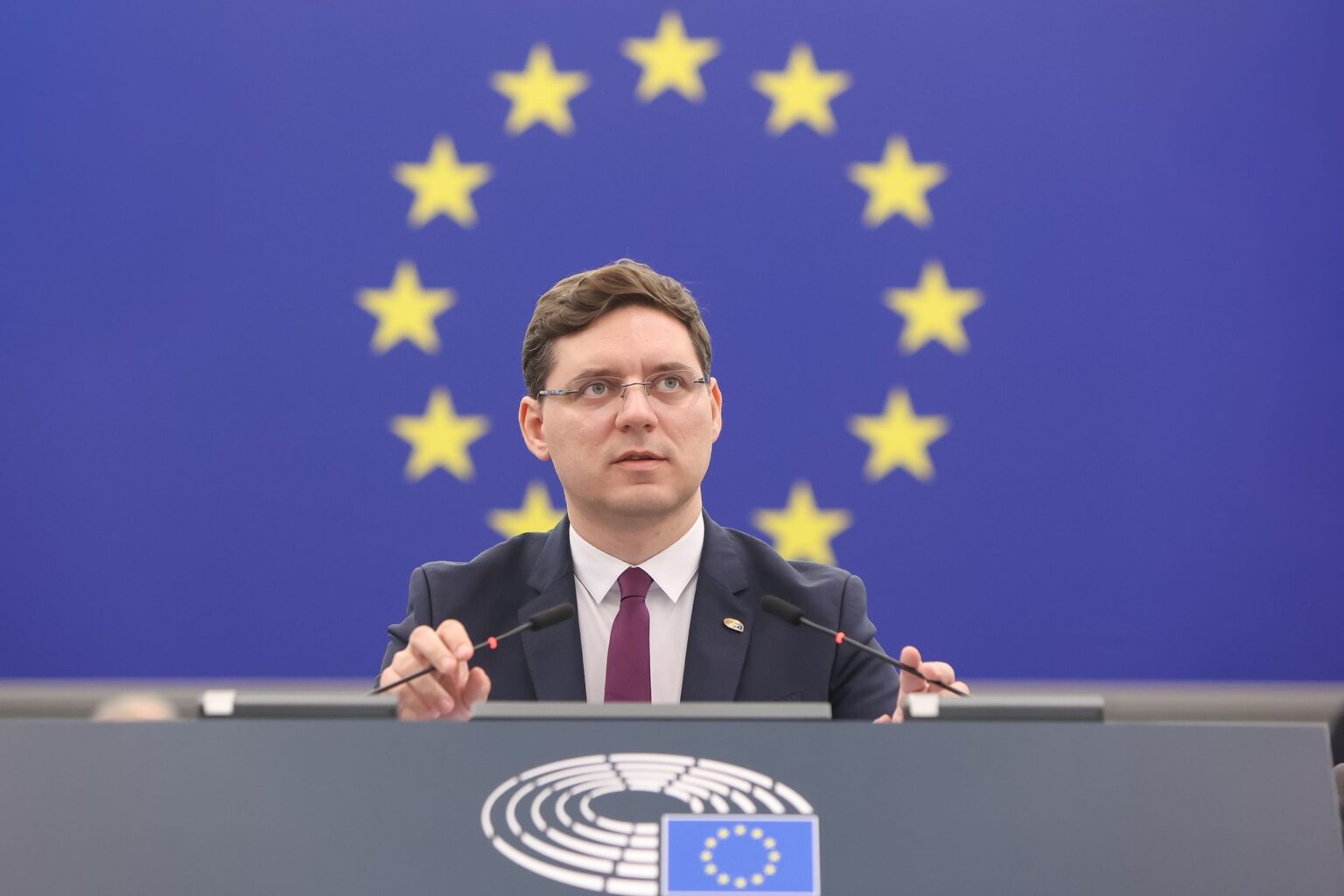
European Parliament vice-president calls for opening cluster negotiations on Moldova’s accession to EU
European Parliament Vice-President Victor Negrescu has called on President of the European Council António Costa to open cluster-based negotiations on Moldova’s accession to the European Union. The call comes in the context of the parliamentary elections in Hungary, in which the opposition party secured a clear victory and incumbent Prime Minister Viktor Orbán, in power for the last 16 years, conceded defeat.

According to Victor Negrescu, the European Council’s decision could be taken at the first formal meeting in June or could be agreed immediately at the level of ambassadors.

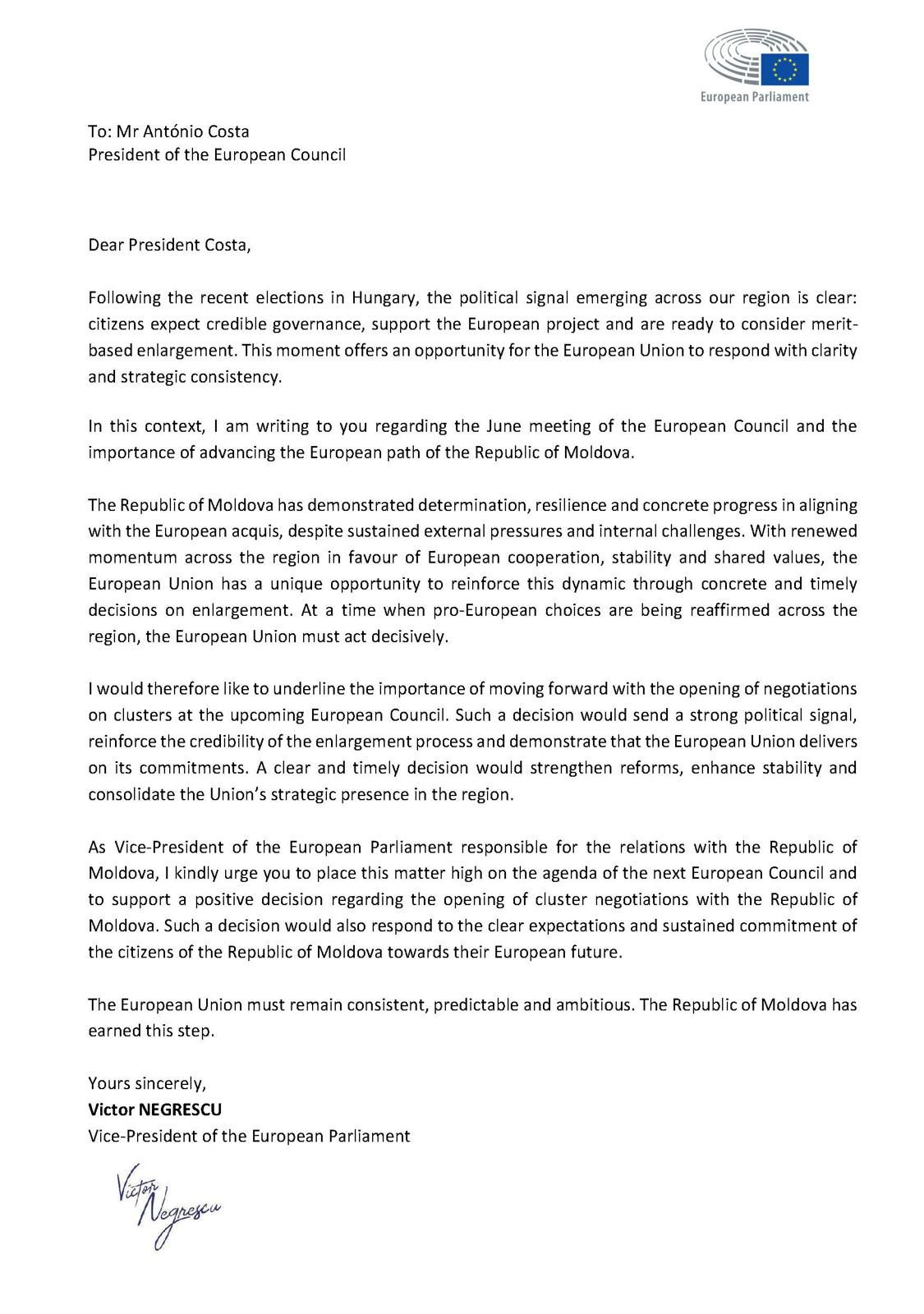
“As a result of the outcome of the elections in Hungary, I have sent, in my capacity as Vice-President of the European Parliament responsible for relations with Moldova, a letter to European Council President António Costa, to request the opening of cluster-based negotiations for Moldova’s accession to the EU. The elections in Hungary give a new opportunity for this decision, which has been delayed far too long by the unanimity rule and the opposition of the anti-European and pro-Russian government in Budapest,” Victor Negrescu said.

The vice-president of the European Parliament stressed that Moldova had made real progress and had shown that it was committed to the European path.

“Starting cluster-based negotiations would give a new impetus to the necessary reforms and would also strengthen cooperation with Romania. It is time for the European Union to confirm this course through a clear decision,” Victor Negrescu underlined.

Moldova submitted its application for accession to the European Union on March 3, 2022, and on June 23, 2022, it got the candidate country status, with a recommendation to continue reforms. In November 2023, European assessments confirmed Moldova’s progress and recommended opening accession negotiations, a decision approved by EU leaders in December 2023. On June 25, 2024, the accession negotiations officially started.

In September 2025, Moldova completed the bilateral screening with the EU – a stage that analyses the compatibility of national legislation with the European acquis. In mid-December 2025, the country launched technical discussions on the first negotiating chapters. The Moldovan authorities emphasized that this stage marked a crucial phase of the accession negotiations, which will underpin future progress in the process of Moldova’s integration into the EU.
 Facebook
 Instagram
 X/Twitter
 Telegram
Moldovan Central Electoral Commission asks Justice Ministry to initiate procedure of dissolution of three political parties
Expert comments on protests staged in Moldova on April 7, 2009
Political analyst: 7 April 2009 protests allowed change in governing paradigm and removal of old nomenklatura
Deputy Prime Minister meets with new Ambassador of Japan to Chișinău
Parliament may adopt new code of operation
Today - last day to submit documents for registration of candidates in new local elections
PHOTO GALLERY // 7 April 2009 protests captured by MOLDPRES
Prime Minister: 7 April 2009 changed country’s direction and left us with lesson we must never forget: freedom does not come by itself, it is won
Speaker about 7 April 2009 events: Memory of this day must unite us, because future of this country depends on choices we make
Moldovan President: 7 April remains lesson about how easily fundamental rights can be violated and about importance of defending freedom
Polish MPs visit Chișinău to strengthen bilateral relations
Justice reform, anti-corruption efforts in Moldova, essential conditions for concluding EU accession negotiations
Moldovan president to deliver speech in Dublin on reforms, European path of Moldova
Moldovan Central Electoral Commission accredits 14 national observers to monitor new local elections, local referendums
Merchandise exports up 11 percent in Moldova in first two months of 2026
European Parliament vice-president calls for opening cluster negotiations on Moldova’s accession to EU
Increased interest in learning Romanian in Moldova: over 6,800 people enroll in programme launched by Education and Research Ministry
PHOTO // Travelers can arrive from Chisinau Railway Station to Airport in just 15 minutes; new rail transfer successfully tested
Attention, travelers! Heavy traffic at Leuseni checkpoint of Moldova, on outbound route
North Bus Station of Chisinau returns 85 per cent to state ownership: decision of Council for examination of investments of strategic importance
April 15 declared National Day of Mourning in Moldova, in connection with funerals of master Gheorghe Urschi
 National Bank of Moldova
Moldovan deputy PM for Reintegration has meeting with delegation of Estonia's Foreign Affairs Ministry
April 15 declared National Day of Mourning in Moldova, in connection with funerals of master Gheorghe Urschi
Moldovan president participates in launch of exhibition dedicated to 1903 Pogrom
Moldovan parliament votes: voluntary amalgamation becomes simpler, better funded for development
Deputy Prime Minister meets UNFPA Country Representative and UNDP Resident Representative to Moldova

Fuel prices drop: diesel becomes 0.85 lei cheaper
Deputy Prime Minister pays working visit to Brussels
Moldovan Speaker to pay visit to Austria
Digital documents can be used directly at counter and online via EVO wallet
PHOTO // National Army sappers conduct demining missions in Orhei, Chișinău, Cimișlia
AIPA allocated over 53 million lei to farmers in first ten days of April
Well-known actor of Moldova passes away at 78
DOR government programme of Moldova: children, young people from Diaspora can submit participation files till April 22
PHOTO GALLERY // Orthodox Christians celebrate Resurrection of the Lord: traditions, faith that unite generations
Local companies can participate in Moldova Presents exhibition, organized in Vaslui, Romania
VIDEO // EU Ambassador to Moldova says people on Eastern holidays return to things that matter most: family, traditions
Moldovan PM conveys message on Easter
VIDEO // Moldovan parliament speaker says may Light of Resurrection brings us peace, courage, new hope
Moldovan president congratulates citizens on Resurrection of the Lord
Orthodox Christians celebrate Holy Easter; Orthodox priest says peace should be sought in hearts, Light of Resurrection should be shared with everyone”
Holy Light from Jerusalem brought to Moldova
Receive the latest news directly to your email

Receive the latest news directly to your email