
Over 25,000 residents from left bank of Dniester commute daily to right bank, Deputy Prime Minister for Reintegration says
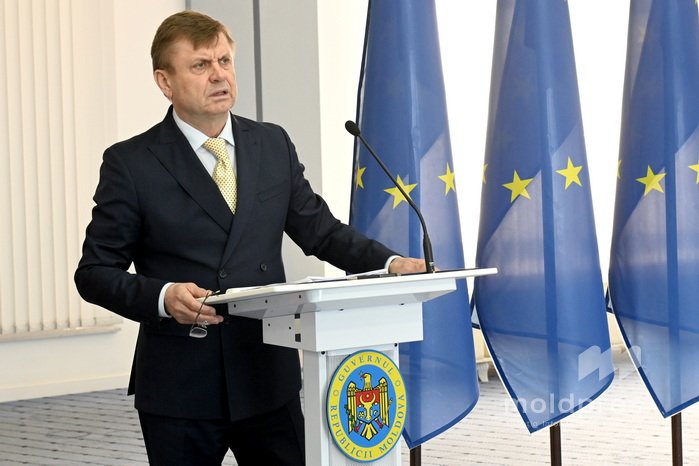
Over 25,000 residents from the Transnistrian region cross the Dniester River every day to work, study or access services on the right bank, Deputy Prime Minister for Reintegration Valeriu Chiveri said during a talk show on Jurnal TV, emphasizing that this phenomenon reflects the economic and social differences between the two banks.

According to the official, the increase in mobility is driven, among other factors, by the higher level of salaries and pensions on the right bank.

“Our figures show that over 25,000 residents from the left bank of the Dniester commute every day to the right bank – not necessarily only to Chișinău, but the majority come for work, studies or other needs. There is very intense movement, an attempt to adapt and to survive,” Chiveri said.

The Deputy Prime Minister noted that the right bank has become a real magnet for residents of the region.

“Salaries and pensions on the right bank are two to three times higher than on the left bank of the Dniester. This is noticeable and explains why more and more citizens choose to come here to work or to benefit from services,” the official explained.

Chiveri drew attention to the fact that the region’s economic situation is increasingly reflected in the ability of the unrecognized authorities to meet their social obligations.

“The share of social expenditures has grown to 85–90%. Even under these conditions, arrears have appeared – not very large, but it is a signal that things are not going very well in terms of budget revenues,” the Deputy Prime Minister said.

At the same time, the official highlighted the growing integration of residents from the left bank of the Dniester into the systems on the right bank.

“We have about 75,000 residents from the Transnistrian region included in the health insurance system on the right bank. Over 14,000 are officially employed, and many others are pensioners who benefit from free health insurance,” Chiveri said.

At the same time, over 11,000 people from the region receive pensions and other social benefits from the constitutional authorities.

The trends confirm the widening gap in living standards between the two banks of the Dniester and underscore the role of the right bank as an economic and social point of attraction.
 Facebook
 Instagram
 X/Twitter
 Telegram
Ben Gurion Airport in Tel Aviv remains closed until 16 April
National airspace overflown by Shahed drone
Perspectives on Moldova's European integration: experts says joint declaration announced today by officials from seven states good political signal
European Union member states' MPs call for speeding up EU accession talks with Moldova; declaration to this effect signed in Chisinau
Moldovan president to meet Moldovans living in Ireland
PHOTO // Republic of Moldova opened Honorary Consulate in Almaty, Kazakhstan
President on 108 years since Union of Bessarabia with Romania
Prime Minister conveys message on anniversary of Bessarabia's Union with Romania
Speaker - 108 years after Union of Bessarabia with Romania
PHOTO // Moldovan foreign affairs minister meets Romanian senators
Moldovan government holds extraordinary meeting to introduce new measures on emergency state period
Moldovan president in Bratislava says country chooses path to peace, freedom, prosperity in European family, not to abandon it
Slovakian president says Moldova proved it is ready to accelerate process of accession to European Union
Romania’s support for Moldova highlighted in Parliament
Over 25,000 residents from left bank of Dniester commute daily to right bank, Deputy Prime Minister for Reintegration says
BTA: Bulgarian Literature Has Become Increasingly Visible on International Stage - Deputy Culture Minister Stoyanov
Simple motion on public policies implemented by Ministry of Labour and Social Protection failed
Moldova to sign social security agreements with Quebec (Canada), Albania, Croatia and Ireland
 National Bank of Moldova
Proposals for improving efficiency of ministries discussed at roundtable
Prime Minister visited agricultural business in Unguri village, Ocnița district
Prime Minister visited rescuers and firefighters unit in Ocnița
Weekly meeting of Joint Control Commission of 2 April 2026
Deputy Prime Minister for Reintegration meets Ambassador of Romania to Moldova

Prime Minister visited agricultural business in Unguri village, Ocnița district
Minister of Labor and Social Protection: Deficit of state social insurance budget decreased to 3.6 billion lei in 2026
Prime Minister visited rescuers and firefighters unit in Ocnița
Eastern European plants used in Chinese medicine: book by Wang Yifeng launched in Chișinău
PHOTO GALLERY // About 160 companies gathered at Moldconstruct and Moldenergy exhibitions: innovation and cutting-edge technologies
Weekly meeting of Joint Control Commission of 2 April 2026
Energy and infrastructure – essential pillars in Ukraine’s reconstruction
Specialized international exhibitions Moldconstruct and Moldenergy open at Moldexpo
Deputy Prime Minister for Reintegration meets Ambassador of Romania to Moldova
Speaker about permanent withdrawal from CIS statutory bodies: Moldova has sovereign and independent right to decide which union to be part of
Moldovan government representatives to present to parliamentary factions actions taken during emergency state, proposals on future developments
VIDEO // Solidarity puzzle: social experiment in Moldovan parliament to raise autism awareness
Moldovan PM has discussions with mayors from Ocnita district
Parents who do not pay child support risk arrest or community service in Moldova
PHOTO // Non-reimbursable funding for entrepreneurs of Moldova: 81 companies receive grants worth 43 million lei
Moldovan foreign affairs minister meets MEP: continuing reforms, leveraging EU support on agenda
Receive the latest news directly to your email

Receive the latest news directly to your email