
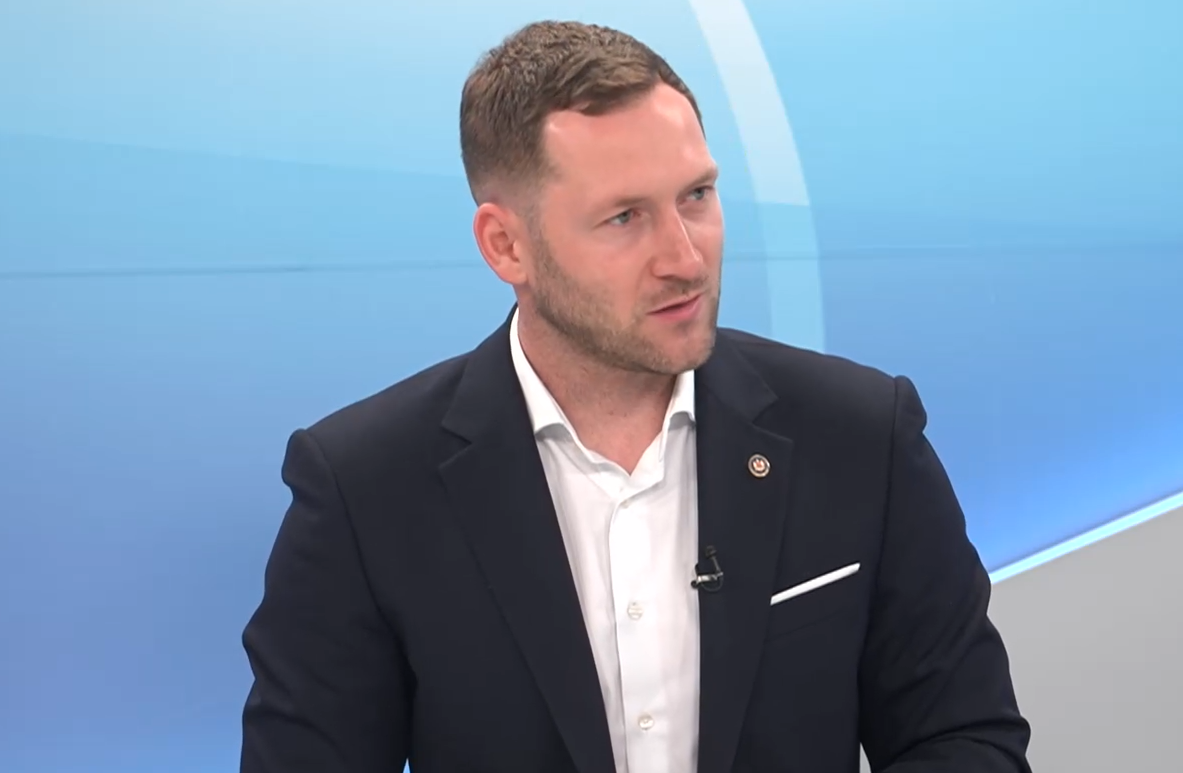
Gheorghe Hajder: Reducing Dniester’s flow to 30 cubic meters per second would mean natural disaster
Reducing the Dniester River’s flow to just 30 cubic meters per second would turn the river into a “small stream,” shut down most water intake stations, and could trigger a natural and ecological disaster, Environment Minister Gheorghe Hajder told a TV show.

The minister said that following a visit to the Novodnestrovsk reservoir together with specialists from the Republic of Moldova and Ukraine, it was confirmed that the situation is critical.

“Reservoir reserves are already decreasing, they are at a critical threshold, and we are four meters below the level recorded in the same period last year. There is a risk of prolonged drought, and if we do not carefully manage the discharges, we could end up with only 30 cubic meters per second flowing in the Dniester,” Hajder said.

According to the minister, in order to conserve water reserves, the Dniester Commission decided to reduce the flow discharged from the reservoir from 100 to 85 cubic meters per second.

“We decided to limit the discharge from 100 to 85 cubic meters per second precisely to extend the reservoir’s lifetime and to gain time until possible rains in the Dniester basin,” the official explained.

Hajder specified that Ukraine initially requested a reduction of the flow to 70 cubic meters per second, but the Republic of Moldova insisted on a gradual decrease.

“We were against that. We requested additional time and a slow reduction of the flow so we could see how the Dniester behaves and have time to adapt the intake stations,” the minister said.

The official reiterated that warnings about the risk of a water crisis were based on technical data and that the authorities should have acted earlier.

“I stated very clearly that we must prepare so that we do not end up in a situation where the water supply is interrupted. Precious time was lost, and measures began to be taken only when the crisis became evident,” Gheorghe Hajder declared.

The minister warned that a reduction of the flow to 30 cubic meters per second would have serious consequences.

“That would mean we’d have a small stream instead of the Dniester. It would be something very tragic and a natural disaster. Most intake and pumping stations for irrigation would no longer function,” he said.

Referring to the information circulated in the public space regarding water reserves, Hajder stated that it does not reflect the real situation.

“The usable volume that can be discharged is about 900 million cubic meters. Today, about 30 cubic meters per second flow into the reservoir and we are releasing 85. The reservoir is on a downward trend, and we cannot allow the flow to drop to 30 cubic meters per second, because that would be a disaster not only for people, but also for the environment,” the minister said.

He added that Moldovan and Ukrainian authorities will continuously analyze the evolution of the hydrological situation and will adjust discharges according to rainfall and the level of water reserves.

On July 28, the Republic of Moldova introduced a hydrological alert for a period of 30 days, after a significant reduction in water resources in the Dniester basin. Following a visit to the Novodnestrovsk reservoir, the environment minister announced that the water level had dropped to 112.9 meters, more than four meters below the level recorded in the same period last year. The authorities are constantly monitoring the situation and urging the population to save water.
 Facebook
 Instagram
 X/Twitter
 Telegram
DOC // Moldova's public-sector employees to receive one-off allowances of up to four thousand lei: law published in Official Journal, enters into force
Drone found in Florești had onboard camera, features specific to Gerbera type
Emotional moment in Parliament: six children opened plenary session with special sign language performance
Draft decisions with environmental impact compiled in new section on EcoContact
Researchers from four countries gathered in Chișinău to discuss medicinal plant biotechnology
DOC // Moldova has new media law
PHOTO GALLERY // Journey through Northern Moldova through MOLDPRES lens
New director at Teleradio-Moldova Company: Ecaterina Cheptanaru wins competition
Moldovan-American sectoral cooperation discussed at Moldova's Defense Ministry
Moldovan PM says situation on Dniester must not be turned into subject of political speculation
Moldovan PM says over 620,000 households might benefit from energy compensation during this season
Environment Minister on Dniester situation: Water reserves three times lower than discharges, situation worsened
Number of families eligible for energy compensation to increase
Government approves declaration of state of emergency in energy and hydrological sectors
Deputy Prime Minister to visit Canada: talks on strengthening bilateral relations and developing economic partnerships
Prime Minister’s speech at UN: We have realistic path to build country our children will not have to leave in search of new opportunities
Prime Minister: Our ambition is clear: to firmly anchor Moldova in European family
PM: We want peaceful reintegration of country
 National Bank of Moldova
Nearly 500 children took up President’s reading challenge
Prime Minister meets with UN Secretary-General
Prime Minister at UN: Moldova may never become great power, but it can certainly become great country
Speech by Prime Minister at 81st Session of United Nations General Assembly
Prime Minister discusses European integration and strengthening economic cooperation with Croatian and Slovenian counterparts in New York

Speech by Prime Minister at 81st Session of United Nations General Assembly
PHOTO // U.S. Ambassador-designate to Moldova arrives in Chisinau
Prime Minister discusses European integration and strengthening economic cooperation with Croatian and Slovenian counterparts in New York
Moldovan Prime Minister holds talks with Croatian and Slovenian counterparts
“A Night Written in Red” - documentary performance about courage, resistance and freedom staged in Parliament square
VIDEO // Prime Minister for Fox News Podcasts: Moldova can be export and trade hub for entire region
Strengthening Moldova’s cooperation with UNDP, UNOPS discussed in New York
PHOTO // PM in New York tells Diaspora government willing to turn experience of Moldovans from United States into projects for country
Moldovan foreign affairs minister at UN says Moldova strengthening capacity to respond to health threats
Moldova under emergency state in energy, hydrological sectors as of September 26; what measures take effect
Moldova's National Crisis Management Commission approves new measures to ensure energy security, protect water resources
PHOTO // PM promotes Moldova's investment opportunities in New York
Balti Clinical Hospital to receive ultrasound machine through grant provided by government of Japan
Moldovan PM, U.S. investors, companies discuss potential projects in Moldova
Japan supports modernization of Balti Clinical Hospital with grant worth over 95,000 dollars
Moldovan parliament speaker urges students not to be afraid to express their ideas, wishes
Receive the latest news directly to your email

Receive the latest news directly to your email